



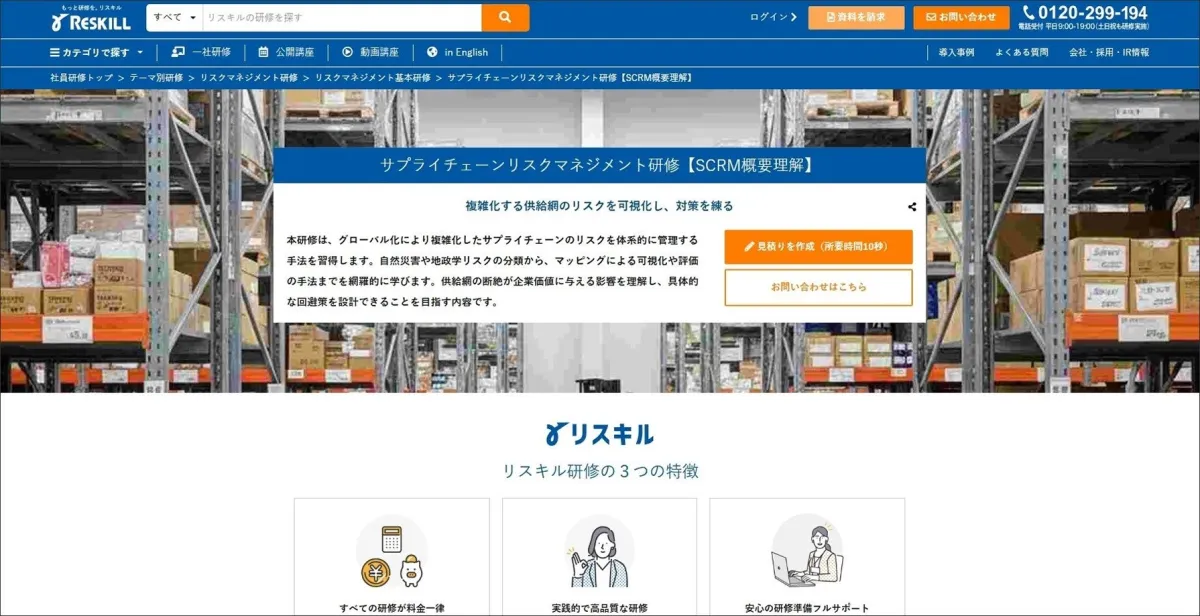
Enhancing Supply Chain Risk Management Training for Employees in a Globalized World
Enhancing Supply Chain Risk Management Training for Employees
In today's interconnected business landscape, the complexity of supply chains has increased significantly due to globalization, requiring companies to adopt comprehensive risk management strategies. Recognizing this urgent need, Reskill Co., Ltd. is launching a new training program focused on Supply Chain Risk Management (SCRM). This initiative aims to equip employees with the essential tools and knowledge to identify, evaluate, and mitigate risks that can disrupt supply chains, ensuring the protection of corporate value.
Understanding the Challenges of Modern Supply Chains
The global supply chain encompasses a wide array of activities from raw material procurement to product sales. Various factors, such as natural disasters, geopolitical tensions, and advanced cyber threats pose significant risks that can lead to supply chain disruptions. These interruptions not only endanger the flow of goods and services but can also result in severe financial ramifications for businesses.
To combat these challenges, companies find it imperative to accurately pinpoint and assess potential risks while developing effective management strategies. Training in Supply Chain Risk Management becomes a crucial step in fostering a resilient business framework.
Overview of the Supply Chain Risk Management Training
The SCRM training program is designed to cultivate professionals who recognize the intricate structure of supply chains and can visualize potential risks to create effective response strategies. The course will enhance the following skills:
- - Understanding Risk Categories: Participants will gain insights into the diverse categories and characteristics of risks present within the supply chain.
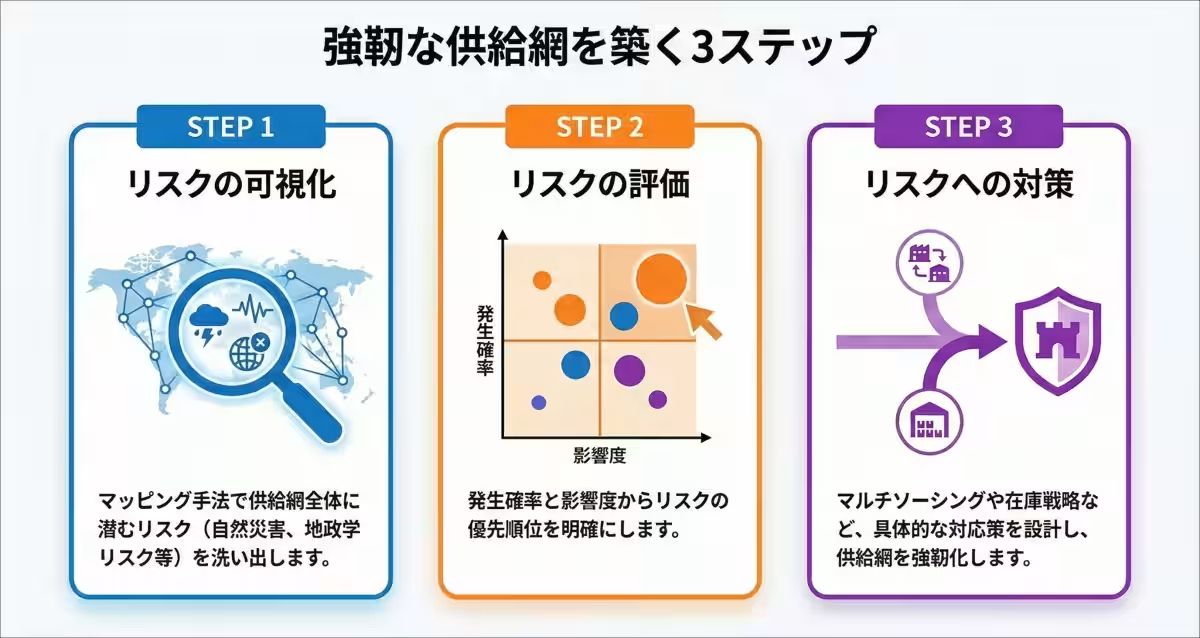
- - Supply Chain Mapping Techniques: The training will teach methodologies for mapping supply chains, thereby revealing latent risks.
- - Designing Practical Response Measures: Trainees will learn how to develop real-world risk response strategies, including avoidance and multi-sourcing options.
Key Features of the Training
1. Multifaceted Risk Understanding: Participants will engage with various factors that jeopardize businesses, encompassing natural disasters, geopolitical risks, and cyber-attacks, to foster a well-rounded understanding of potential threats.
2. Risk Visualization via Mapping: The curriculum incorporates comprehensive mapping techniques that delve beyond primary suppliers, allowing participants to trace upstream processes and effectively identify critical points where risks may cascade.
3. Actionable Strategy Development: By reinforcing fundamental strategies—such as avoidance, reduction, transfer, or acceptance—this program focuses on practical approaches including inventory strategies and alternative sourcing to bolster on-ground response capability.
Training Curriculum Highlights
The training covers a wide range of crucial topics, including:
- - Understanding the Overall Picture of Risk Management: Grasping the basic concepts and significance of risk management through real-world case studies.
- - Risk Identification and Visualization Techniques: Utilizing supply chain mapping to unearth potential risks.
- - Risk Assessment and Prioritization: Distinguishing critical risks based on likelihood of occurrence and impact.
- - Designing Risk Response Strategies: Reducing risks through strategic multi-sourcing or optimized inventory and procurement policies.
- - Operationalizing Under Normal and Crisis Situations: Establishing monitoring structures and refining initial response protocols.
About Reskill Co., Ltd.
Reskill Co., Ltd. is committed to providing diverse training programs, including the newly introduced Supply Chain Risk Management training. The company adopts a transparent and consistent pricing structure, making it easier for organizations to plan and implement their training initiatives.
Strengths of Reskill's Training Programs
- - Consistent Pricing Structure: Program costs are standardized based on training duration, and there are no hidden fees for customizations tailored to specific organizational needs.
- - Practical Training Quality: Facilitators with extensive real-world experience guide participants toward acquiring skills that can be immediately applied in their work environments.
- - Reduced Administrative Burden: The organization provides full support for logistical needs, such as training materials and dispatching, allowing company representatives to focus on core business operations.
This new initiative by Reskill reflects an understanding of current challenges in supply chain management and emphasizes the importance of preparation, evaluation, and proactive response to emerging threats in a globalized economy.
Topics Business Technology)
【About Using Articles】
You can freely use the title and article content by linking to the page where the article is posted.
※ Images cannot be used.
【About Links】
Links are free to use.