




The Impact of Financial Education on Employee Performance and Trust in Companies
The Hidden Costs of Financial Worries Among Employees
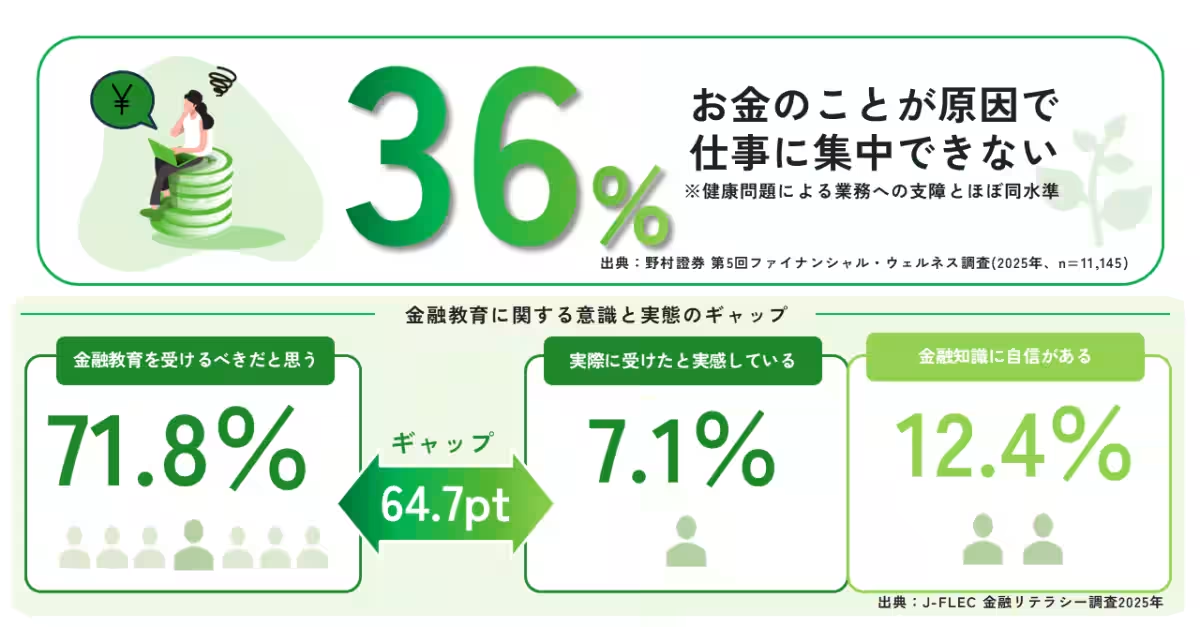
In a recent survey conducted by Broadmind Inc., a leading financial service company in Japan, alarming results were revealed regarding the impact of financial concerns on employee productivity. Approximately 36% of employees reported that their financial anxieties prevented them from concentrating fully on their work. Surprisingly, this figure aligns closely with those who reported productivity issues due to health-related problems, underscoring the fact that financial stress can significantly affect work performance.
Defining ‘Money Presenteeism’
This phenomenon is referred to as “Money Presenteeism,” a term used to illustrate the decrease in productivity employees face caused by financial stress while physically present at work. Similar to the broader issue of presenteeism caused by health problems, Money Presenteeism manifests as a hidden barrier to productivity, leading to substantial losses for companies without being easily identifiable.
According to the Financial Literacy Survey conducted by the Japan Financial Public Relations Association, over 71% of participants expressed the need for financial education, yet only a minuscule 7.1% felt that they had received adequate training. This disconnection drives home the urgent necessity for ongoing financial education programs in workplaces.
Positive Impacts of Continuous Learning
Broadmind’s financial education program, Broccoli, provides a targeted approach to improving financial literacy among employees. By surveying companies across various sectors, including construction and IT (with a combined employee base of around 5,000), the positive outcomes of this program were made evident.
Key Findings from the Employee Survey:
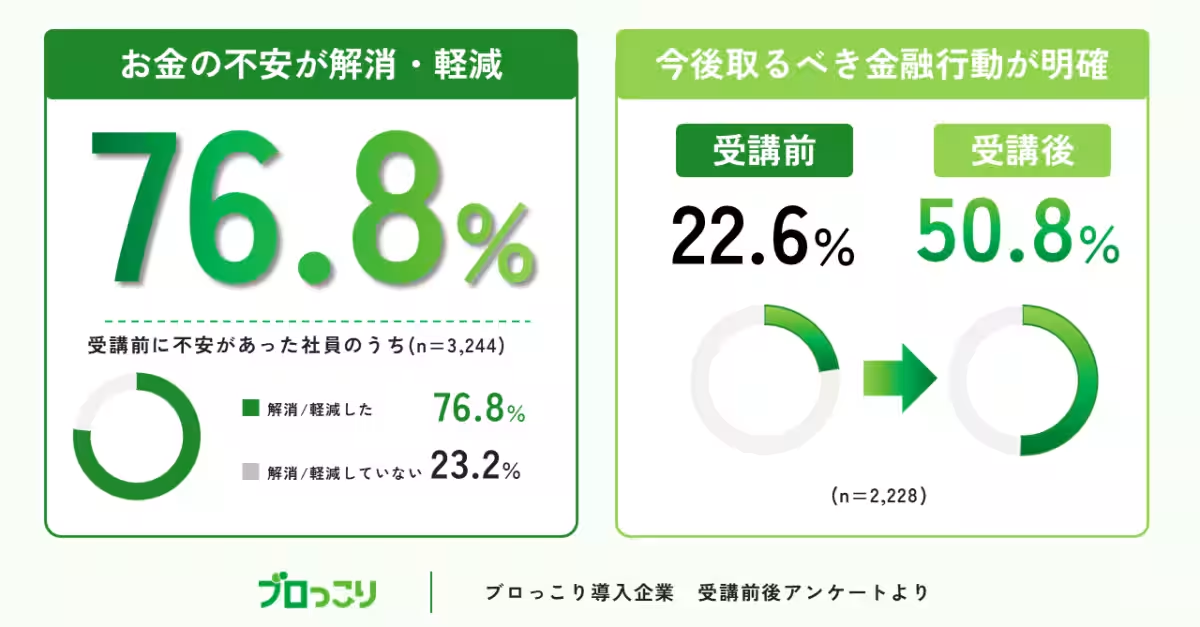
1. Reduction in Financial Anxiety: 76.8% of participants reported a decrease in financial worries post-training.
2. Clarity in Financial Actions: The percentage of employees who felt they had clarity on future financial actions jumped from 22.6% before the training to 50.8% after completion, representing a 2.2-fold increase.
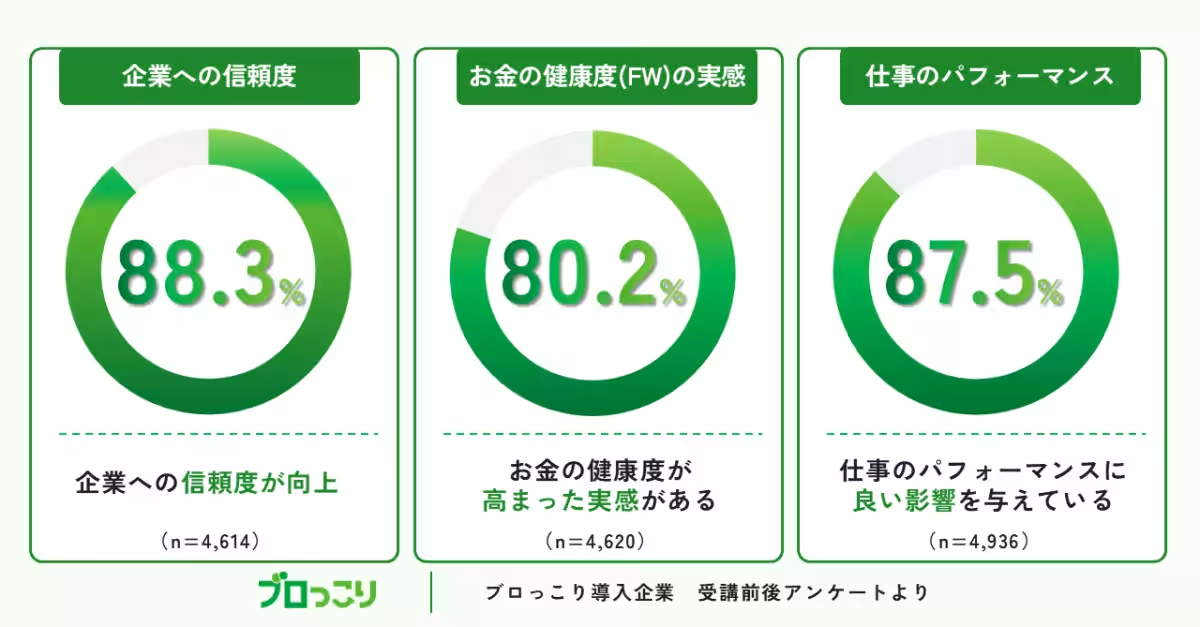
3. Trust in Employers: A remarkable 88.3% of employees indicated increased trust in their employers due to the financial education provided, demonstrating a direct correlation between financial well-being programs and employee trust.
4. Improvement in Financial Health: 80.2% of respondents felt their overall financial health had improved, and 87.5% acknowledged that a sense of financial security positively influenced their job performance.
Expert Insights on Financial Well-Being
Tetsuki Nakamura, a manager in Broadmind’s Business Development Division and a Financial Well-Being Champion, commented on these findings, highlighting that financial worries often go unnoticed yet gradually erode focus and job performance. He emphasized that the impact of financial stress equates to that of health issues and advocated for integrating the concept of Money Presenteeism into wellness discussions within companies.
Ensuring Effectiveness: Features of the Broccoli Program
The success of the Broccoli program can be attributed to its continuous, neutral, and customizable learning approach. Employees receive personalized guidance from certified financial coaches over a period of six months to a year, ensuring that their inquiries are addressed promptly, thereby reducing anxieties and promoting behavioral changes.
Importantly, these coaches refrain from endorsing financial products, which fosters a high level of trust among employees.
Future Prospects
Building upon these promising results, Broadmind plans to introduce a dedicated survey for HR and welfare personnel and release a white paper summarizing insights related to financial education and corporate well-being. The objective remains to communicate ongoing strategies that simultaneously enhance employee financial security and bolster trust in firms.
Conclusion
The insights from the survey strongly advocate for the critical importance of financial literacy in the workplace. It is clear that tackling financial concerns not only benefits employees personally but contributes to an overall increase in workplace productivity and trust. Firms investing in the financial education of their employees can cultivate a more engaged, focused, and productive workforce, ultimately fostering a healthier workplace environment.





Topics General Business)
【About Using Articles】
You can freely use the title and article content by linking to the page where the article is posted.
※ Images cannot be used.
【About Links】
Links are free to use.