



How Small Teams Are Defeating Big Tech in the AI Era
Why the "11-Person Company" Can Beat Giant Tech Firms
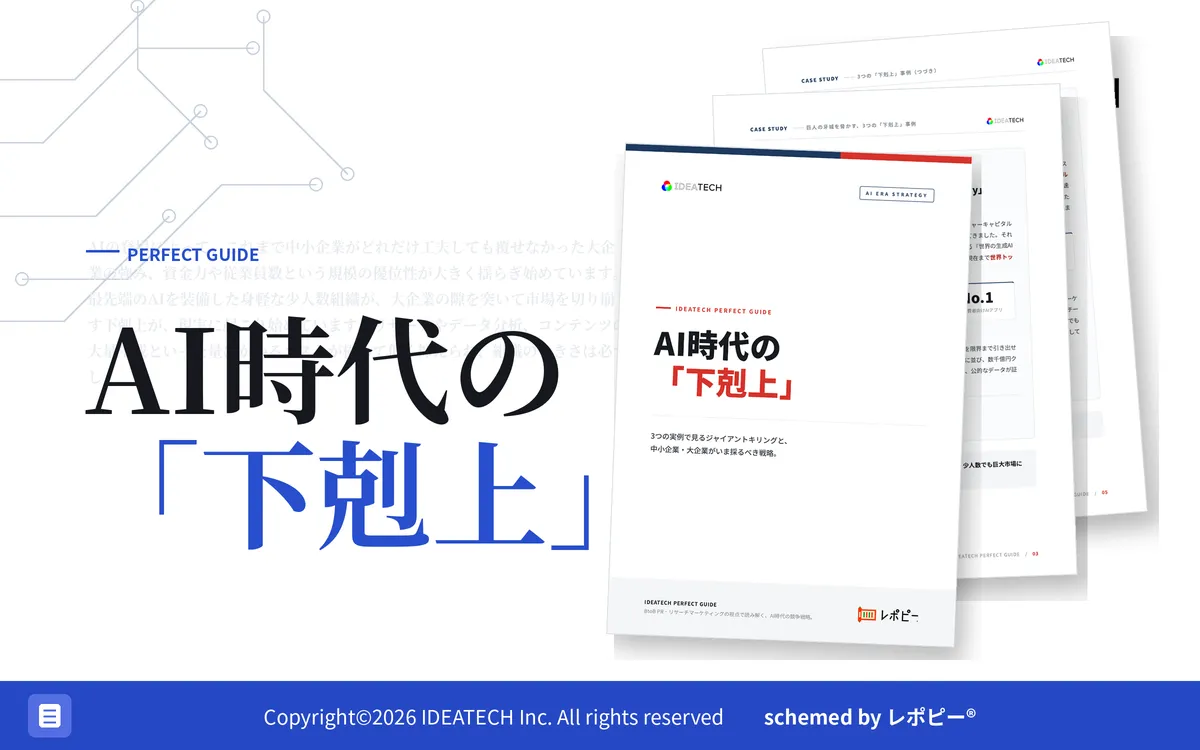
In the rapidly evolving landscape influenced by AI, traditional power dynamics in business are shifting dramatically. IDEATECH, a Tokyo-based company known for its innovative marketing solutions, has released a guide titled "AI Era's 'Upset'", which explores how smaller organizations can now compete with, and even surpass, large tech firms. The guide is available for free, allowing anyone interested to explore these groundbreaking strategies.
Overview of the Guide
The emergence of AI has started to erode the long-standing advantages that large corporations have held over smaller businesses—namely, access to funds and a large workforce. Due to the decreased cost of data analysis and content generation, companies are finding that the size of their organization can now act as a hindrance rather than an asset, often slowing down decision-making processes.
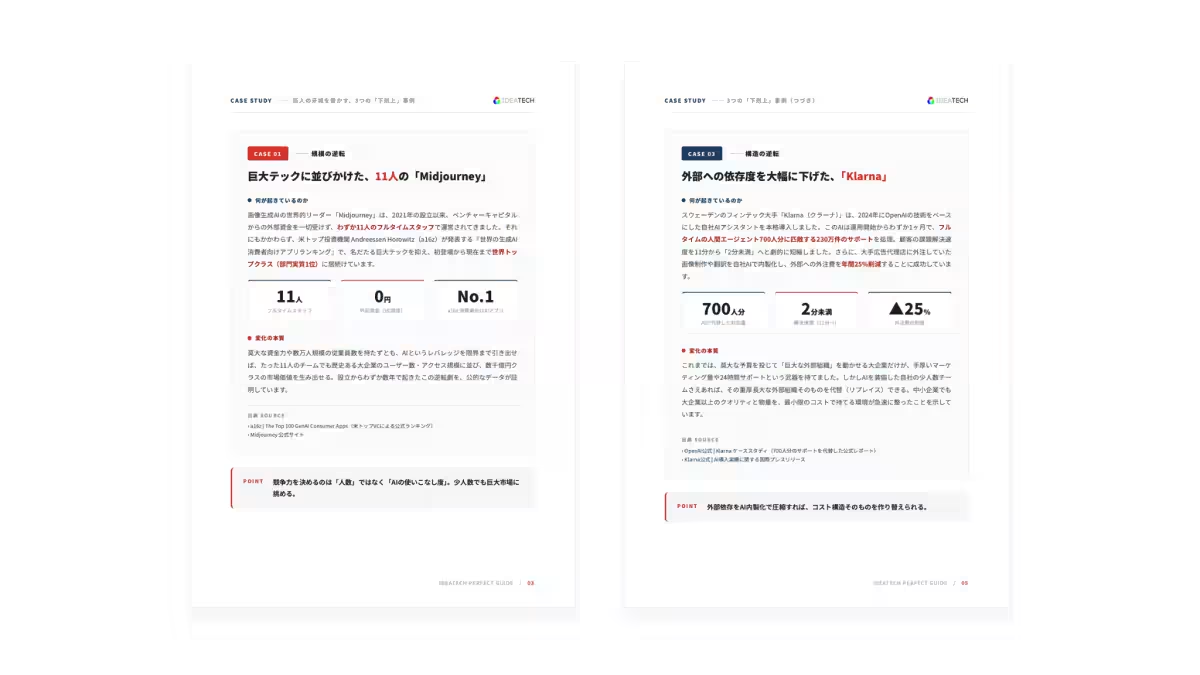
In this guide, IDEATECH highlights notable examples like Midjourney, which operates with only 11 full-time employees yet has achieved global recognition in image-generation AI. Through three case studies, it examines the transformation of competitive landscapes from being dictated by size to being driven by speed.
Key Points from the Guide
1. The Shift in Competitive Advantage: The traditional advantages held by large companies in terms of capital and manpower are eroding thanks to advancements in AI technology.
2. Fast-Paced Case Studies: The guide presents three compelling case studies:
- Midjourney: How this team of 11 is competing with tech giants.
- Peter Levels: Demonstrating the power of a one-person organization to outpace larger competitors.
- Klarna: Showcasing a significant reduction in outsourcing costs.
3. Strategic Paradigms: The guide discusses how small and mid-sized enterprises (SMEs) should focus on "depth" in customer relationships while large enterprises may need to leverage their existing "height" in market presence.
Case Studies Highlighted
CASE 01: Upsetting Scale - Midjourney vs Giant Tech
Midjourney illustrates this shift perfectly. With no external funding and just 11 employees, it has outperformed numerous established tech companies to reach the top ranks in consumer-facing AI applications. Its success demonstrates that agility trumps size, especially in the tech space.
CASE 02: Upsetting Speed - Peter Levels
The simplicity and swiftness of a one-person venture often allow for quicker pivots and innovations, setting it apart from larger organizations burdened with bureaucracy and slow decision-making.
CASE 03: Upsetting Structure - Klarna
Klarna's significant reduction in reliance on external contractors signals a new era for companies seeking to streamline operations and enhance productivity.
The Insights Offered
The guide provides insights into why large corporations struggle to keep pace with nimble competitors in the AI age. Key factors include:
- - Internal processes leading to inefficiencies
- - The risks associated with protecting existing business models
- - Legacy systems that constrain innovation
Recommendations for Companies
For SMEs looking to harness AI to outperform larger rivals, the strategy is straightforward: delegate repetitive tasks to AI and concentrate on building deeper connections with customers—something bigger companies cannot replicate easily. Conversely, larger enterprises should transcend their size advantage by rethinking their brand narratives and leveraging their established reputations.
Conclusion
The competitive battlefield has irrevocably changed in the AI era. The ultimate question is whether a business's strengths lie in scale or speed. Understanding how to integrate AI into operations and where best to leverage competitive advantages will be crucial for success moving forward.
To delve deeper into these strategies and download IDEATECH's comprehensive guide, visit the following link: Download the Guide.


Topics Business Technology)

【About Using Articles】
You can freely use the title and article content by linking to the page where the article is posted.
※ Images cannot be used.
【About Links】
Links are free to use.