




Challenges of Overly Complex SaaS Tools Affecting Business Efficiency
The Challenges of Overly Complex SaaS Tools Affecting Business Efficiency
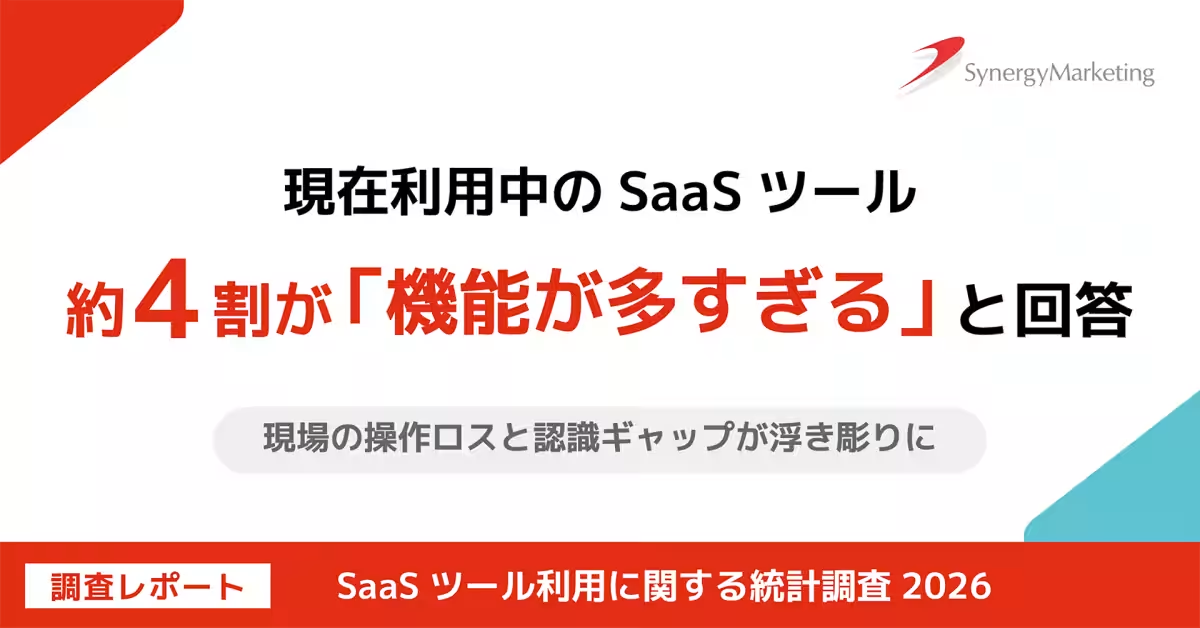
Recent research conducted by Synergy Marketing Co., Ltd. has shed light on the difficulties encountered by business professionals using SaaS tools across Japan. With a focus on a sample of 250 individuals, this study highlights a significant concern: nearly 40% of respondents feel that the tools they are using are overly complex. As SaaS solutions become increasingly feature-rich, the actual utility in a practical work environment is being called into question.
Survey Insights
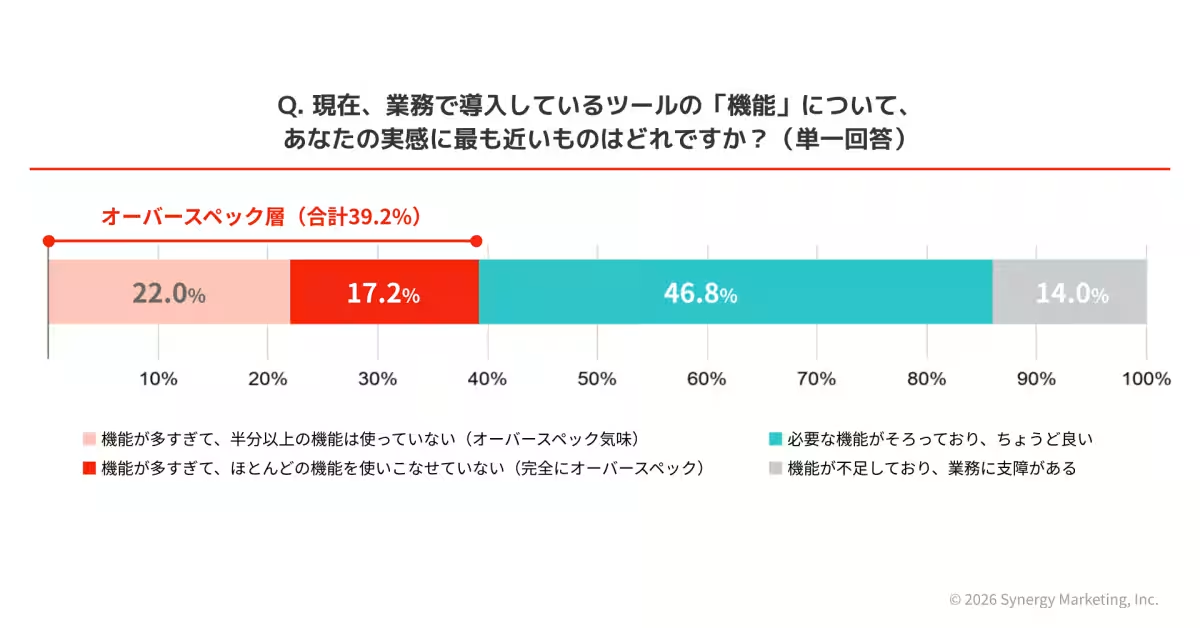
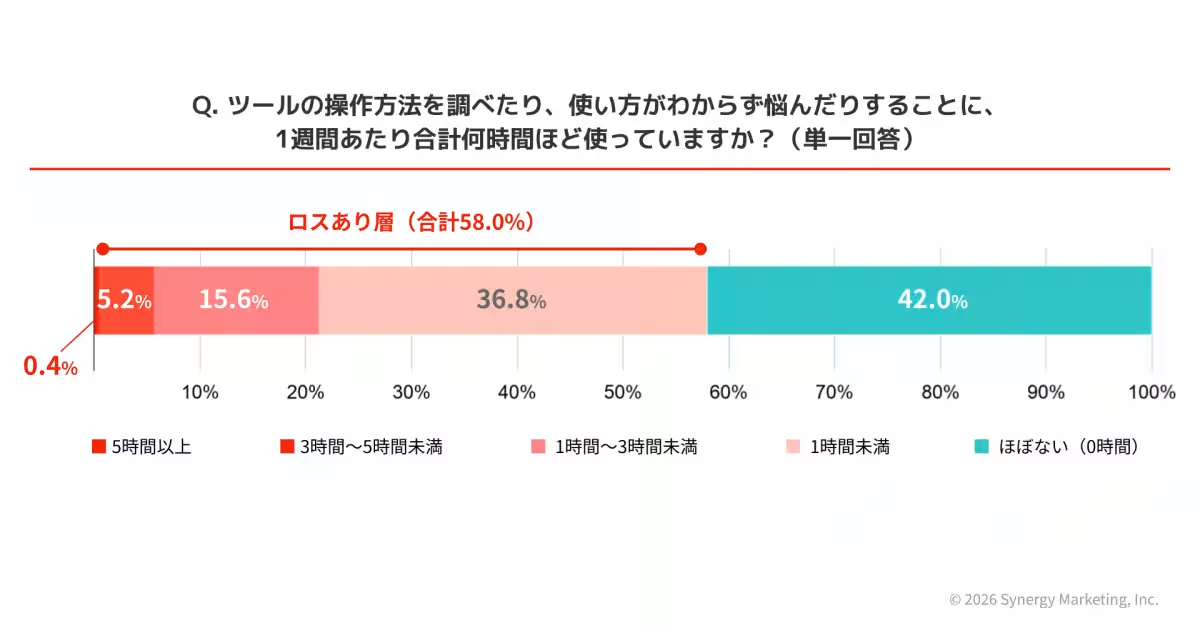
In the survey, it was revealed that 39.2% of SaaS users believe their current tools are “over-spec.” This means that a significant portion of these professionals is not leveraging the full potential of their tools, thus indicating a disconnect between tool complexity and user needs. Moreover, the findings show that 58.0% of users encounter operational losses every week, which is counterproductive to the very purpose SaaS tools were intended to serve — efficiency.
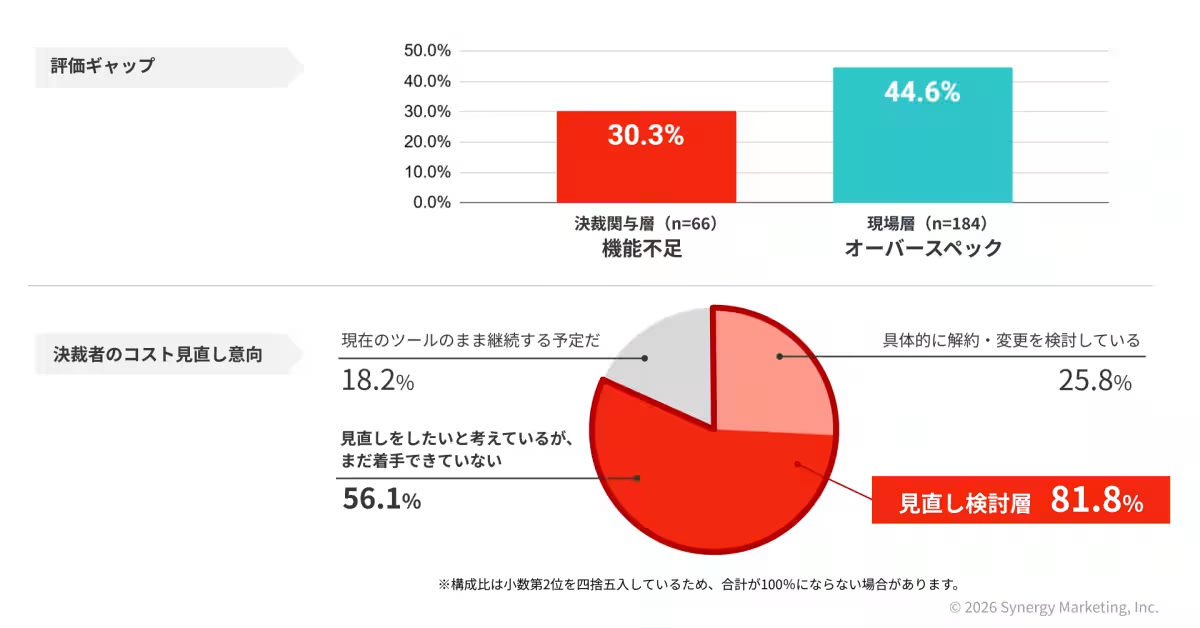
Notably, there is a disparity in perceptions between decision-makers and end-users. Approximately 30.3% of decision-makers feel there is a lack of necessary features in SaaS applications, while 44.6% of operational staff think the tools are over-specified. This gap in perceptions complicates the process of evaluating and potentially overhauling SaaS tools, raising questions about user engagement and actual operational success.
The Time Cost of Complexity
The survey also revealed startling statistics regarding the time spent in frustration with these tools. A substantial 58.0% of respondents admitted to spending time each week merely figuring out how to operate their tools. Among those, 36.8% spend less than an hour each week, while 15.6% waste approximately 1 to 3 hours, and some even 3 to 5 hours simply troubleshooting or attempting to decipher their tools. This scenario presents a paradox where tools meant to streamline operations instead generate significant amounts of wasted time.
Gaps in Recognition
Another level of complexity arises with the differing expectations of stakeholder groups within organizations. With 81.8% of decision-makers expressing a desire to review tools, the process remains stagnant due not only to transition costs and resource allocation but also to the discrepancy in how the tools are perceived by different user groups. The inability for decision-makers and operators to arrive at a unified perspective on the tool's effectiveness brings into question the efficiency of the software's utilization.
Naoyuki Wada, a Marketing Producer in the Cloud Business Division at Synergy Marketing, commented on the findings. He argues that the heart of the challenge lies not in whether tools are under-developed but in whether they have been designed for functional usability in actual workflow scenarios. Multi-feature tools can appear attractive but tend to result in learning curves and operational confusion rather than enhanced effectiveness for users.
Recommendations for SaaS Utilization
In response to the issues highlighted in this study, there are three key recommendations for organizations to enhance their use of SaaS tools:
1. Visualize Operational Losses: Quantifying the time spent on confusion and searching for instructions can help in understanding the unseen operational burdens.
2. Prioritize Simplicity Over Feature Creep: Instead of accumulating unnecessary features that might be useful in the future, focus on those necessary for current operations to avoid complexity.
3. Bridge the Gap Between Decision Makers and Users: It's critical to involve end-users during the review and selection of tools to establish criteria that can satisfy both operational staff and decision-makers alike.
Conclusion
The report highlights that effective SaaS implementation goes beyond mere feature comparison or cost assessment; it requires a fundamental understanding of how tools can be made easier for everyday use. Ultimately, organizations should not view the deployment of SaaS tools as the end of the journey but rather as the beginning of a process aimed at continuous improvement. The full report containing data on operational losses, discrepancies in user evaluations, and practical guidance is available for free download on the Synergy Marketing website.
For those interested in further insights, a webinar discussing operational design to streamline the usage of complex tools will be held on July 8, 2026. Participation is free, and attendees will receive diagnostic tools for analyzing their internal SaaS applications.
To explore the full report and additional resources, please visit: Detailed Report Download.
Topics Consumer Technology)
【About Using Articles】
You can freely use the title and article content by linking to the page where the article is posted.
※ Images cannot be used.
【About Links】
Links are free to use.