



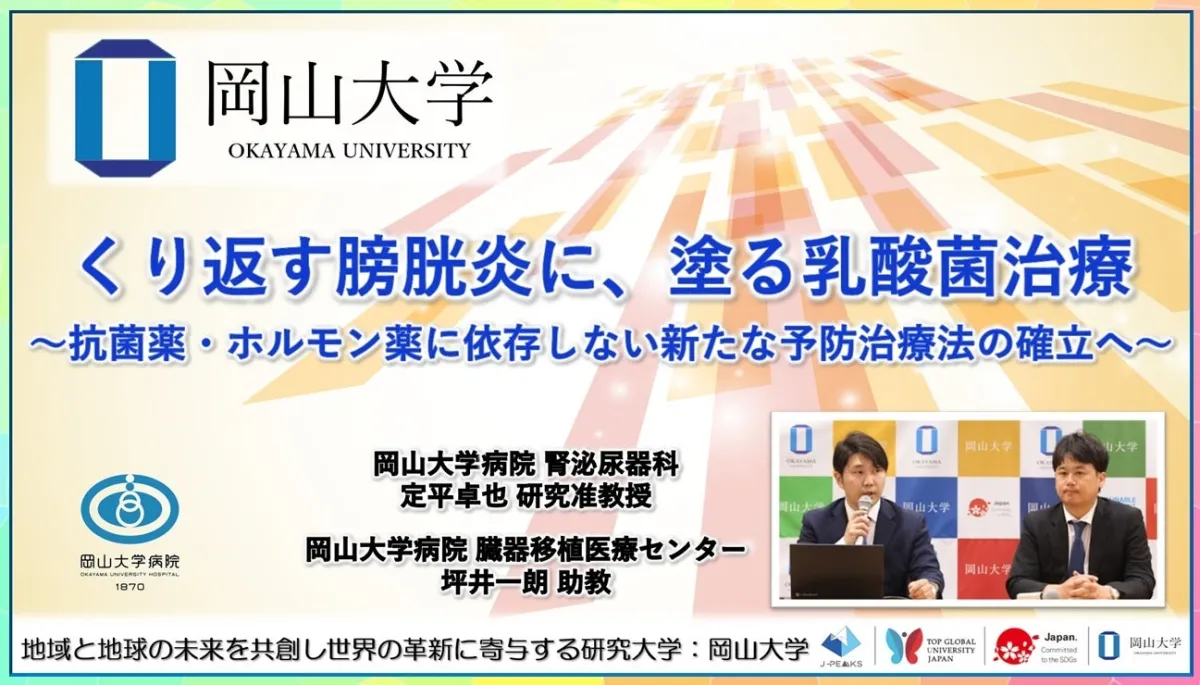
New Revolution in Bladder Infection Prevention Using Lactobacilli Cream Developed by Okayama University
Novel Approach to Prevent Recurrent Bladder Infections
Okayama University has announced an innovative clinical study aimed at addressing recurrent bladder infections through the application of lactobacilli cream. This initiative marks a significant development in treating this condition that afflicts many women, especially post-menopausal individuals.
Recurrent bladder infections, defined as two or more episodes within six months, can be challenging to manage, often necessitating repeated courses of antibiotics. The new research, led by Associate Professor Takuya Sadahira and his colleagues from the Urology Division at Okayama University Hospital, aims to offer an alternative that reduces reliance on conventional antibiotics and hormone therapies.
Background of the Research
Recent studies have indicated the impact of the Genitourinary Syndrome of Menopause (GSM), which includes changes in the vaginal environment due to decreased estrogen levels. These changes can lead to dryness, discomfort, and recurrent infections, as harmful bacteria such as E. coli can establish themselves in the altered environment. Research has demonstrated that administering lactobacilli through vaginal suppositories effectively prevented bladder infections in approximately 86% of participants over a year.
Exciting New Possibilities
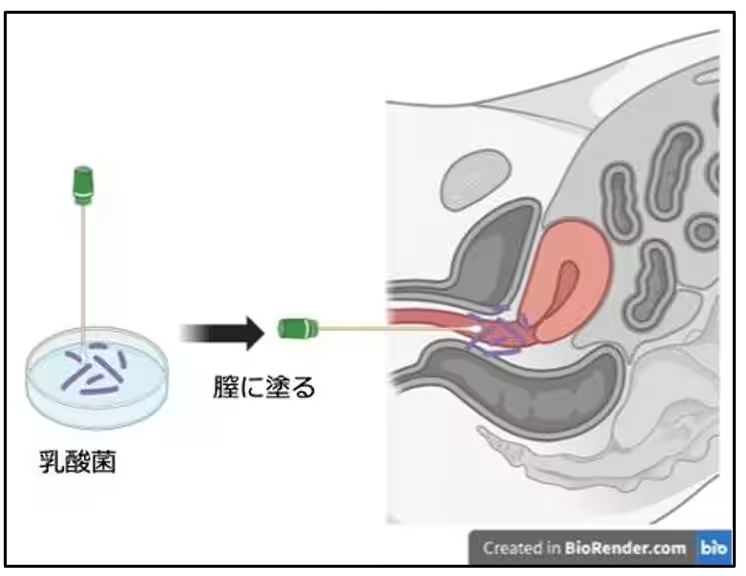
The upcoming study, beginning in 2026, will evaluate the efficacy of a lactobacilli cream, which physicians will apply in an outpatient setting. This approach aims to achieve similar outcomes with a significantly reduced frequency of applications, totaling only eight sessions over six months. The researchers hope that this streamlined method will be more accessible and convenient for patients, thereby increasing adherence to treatment.
The ultimate goal is to establish this lactobacilli-based treatment as a new preventive approach against recurrent bladder infections that minimizes the side effects and concerns associated with long-term antibiotic and hormone use.
Future Directions
The implications of this research extend beyond bladder infections; there is also the potential to investigate the benefits of lactobacilli in relation to GSM itself, addressing a broader spectrum of symptoms experienced by post-menopausal women. Dr. Ichiro Tuboi, one of the leading researchers, has emphasized the necessity for diverse treatment options for patients struggling with the recurring nature of bladder infections. With many expressing apprehension about the side effects of antibiotics and hormones, new solutions like the lactobacilli treatment could play an integral role in improving quality of life.
Conclusion
The pioneering research at Okayama University reflects a growing trend in modern medicine that seeks to harness natural solutions to combat health issues while mitigating the adverse effects commonly associated with conventional treatments. The commitment to innovating non-antibiotic therapies could revolutionize the management of recurrent bladder infections, offering hope and relief to many women facing the discomfort and complications of this distressing condition. As the study progresses, it could pave the way for safer, more effective treatment options that empower patients and healthcare providers alike.
For further insights, feel free to consult the official press release and additional resources provided by Okayama University here. Additionally, the Urology Division at Okayama University Hospital continues to lead impactful research in this vital field of women's health.
By focusing on both efficacy and patient-friendly applications, Okayama University is set to lead the future of urological health science.





Topics Health)
【About Using Articles】
You can freely use the title and article content by linking to the page where the article is posted.
※ Images cannot be used.
【About Links】
Links are free to use.