



Impact of Trump's Tariffs on Individual Investors: Insights from 800 Responses
The Impact of Trump's Tariffs on Individual Investors: Insights from a Survey
In April 2025, a significant policy change emerged from the United States—President Trump's announcement to substantially raise tariffs on imported goods. This decision sent shockwaves through global markets, leading to a notable decline in stock prices, including the Nikkei index, which plummeted 15.5% from March’s close of 35,617 yen to 30,792 yen by April 7. To understand how this event affected individual investors in Japan, "Kabunogakkou.com," an online stock trading school operated by Treasure Promote Co., conducted a survey targeting 800 individual investors.
Survey Overview
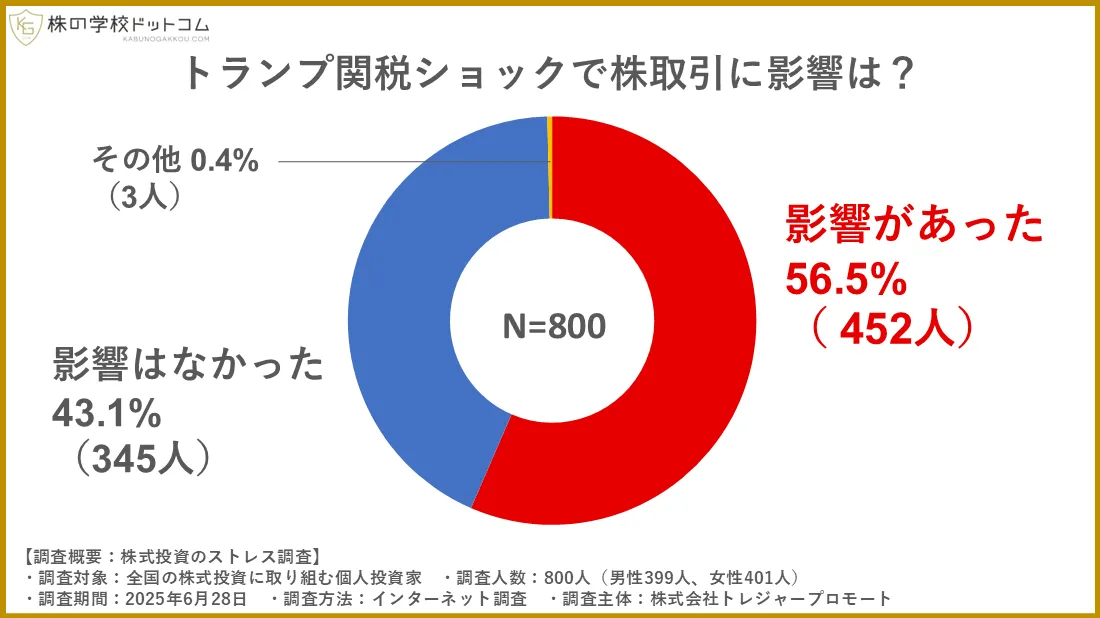
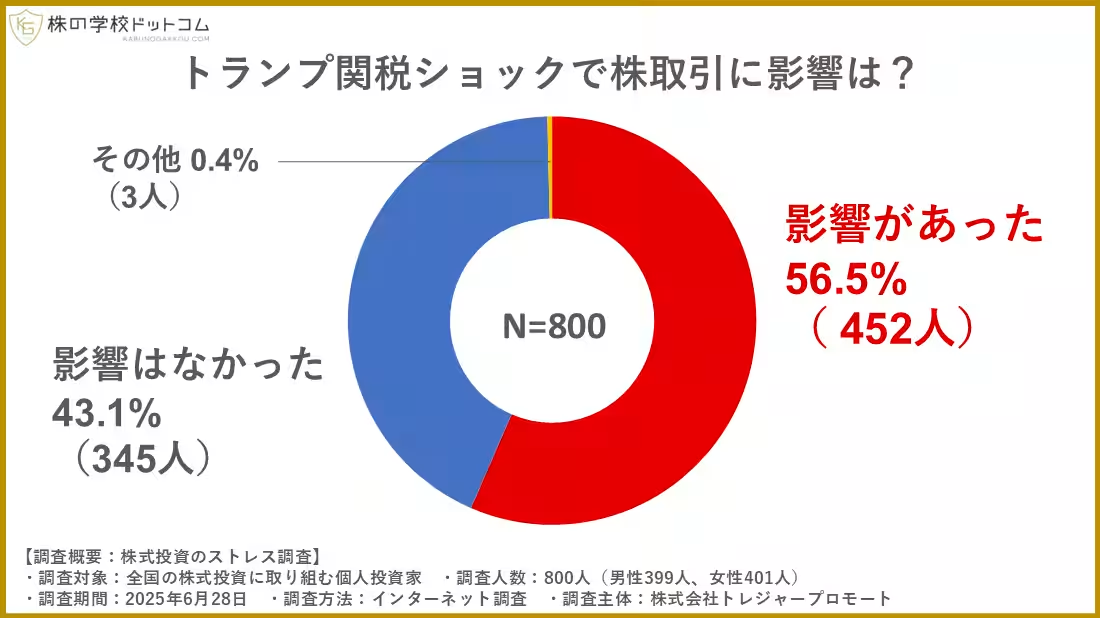
The survey was conducted with a diverse group of 800 investors from across Japan, consisting of 399 males and 401 females. The data was collected through an online survey from June 28, 2025. The results revealed that over half of the respondents, specifically 56.5%, acknowledged having been influenced by the tariff announcement, while 43.1% reported no significant impact on their trading activities.
Cautious Sentiment Among Investors
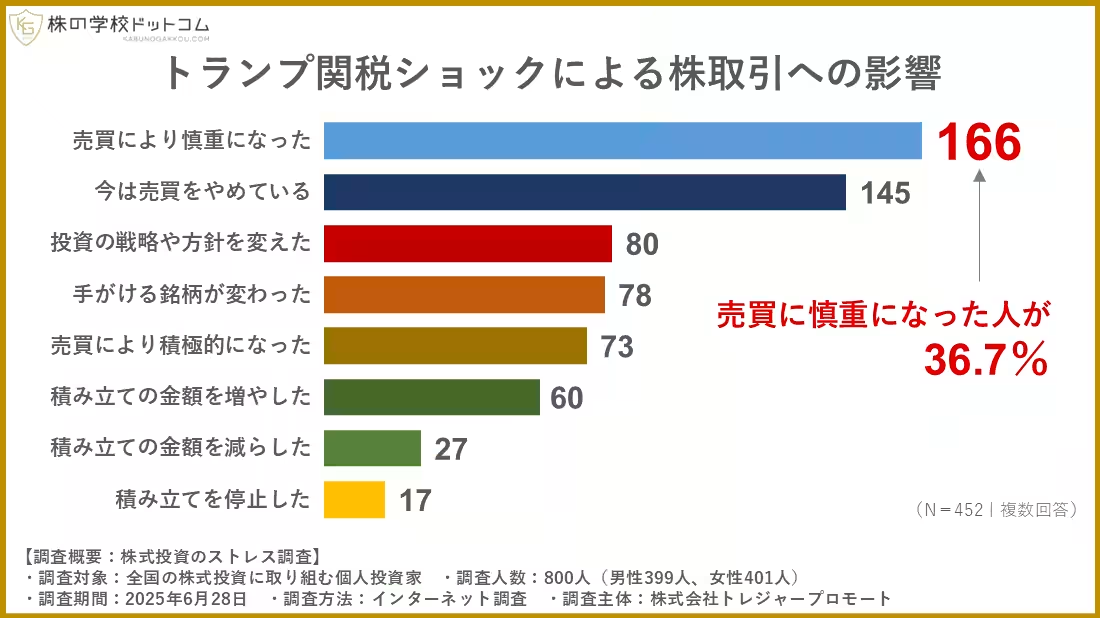
When asked about the nature of this impact, a staggering 36.7% indicated that they had become more cautious in their trading activities. The next most common response, selected by 32.1% of respondents, was that they had ceased trading altogether, followed by 17.7% who adjusted their investment strategies. Despite the overall trend toward caution, an interesting perspective emerged among younger investors, particularly those in their 20s.
Generational Divide in Responses
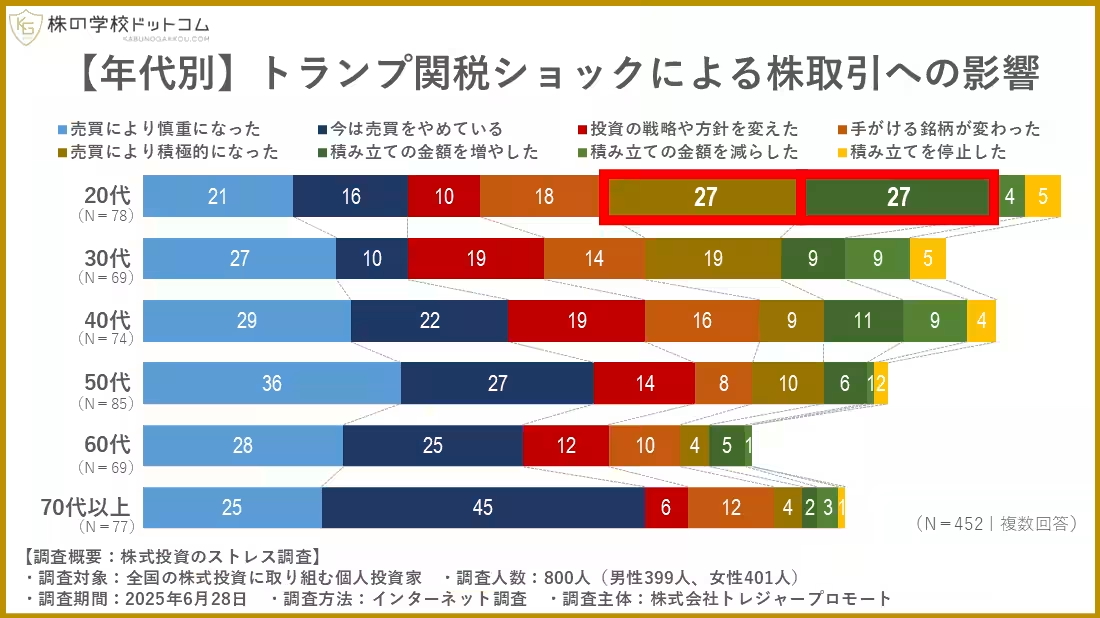
A more granular look across age demographics revealed a distinct divide in attitudes. While 40% of those in their 30s to 60s reported increased caution in trading, nearly 35% of respondents in their 20s indicated they were now engaging in trading activities more actively than before. Furthermore, this group also reported an increase in their investment amounts, suggesting a proactive approach amidst market uncertainty, contrasting with the older generations’ tendencies to withdraw from active trading.
Outlook and Strategies of Investors
As the market showed signs of recovery, reaching back over the 40,000 yen mark by June 27, individual investors shared their sentiments regarding future market conditions and their trading plans. Here are some of their thoughts:
- - "The market has rebounded well. I plan to adopt a long-term perspective without getting caught up in daily fluctuations." (23-year-old female)
- - "While I expect volatile price movements, I intend to stick with my current strategy." (29-year-old male)
- - "My approach remains cautious; I’m focused on making profits while avoiding excessive risk." (33-year-old female)
- - "I foresee continued fluctuations, yet I will seek out opportunities to buy during dips." (34-year-old male)
- - "The unpredictability of the market leads me to take a long-term view and diversify my investments strategically." (36-year-old female)
- - "I'm exploring stocks with high dividends in case of further tariffs or market disruptions." (49-year-old male)
- - "Uncertainty has made me hesitant, and I find trading increasingly challenging." (50-year-old female)
- - "I aim for stability in my investments, anticipating only minor fluctuations ahead." (54-year-old male)
- - "With rising yen, I’m interested in stocks that perform well despite currency shifts." (57-year-old female)
- - "I am considering withdrawing from U.S. stocks due to concerns about governmental reliability." (67-year-old male)
- - "The current market disruptions are unpredictable. I prefer waiting for stability before active trading." (71-year-old male)
- - "Trading feels overwhelming at times; I prefer sticking to familiar strategies to minimize stress." (73-year-old female)
Diverse Reactions: The Importance of Individual Approach
The survey results elucidate that individual investors had varied reactions to the tariff news. While caution prevailed for many, a significant faction, particularly younger investors, viewed it as an opportunity for increased engagement in the market. As evident in the multitude of comments regarding future strategies, each investor's approach is uniquely tailored to their personal investment philosophy and risk tolerance.
This nuanced response indicates that there is no single 'correct' way to navigate stock trading—decisions must align with individual financial goals, risk appetite, and market perspectives. For those looking to invest long-term through strategies like NISA, it's crucial to avoid knee-jerk reactions to market events and instead maintain a steady and informed investment strategy.
Conversely, opportunities for short-term trading could present themselves in volatile markets, highlighting a dichotomy in strategies based on the unique needs and objectives of individual investors. As "Kabunogakkou.com" continues to promote financial literacy, it supports a diverse array of investment styles, facilitating informed, confident stock trading.
About Kabunogakkou.com
Established in 2002, Kabunogakkou.com has evolved into Japan's largest online stock trading school, offering extensive resources for investors at all levels. With over 910,000 participants in its courses and a commitment to quality education, it remains a vital player in enhancing financial knowledge throughout the nation.
Visit Kabunogakkou.com for more information
Topics Consumer Products & Retail)
【About Using Articles】
You can freely use the title and article content by linking to the page where the article is posted.
※ Images cannot be used.
【About Links】
Links are free to use.