



The Hidden Burdens of Check Back Work Revealed by New Survey
The Hidden Burdens of Check Back Work Revealed by New Survey
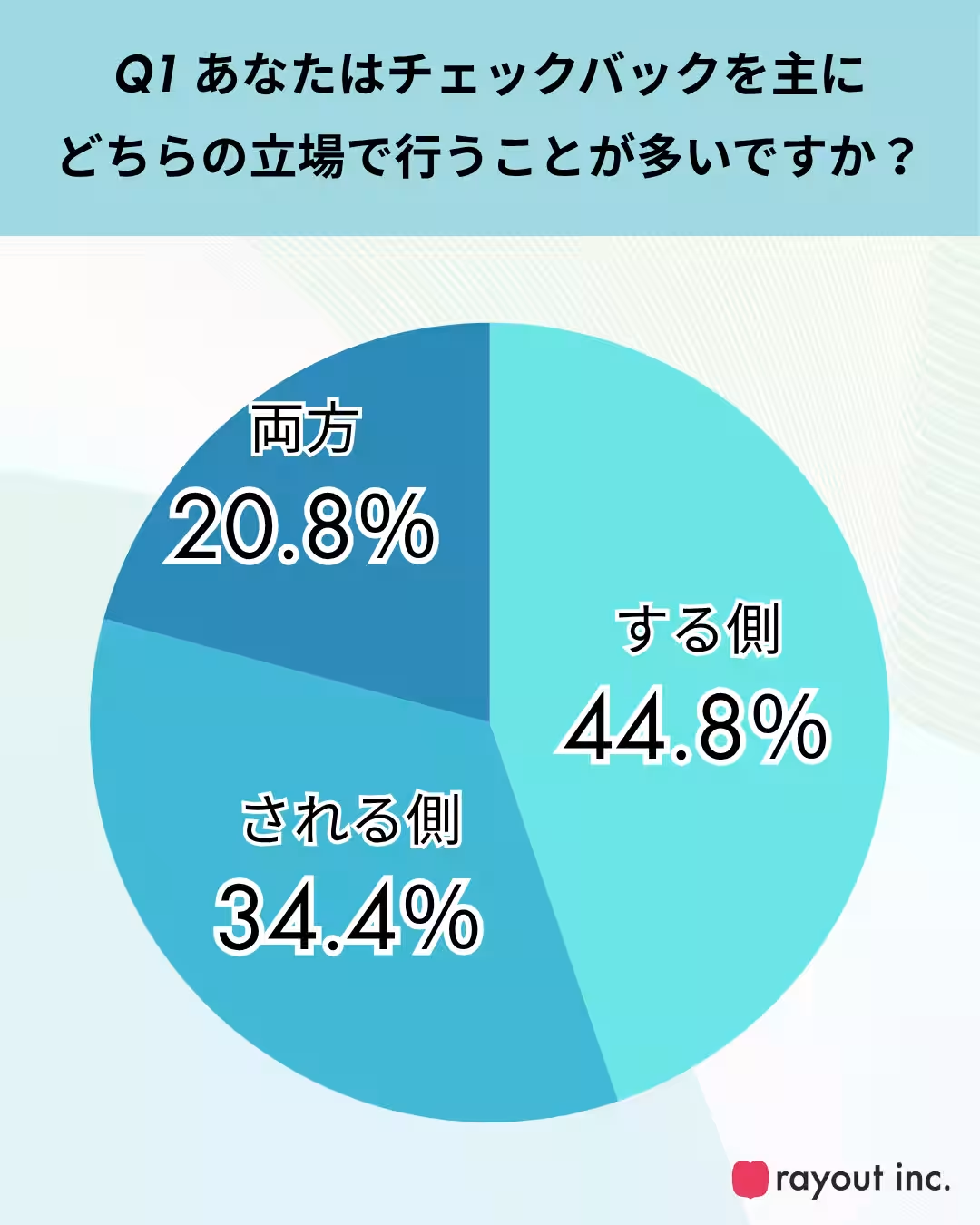
A recent survey conducted by rayout Inc., focused on their check back tool called CheckBack, has shed light on the often-overlooked burdens associated with the check back process in various workplaces. The survey, which included responses from 317 individuals involved in confirming and approving business content, has revealed that a significant number of participants find check back work to be both a time-consuming and psychologically taxing task.
Survey Overview
The survey was conducted from June 25 to June 30, 2025, through Cross Marketing QiQUMO. It targeted individuals who had previously indicated that they often engage in the confirmation and approval of business-related content.
Key Findings
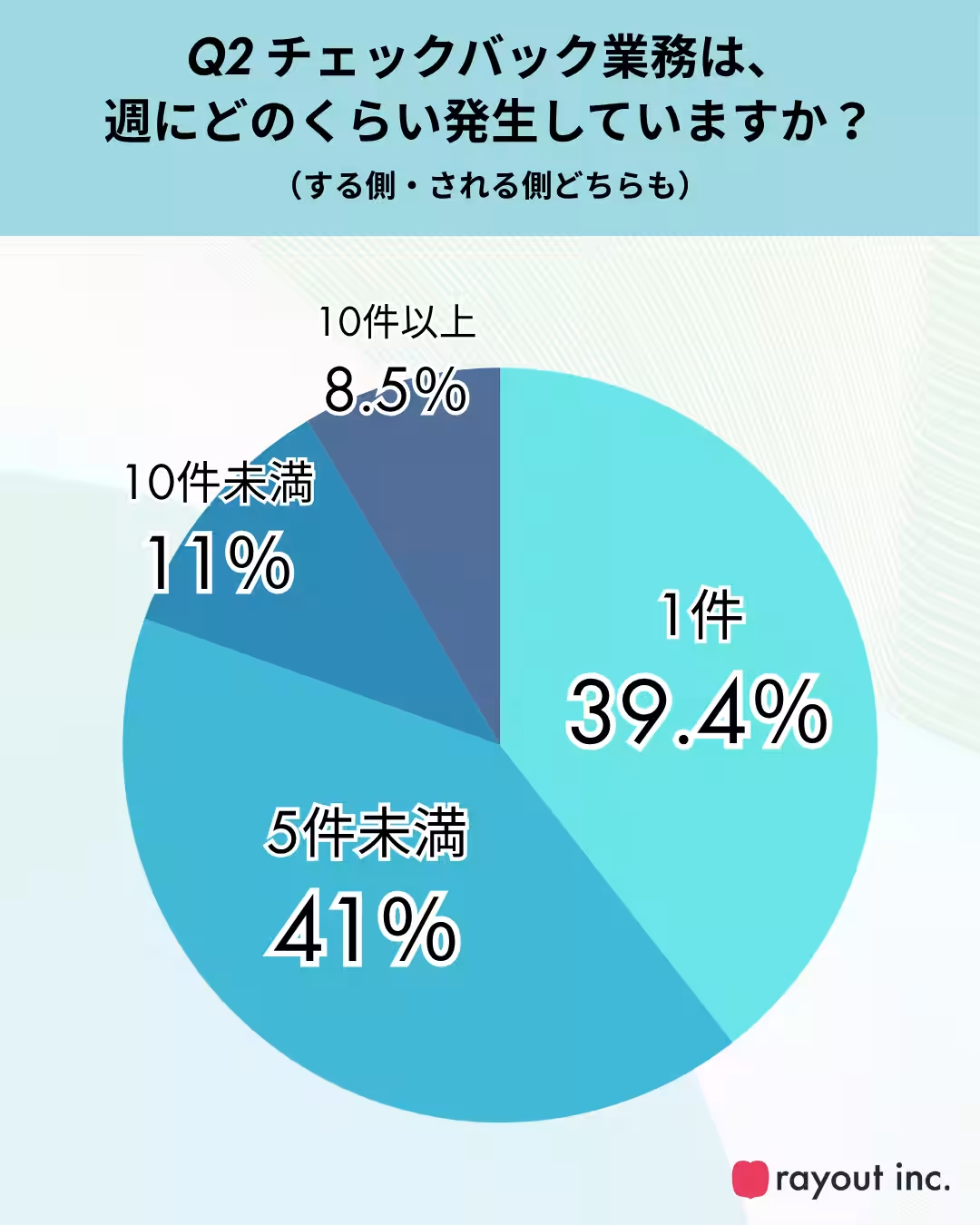
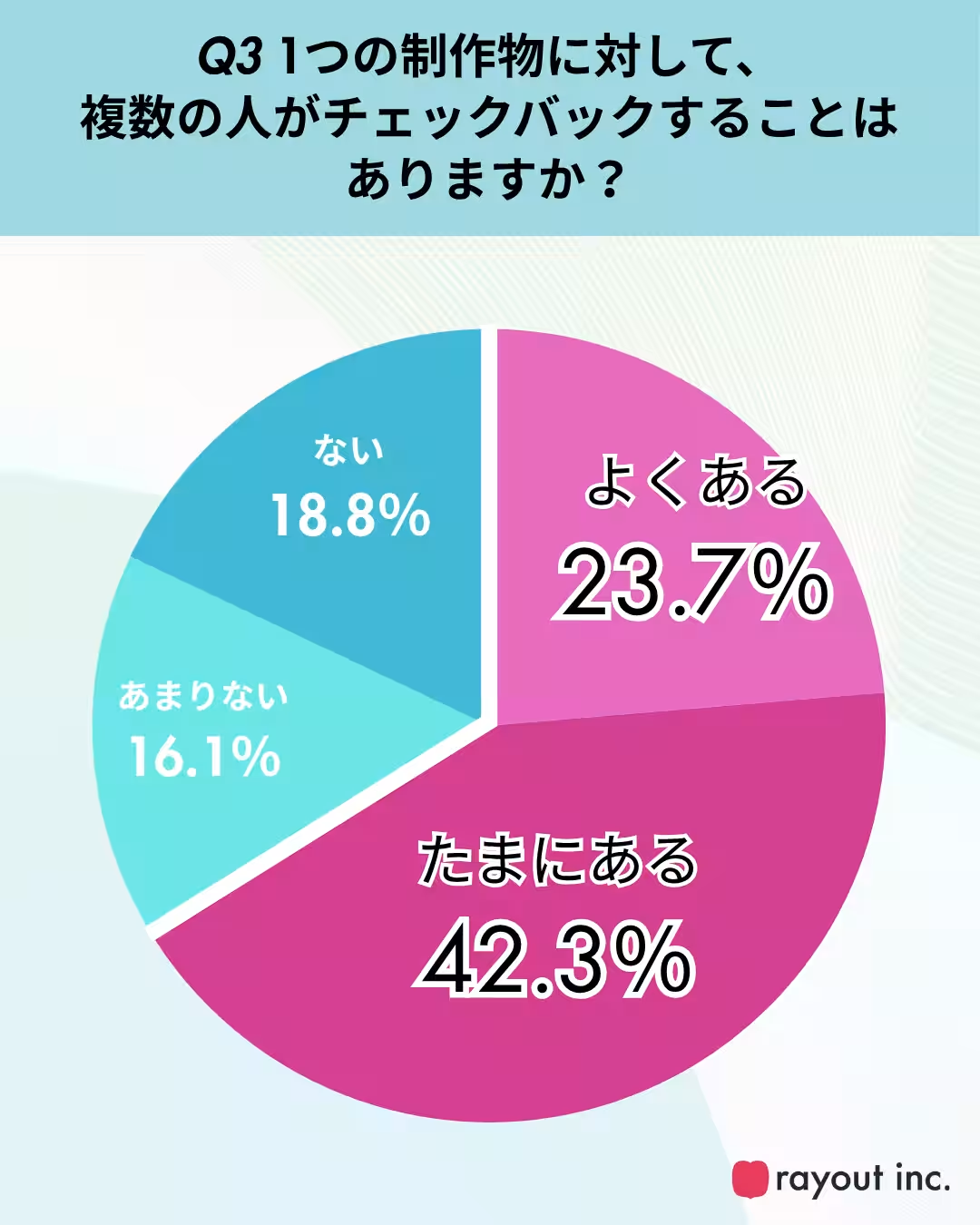
Among the respondents, 80% acknowledged that they typically deal with one to four instances of check back tasks each week. Remarkably, over 70% reported experiencing situations where multiple people were involved in the check back process for a single piece of work. These findings illuminate the complex interplay of responsibilities and the resultant delays in workflow
The Impact on Core Duties
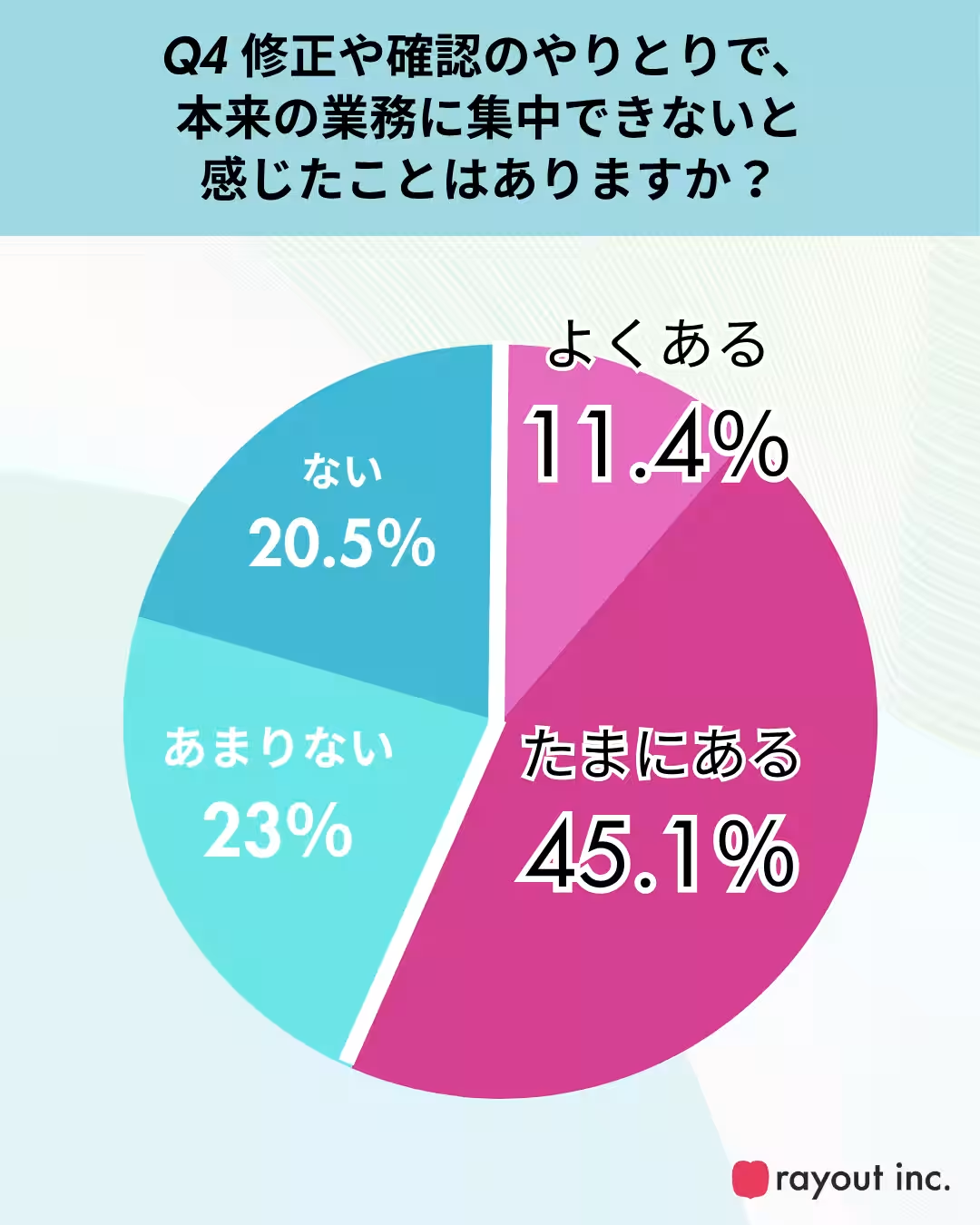
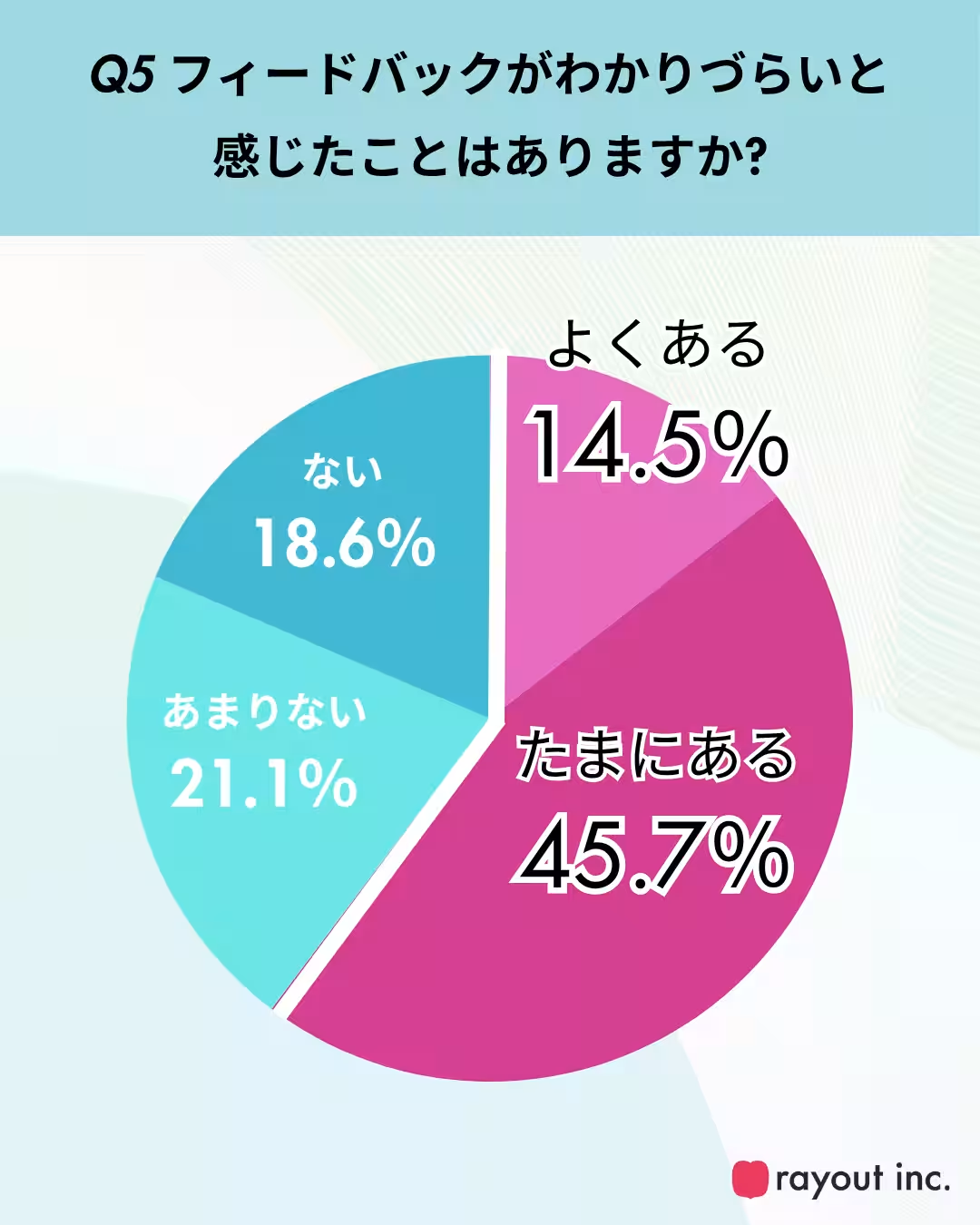
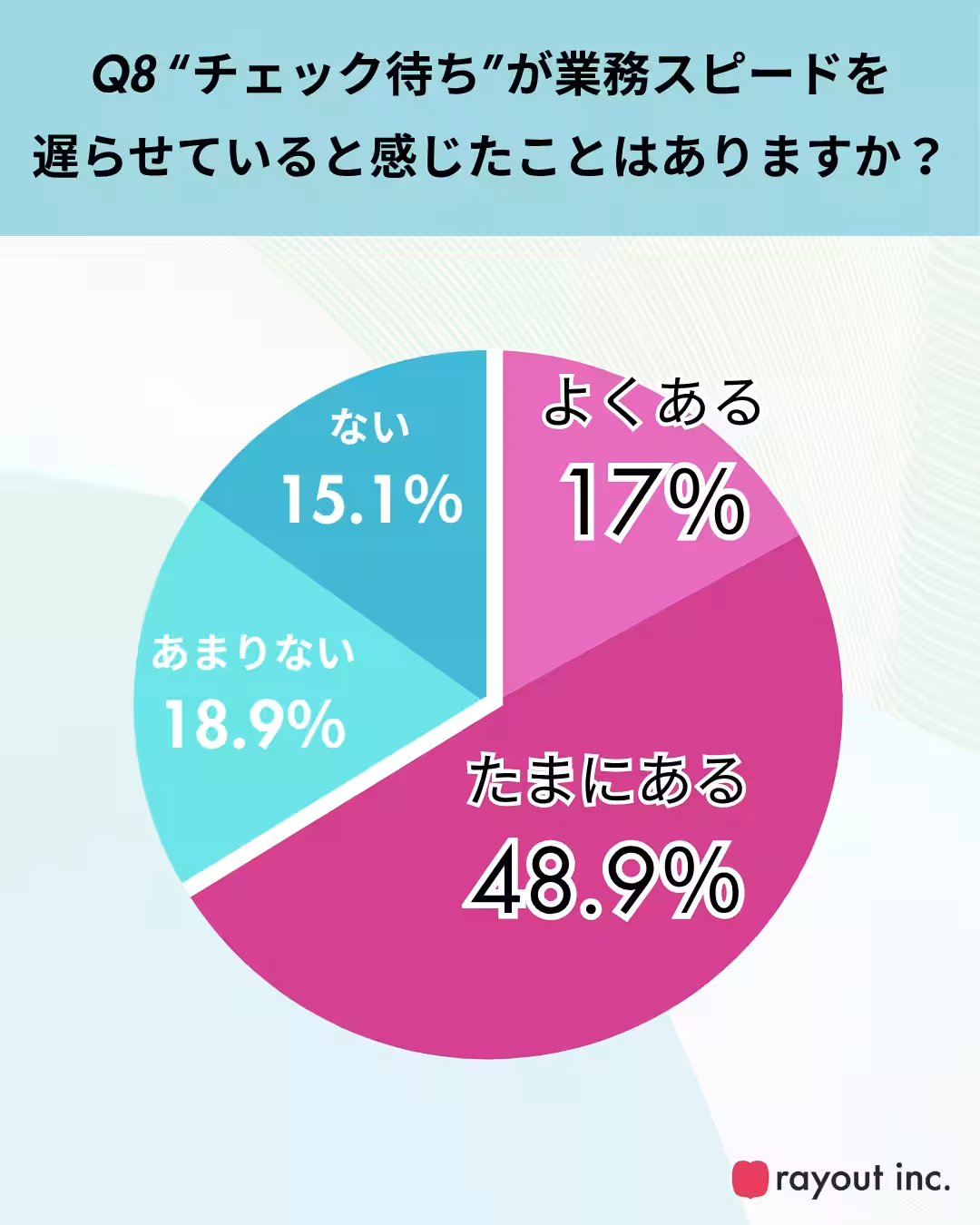
The survey indicated that more than half of the respondents, specifically 50%, frequently felt that the back-and-forth nature of revisions and approvals hindered their ability to concentrate on their primary responsibilities. An overwhelming 70% expressed concerns regarding delays in work speed due to being “check waited.” Furthermore, about 60% noted that they often found feedback unclear, highlighting how ambiguous directives lead to additional stress.
The Nature of Check Back Work: Complexity and Ambiguity
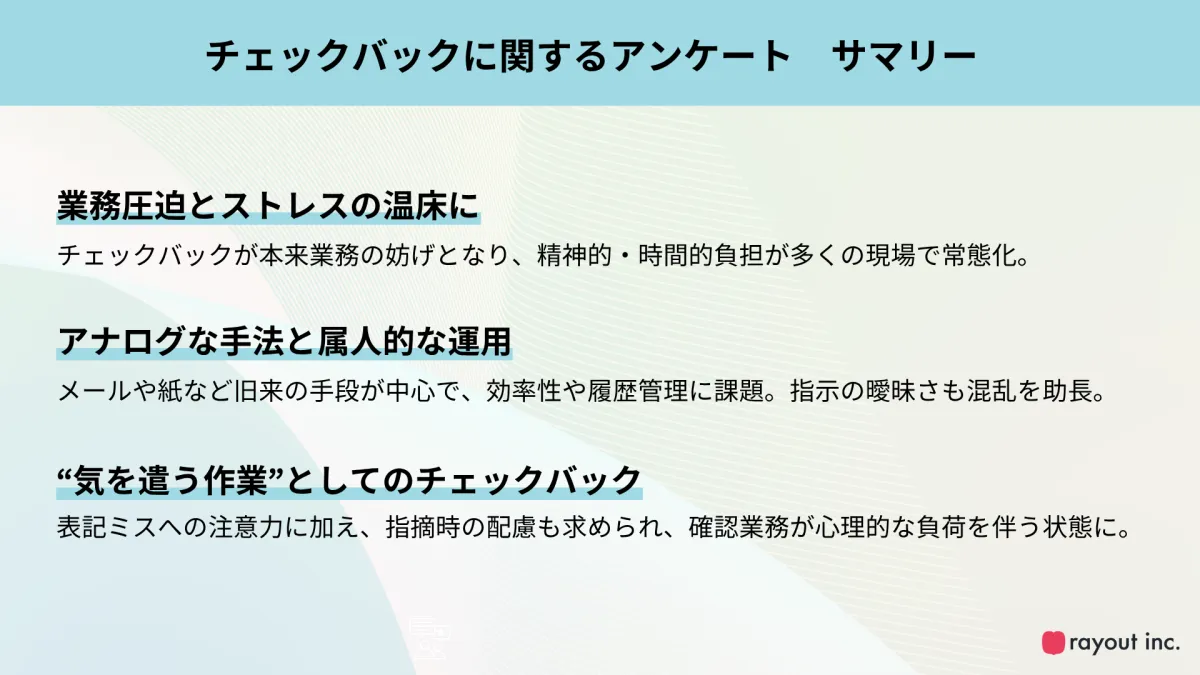
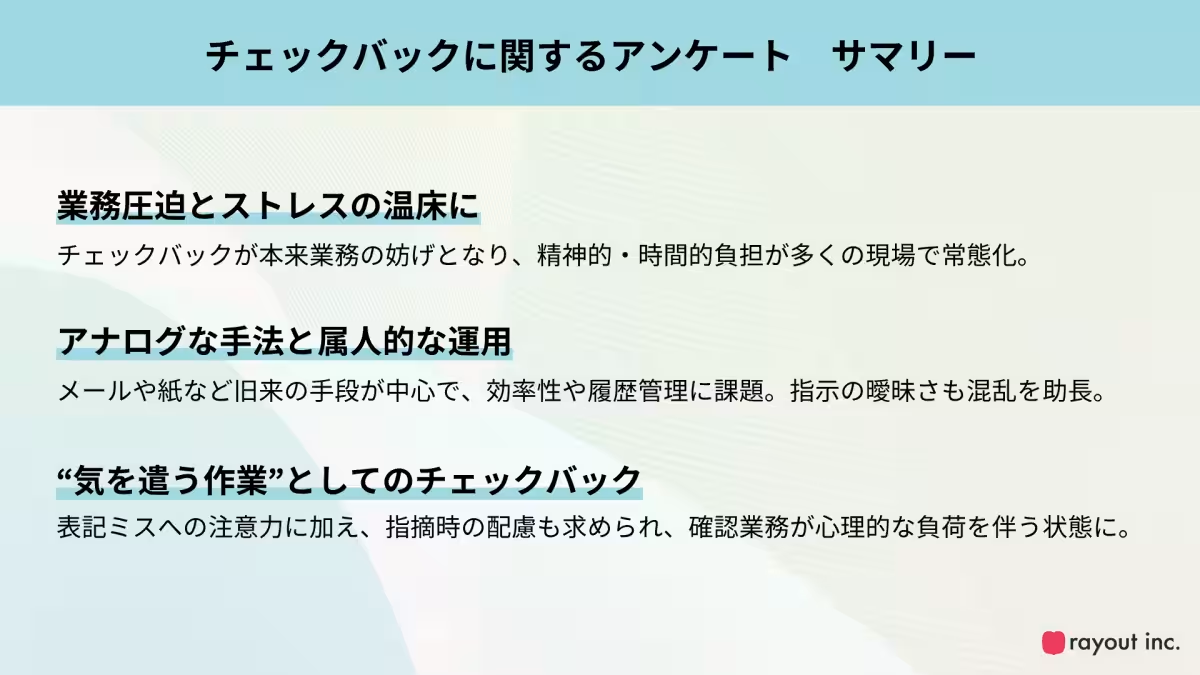
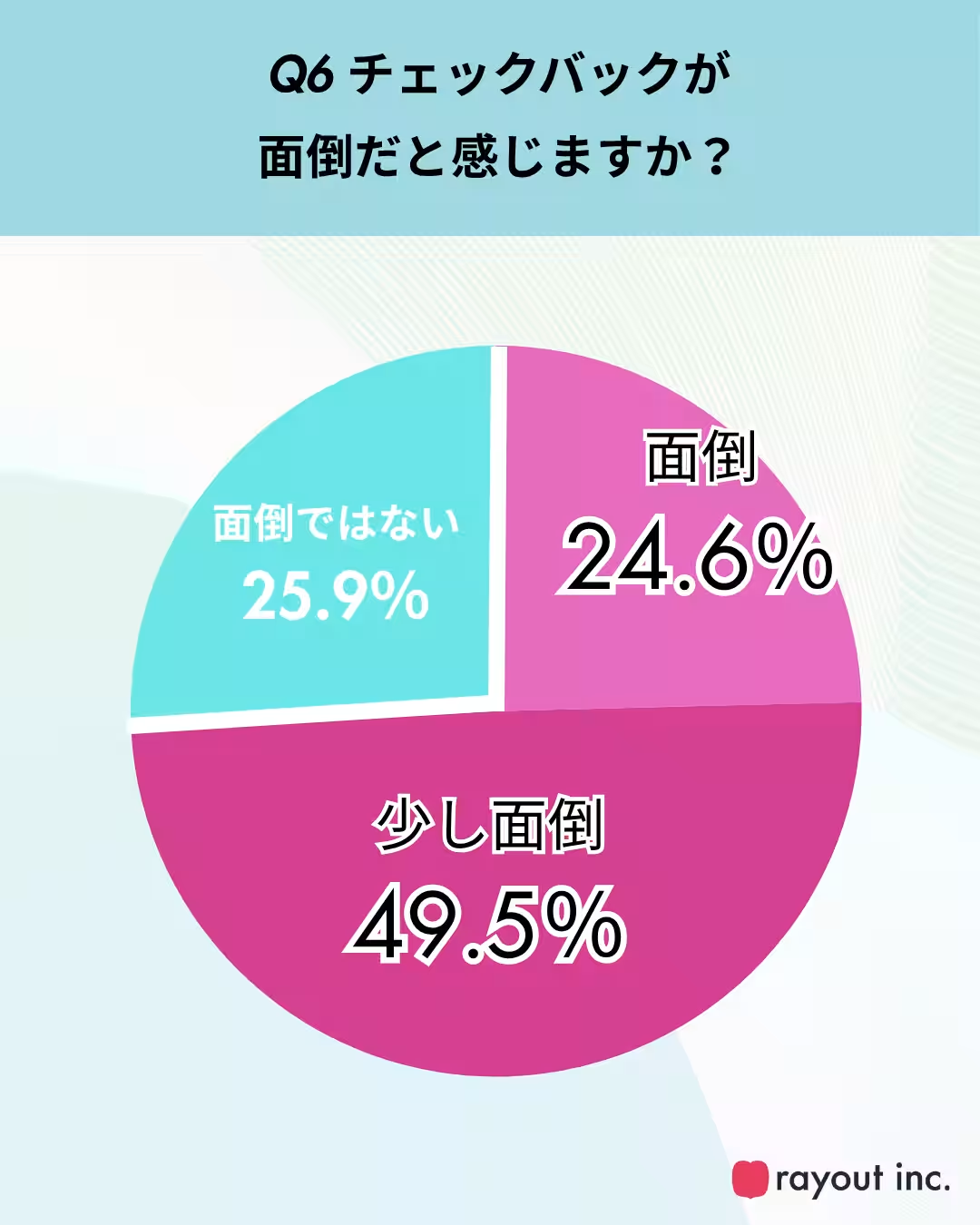
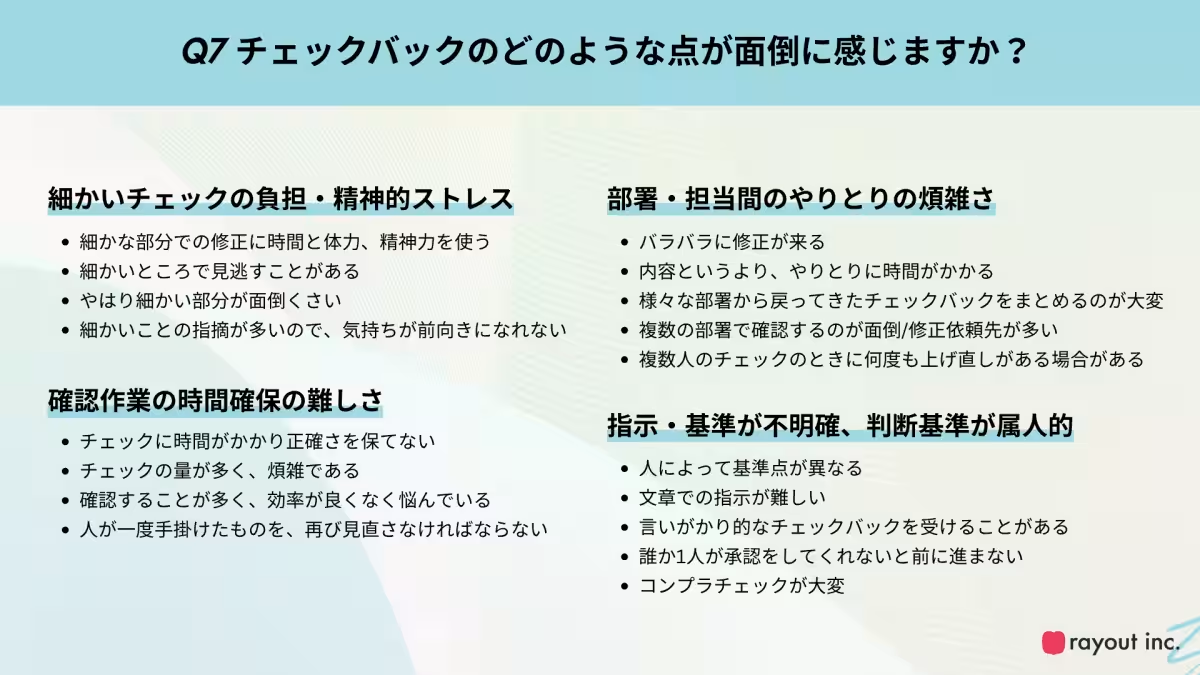
An alarming 70% of respondents felt that check back processes were tedious. Analysis of their open-ended responses revealed recurring themes of stress due to meticulous checks, complications arising from inter-departmental communications, difficulty in allocating time for reviews, and a lack of clear directives and criteria. This highlights that check back is not merely a routine confirmation task; it significantly impacts operational efficiency and communication within teams.
Attention to Detail and Interpersonal Scrutiny
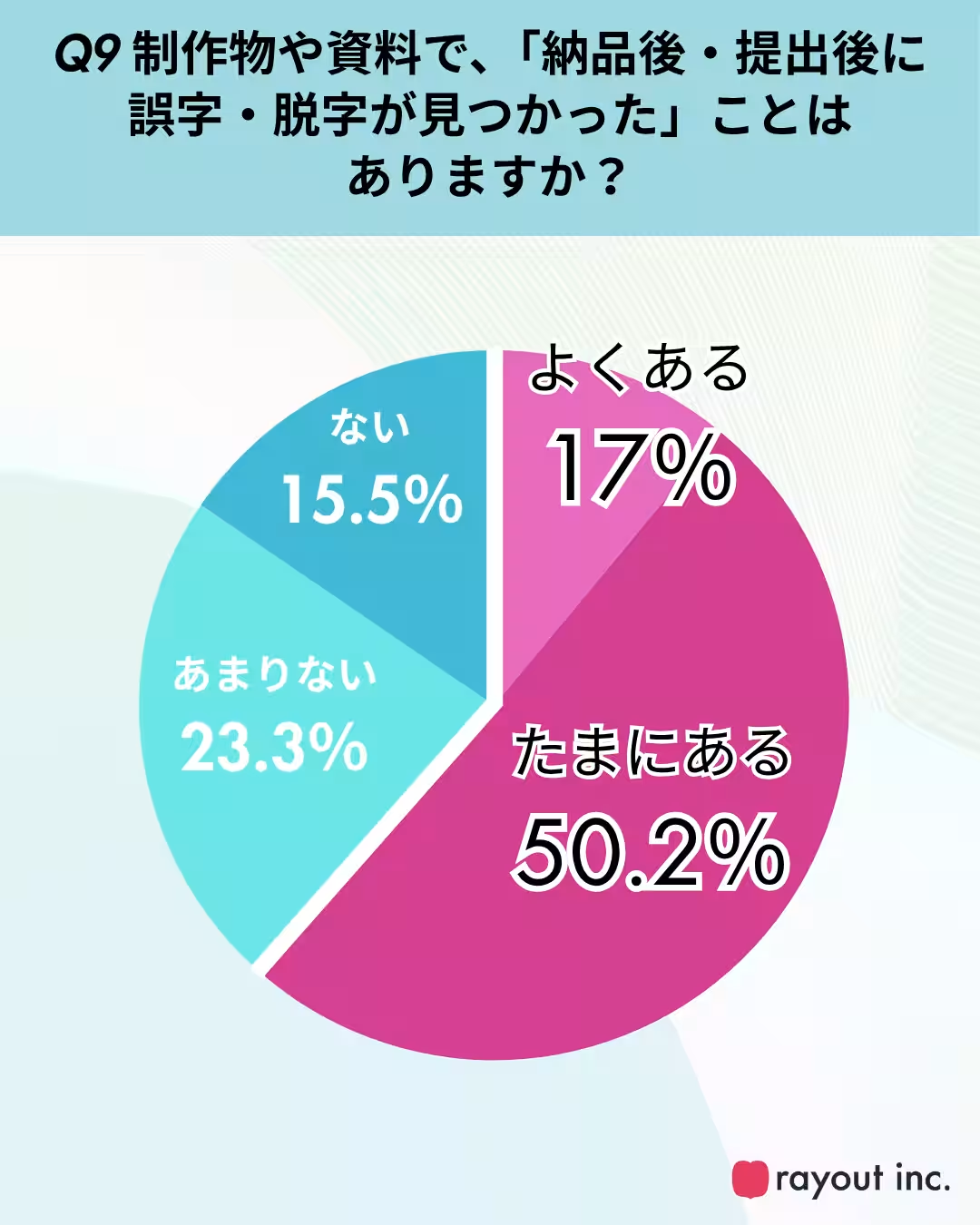
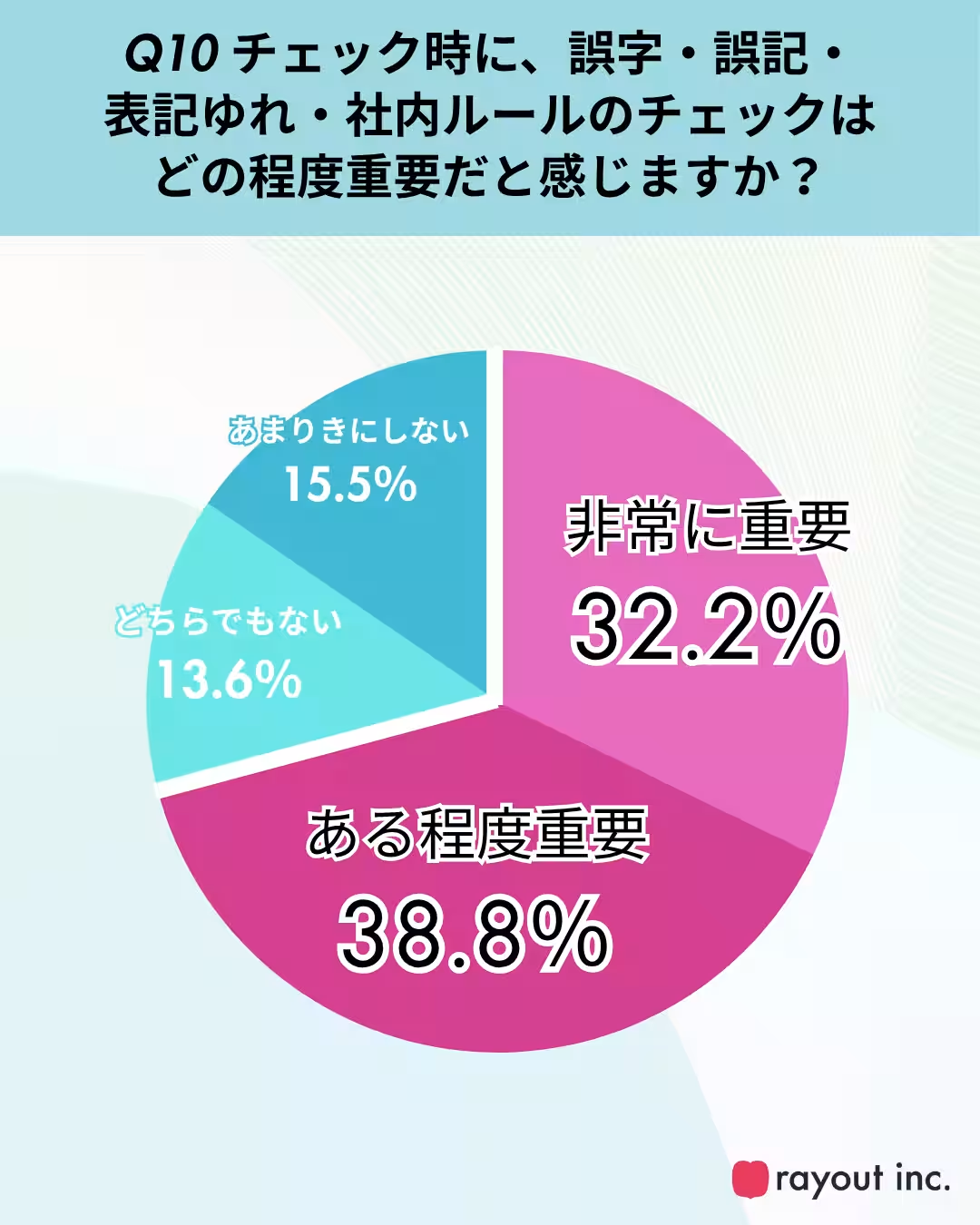
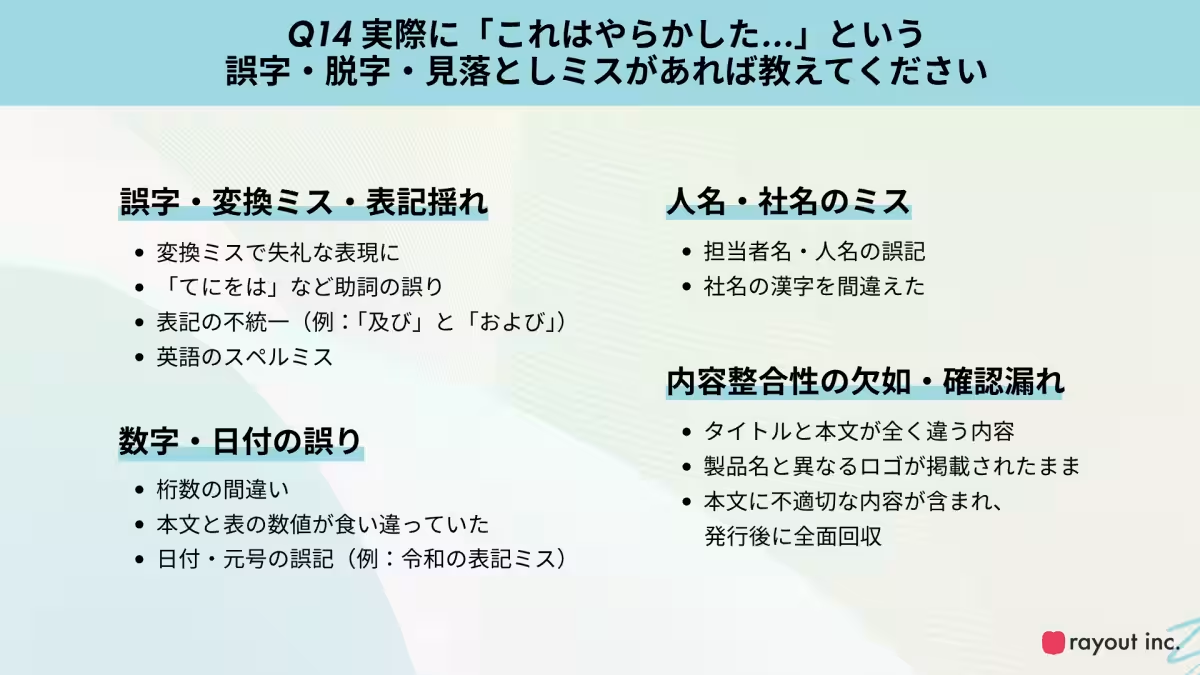
Surprisingly, 60% of participants reported experiencing errors, such as typos or omissions, in submitted materials. This indicates that quality assurance risks are a common occurrence after the submission of work. Additionally, when inquiring about the importance of accuracy in documentation, 70% indicated it was crucial, showing that attention to detail remains paramount.
Respondents also reported feeling the need to be considerate when providing feedback, with over 60% indicating they frequently experience this level of interpersonal fatigue during the check back process.
Limited Use of AI in Check Back Processes
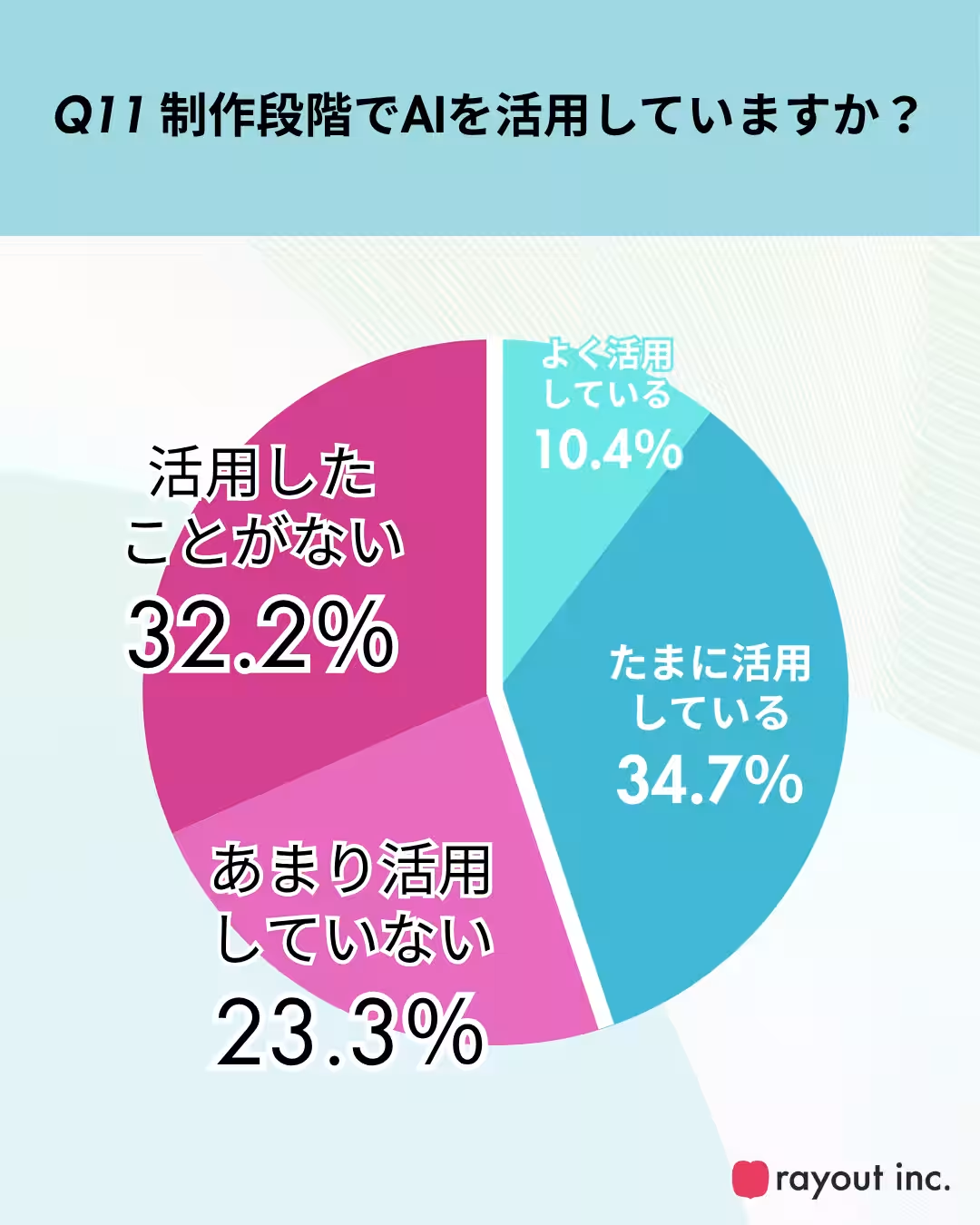
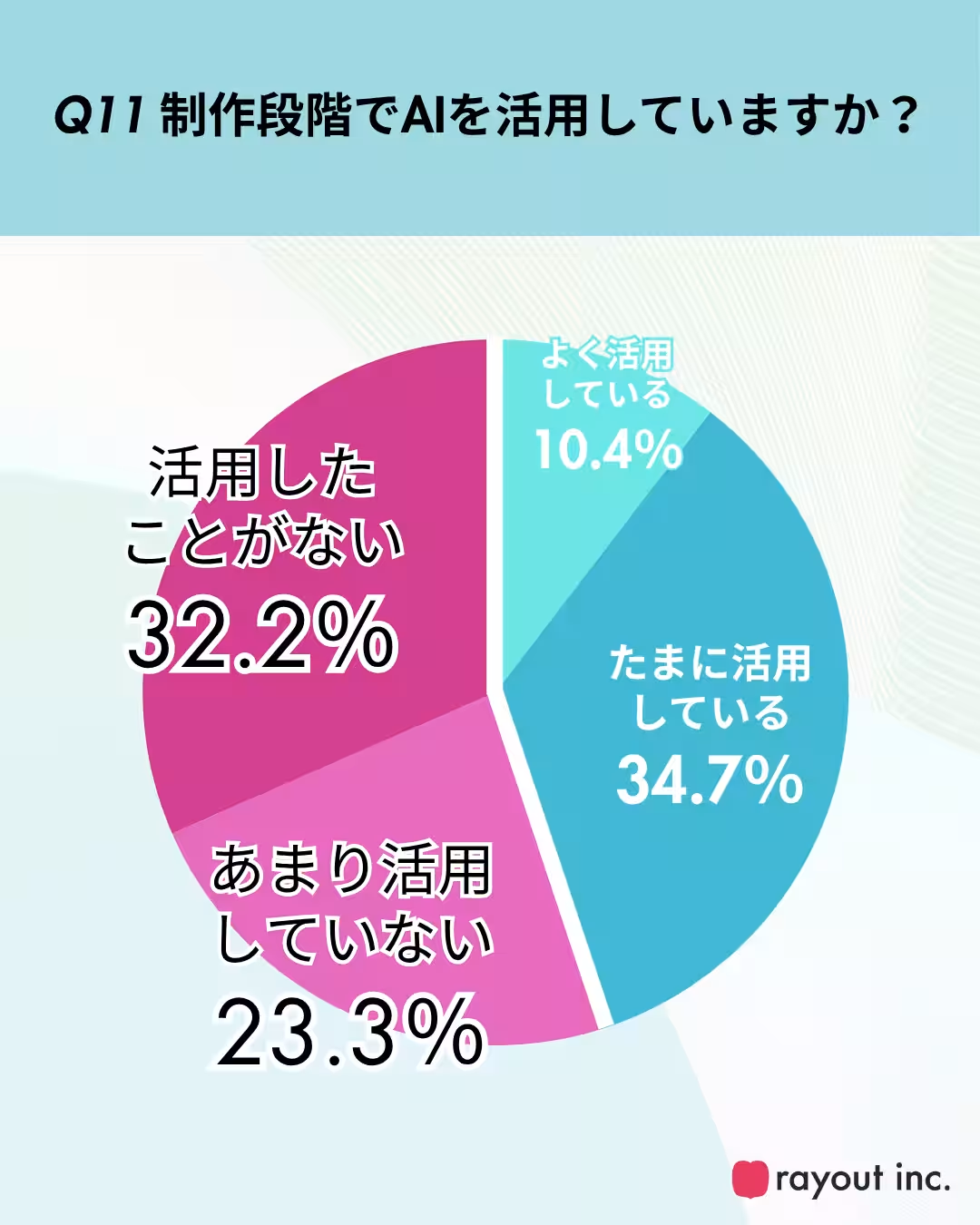
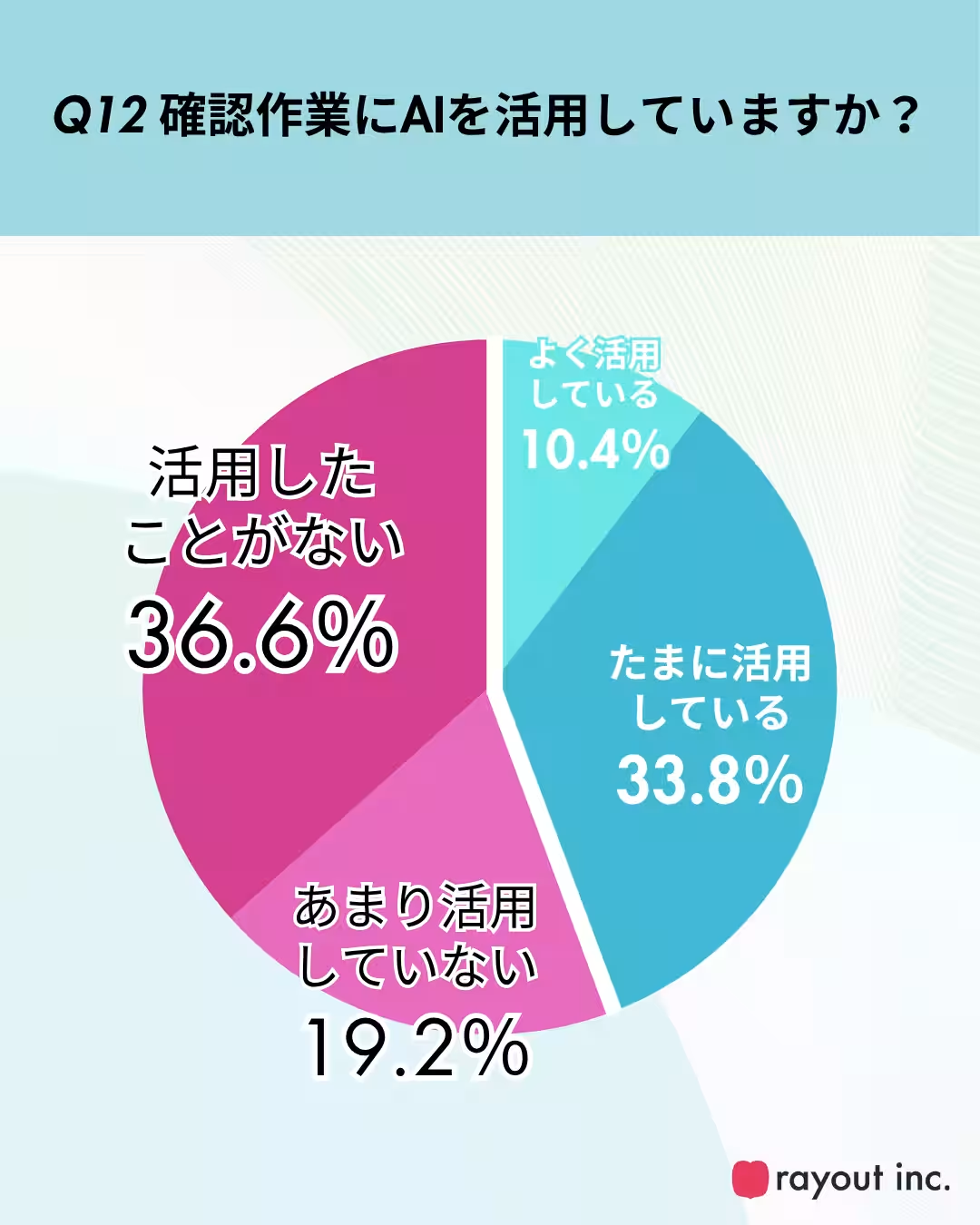
Despite ongoing advancements in technology, the survey revealed that over half of the respondents had little to no experience utilizing AI for either production or check back tasks, exposing a critical area to tap into for future efficiency improvements
Traditional Check Back Tools Remain Prevalent
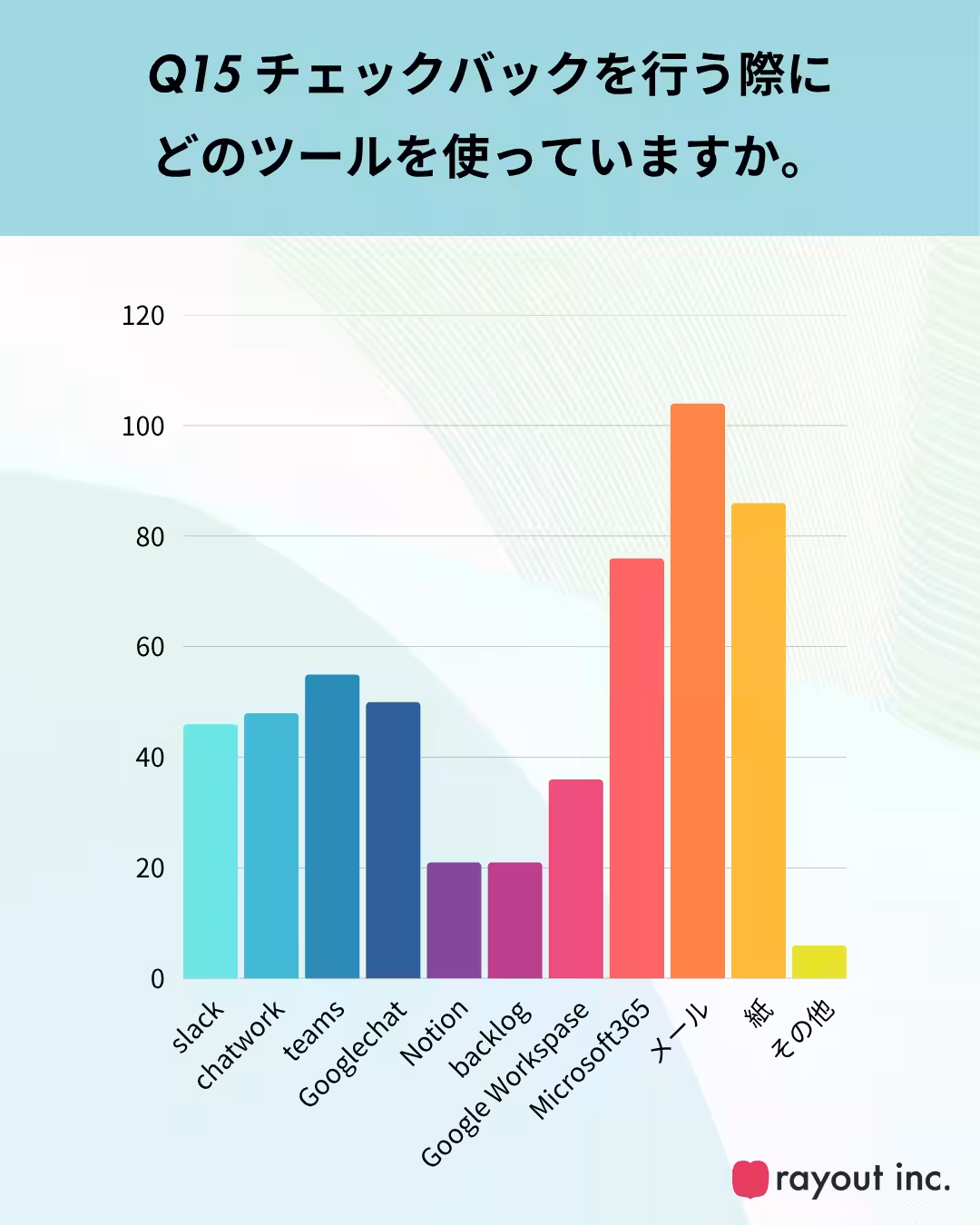
The survey also assessed the tools used during the check back process. Email was the most common tool, followed by paper. It reveals that old-fashioned methods, such as email and printed documents, still dominate the check back landscape. Such reliance on traditional methods underscores the challenge of streamlining processes with new technologies.
Conclusion
The survey has revealed that the check back process burdens many workplaces, contributing to both time-related and psychological stresses. Numerous individuals expressed concerns about productivity and clarity, with many utilizing outdated methods of communication which slows the check back process significantly. The findings underscore a pressing need to shift towards more efficient tools and technology for managing reviews and approvals, meeting not only the logistical demands of business content confirmation but also the mental load associated with these tasks.
Introducing CheckBack: A Solution for Streamlined Approvals
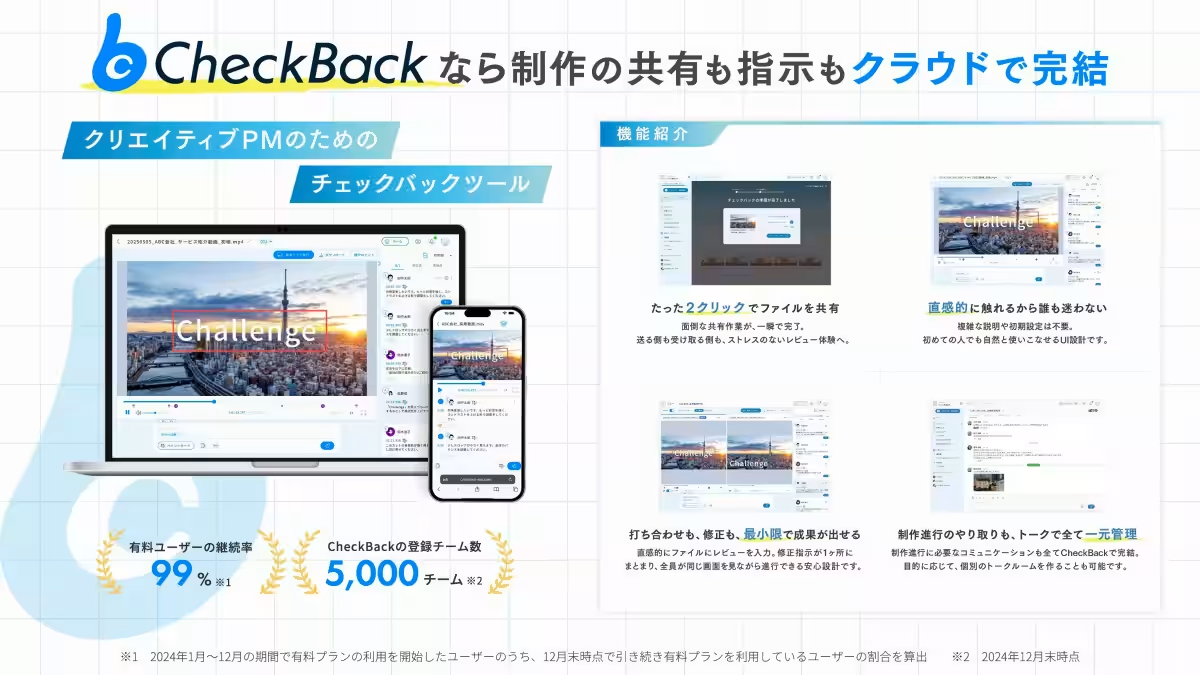
CheckBack, a versatile tool tailored for creative project management, enables seamless review, sharing, and approval of all production materials, including videos and documents, in a cloud-based environment. It facilitates effective communication, allowing team members to access content anytime and anywhere, thereby streamlining the entire production process. As emphasized in this survey, CheckBack aims to evolve further into a 'Progress AI' that addresses the highlighted challenges by integrating automation in review processes and customized guidelines, ensuring smoother workflows for creative teams.
For more information, visit the official site: CheckBack.
About rayout Inc.
Founded in April 2019, rayout Inc. executes effective communication design strategies while providing robust cloud-based tools like CheckBack. The tool serves over 5,000 teams, including production companies and advertising firms for efficient collaborative workflows.
Location: Shibuya, Tokyo. Website: rayout.
Topics Business Technology)

【About Using Articles】
You can freely use the title and article content by linking to the page where the article is posted.
※ Images cannot be used.
【About Links】
Links are free to use.