



Mirarista Introduces Innovative Spatial Addressing System for Real World Navigation
Introducing the Concept of Spatial Address
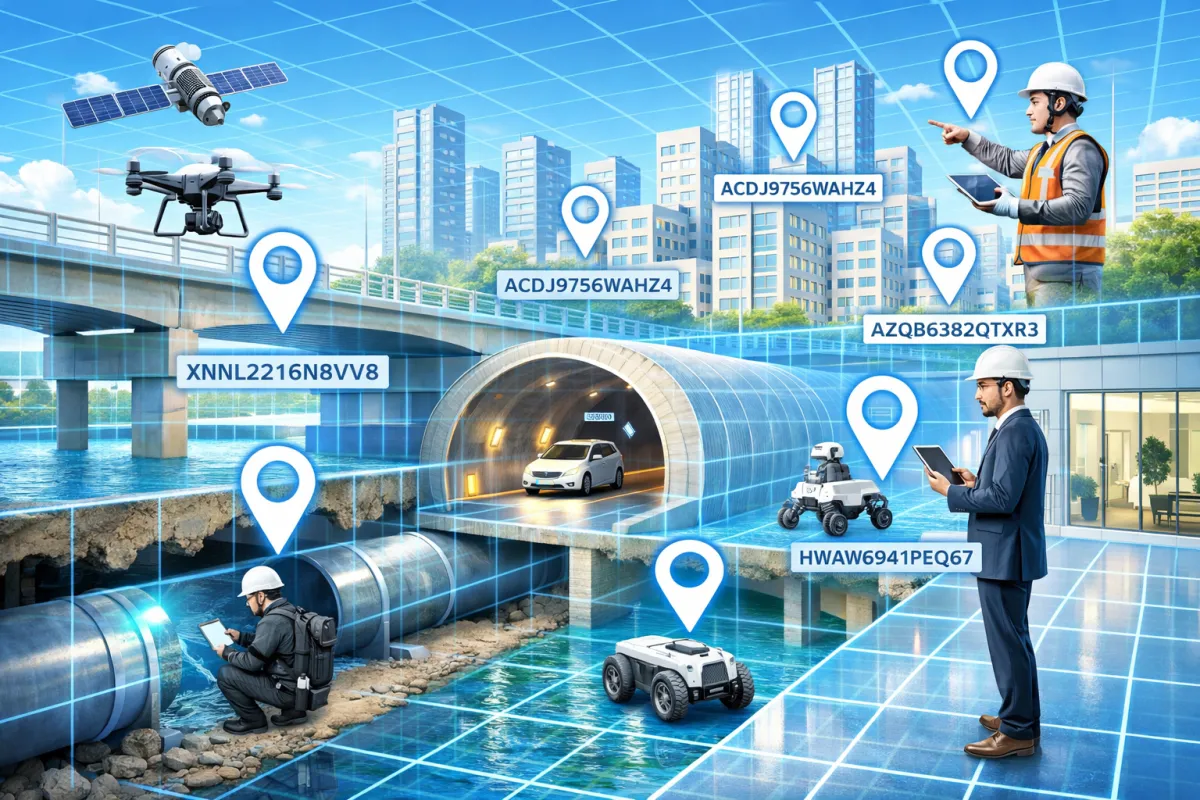
In an era where navigation and location-based services play a crucial role in various sectors, Mirarista, a Tokyo-based company, has announced a revolutionary concept known as the 'Spatial Address.' This framework aims to treat real-world locations similarly to how IP addresses function in the digital realm, providing a unique identifier for every physical space.
The Need for Standardized Location Information
Traditionally, location data is represented by latitude, longitude, and altitude coordinates. However, such coordinates often rely on specific positioning methods (like GNSS and SLAM), leading to inconsistencies. For example:
- - Location identification becomes challenging in indoor or obstructed environments.
- - Different positioning methods may yield conflicting coordinates for the same location.
- - Coordinate data is not very intuitive for users.
- - Sharing positions in infrastructure and construction sites can be cumbersome.
The increasing complexity arises with the rise of collaborative workflows that involve multiple entities—robots, humans, vehicles—operating in the same space. Nonetheless, these entities often utilize different positioning methods, resulting in incompatible location information, which hinders effective collaboration.
This highlights a significant issue: a lack of a common understanding framework for spatial data, leading to challenges in coordinating activities and ensuring operational efficiency. Thus, the demand for a unified system that can recognize 'the same place' for all parties becomes critical.
What is Spatial Addressing?
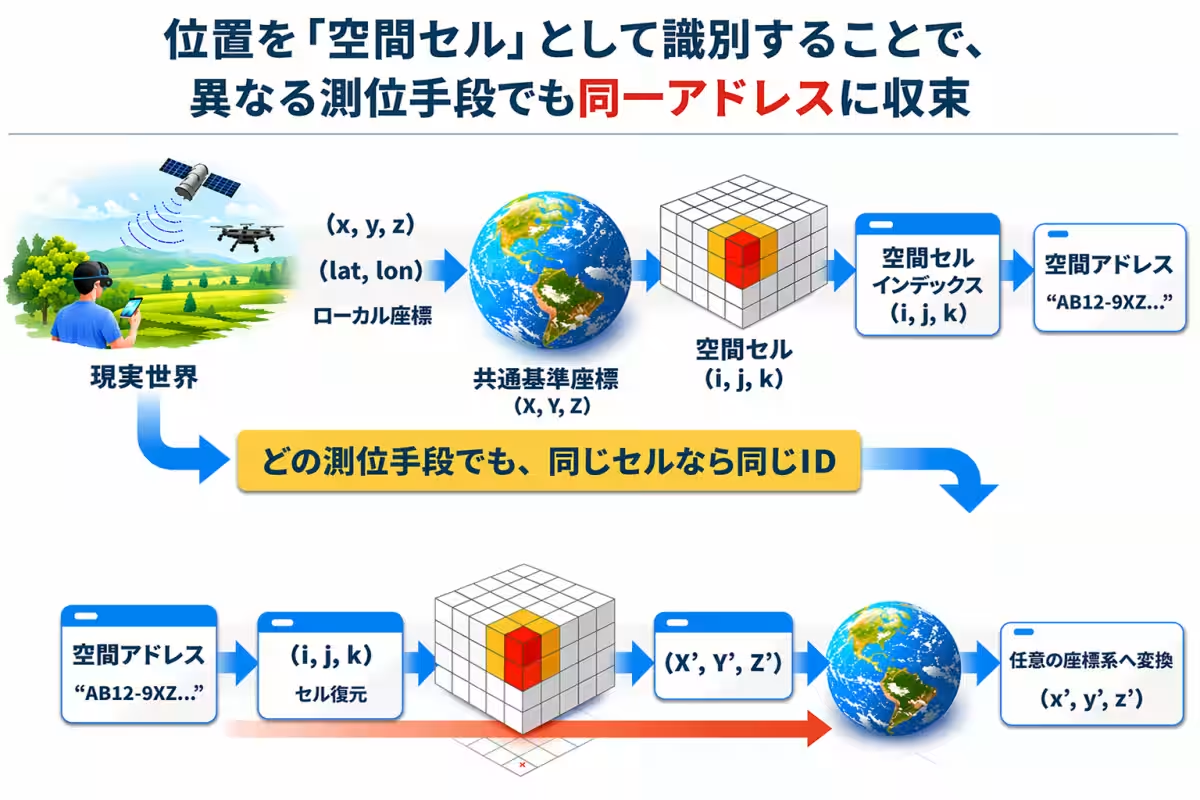
The 'Spatial Address' concept involves subdividing the physical world into manageable units and assigning unique identifiers to these units. Instead of relying on coordinates, this system promotes treating locations as IDs.
Similar to how IP addresses uniquely identify devices on the internet, Spatial Addressing directly maps identifiers to physical spaces. This means that regardless of the positioning method used, if two different systems refer to the same physical space, they can reference it with the same ID.
This innovation serves as a common language for various stakeholders—humans, robots, vehicles, and drones—enabling seamless collaboration in real-world tasks.
Key features include:
- - Unique identifiers assigned to subdivided spaces.
- - Flexible adjustment of resolution (Level of Detail) based on specific needs.
- - Consistent representation of positions across indoor and outdoor environments.
- - Ability to represent identical spaces using the same ID, despite varying positioning technologies.
- - Facilitation of cooperation and position sharing among multiple entities.
With this framework, disparate systems and stakeholders can efficiently share and work with location data, significantly reducing the costs associated with coordinate transformations and manual alignment.
Integrations with Robotics, XR, and IoT
Previously, robotics and systems operated through coordinate-based controls, resulting in discrepancies when different systems attempted to recognize the same location due to environmental factors. With the increase in collaborative scenarios involving robots, people, and vehicles, it is essential to accurately identify 'the same place.'
Utilizing Spatial Addressing allows users to directly specify physical locations as they do when specifying communication endpoints with IP addresses. This encourages cooperation and communication among various entities without the burdensome adjustments for positional misalignment expected in traditional systems.
An exciting prospect lies in the ability to automatically generate routes to destinations by simply specifying a 'location ID.' This would enable multiple robots to access the same worksite in succession and dynamically adjust their paths according to live conditions, such as congestion.
Potential applications include:
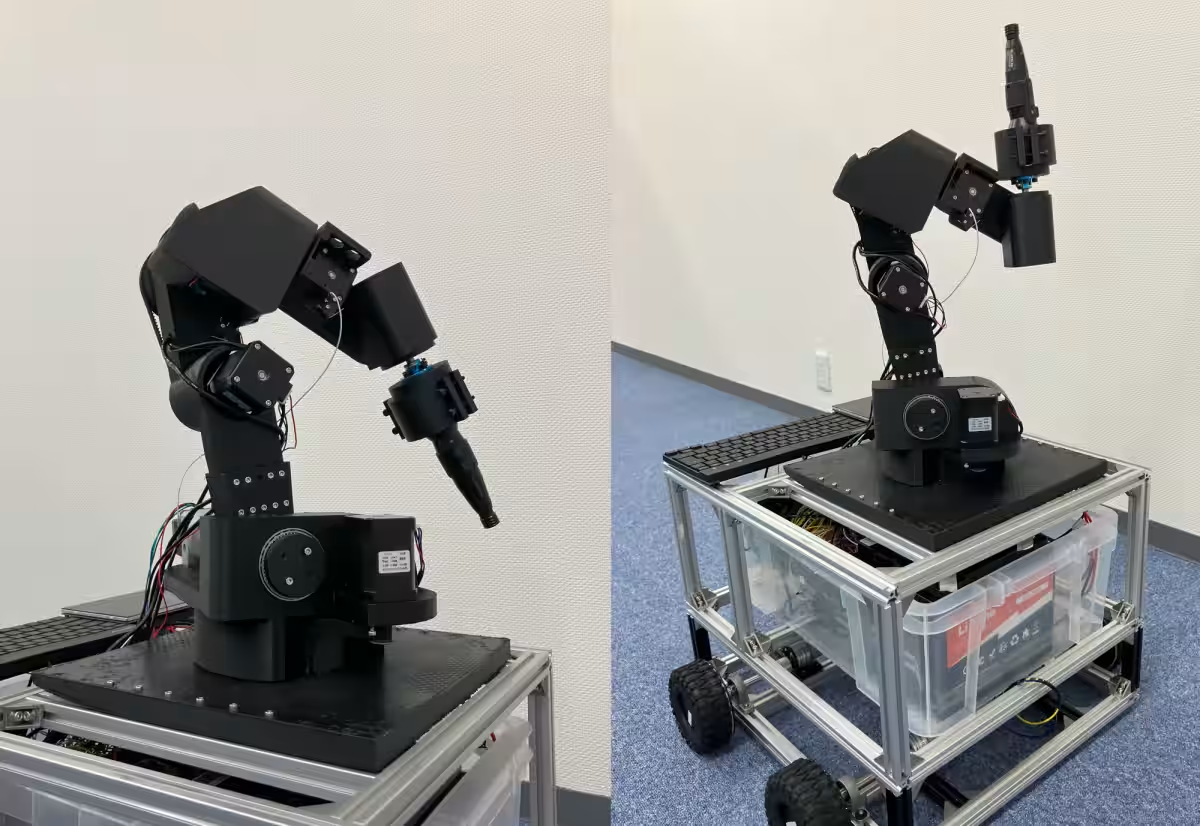
- - Several robots collaborating to efficiently share a workspace without collisions in industrial environments.
- - Enhanced safety management where humans and machines can share awareness of hazardous areas at construction sites.
- - Accurate inspection within infrastructure sectors like bridges and tunnels by aligning scanning points between teams and robots.
- - Intuitive operational directives via XR devices where digital blueprints correlate with physical world locations.
- - Coordinated vehicle systems in autonomous driving scenarios, ensuring real-time adjustments for collision avoidance and traffic management.
These concepts are currently in the development phase, with ongoing technological explorations and testing planned to refine these capabilities further.
Debuting at Startup JAPAN EXPO 2026
The innovative Spatial Address framework will be introduced at the upcoming Startup JAPAN EXPO 2026 from April 15-16, held at Makuhari Messe. Attendees can expect to see real-life applications and detailed interpretations of how this concept can integrate into existing frameworks.
Event Details
- - Exhibition Name: Startup JAPAN EXPO 2026
- - Booth Number: 15-44
- - Date and Time: April 15-16, 10 AM - 5 PM
- - Location: International Exhibition Hall 7-8, Makuhari Messe
- - Official URL: Startup JAPAN EXPO 2026
Future Developments
Mirarista is dedicated to exploring novel applications of the Spatial Address system in various fields, particularly construction, manufacturing, and societal infrastructure. They aim to establish a solid foundation facilitating collaboration among diverse entities by driving operational efficiencies based on shared spatial understanding.
Closing Remarks from the CEO
Koji Kanou, CEO of Mirarista, stated, “While the Internet uses IP addresses to standardize communication among devices, our real world lacks a similar common framework. The Spatial Address is our attempt to assign identifiers directly to locations, allowing us to treat positions as a shared foundation for multiple entities—humans, robots, vehicles—to optimize and coordinate effectively. We envision a future where simply specifying a location ID triggers automatic responses in tasks and movements.”
Company Overview
- - Company Name: Mirarista Co., Ltd.
- - Location: Shinagawa, Tokyo
- - Representative: Koji Kanou, CEO
- - Business Focus: Development and sale of software and hardware solutions tailored for construction and manufacturing sectors, including consulting services.
Contact Information
- - Website: Mirarista Co., Ltd.
- - Email: [email protected]
Topics Other)

【About Using Articles】
You can freely use the title and article content by linking to the page where the article is posted.
※ Images cannot be used.
【About Links】
Links are free to use.