



Current Business Challenges Highlighted in New JMA Survey on Management Issues
Insights from the Recent JMA Survey on Management Challenges
The Japan Management Association (JMA), under the presidency of Masaki Nakamura, has concluded its latest survey titled "Survey on Current Corporate Management Issues for FY2025 (46th Edition)." Since its inception in 1979, this survey has aimed to shed light on the management hurdles companies face, guiding future management strategies. This recent survey gathered insights from 530 executives, including those in management roles, focusing specifically on management challenges.
Summary of Findings
Current Management Challenges
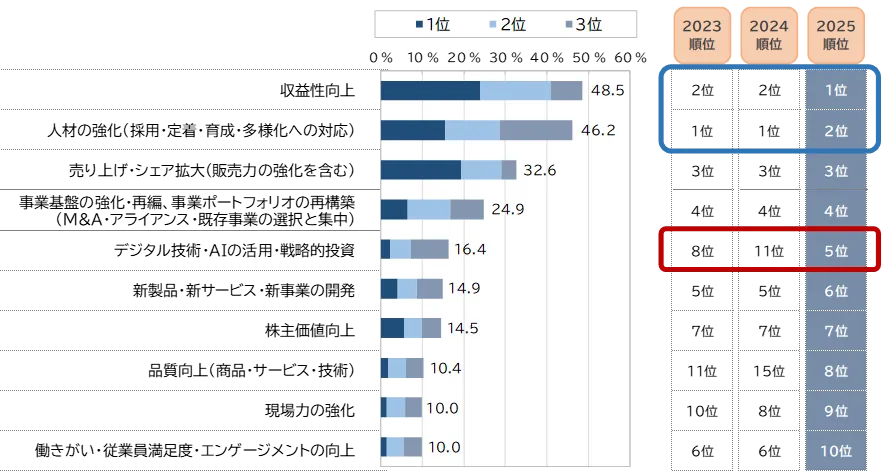
The survey results indicate that approximately 50% of companies are grappling with two primary issues: enhancing workforce capabilities and improving profitability, which have remained paramount since FY2024. Specifically, 48.5% of respondents identified profit enhancement as a critical challenge, while 46.2% underscored the importance of strengthening human resources.
The persistent issue of rising raw material costs, energy price hikes, and increasing labor expenses underlines the need for improved profitability strategies. Meanwhile, the challenge of workforce enhancement reflects ongoing issues such as chronic labor shortages and employee turnover, which have yet to show signs of significant improvement.
Importantly, the adoption of digital technologies and AI has seen a notable rise in focus, moving from 11th to 5th place among management issues. This suggests companies are transitioning from merely trialing these technologies to actively leveraging them for operational efficiency and enhanced customer value creation.
Future Business Influences
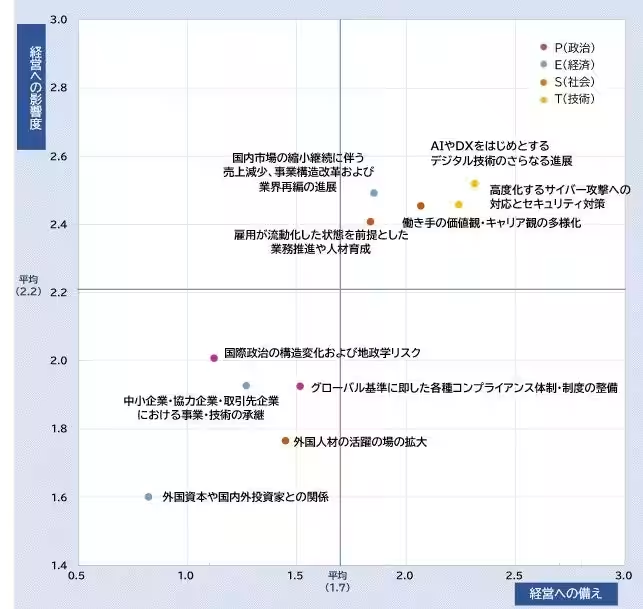
Looking towards the future, the survey explored which factors will significantly impact management decisions by 2035. Key concerns that emerged included:
- - Domestic Market Decline: A sustained contraction in the domestic market is expected to result in decreased revenues and necessitate structural reforms and industry consolidation.
- - Digital Readiness: The need to adapt both defensively and offensively to evolving digital landscapes, including advanced cyber threats and security measures, stands out.
- - Workforce Dynamics: The diversification of worker values and career perspectives is anticipated to shape future employment landscapes.
These findings convey that companies are reacting to social changes and technological advancements, preparing for the divergences in what employees seek from their careers.
Strategic Horizon for Business Design
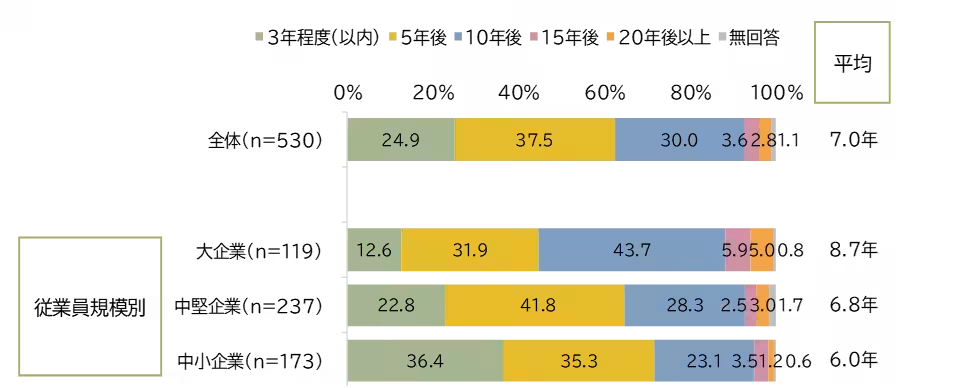
When asked about the planning timeframes for addressing management issues, survey respondents indicated a focus on the next 5 to 10 years, with an average outlook of about 7 years ahead. Notably, corporations tend to plan further into the future compared to smaller firms, with over 40% of large enterprises projecting 10 years forward. On the other hand, small to medium enterprises often look to the near term, with many planning for a maximum of 5 years. This reflects varying organizational priorities and the need to navigate cash flow stability and agile responses to market demands.
The differentiation in planning horizons suggests a shift towards more strategic long-term thinking among medium and small enterprises, with an increasing number acknowledging the importance of defining their mission, vision, and values (MVV) in context with stakeholder engagement.
Conclusion
As the corporate landscape continues to evolve, the insights garnered from this survey present a critical lens through which businesses can better understand not only their current challenges but also the emerging trends that will shape their strategies in the years to come. The need for workforce enhancement and the integration of digital capabilities remain at the forefront of corporate management agendas. With the challenges accompanied by potential strategies outlined in this survey, companies are better positioned to navigate the complexities of tomorrow's business environment.
To access more detailed findings from the survey, you can visit JMA's website here.
Topics Business Technology)
【About Using Articles】
You can freely use the title and article content by linking to the page where the article is posted.
※ Images cannot be used.
【About Links】
Links are free to use.