



Ginger Lab Collaborates with Kodomo Takushoku to Promote Community Support with KIBOU CURRY
Supporting Families in Need: The KIBOU CURRY Initiative
In a significant move towards community welfare, Ginger Lab, a Tokyo-based company, has partnered with the non-profit organization Kodomo Takushoku to enhance food relief for families in need. This collaboration aims to leverage Ginger Lab's disaster preparedness food, KIBOU CURRY, in a way that fosters both support and resilience in local communities.
The KIBOU CURRY Concept
KIBOU CURRY is designed to be a long-lasting, ready-to-eat food option that requires no heating and can be consumed without rice or water. This innovative product can be stored for approximately five years, making it ideal for emergency situations. However, more than just a food source, KIBOU CURRY embodies a commitment to social responsibility.
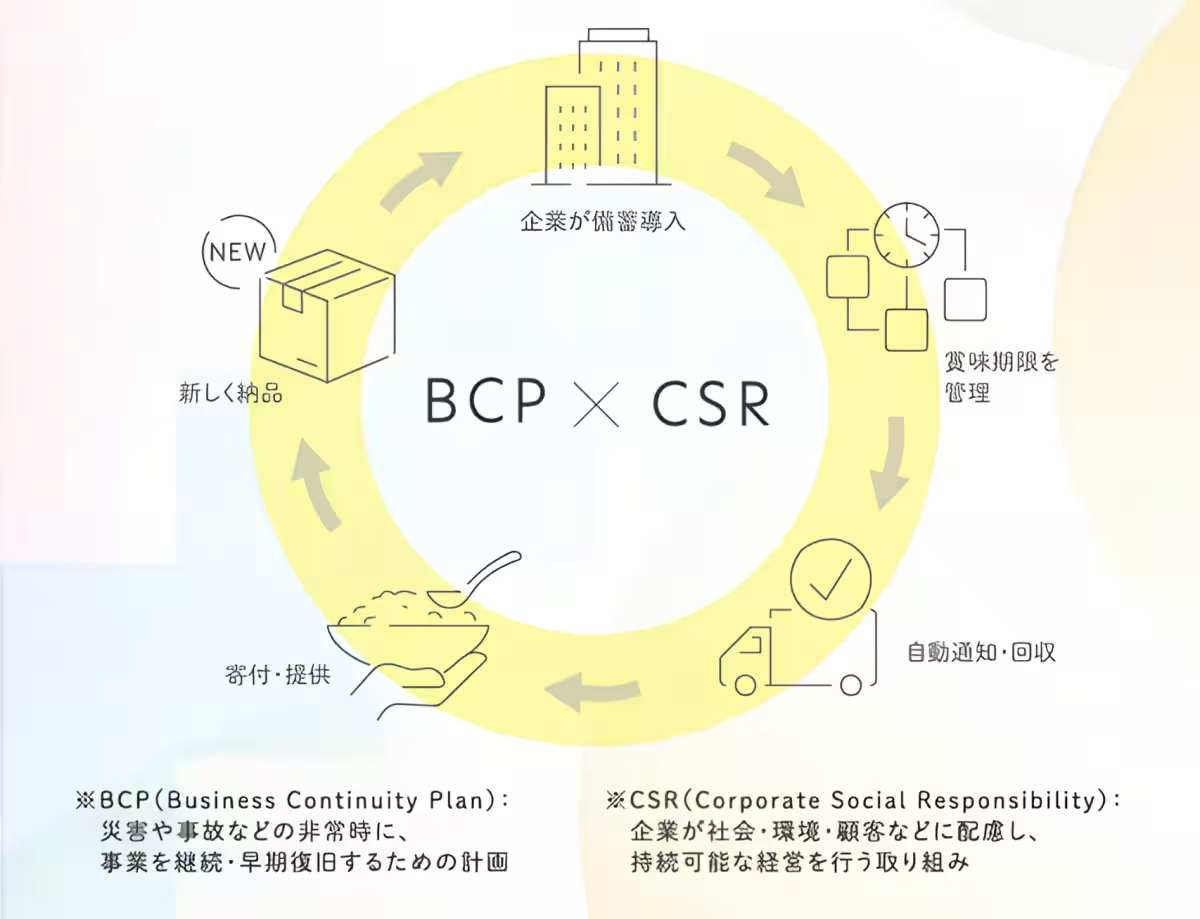
The partnership with Kodomo Takushoku allows Ginger Lab to collect KIBOU CURRY before its expiration date from companies and local governments and redistribute it through various organizations that support families in need. This strategy not only offers nourishing meals but also helps address the broader issues of food waste and community support.
Background of the Collaboration
It is imperative for companies and local governments to maintain emergency food supplies to protect lives and sustain business operations during disasters. However, in Japan, an alarming 4.64 million tons of food waste is generated annually, of which 2.31 million tons come from businesses. With such implications in mind, the collaboration aims to ensure that remaining edible food is not wasted but instead redirected to help those who require it.
Kodomo Takushoku focuses on delivering food regularly to families struggling with issues and challenges. They have recognized that the need for assistance goes beyond the point of delivering food; it extends to providing a sense of community and support. Their mission aims to connect families who cannot easily access food resources with necessary assistance from local authorities and support systems.
Tailored Community Solutions
The collaboration does not merely focus on increasing the quantity of donated food. It seeks to evaluate the local needs and infrastructure for food storage and delivery before implementation. By integrating the realities of each community into its operational design, Ginger Lab aims to maintain a sustainable cycle of preparedness and support.
This approach confirms that simply having food resources does not equate to effective help. Establishing a strong intermediary support function to connect the right food supply with local demands significantly impacts the efficacy of such initiatives.
Responses from Leaders
From the perspective of Kodomo Takushoku’s director, Atsushi Hara, the collaboration reflects a vital understanding that every food item should be delivered with concern for the recipients. Emphasizing the importance of delivering quality and appealing food, Hara expresses hope that KIBOU CURRY can bring smiles and comfort to struggling families.
In agreement, Ayano Nagaregawa, CEO of Ginger Lab, highlights the value of food as a medium to forge connections. The initiative embodies a dual purpose, serving not only as disaster preparedness but also as a bridge of hope for those in need during regular times. She asserts the need to create adaptable frameworks that harmonize company donations with the realities of local families.
Vision for the Future
The collaborative efforts intend to dynamically address the challenges of disaster preparedness, food waste reduction, and support for families raising children. A continuous evaluation system will provide ongoing verification of the appropriateness and safety of food sourced from businesses, ensuring that the processes remain beneficial and sustainable.
By continually adapting logistical practices to accommodate community needs, both Ginger Lab and Kodomo Takushoku strive to cultivate a model that connects disaster preparedness with direct family support. The joint aim is to foster a replicable framework that seamlessly intertwines the cycles of preparedness and community assistance through initiatives like KIBOU CURRY.
Conclusion
The partnership highlights an innovative approach to community welfare, reinforcing the notion that food distribution can extend beyond mere sustenance to embody care, connection, and hope. As both organizations press forward, they remain committed to nurturing this cycle of support, ensuring that every effort serves the children and families that depend on it.




Topics Consumer Products & Retail)
【About Using Articles】
You can freely use the title and article content by linking to the page where the article is posted.
※ Images cannot be used.
【About Links】
Links are free to use.