



The Formation and Persistence of Tokyo's Private Railway System Explored
Analyzing the Evolution of Tokyo's Private Railway System
Tokyo's private railway system stands as a remarkable example of transport infrastructure sustained through historical and political intricacies. The recent research by Yudi Liu, an assistant professor at Waseda University, published in the academic journal "Urban Studies", sheds light on how this institutional structure has persisted, grounded in historical institutionalism.
Understanding the Framework
Historically, transport studies often focused on technical aspects like speed and efficiency. However, Liu's work emphasizes that these transport systems are not merely technological concerns but are deeply rooted in historical processes and power relations. This novel perspective blends critical transport studies with historical institutionalism, providing fresh insights into how transport policies are shaped and sustained over time.
By examining the emergence of Tokyo's private railways, Liu articulates the unique mechanism whereby railway companies engage in property development, leveraging profits from these ventures to maintain financial independence from public funds. This model, although reminiscent of practices seen in historic Western railways, is notably distinctive in its modern-day application within Japan's urban landscape.
Key Findings of the Research
Liu's analysis suggests that the ongoing success of private railways in Tokyo is not merely a result of favorable public policy or operational efficiency. Instead, it is the outcome of a series of historical decisions and political choices that have fortified the current system. The railway's stability and adaptation over time are influenced significantly by past policies and the sociopolitical environment.
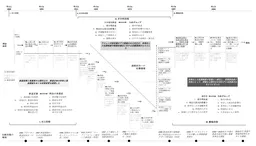
Liu identifies three critical phases of this institutional evolution: the establishment stage, the asymmetry stage, and the hegemony stage, each illustrating the complex interplay between political decisions, market conditions, and historical accidents.
Furthermore, the research points out that while the private railway model supports urban development and convenience, it also exacerbates regional disparities. Metropolises experience heavy investments and infrastructure benefits, contrasting sharply with rural areas that struggle to maintain public transport services economically.
Implications for Policy and Planning
This study has substantial implications for future urban and transport policies in Tokyo and beyond. By understanding the historical constraints that have shaped the current railway system, policymakers can identify opportunities for rethinking and designing alternative transport models. Liu's research encourages a critical examination of how public transport systems are evolving and challenges the notion of efficiency as the sole determinant of transport success.
Moreover, Liu’s findings reflect a growing trend in international transport discourse, wherein transport is regarded as a socially constructed system shaped by competing interests and historical contingencies. This shift towards a historical perspective equips stakeholders with nuanced tools to analyze current transportation frameworks effectively.
Future Research Directions
Despite the breadth of Liu's inquiry, limitations are acknowledged regarding the comprehensive coverage of Tokyo's railway history within a single paper. Future research may integrate local data and engage deeper with the vast resources accumulated in regional studies. Employing a broader comparative approach to examine similar infrastructures in other cities could enrich this discourse significantly.
In summary, Liu's research not only illuminates the underpinnings of Tokyo's private railway system but also challenges contemporary understandings of transport policies, urging a critical reassessment of factors influencing their establishment and evolution. This work serves as a vital reference for academics, urban planners, and policymakers as they navigate the complex landscape of urban mobility and infrastructure.
Topics Other)
【About Using Articles】
You can freely use the title and article content by linking to the page where the article is posted.
※ Images cannot be used.
【About Links】
Links are free to use.