



FANCL Achieves Breakthrough in Water-based Cleansing Innovation with Visualization Techniques
FANCL's New Water-based Cleansing Product
FANCL, a prominent name in skincare, has announced a significant breakthrough in the formulation of water-based cleansers. By employing advanced molecular simulation technology and small-angle X-ray scattering techniques, the company has successfully visualized the process of makeup residue removal. This innovative approach not only elucidates the cleaning performance but also allows for the precise selection of moisturizers, leading to a cleansing product that is both effective and skin-safe.
Understanding Cleansing Performance
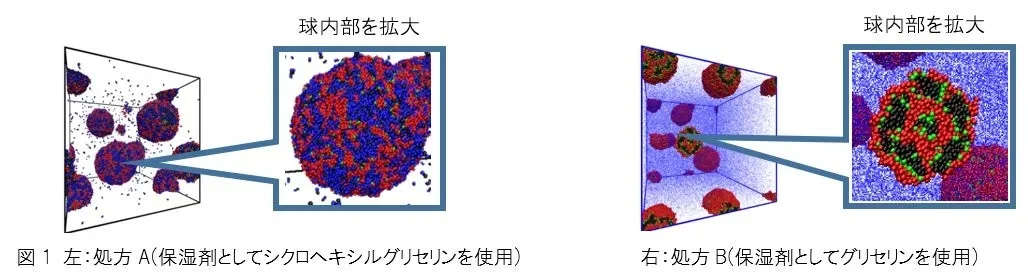
The effectiveness of a cleansing product is influenced by the type and concentration of surfactants, as well as the structural assembly of the ingredients. Utilizing the aforementioned techniques, FANCL's research identified how different moisturizers impact the cleansing performance. By lowering the surfactant concentration to just 4%, they were able to analyze two formulations: one with cyclohexyl glycerin and another with glycerin. The findings revealed that formulation A, which included cyclohexyl glycerin, exhibited superior cleaning performance compared to formulation B, which contained glycerin. Although both formulations shared a similar spherical structure, the internal distribution of the moisturizer played a crucial role in their effectiveness.
In formulation A, the cyclohexyl glycerin was incorporated into the structure of the spheres, enhancing the dispersion of surfactants and facilitating better adhesion to makeup residues. On the other hand, formulation B showed a layered structure that hindered its cleansing capabilities. The study conclusively demonstrated that the choice of moisturizer and the arrangement of the assembly structure significantly influence cleansing effectiveness.
Investigating the Adsorption Mechanism
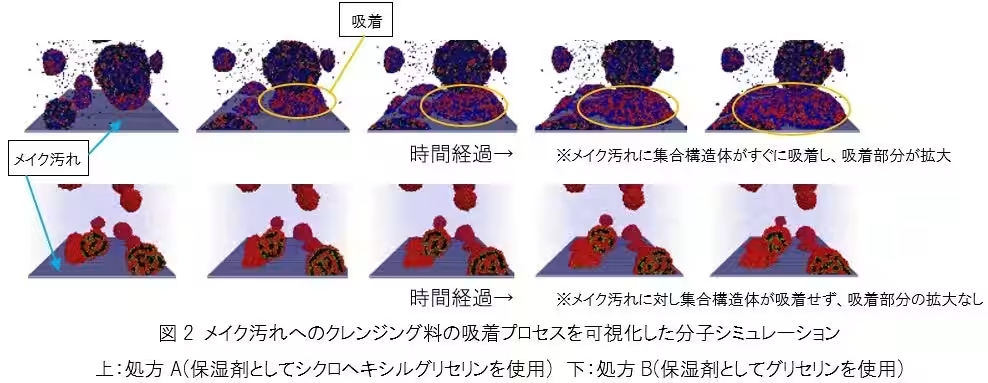
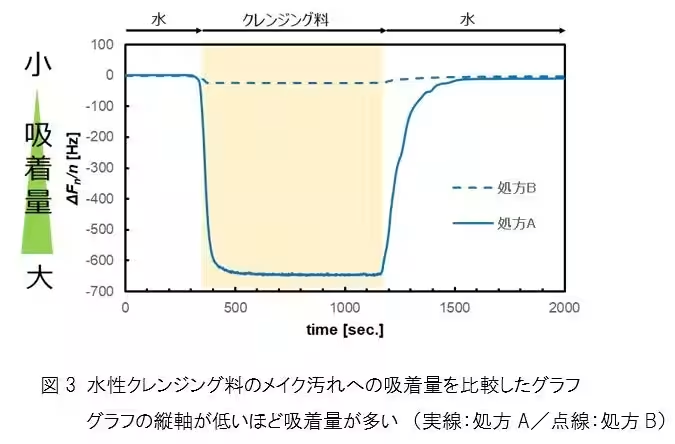
FANCL further explored how these formulations interact with makeup residue to uncover the mechanisms behind their varying cleaning performances. Through molecular simulations, it was clear that formulation A's cyclohexyl glycerin quickly adhered to the makeup residues, while formulation B's glycerin did not exhibit immediate adsorption. This discrepancy was confirmed through empirical tests, which revealed that formulation A not only adhered more effectively to makeup but also exhibited higher absorption quantities compared to formulation B.
These findings underscore the importance of moisturizer selection in enhancing the speed and amount of makeup residue removal, which is critical for overall cleansing performance.
High Cleaning Efficacy with Moisturizer Selection
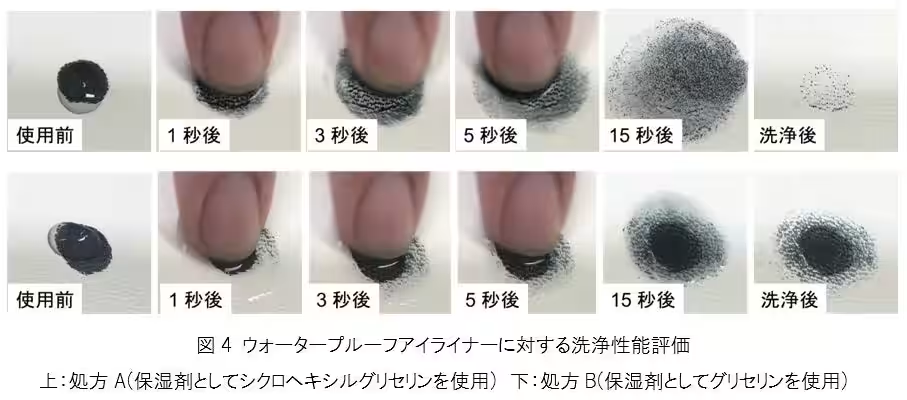
Based on these insights, FANCL created a simplified formulation for their water-based cleanser and evaluated its performance against waterproof eyeliner. The results confirmed that formulation A, utilizing cyclohexyl glycerin, demonstrated remarkably high cleansing efficacy. This indicates that by carefully selecting moisturizers, it is possible to achieve effective makeup removal with a low concentration of surfactants in a water-based cleanser.
Research Context and Goals
FANCL has long excelled in oil cleansing technologies; however, recognizing that not everyone prefers oil-based products, the company sought to cater to the growing demand for effective water-based cleansers. Conventionally, enhancing the cleansing performance of water-based products requires increasing surfactant concentrations, which can lead to skin irritation and dryness. As a result, FANCL focused on developing a water-based cleanser that effectively removes makeup while maintaining skin safety by visualizing the micromolecular cleaning mechanisms.
Future Aspirations
According to Hideki Miya, manager of the Cosmetic Research Institute's Cleaning Agent Development Group, this research leverages oil cleansing technology to develop a new water-based cleansing experience, ensuring thorough makeup removal without compromising on texture. Through portraying the distinct cleansing mechanisms of oil and water-based products, FANCL aims to enhance cleansing performance through innovative approaches. The foundational formulations discovered during this study will be pivotal for future global product development initiatives focused on water-based cleansing solutions.
Overall, FANCL's new product exemplifies a significant stride in creating gentle yet effective cleansing solutions that align with diverse consumer preferences worldwide.

Topics Consumer Products & Retail)









【About Using Articles】
You can freely use the title and article content by linking to the page where the article is posted.
※ Images cannot be used.
【About Links】
Links are free to use.