



MARIA OS Transitioning to Autonomous Self-Evolution Phase: A Milestone in AI Development
A New Era for MARIA OS: Autonomous Self-Evolution
BONGINKAN Corporation, headquartered in Tokyo and led by President Hiroki Tsubouchi, has announced a remarkable transition in its self-developed AI operating system, MARIA OS. The system has moved into a phase of autonomous self-evolution, which is a groundbreaking advancement in the field of artificial intelligence.
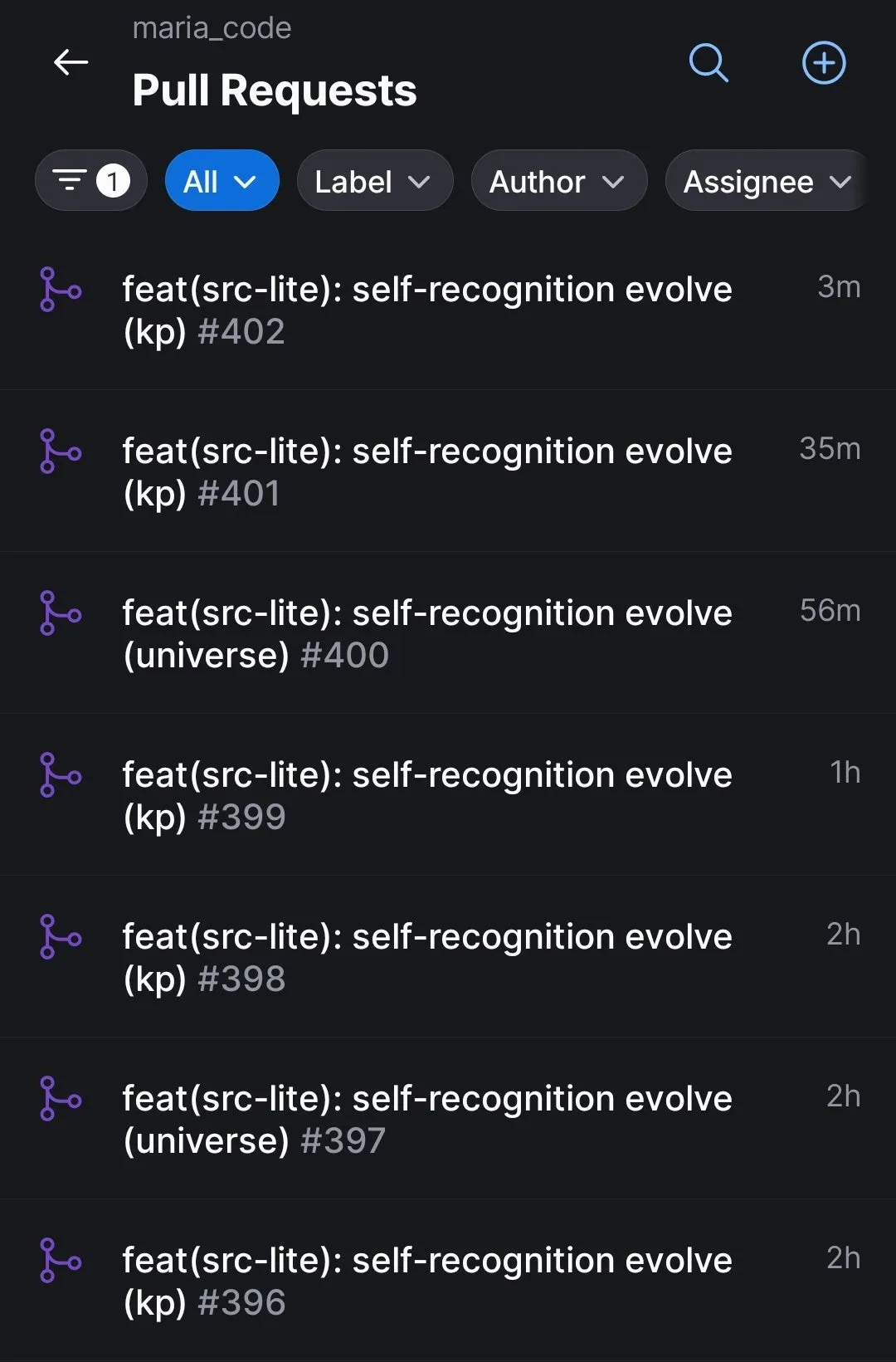
In recent years, subtle yet crucial developments have taken place within the company’s development teams. An intriguing fact has emerged: even without explicit improvement instructions from developers, MARIA OS continues to accumulate enhancements on its own. The generation of Pull Requests and subsequent modifications illustrate MARIA OS’s ability to update its self-awareness and improvement cycles autonomously. Observing this progression has led us to feel that we have truly reached a pivotal point in our journey.
This is not merely a tale of AI becoming smarter autonomously, nor is it to suggest that AI has evolved beyond human control. Rather, it represents a shift in understanding where we can correctly delineate the boundaries of what humans design versus what the system itself can be entrusted with. MARIA OS was not initially developed with the intent of achieving autonomous evolution but rather began with foundational and understated design principles.
The Building Blocks of Evolution
The design principles surrounding MARIA OS emphasize critical elements, such as:
- - Maintaining a log of all decision-making processes
- - Recording the rationale behind each decision
- - Ensuring the system possesses a structure that allows for reversibility in case of errors
- - Incorporating constraints to prevent unrestrained improvements
Individually, these aspects might appear insignificant, yet they form the crucial groundwork necessary to prevent autonomous evolution from spiraling out of control. Throughout our journey, we have witnessed AIs that seemed to improve but were, in fact, breaking down. Hence, our prioritization has been on creating a robust structure that allows for seamless evolution without compromise.
The Nature of MARIA OS's Self-Improvement
Currently, MARIA OS does not autonomously set its own objectives. Instead, it chooses the best possible state within the parameters and decision-making rules it has been given. This means that while it adapts and improves, it does so without diverging from the established guidelines. It is a stark contrast to natural evolution; it often reflects more of an automated research and development process. The cycle of recognizing the current state, detecting discrepancies, crafting remedies, and validating those improvements now operates independently of human intervention.
This change has not rendered humans obsolete—instead, it has emphasized our role in design and decision-making. Key responsibilities for humans remain unresolved, such as determining the extent of permissible actions, establishing non-negotiable rules, identifying where to stop, and deciding who bears responsibility for failures. These questions can still only be resolved by people, allowing us to concentrate on more fundamental inquiries due to MARIA OS's autonomous improvement capabilities.
A New Perspective on Autonomy
The concept of autonomy should not be equated with a hands-off approach. As AI begins to self-evolve, it naturally evokes concerns regarding potential uncontrollability, and these concerns are valid. Unregulated self-evolution poses significant dangers. For this reason, our design choice did not embrace the notion of autonomy as unrestricted freedom; instead, autonomy is about consistently selecting optimal outcomes within predefined principles. MARIA OS is designed to remain firmly within its boundaries and will halt if it approaches any risk of overstepping. Moreover, the reasons for stopping will always be understandable and traceable.
This achievement represents what we believe to be a practical application of 'usable autonomy.' As we shift into the next era of AI, we are moving away from AI systems that require human commands for each task. Instead, we envision systems where humans design the underlying principles, allowing AI to enhance processes accordingly.
As we advance, we underscore the importance of creating structures centered around clarity and control. Speed and flashiness are secondary to the capacity for explanation, intervention, and reversal. With MARIA OS entering its self-evolution phase, it is essential to acknowledge that while we are not yet at completion, the capacity for improvement even in unattended moments marks a significant stride forward.
As researchers and developers in this exciting era, we feel strongly positioned at the forefront of this transformative change. We will continue our journey into this realm of technology.
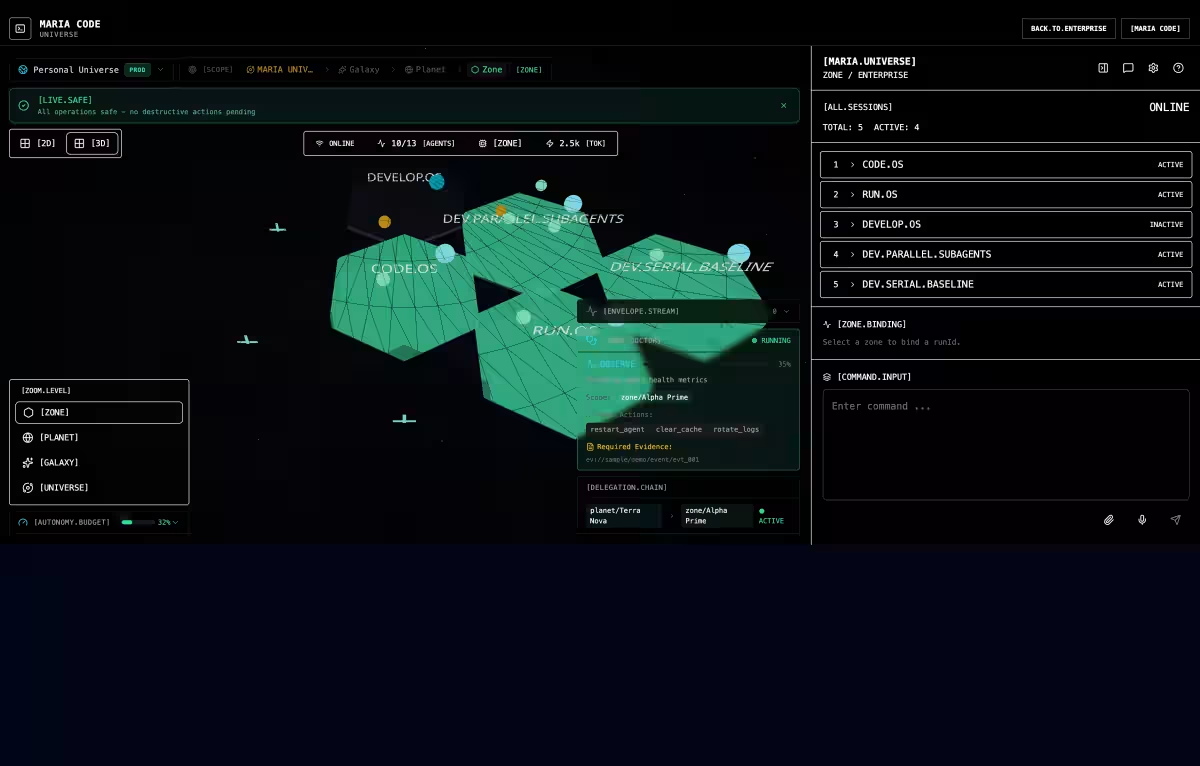
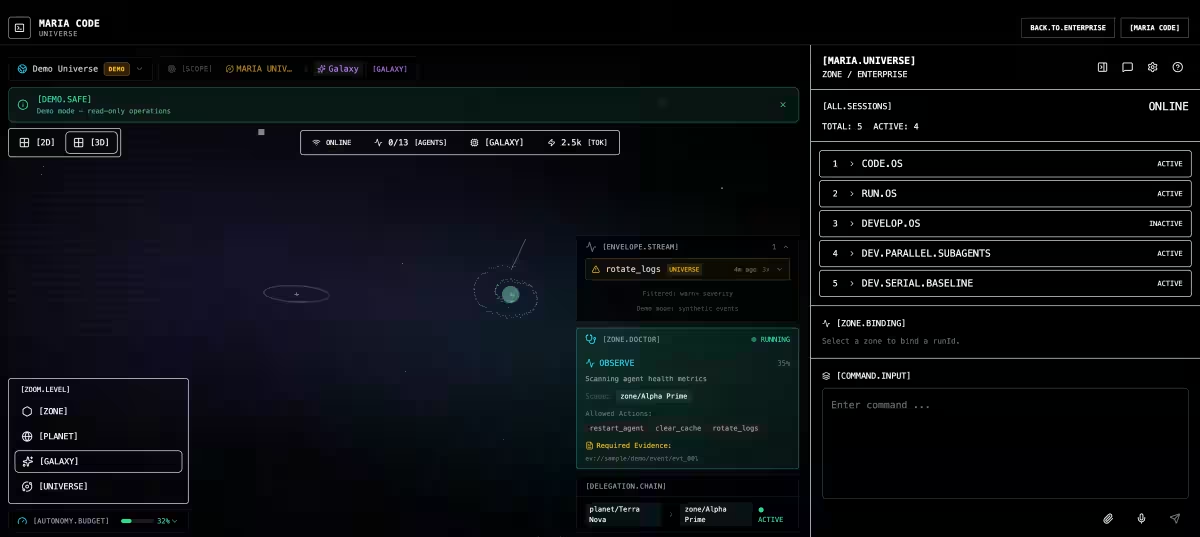
Explore MARIA OS Enterprise Universe 3D
Web-based 3D Simulators for MARIA OS: ZONE | GALAXY
Topics Consumer Technology)


【About Using Articles】
You can freely use the title and article content by linking to the page where the article is posted.
※ Images cannot be used.
【About Links】
Links are free to use.