



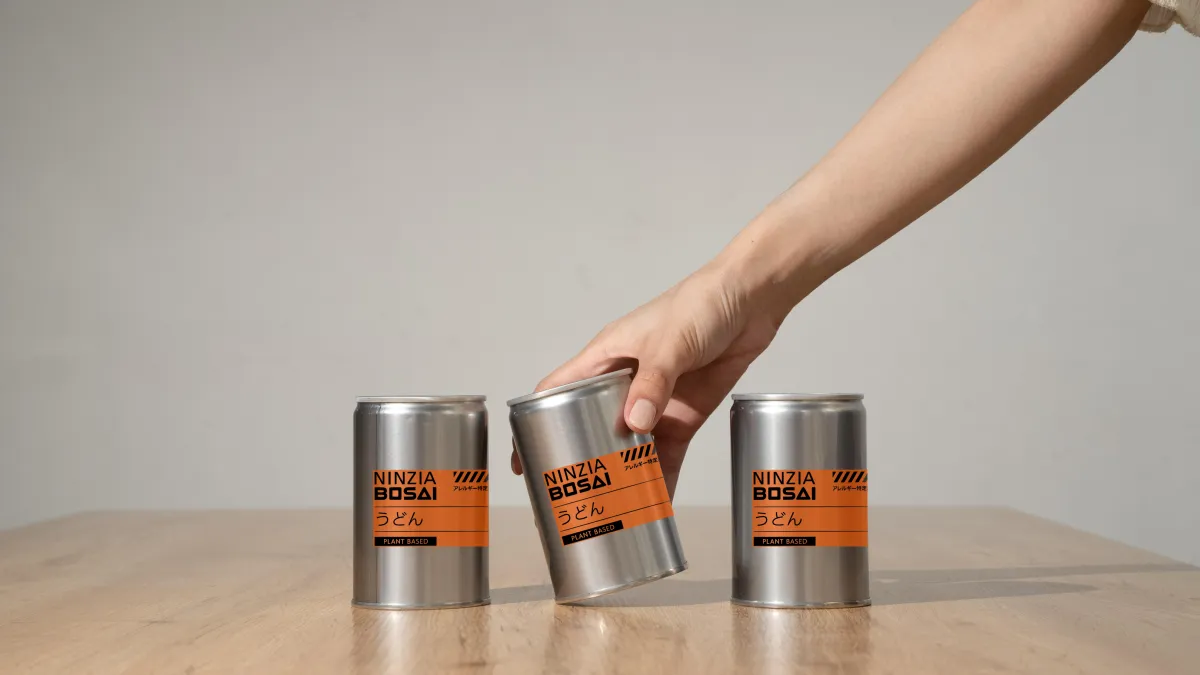
Revolutionizing Emergency Food with Gluten-Free Plant-Based Udon Cans
Transforming Emergency Food: NINZIA's Plant-Based Udon
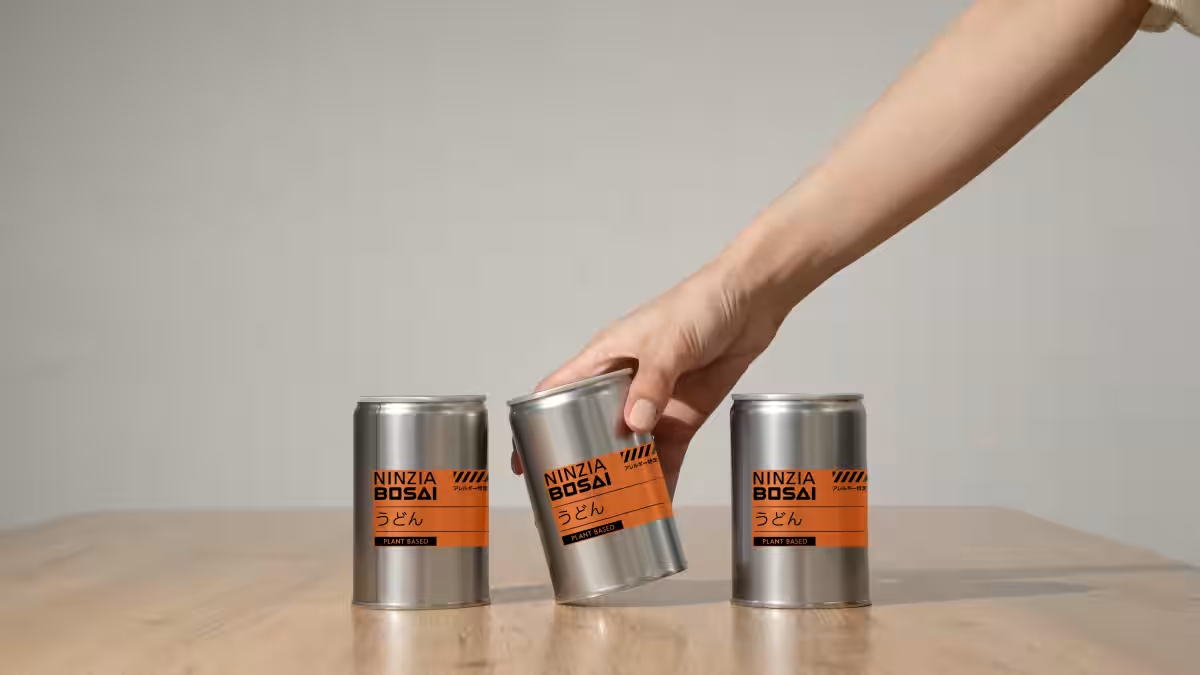
In an innovative approach to emergency food, NINZIA, a company based in Kobe, Japan, has unveiled a groundbreaking canned product that combines sustainability with convenience. Known as the "NINZIA BOSAI Udon," this gluten-free, fully plant-based udon aims to reshape how we think about emergency food supplies.
The Idea Behind the Development
As concerns for sustainability grow, the issue of food waste in emergency stocks has come to light. Reports suggest that as much as a quarter of local government food reserves are rendered unusable due to expiry dates. This has spurred initiatives for more sustainable practices, such as "rolling stock," where inventories are rotated regularly. However, these measures have primarily focused on passive responses like donating near-expiry goods to food banks.
Recognizing the need for more effective solutions, NINZIA has developed its udon with a focus on being both convenient and tasty. This type of canned udon does not rely on animal products, ensuring that it remains accessible to various dietary lifestyles. Furthermore, the unique texture engineering technology employed by NINZIA ensures that the noodles maintain their integrity even under the high-heat pressures of the canning process. This results in udon that can be enjoyed straight from the can, requiring no additional water or heat.
Key Product Features
Resilient Noodles
The NINZIA BOSAI Udon features noodles crafted from konjac-derived dietary fibers, developed using advanced texture engineering techniques. This approach allows the noodles to endure the canning process while retaining their al dente texture, providing an authentic udon experience. Unlike traditional shirataki, these noodles also preserve the flavor of rice flour.
Plant-Based Kansai-Style Broth
The udon is complemented by a savory broth that is completely plant-based. A collaboration with Kōkai Heroes and Fujiseiyu Co., Ltd. resulted in a broth that uses sustainable kombu and plant-based dashi, specifically the "MIRA-Dashi®" product. This udon soup is crafted without any animal products, encapsulating the essence of Kansai-style udon broth within a can.
Gluten-Free
Thanks to NINZIA's innovative techniques, this product is gluten-free, offering a satisfying noodle without the use of wheat. This attribute ensures that a wider audience can enjoy the udon, making it a more inclusive option in emergency food supplies.
Team Collaboration
NINZIA
NINZIA is committed to crafting new food forms that enhance well-being through sustainable practices. Focusing on the capabilities of konjac, the company develops texture engineering techniques that promote healthier eating habits. The introduction of NINZIA BOSAI Udon represents their vision to bring Japanese innovation to global dining.
Fujiseiyu Co., Ltd.
A leader in plant-based ingredients, Fujiseiyu has spent over 70 years developing oils and proteins to create satisfying plant-based culinary experiences. Their "MIRA-Dashi®" underscores their commitment to offering tasty alternatives without the need for animal products.
Kōkai Heroes
Kōkai Heroes is dedicated to sustainable kombu farming that supports biodiversity and carbon absorption. This environmental focus not only provides quality ingredients for products but also aids in maintaining ecological balance.
Conclusion
The journey of the NINZIA BOSAI Udon begins with its prototype debut at the Osaka Kansai Expo, where it was showcased to a global audience. Although the initial prototype contains trace amounts of wheat, making it not entirely gluten-free, plans are in place for mass production of fully gluten-free versions in the future.
As NINZIA leads the charge in sustainable emergency food options, their plant-based, gluten-free udon embodies a significant step toward reducing food waste and promoting healthier diets. Through innovation and collaboration, NINZIA is poised to change the landscape of emergency foods for the better.



Topics Consumer Products & Retail)
【About Using Articles】
You can freely use the title and article content by linking to the page where the article is posted.
※ Images cannot be used.
【About Links】
Links are free to use.