



Exploring the Complex Relationship Between Additives and Advanced Plastic Recycling Technologies
Comprehensive Overview of Additives and Advanced Plastic Recycling
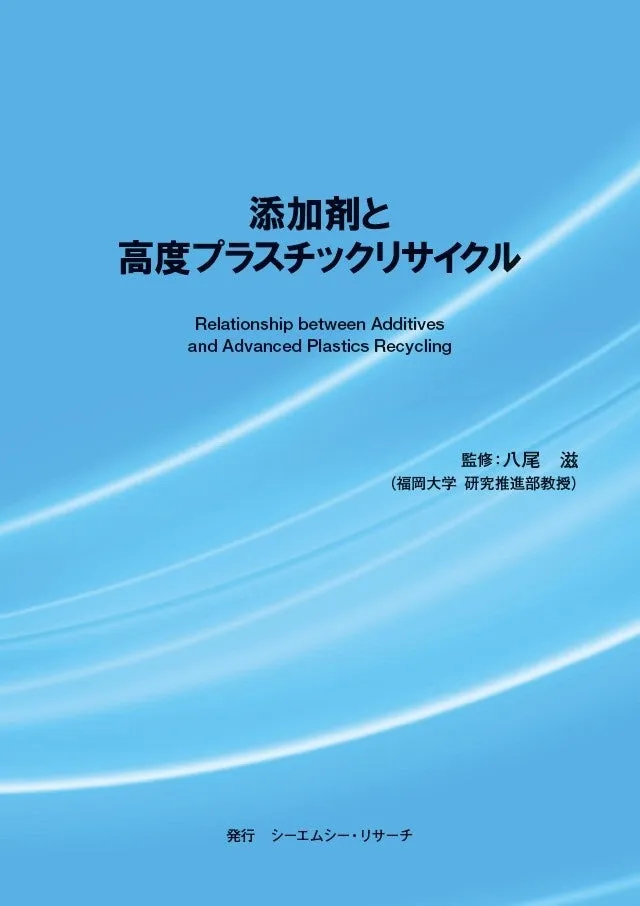
The newly published book, "Relationship between Additives and Advanced Plastics Recycling," curated by Dr. Shige Yao, offers a detailed exploration of the relationship between plastic recycling methods and the role of additives in improving the recyclability and quality of plastics. Set to be released by CMC Research on November 28, 2025, this 202-page A4 paperback is priced at ¥99,000, with a bundled PDF version available for ¥110,000.
Importance of Plastic Recycling
Plastic recycling remains an urgent issue for Japan as both an environmental necessity and a means of securing stable carbon resources. Traditional thermal recycling, which utilizes combustion to recover energy, has dominated the recycling landscape, accounting for nearly 70% of plastic recycling practices in Japan. However, this method is not recognized in Europe due to its inability to reuse carbon sources, leading to a push for material and chemical recycling.
The book discusses both material recycling and chemical recycling, both of which have significant implications for carbon sustainability. Material recycling has faced stagnation at approximately 20% for nearly 30 years due to the decline in the properties of recycled pellets, which are largely caused by unavoidable chemical degradation. Recent advances in understanding physical degradation and regeneration have reignited interest in this area and revealed that it is indeed possible to recycle plastic materials for practical use.
In contrast, chemical recycling leverages organic chemistry knowledge, with foundational research dating back over three decades in universities and chemical manufacturers. However, the application of this research to real-world plastic waste is still limited, as costs have hindered widespread adoption.
Bridging the Gap Between Additives and Recycling
Historically, books on chemical and material recycling have been treated separately from those focusing on additives. However, the interrelationship is critical; thus, this publication aims to integrate these perspectives, providing essential insights for researchers and industry professionals involved in product development, strategic planning, and implementing circular economy practices.
The text addresses various issues regarding the degradation of recycled materials by additives and highlights emerging techniques to enhance the quality and stability of these materials through innovative composite materials and process development. Notably, various case studies are presented to exemplify successful strategies across different types of plastics, addressing unique challenges faced in recycling.
Author Contributions
Dr. Yao, a renowned figure and professor emeritus at Fukuoka University, leads an esteemed group of contributors from top universities and chemical companies in this comprehensive guide. The applications discussed are critical for driving forward the agenda of resource sustainability and effective recycling strategies that align with global environmental goals.
Future Outlook
Looking ahead, Japan must escalate its efforts in both chemical and material recycling by integrating this new knowledge into practical applications. This book serves as a vital roadmap for understanding and advancing the agenda for effective plastic recycling practices and contributing to a more sustainable future.
In summary, "Relationship between Additives and Advanced Plastics Recycling" not only consolidates substantial research but also aims to catalyze the recycling industry towards innovative practices and heightened awareness of the critical role additives play in this process. It stands as a crucial resource for anyone interested in the future of sustainable materials management.
Topics Consumer Technology)
【About Using Articles】
You can freely use the title and article content by linking to the page where the article is posted.
※ Images cannot be used.
【About Links】
Links are free to use.