



Exploring AI-Driven Productivity Improvements in System Development with PLAYLOT-HUB
Unleashing AI for Enhanced Software Development Productivity
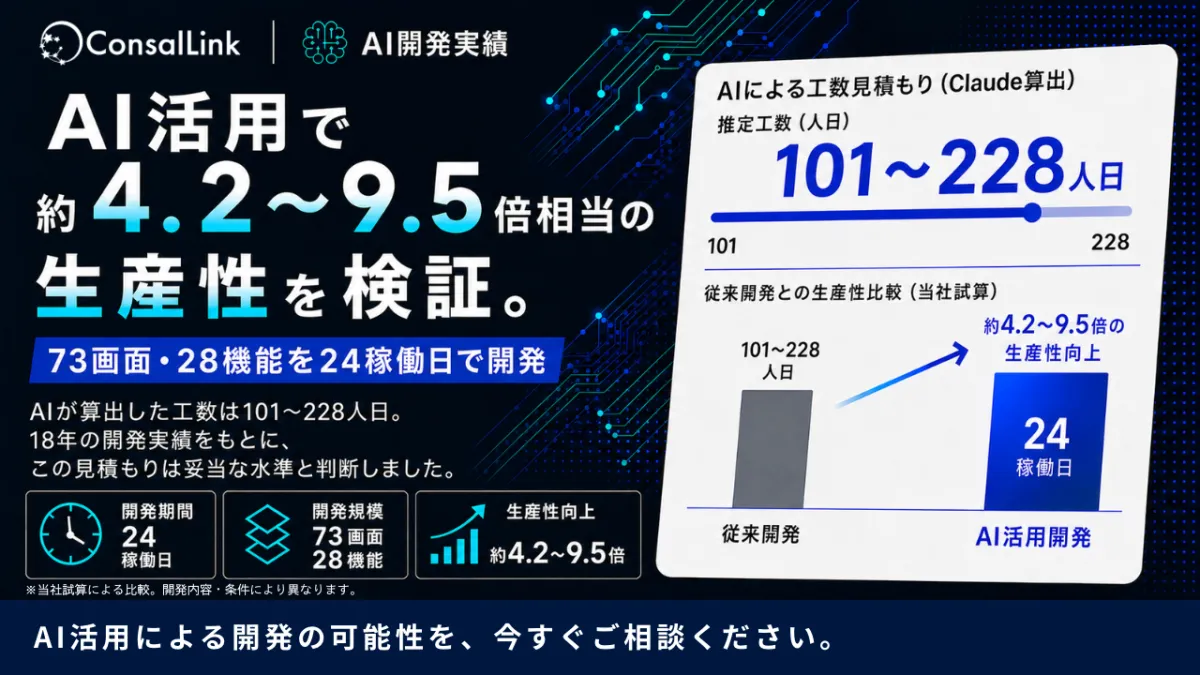
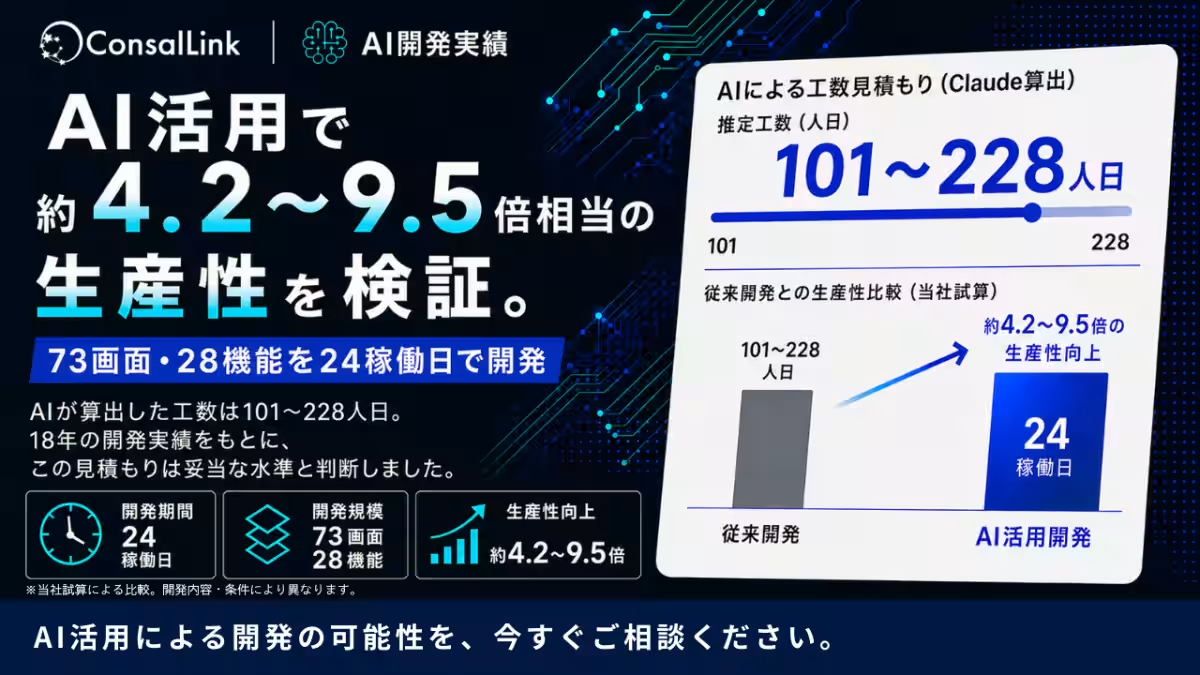
In an era where AI technologies are rapidly evolving, the adoption of AI in software development has become more than a trend—it's a transformative necessity. Consult Link, based in Osaka, Japan, is currently in the development phase of their proprietary service, PLAYLOT-HUB, which has showcased impressive productivity gains by leveraging AI coding agents, specifically Claude Code. This article delves into the findings from the initial development phase of PLAYLOT-HUB, where it was discovered that using AI boosted productivity by a remarkable factor of 4.2 to 9.5 compared to traditional development methods.
The Advances of AI in Software Development
The conversation around AI's impact on software development often includes phrases like, “AI can accelerate development” or “What used to take months can now be completed in a fraction of that time.” However, concrete, empirical evidence backing these claims is still scarce in the real-world context of software development. As such, Consult Link undertook a thorough examination using real data from the development of PLAYLOT-HUB to quantitatively assess the productivity enhancements made possible by AI.
Understanding PLAYLOT-HUB
PLAYLOT-HUB is an enterprise-level SaaS product designed to integrate seamlessly with Microsoft Entra ID and Microsoft 365, offering functions such as employee searches, organizational charts, notifications, workflows, and more. While initially developed for internal use, Consult Link is now advancing towards making it available externally. The specific launch timeline and additional service details will be announced in due course.
Significant Development Milestones
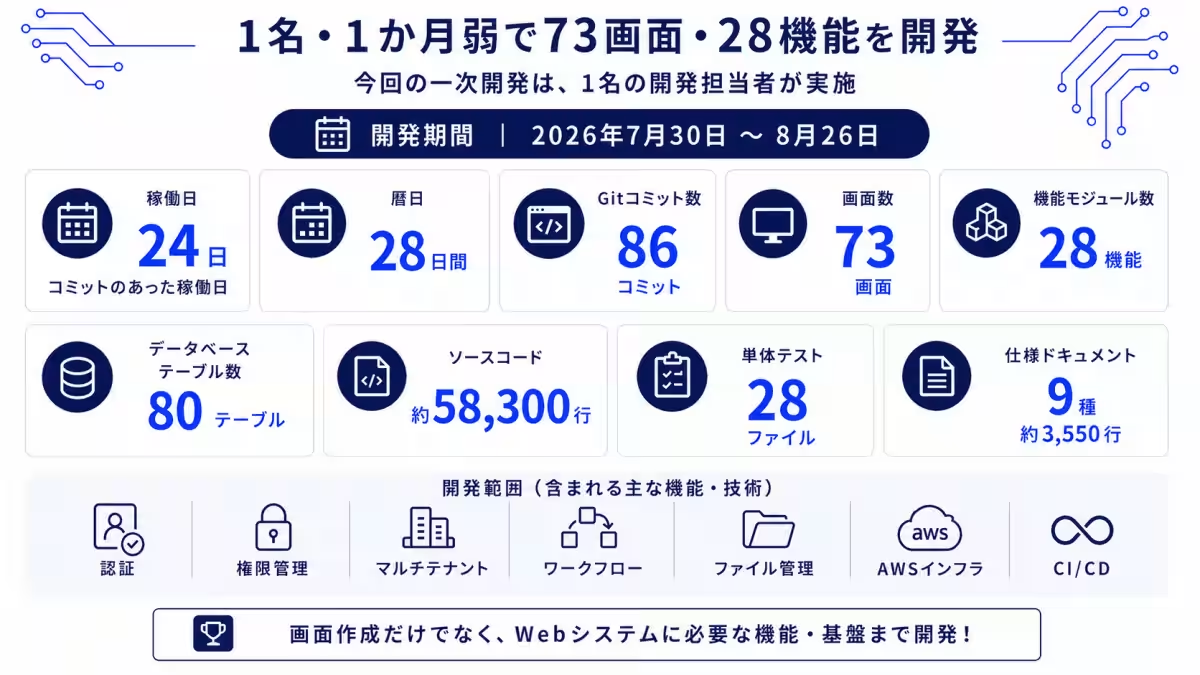
The first phase of the PLAYLOT-HUB development involved a single developer working to achieve remarkable outcomes in a short time frame. From the initial commit on July 30, 2026, to August 26, 2026, the development yielded the following results:
- - Development Period: 28 days
- - Active Days with Commits: 24 days
- - Total Commits: 86
- - Screens Developed: 73
- - Functions Implemented: 28
- - Database Tables Created: 80
- - Source Code Volume: Approximately 58,300 lines
- - Unit Tests Developed: 28 files
- - Specification Documents: 9 types, summing up to around 3,550 lines
What stands out in this endeavor is not merely the quantity of components made but the sophisticated nature of the development that also included authentication processes, rights management, multi-tenancy features, file management protocols, AWS infrastructure, and CI/CD elements.
Beyond Simple Code Generation
One of the crucial aspects of this project was that AI wasn't just utilized as a basic code generator. It involved a collaboration where developers communicated their goals, requirements, and overarching system strategy to the AI. Based on this input, Claude Code understood existing code and specifications, determining necessary file updates, database adjustments, and necessary tests to ensure functionality. Such a synergistic approach allowed for a more nuanced application of AI in the development phase, enabling the transitioning from human-centric activities to an AI-assisted workflow efficiently.
Productivity Metrics: Traditional vs. AI-Enhanced
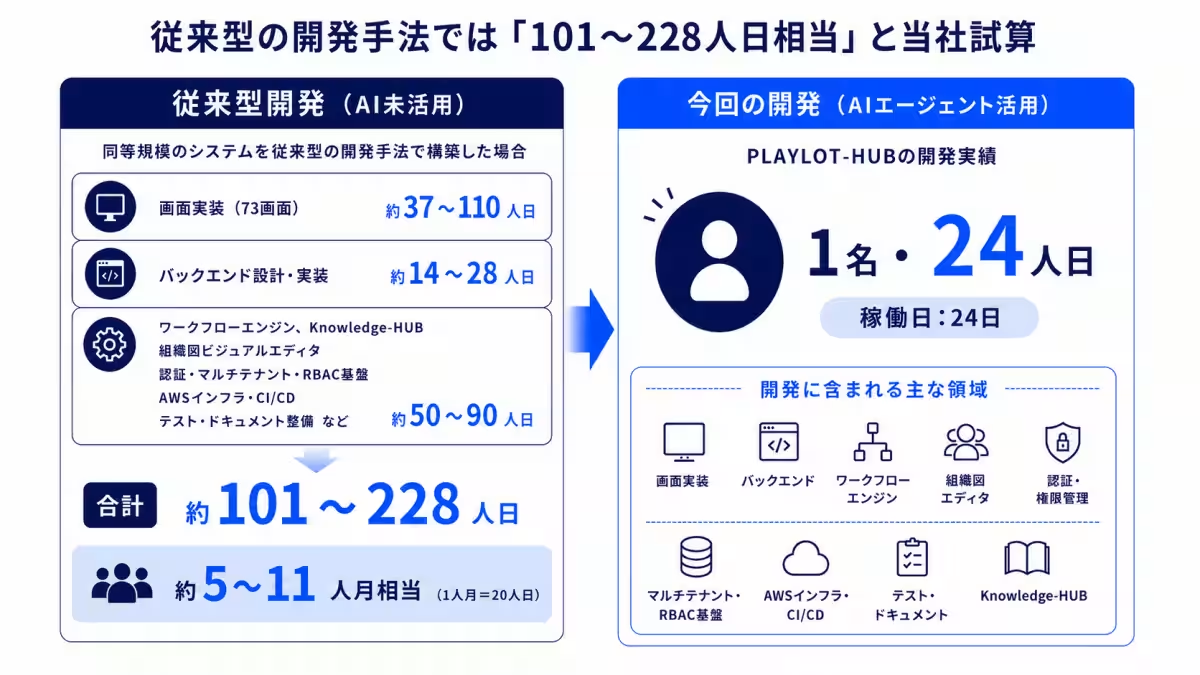
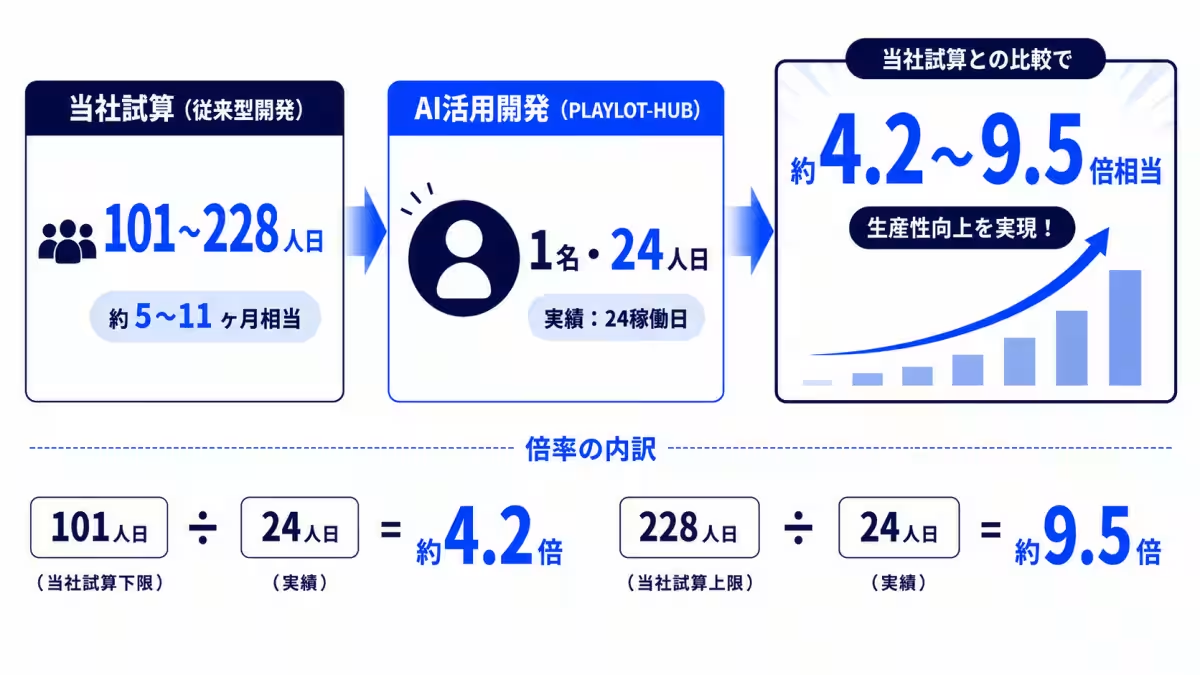
To grasp the improvements, it's essential to contrast the AI-assisted development with traditional methods. When estimating the labor required for similar projects without AI's involvement, Consult Link anticipated an effort ranging between 101 to 228 person-days. This translates to an approximate equivalence of 5 to 11 months per person using conventional development approaches. Such estimates were corroborated by a senior developer with 18 years of experience, offering validation to various stages of estimation.
Conversely, the reported results from the implementation of AI in developing PLAYLOT-HUB demonstrated that a single developer accomplished these feats in just 24 person-days—a staggering productivity increase compared to the traditional model, clocking in at nearly 4.2 to 9.5 times more effective.
The Human-AI Collaboration Framework
It's vital to note that the presence of AI did not eliminate the essential human element from the process. The developer made key decisions regarding functionality, specification, review, and overall direction, while AI efficiently handled the coding aspect. In a typical contract system development scenario, additional phases like customer interviews, requirement mapping, and specification adjustments would have imposed further time commitments not reflected in these calculations.
The successful completion of PLAYLOT-HUB's development runs counter to the notion that AI can autonomously generate completion of tasks devoid of human guidance.
Comprehensive Testing and Quality Assurance
In addressing software efficiency, it's critical to maintain high-quality standards. During the project, the team instituted rigorous quality assurance protocols, including comprehensive unit testing, lint checks, and adherence to specifications. These processes ensure ongoing capability to uphold quality as the project evolves beyond just its initial development.
As we transition into a future increasingly defined by AI, the narratives surrounding software development dynamics also shift. Development will likely move towards a model where engineers focus more on decision-making processes while AI automates many technical aspects.
Final Thoughts on AI's Role in Development
In conclusion, the results obtained during the development of PLAYLOT-HUB signal an essential shift in productivity dynamics portrayed through innovative AI integration. As more companies adopt AI for their development processes, questions surrounding the implications of growth in productivity become paramount. Rather than just exploring if AI is involved, understanding the actual results from this implementation is crucial. Consult Link's journey through AI development signifies not just an increase in development speed but an open door to focus more on valuable and strategic elements of system design and development.
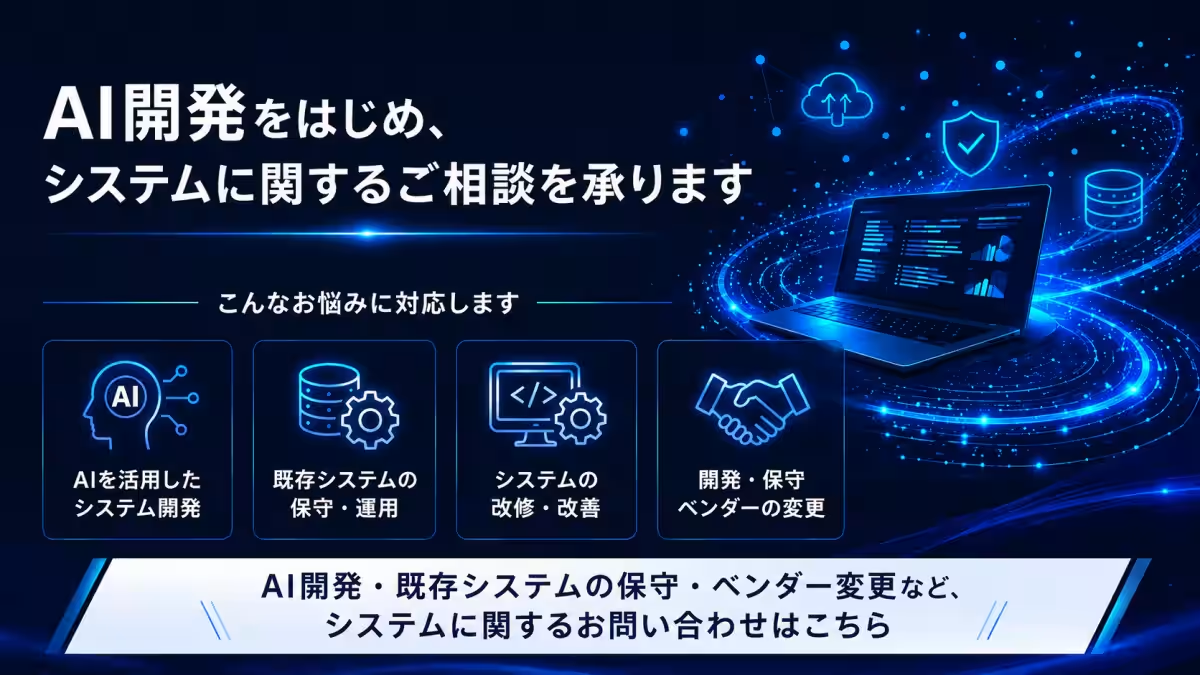
For deeper insights into using Claude Code in real-world applications or consultations regarding AI in system development, please visit our website or reach out directly.

Topics Consumer Technology)
【About Using Articles】
You can freely use the title and article content by linking to the page where the article is posted.
※ Images cannot be used.
【About Links】
Links are free to use.