



Revolutionizing Die Design with XDaevr SCRAP-FALLING V2.0 Simulation Tool
UEL Introduces XDaevr SCRAP-FALLING V2.0
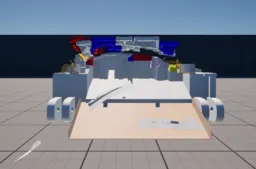
UEL Corporation has officially launched its latest simulation program, XDaevr SCRAP-FALLING V2.0, aimed at optimizing die design and proactively identifying potential issues during the pressing process. This innovative solution is designed to analyze the dropping behavior of scrap material at early design stages, helping engineers foresee and prevent serious complications such as mold damage or production line interruptions caused by improperly falling scrap.
The release of this new version is significant for engineers and manufacturers alike, as it enhances the capability to visualize scrap drop success rates and reduces the workload associated with preparing data for simulation. Unfortunately, when scrap does not fall as expected, it can lead to severe operational disruptions; thus, UEL’s program is a crucial tool for maintaining production efficiency.
Development Background
Historically, handling scrap drop failures heavily relied on the experience of skilled operators and a process of trial and error. This traditional method made it challenging to thoroughly validate designs before production. To address this issue, UEL developed XDaevr SCRAP-FALLING to empower designers to observe various scrap dropping behaviors right from the design phase, ensuring a higher overall design quality.
With V2.0, UEL focused on enhancing visibility around challenges associated with scrap drop failures while aiming to simplify the overall data preparation process. Feedback gathered from users who expressed the need to identify troublesome scrap and reduce preparation workload played a pivotal role in the development of this updated version.
Key Features of XDaevr SCRAP-FALLING V2.0
1. Quantitative Evaluation of Drop Success Rates
- The new version now enables a comprehensive view of each scrap’s drop success rate. This feature allows designers to assess how changes in design impact scrap fall performance comprehensively. Before and after comparisons become much easier, and it becomes simpler to prioritize which scraps need immediate attention for better performance.
2. Improved Input Functionality to Reduce Preparation Workload
- In V2.0, the tool allows users to utilize scrap data from complex surfaces as verification data, reducing the need to create three-dimensional representations of scrap, which was often cumbersome in V1.0. This improvement removes a pre-processing task that could take over an hour, significantly speeding up preparations for simulation and making the entire process more efficient.
Future Developments
Looking ahead, UEL is committed to continuous improvement of the XDaevr SCRAP-FALLING based on customer needs to shorten lead times in die manufacturing. Also, the XDaevr brand will expand into additional manufacturing solutions. UEL aims to foster the growth of the XDaevr series as a cornerstone of its business while contributing to advancements in digital transformation (DX) within the industry.
For more detailed information about UEL’s advances in UX and XR applications, visit the XDaevr brand page.
Conclusion
As the manufacturing landscape evolves, UEL’s commitment to innovation, especially with tools like XDaevr SCRAP-FALLING V2.0, positions them as leaders in integrating cutting-edge technology with traditional manufacturing processes. Their ongoing development promises enhanced productivity and stability in production lines, making it an essential addition to any engineer’s toolkit.
For inquiries regarding this product, please contact: [email protected]
Topics Consumer Products & Retail)
【About Using Articles】
You can freely use the title and article content by linking to the page where the article is posted.
※ Images cannot be used.
【About Links】
Links are free to use.