



The Surge of Generative AI Usage Among University Students in 2026
The Surge of Generative AI Usage Among University Students in 2026
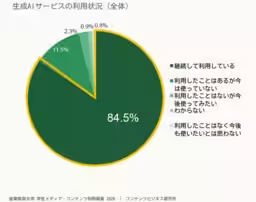
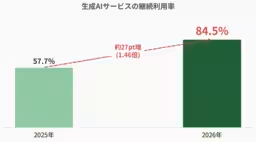
Recent research conducted by the Content Business Research Institute at Sanno University reveals a significant rise in the utilization of generative AI among students, signaling a transformational shift in educational and social dynamics. In a survey involving current students, the findings indicated that a remarkable 84.5% of students are actively using generative AI, compared to only 57.7% the previous year. This dramatic increase illustrates how integral generative AI has become in everyday student life.
A Closer Look at AI Usage
The survey aimed to capture various dimensions of students' media consumption, highlighting not only smartphone and social media usage but also their engagement with video-on-demand services and the popular trend of ‘oshi-katsu’ (fandom activity). Focusing specifically on generative AI, the results show that almost all respondents (96%) have had some exposure to AI tools, whether they are currently in use or not.
Sustained Usage and Preferred Tools
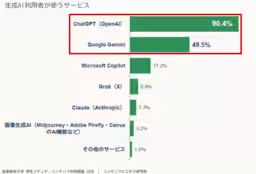
When asked which generative AI services they use, 90.4% of students reported using ChatGPT. This dominance is stark when juxtaposed with Google Gemini, which surged from 12.3% to 49.5% within a year, showcasing a notable diversification in preferences. This shift illustrates a growing trend among students to not only rely on ChatGPT but to incorporate multiple AI tools into their workflow, depending on the task at hand.
Purpose of Utilization
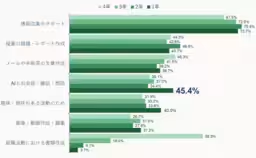
The survey also dove into the reasons students are turning to generative AI. Information gathering emerged as the most common usage across all academic years, with 67.5% to 75.4% engaging in this activity. First-year students predominantly relied on AI for casual conversations and personal interests, while fourth-year students utilized it mainly for crafting job application documents. Interestingly, the use of generative AI for academic tasks such as writing reports has also escalated significantly, rising from 29.5% last year to 44.8%.
Impact of AI in Daily Life
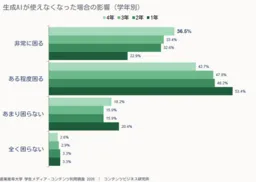
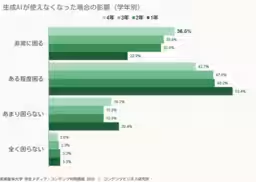
The study further examined the implications of losing access to generative AI tools. An overwhelming 83.8% expressed that they would find it challenging, with a noteworthy increase in those who responded “very difficult” as students advance in their academic years—from 22.9% in first-year to 36.5% in fourth-year students. This trend underscores the inextricable link students have formed with these AI tools in their daily routines.
Conclusion
These findings illustrate a pivotal moment for students and higher education. The advent of generative AI is evolving not only how students access information and learn but also how they relate to new technologies. What began merely as a novel trend in 2025 with a 57.7% adoption rate has swiftly escalated into a mainstream tool integrated into academic and personal life. As the landscape of education continues to change, students are no longer asking whether to incorporate generative AI into their studies, but rather exploring how to leverage various tools for their unique needs and circumstances.
In conclusion, the rapid ascent of generative AI marks an essential evolution in student engagement with technology, prompting ongoing research and adaptation in educational methodologies. As these tools become embedded in the learning process, understanding their impact will be crucial for educators and policymakers alike.
About the Content Business Research Institute
Established in April 2014, the Content Business Research Institute focuses on practical research surrounding the production and management of digital content, character businesses, and branding. Their initiatives aim to benefit students at Sanno University while advancing knowledge within the broader field of content management.
For more details, visit the Content Business Research Institute.
Topics Entertainment & Media)
【About Using Articles】
You can freely use the title and article content by linking to the page where the article is posted.
※ Images cannot be used.
【About Links】
Links are free to use.