



Pioneering Automatic Disaster Recovery Between Data Centers Over 600km
World-First Automatic Disaster Recovery Confirmed Over 600km
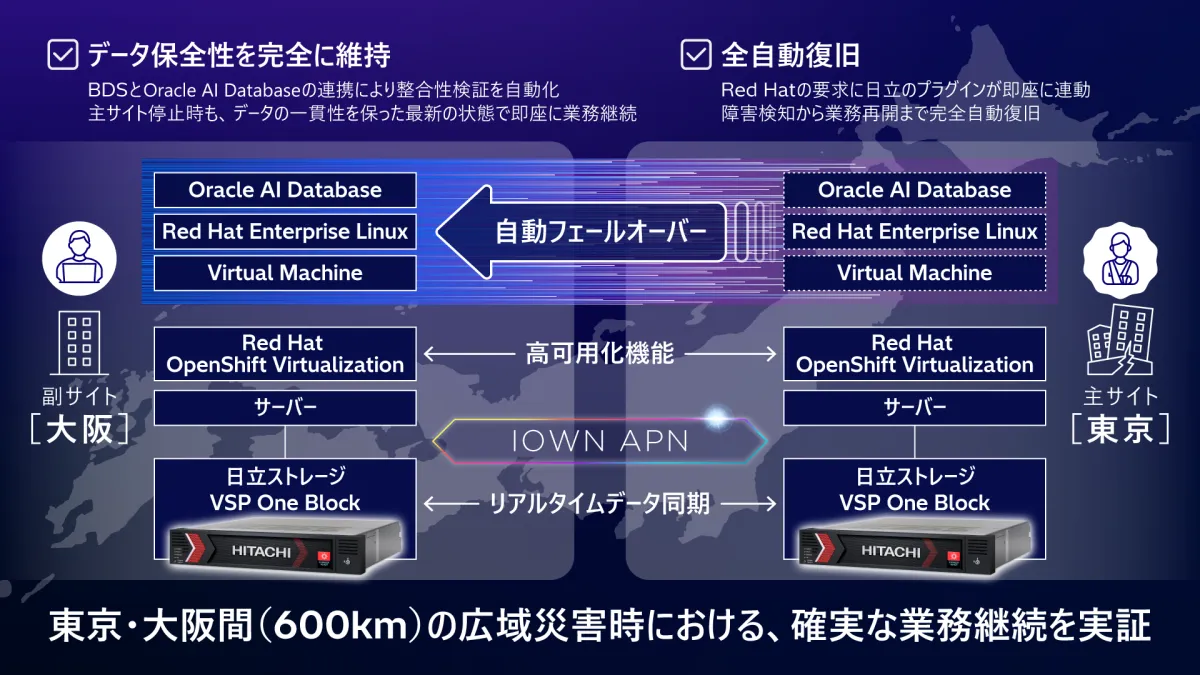
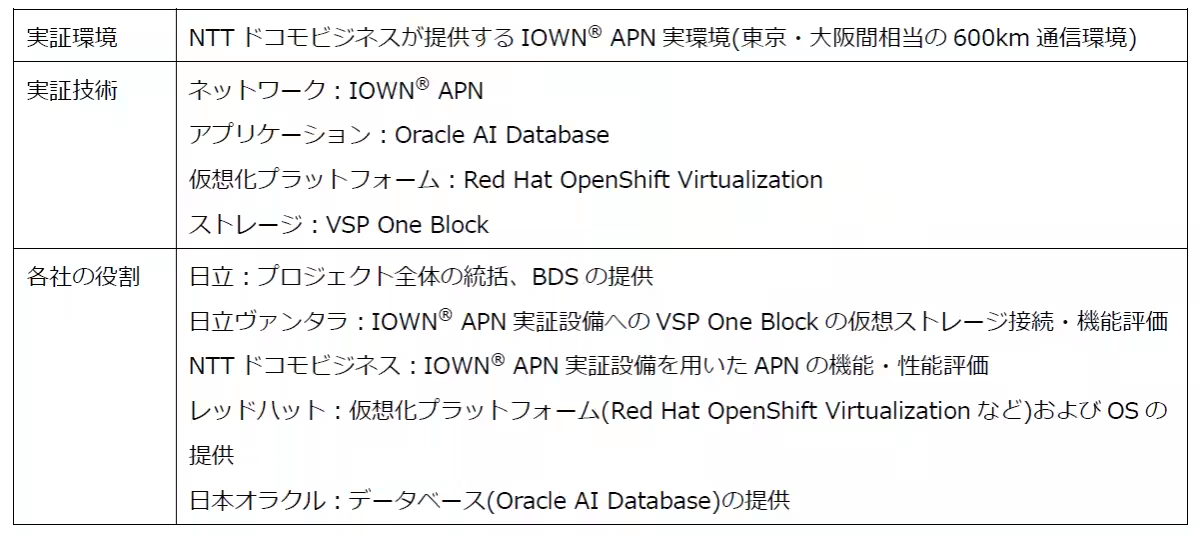
In a groundbreaking venture, Hitachi, NTT Docomo Business, and their partners, including Red Hat and Oracle Japan, have successfully demonstrated a fully autonomous disaster recovery system across a distance exceeding 600 kilometers. Utilizing NTT Docomo Business's fast and low-latency IOWN® APN network, they showcased a robust disaster-preparedness setup that preserves data integrity while ensuring operational continuity during disasters.
Background
With the frequency of natural disasters and the sophistication of cyber-attacks increasing, there is a pressing demand for mission-critical systems that guarantee business operations during emergencies. Companies are increasingly interested in real-time data synchronization between remote locations to maintain data availability and swiftly resume operations post-disaster. However, challenges arise, particularly in ensuring a streamlined automatic recovery system that encompasses virtualization infrastructure, operating systems, and applications, due to the complexity involved in maintaining coordinated functionality across the system.
Summary of the Demonstration
The collaborative proof of concept (PoC) involved constructing a physical environment that meets the crucial requirements of a mission-critical system. This involved integrating Hitachi Vantara's storage technology and the Red Hat OpenShift Virtualization platform within a hybrid cloud environment, incorporating the Oracle AI Database for verification of disaster resilience measures. The automatic recovery process was thoroughly tested when a simulated failure occurred at the primary site, transitioning operations seamlessly to the backup site. Key highlights included:
1. Full Autonomy in Recovery: The comprehensive automatic recovery was capable of resuming business operations within approximately 10 minutes, significantly optimizing recovery time. The operational efficiency was notable, with the platform initiating database recovery while ensuring data consistency, meeting stringent mission-critical continuity requirements.
2. Data Integrity Maintained Over Long Distances: The PoC validated that data integrity could be successfully maintained post-switching sites even beyond 600km between the primary and backup locations.
3. Real-Time Microservice Interaction: Successfully tested the feasibility of deploying microservices under Red Hat OpenShift over lengthy distances, overcoming inherent latency challenges and promoting a more connected systems approach for disaster management.
Future Directions
The participating companies intend to expand the insights gained from this demonstration into broader applications, particularly in the financial sector and other mission-critical domains. Collaborating to enhance disaster preparedness solutions, they will emphasize sustainable data infrastructure services and integrate cyber resilience aspects into their offerings. The aim is to transition from merely maintaining business operations during a disaster to actively leveraging BDS technology for workload management and optimizing system operations even under normal conditions.
Upcoming Presentation
These remarkable findings will be showcased at the upcoming "Hitachi Social Innovation Forum 2026 JAPAN" scheduled for early September 2026. Attendees can visit the exhibit titled "Overcoming Distance and Power Barriers through Borderless Data Share" to delve deeper into this pioneering technology.
As we look forward to evolving business technologies, the collaboration between Hitachi, NTT Docomo Business, and their partners demonstrates significant advancements in disaster recovery capabilities and ensures operational resilience during adverse events. This ongoing partnership sets the framework for continued innovation and support in bolstering business continuity systems.
Topics Business Technology)
【About Using Articles】
You can freely use the title and article content by linking to the page where the article is posted.
※ Images cannot be used.
【About Links】
Links are free to use.