



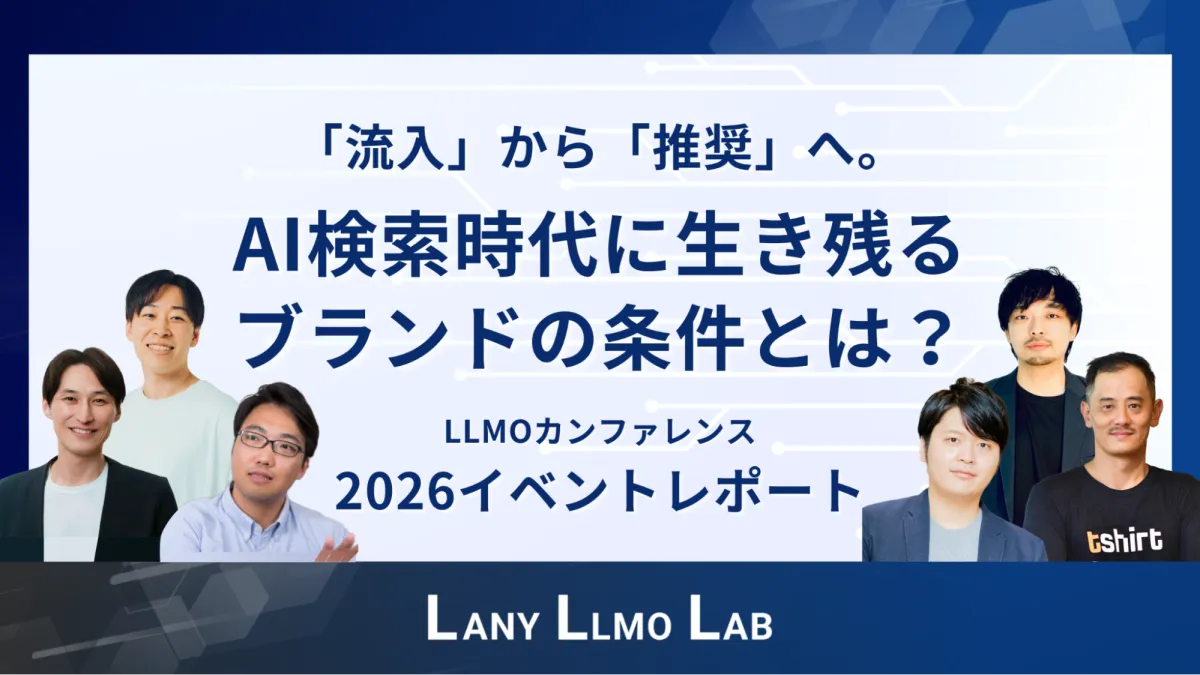
Transitioning from 'Traffic' to 'Recommendation': Insights from LLMO Conference 2026
Transitioning from 'Traffic' to 'Recommendation'
The rise of AI-driven search behavior is transforming how users interact with information. On January 20, 2026, the LLMO Conference convened in Tokyo, hosted by LANY, a prominent digital marketing support company. This groundbreaking event brought together six industry experts to explore the new marketing strategies necessitated by AI's influence on user search behavior.
The Dawn of AI Search Era
As generative AI becomes mainstream, user search habits have shifted dramatically from visiting multiple websites to obtaining direct answers from AI. This monumental change implies a redefined approach to SEO, where businesses must optimize their content not just for conventional search rankings but also to be recognized as credible sources by AI—what is referred to as LLMO (Large Language Model Optimization).
To highlight the significance of this shift, the conference featured several key topics:
1. Integrated Search Marketing (ISM): The Future of Brand Visibility
Keita Takeuchi from LANY emphasized the importance of positioning evidence of a brand's strengths strategically in the digital realm to influence AI's content selection process. As the agency shifts from a user-centric to an AI-centric search framework, adapting marketing strategies becomes crucial for companies aiming to be recommended.
2. Rational Branding and Marketing in the Age of AI
NexGen's Toshi Kanai discussed how brands can leverage AI to enhance their visibility. The objective is to allow AI to select options based on 'functional value' through structured data, while human choices should revolve around 'emotional value,' fostering a cohesive customer experience across digital and traditional platforms.
3. Understanding Consumer Journeys with AI-Centric KPIs
Daishiro Hira, from the SEO Research Channel, introduced the concept of utilizing citations and mentions as KPIs. By analyzing how AI dissects user queries, businesses can improve their own sites while simultaneously disseminating essential information to external platforms.
4. AI Search Marketing: Global Trends and Future Strategies
Yusuke Horiuchi from Opt's analysis shed light on the duality of incoming data following AI implementation. He advocated for the adoption of intent-based management and an integrated approach to SEO and advertising for optimal investment outcomes.
5. The Role of Citation in Trust Building through Digital PR
Hitoshi Kyou from IDEATECH provided insights into how AI prioritizes third-party narratives about a brand over the brand's own messaging. He cited research from UC Berkeley to showcase how digital PR can effectively generate citations that enhance LLMO efficacy.
6. Becoming a Recommended Brand through Data-Driven Insights
Lastly, Takunori Kawarada from Ahrefs offered a unique analysis of AI tools and their algorithms, introducing the concept of 'brand radar’—a measure of AI visibility. He emphasized the necessity for companies to adopt a data-driven approach to manage recommendations effectively.
Three Guiding Principles for Future Marketing
The conference concluded by presenting three advisories to navigate the evolving marketing landscape:
1. Structured Information Delivery: Organizations should arrange their information in a manner that is easily understandable and accessible to AI, tailoring formats for external dissemination.
2. Building Trust through Citations: It’s vital to create a state where brands are talked about positively from external sources via PR strategies.
3. Integrated User Experience Design: An effective user experience should marry the rational aspects valued by AI with the emotional nuances cherished by humans.
As the industry moves into this new epoch, traditional quick-fix tactics will no longer suffice. Authentic brand building, guided by objective evidence and assessment from third parties, is becoming the only way to ensure ongoing relevance in the evolving search experience. The full report on the event is available here.
Topics Consumer Products & Retail)
【About Using Articles】
You can freely use the title and article content by linking to the page where the article is posted.
※ Images cannot be used.
【About Links】
Links are free to use.