



High Cardiorespiratory Fitness May Reduce Genetic Breast Cancer Risk
High Cardiorespiratory Fitness May Reduce Genetic Breast Cancer Risk
A groundbreaking study conducted by researchers from Waseda University, including Associate Professor Kunpei Tanisawa and researcher Daiki Watanabe, alongside Associate Professor Xiaomin Sun from Xi’an Jiaotong University, investigates the relationship between cardiorespiratory fitness and the risk of breast cancer influenced by genetic factors. The study utilized data from the UK Biobank, involving 15,199 postmenopausal women, to assess how these fitness levels interact with genetic predispositions to breast cancer. Published in the esteemed journal Medicine & Science in Sports & Exercise on October 6, 2026, this research sheds light on an important health topic.
Background of the Study
Breast cancer is the most commonly diagnosed cancer among women globally, influenced by lifestyle choices, obesity, and hormonal factors. Notably, genetic predispositions also play a significant role in breast cancer development, with multiple gene variants identified through genome-wide association studies (GWAS). The emergence of polygenic risk scores (PRS), which integrate various genetic variations, has enabled the evaluation of individual risks for breast cancer based on genetic makeup. However, the role of cardiorespiratory fitness—a measure of how well the body can supply oxygen to muscles during physical activity—has not been fully explored in conjunction with these genetic factors.
Former research has suggested that higher cardiorespiratory fitness correlates with a reduced risk of breast cancer. This study aimed to investigate whether higher fitness levels could alter the relationship between genetic risk factors and the likelihood of developing breast cancer.
Key Findings
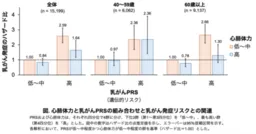
The study followed participants over a period of 10.7 years, during which 547 cases of breast cancer were reported. Key findings revealed a significant correlation between high levels of cardiorespiratory fitness and decreased breast cancer risk. Women in the upper quartile for cardiorespiratory fitness had approximately 28% lower odds of developing breast cancer compared to those in the lowest quartile.
In terms of genetic risk factors, the analysis demonstrated that higher PRS correlated with an increased risk of breast cancer; those in the highest quartile for PRS exhibited a 4.27 times greater risk compared to those in the lowest quartile. However, when examining the interaction between cardiorespiratory fitness and PRS, it became evident that women with high fitness levels faced a diminished increase in breast cancer risk associated with higher PRS scores. This effect was pronounced in women aged 60 and above—showing that high fitness may significantly mitigate the genetic risks associated with breast cancer.
Implications for Public Health
These findings hold considerable implications for public health strategies, especially for postmenopausal women. They indicate that improving cardiorespiratory fitness might reduce the severe implications of genetic predispositions among women who are genetically at risk for developing breast cancer. As there is growing interest in employing PRS for personalized disease risk assessments, the inclusion of modifiable factors such as fitness could pave the way for tailored prevention strategies.
Limitations and Future Directions
Despite the promising results, the researchers caution against drawing sweeping conclusions. The study is observational, and while it associates cardiorespiratory fitness with reduced genetic risk factors, it does not establish a direct causal relationship. Additionally, VO₂max—used as a standard measure for cardiorespiratory fitness—was estimated rather than directly measured, leading to questions about accuracy. Future studies are necessary to periodically assess cardiorespiratory fitness and its evolving relationship with the onset of breast cancer over time. Furthermore, the research sample comprised primarily European ancestry, necessitating further exploration across diverse racial and ethnic groups to validate these findings globally.
Conclusion
In conclusion, the collaborative efforts of these researchers highlight the significance of physical fitness in potentially moderating genetic risks for breast cancer among postmenopausal women. As the scientific community seeks to enhance individualized approaches to health and preventive strategies, the link between exercise, fitness, and genetic risk warrants further investigation and public awareness. It underscores the importance of cultivating a healthy lifestyle as a powerful tool in disease prevention, especially for those offset by genetic predispositions.
Topics Health)

【About Using Articles】
You can freely use the title and article content by linking to the page where the article is posted.
※ Images cannot be used.
【About Links】
Links are free to use.