



Pendo Japan Reveals Insights on Corporate DX Progress and Challenges
Insights from the DX User Experience White Paper 2026
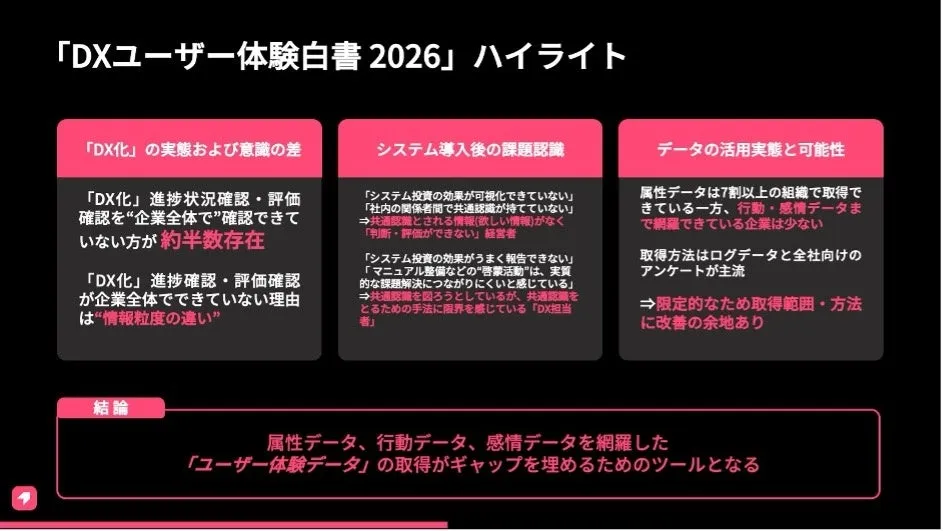
Pendo.io Japan, based in Shibuya, Tokyo, has recently released a comprehensive survey titled "DX User Experience White Paper 2026." This survey, conducted among 726 executives and DX professionals from companies employing between 100 and over 3,000 individuals, aims to analyze the current state of digital transformation (DX) across domestic enterprises in Japan. The research highlights the difficulties and inconsistencies in understanding the progress and effectiveness of DX initiatives.
Key Findings of the Survey
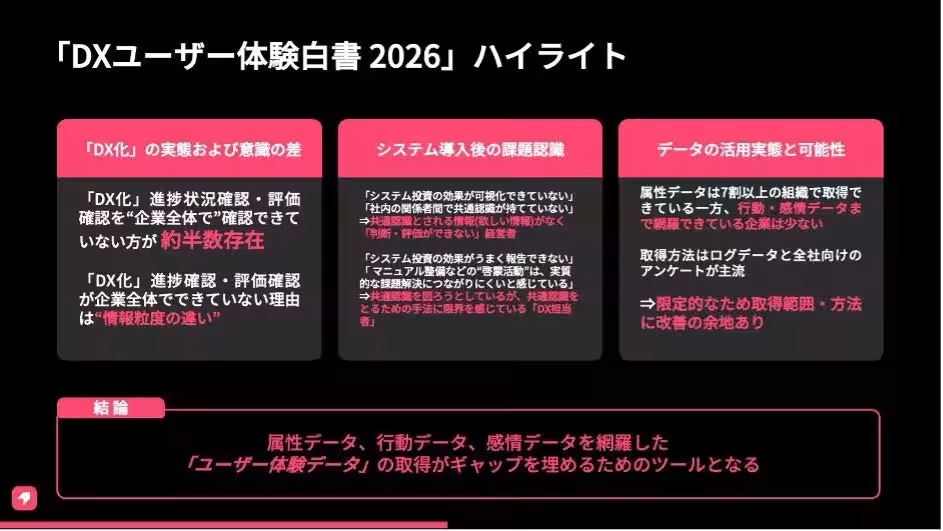
The survey reveals a significant gap in the ability to visualize the progress and evaluation of DX efforts across entire organizations. Both management and DX representatives expressed similar concerns regarding the discrepancies in information granularity between systems and departments, which pose substantial barriers to unified assessments.
Management vs. DX Professionals
Interestingly, the survey found differing preferences in evaluation methods. While 58% of executives favored qualitative reporting, a substantial 71% of DX professionals leaned towards quantitative analysis through metrics such as logs and data analytics. This divergence signifies a need for a common language and evaluation framework to align perspectives and enhance communication between the two groups.
The Need for a Unified Evaluation Framework
Pendo Japan emphasizes the necessity for a common evaluation metric that acts as a shared language between executives and DX staff. This common evaluative approach is paramount for ensuring that businesses can truly leverage their technological investments to foster growth and innovation.
Challenges in System Implementation
The survey also highlighted specific operational challenges faced post-system implementation. Top concerns from management included the inability to visualize the effectiveness of system investments and a lack of shared understanding among internal stakeholders. Conversely, DX professionals reported practical challenges, such as difficulties in reporting on system investment outcomes and the limited effectiveness of training sessions and materials in resolving operational issues.
Project Management Tools
A staggering 94% of respondents noted that they experience challenges with project management tools. This indicates the critical need for effective management strategies that can enhance operational cycles and minimize unexpected costs or time burdens associated with system modifications after deployment.
Goals and Metrics
The findings indicate that a mere 23% of executives and 12% of DX professionals report even meeting their goals, exposing a significant gap in target achievement. A predominant reason for this shortfall is the absence of clear Key Performance Indicators (KPIs) to measure success accurately.
To address these gaps, the report suggests enhancing quantitative monitoring methods and integrating emotionally driven data, known as “experience data,” to create a holistic view of user experiences.
User Data Collection and Utilization
The survey also explored the types of data being collected, highlighting user attribute data (demographics), user behavior data (usage metrics), and user sentiment data (satisfaction levels). The tendency to focus on behavioral metrics while neglecting sentiment insights indicates a missed opportunity for deeper understanding and improvement in user experiences.
Future Directions for DX Implementation
These insights encapsulate the need for businesses to embrace not only quantitative methods but also qualitative insights into user experiences. Effective utilization of data derived from both user behavior and sentiment will be crucial in advancing DX initiatives. Pendo's platform offers tools to capture and leverage this user experience data, providing organizations with essential insights to facilitate informed decision-making.
The DX User Experience White Paper 2026 aims to foster awareness among Japanese companies about the significance of a unified evaluative framework between management and DX teams. By establishing a common set of metrics, businesses can continuously assess and enhance their digital transformation efforts, ensuring long-term success and adaptability in a rapidly evolving technological landscape.
Conclusion
Pendo Japan's research highlights fundamental challenges in measuring and evaluating DX progress across various industries. Bridging the communication gap between management and DX professionals through shared terminology and cohesive evaluation methods is essential for fostering a productive and innovative digital transformation culture. As firms navigate their digital journeys, integrating multiple facets of data will be key in promoting a better understanding of user experiences and driving effective outcomes.
For further insights, download the complete "DX User Experience White Paper 2026". For more about Pendo, visit their official site: Pendo Japan.


Topics Consumer Technology)
【About Using Articles】
You can freely use the title and article content by linking to the page where the article is posted.
※ Images cannot be used.
【About Links】
Links are free to use.