



New Graduate Trends in IT Engineering: Growing Demand for Skilled Professionals
Overview of IT Graduate Employment Trends
The employment landscape for new graduates in IT engineering continues to exhibit growth, based on the latest insights from Human Resocia, a comprehensive staffing service company located in Shinjuku, Tokyo. They compiled the findings of their report, referred to as the "Global IT Engineer Report," using data from international organizations like the ILO and OECD. This particular report focuses specifically on the hiring trends for new graduates entering the IT sector as of 2024.
Key Findings
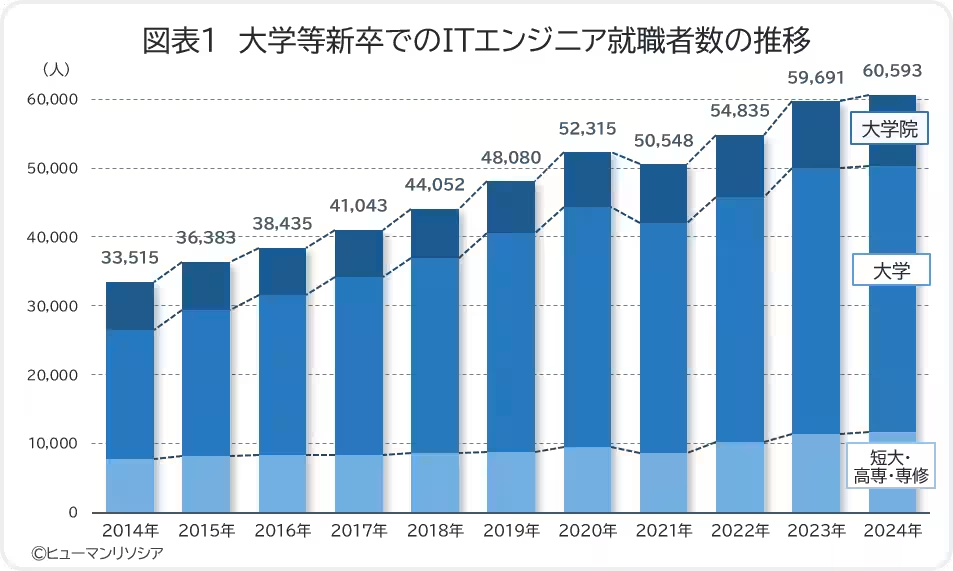
1. Increase in New Graduates: The number of new graduates securing jobs as IT engineers has grown for three consecutive years, although the growth rate has only seen a marginal increase of 1.5% from the previous year.
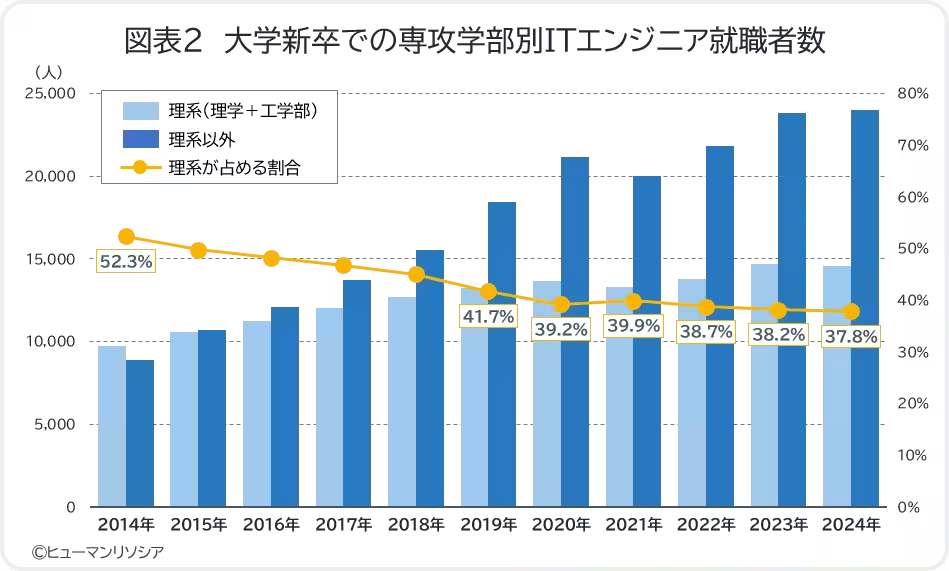
2. Decline in Science Graduates: Despite the growth, those from scientific fields (natural and engineering sciences) make up only 37.8% of new employment in IT, indicating a worrying trend where humanities graduates are increasingly filling these roles.
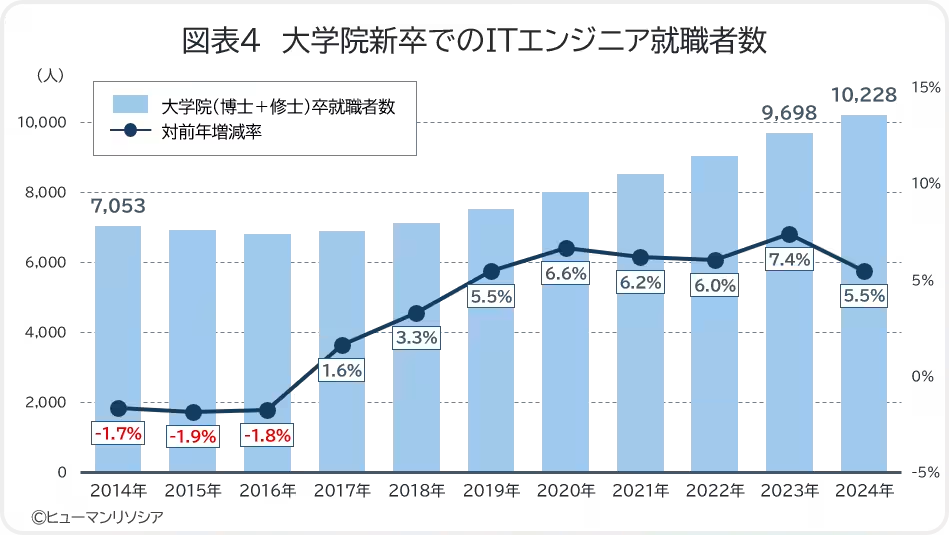
3. Graduate Demand on the Rise: Conversely, the number of graduates from graduate school has seen an increase for eight consecutive years, highlighting an escalating demand for individuals with advanced IT knowledge and skills.
The report employs data compiled from Japan's Ministry of Education and various educational institutions, analyzing job placements among graduates from universities and technical colleges specifically in the realm of IT engineers. Those graduating from graduate schools, universities, junior colleges, technical colleges, and vocational schools, were all examined. Special emphasis was placed on the number of graduates entering specialized technical professions in the information processing and communications sector.
Trends in New Graduate Employment
The results of the analysis indicate that the employment of new graduates in IT engineering reached a total of 1.5% growth, demonstrating a positive but cautious trend in the market. However, this rise was much smaller compared to previous years and suggests that hiring new graduates may become more challenging moving forward.
When we delve deeper into the figures, we observe that graduates from humanities fields are increasingly taking up roles traditionally filled by those from technical backgrounds. In fact, the proportion of humanities graduates entering IT careers is on the rise, while the percentage of science and engineering graduates has fallen below 40%. The challenge here is clear: as the market evolves, employers may need to invest more resources into developing and nurturing the talent they bring on board — particularly through training and ongoing professional development.
Educational Background Impact
Looking to graduate education, the report notes a considerable increase in those pursuing master’s and doctoral degrees within IT fields, showing a 5.5% increase year on year and surpassing 10,000 individuals. This long-term trend can likely be attributed to continued advancements in IT technologies such as artificial intelligence and enhanced data analysis capabilities, which necessitate a higher level of expertise.
However, it is also critical to acknowledge that while the number of those entering the field has risen, the overall number of graduate students in the IT sector has remained relatively stable. This static figure implies that attracting skilled young professionals will face significant competitive pressure in the foreseeable future.
Conclusion
The ongoing expansion of hiring among new graduates in IT engineering points toward a promising trend. Yet, it also highlights significant challenges. With the rapid advancement of technology and renewed focus on digital transformation initiatives, foundational changes in how companies nurture talent will be essential. Organizations may need to rethink their approaches, placing a greater emphasis on the development of young hires and reskilling their existing workforce.
Moreover, the current trend indicates a critical pivot in the type of candidates entering the IT field. As various sectors embrace digital transformation, the importance of continuous learning and skills evolution will take precedence, making training and educational investment not just beneficial but essential.
For those interested, the full report can be downloaded from the designated publication page provided by Human Resocia.
About Human Resocia
Human Resocia has established itself as a comprehensive human resource service provider encompassing staffing, recruitment, and defining solutions tailored toward digital transformation across 27 locations in Japan. Since its establishment in 1988, the company has utilized its diverse capabilities rooted in educational ventures to provide extensive support and services in this competitive market.
Topics Business Technology)
【About Using Articles】
You can freely use the title and article content by linking to the page where the article is posted.
※ Images cannot be used.
【About Links】
Links are free to use.