



Understanding the Departure of Key Personnel in Small Enterprises: Insights from Recent Research
Understanding the Departure of Key Personnel in Small Enterprises: Insights from Recent Research
In the recent survey conducted by OGS Consulting, significant insights were gathered regarding the departure of skilled executives from small and medium-sized enterprises (SMEs) in Japan. With a focus on managers and executives who have resigned in the past five years, this study reveals the underlying issues that often lead to their decision to leave.
The Reality of Executive Departures
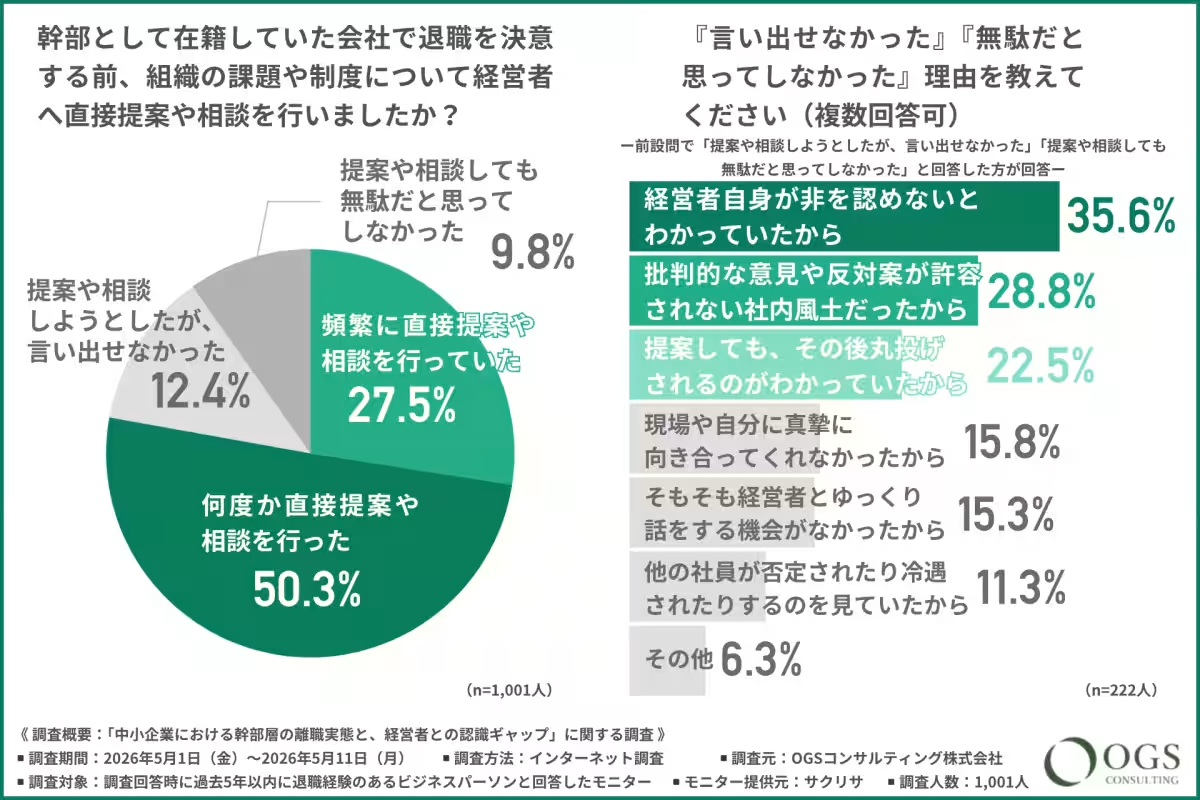
Many small business owners may resonate with the phrase, "Suddenly, my right-hand person left." The survey found that most executives did not leave the company abruptly but had previously voiced concerns and suggested improvements for the organization. A staggering 80% of executives indicated they had attempted to engage with their management through proposals aimed at fostering organizational improvement prior to their departure. However, these efforts often went unacknowledged or unnoticed, leading to feelings of disappointment and abandonment that ultimately resulted in resignations.
Impact on the Organization
The loss of key executives poses far more than just an HR challenge; it can impair decision-making speed and weaken management functions, potentially triggering a chain reaction of departures among younger employees. The research emphasizes the importance of understanding the true reasons behind these departures, which often include hidden conflicts and unmet expectations that are not immediately visible to company leaders.
OGS Consulting defines the executive roles in this context as individuals integral to facilitating communication between the management and the operational teams, emphasizing organizational growth and direction. The term “right-hand personnel” encompasses those who understand the company’s vision and actively participate in executing it.
Key Findings from the Survey
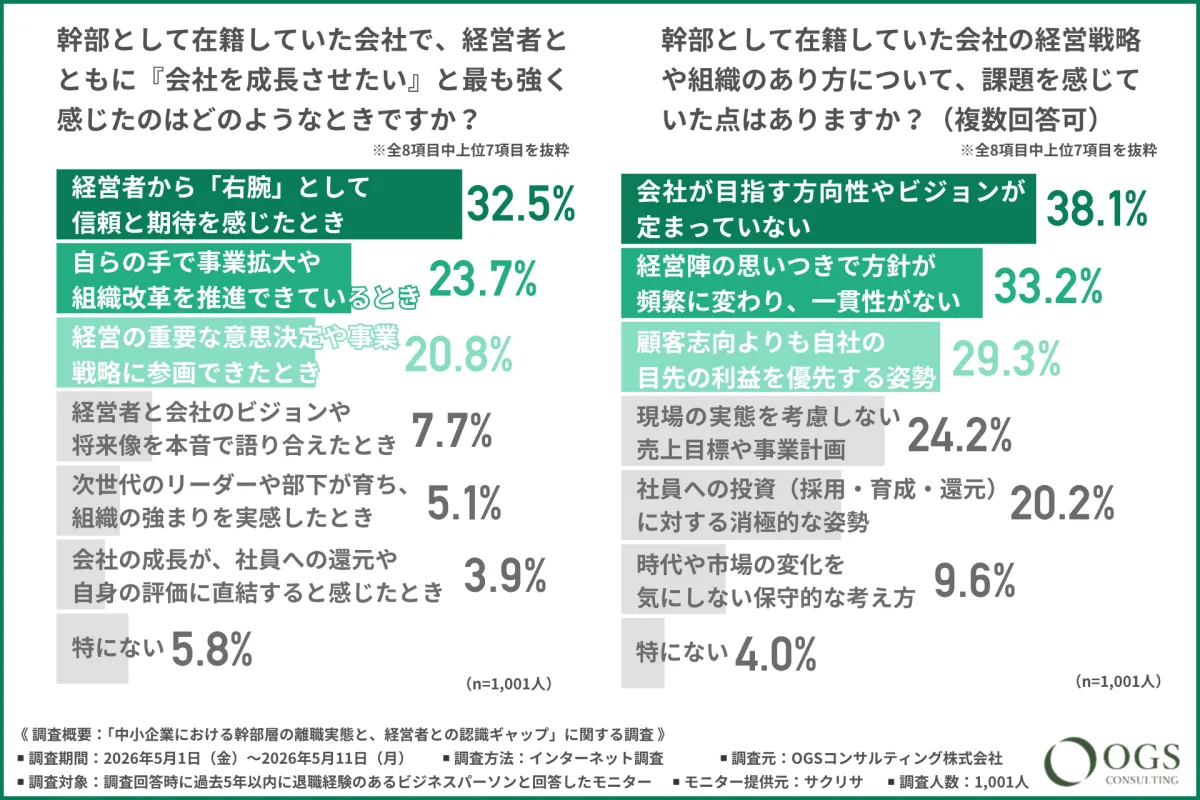
1. Trust and Engagement: A substantial percentage (32.5%) of respondents stated that feeling trusted by their executives inspired their motivation the most, echoing the sentiment that they wish to actively participate in shaping the company’s direction. Further, 23.7% felt most engaged when they could drive business expansion or organizational reform themselves.
2. Identifying Gaps: When asked about the challenges they faced regarding the company's strategic direction, many executives highlighted the lack of clear vision (38.1%) and frequently changing policies (33.2%) as major setbacks that created a stressful work environment. Nearly 30% expressed frustration at the company's short-term profit focus instead of long-term customer value.
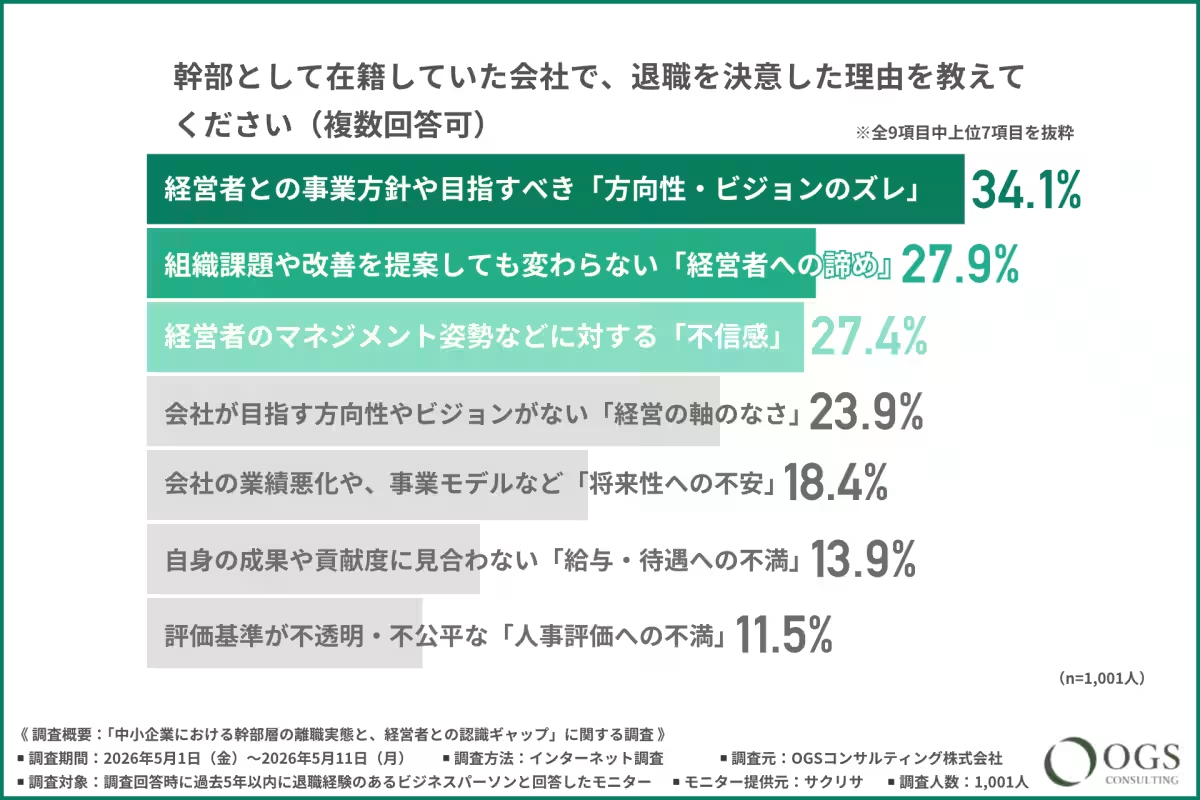
3. Reasons for Departure: Notably, the leading cause for resignation was identified as a misalignment between the executives' vision and that of their management, with 34.1% citing this as a primary reason for their departure.
4. Connection Between Proposals and Departure Decisions: A significant 77.8% of those who left affirmed that they had frequently or occasionally tried to propose changes to address organizational challenges before resigning, indicating a proactive approach to influencing the company positively.
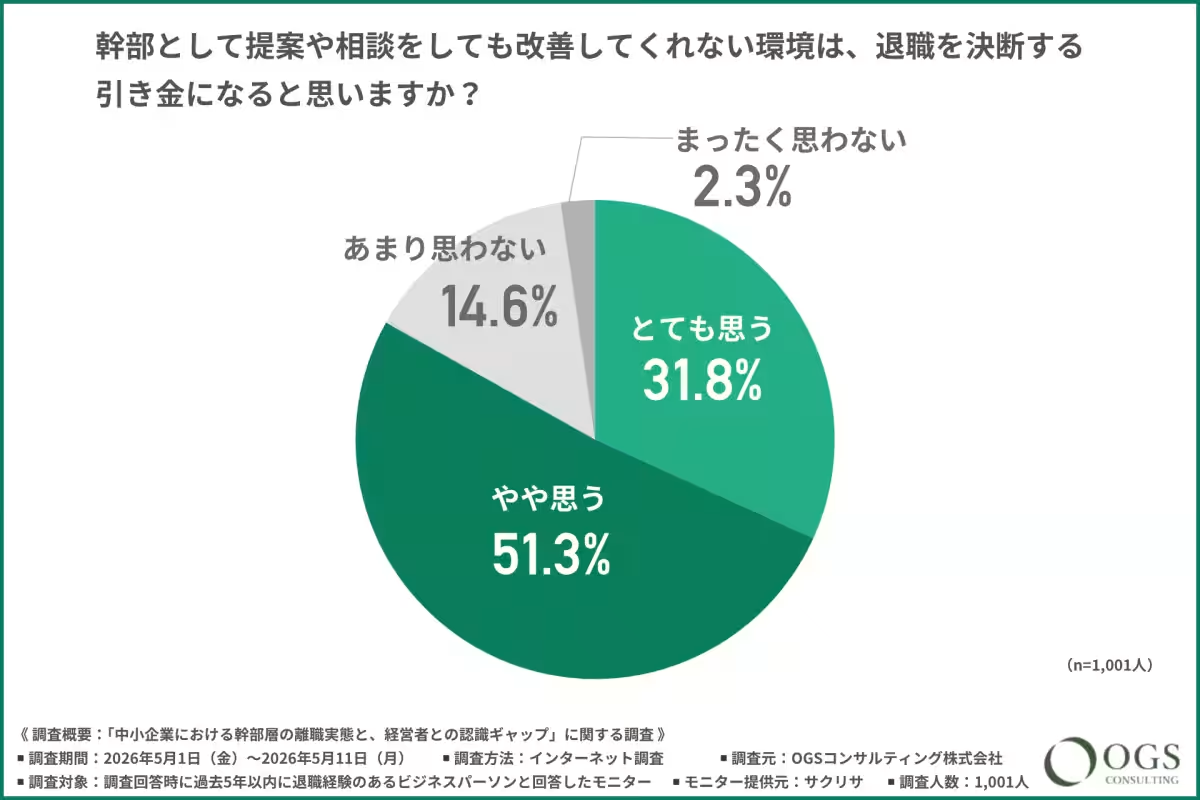
5. Going Unheard: The executives reported that despite their repeated proposals, they often found management unresponsive or dismissive, fostering a growing sense of despair and distrust that ultimately contributed to their decision to leave.
The Importance of Actionable Feedback
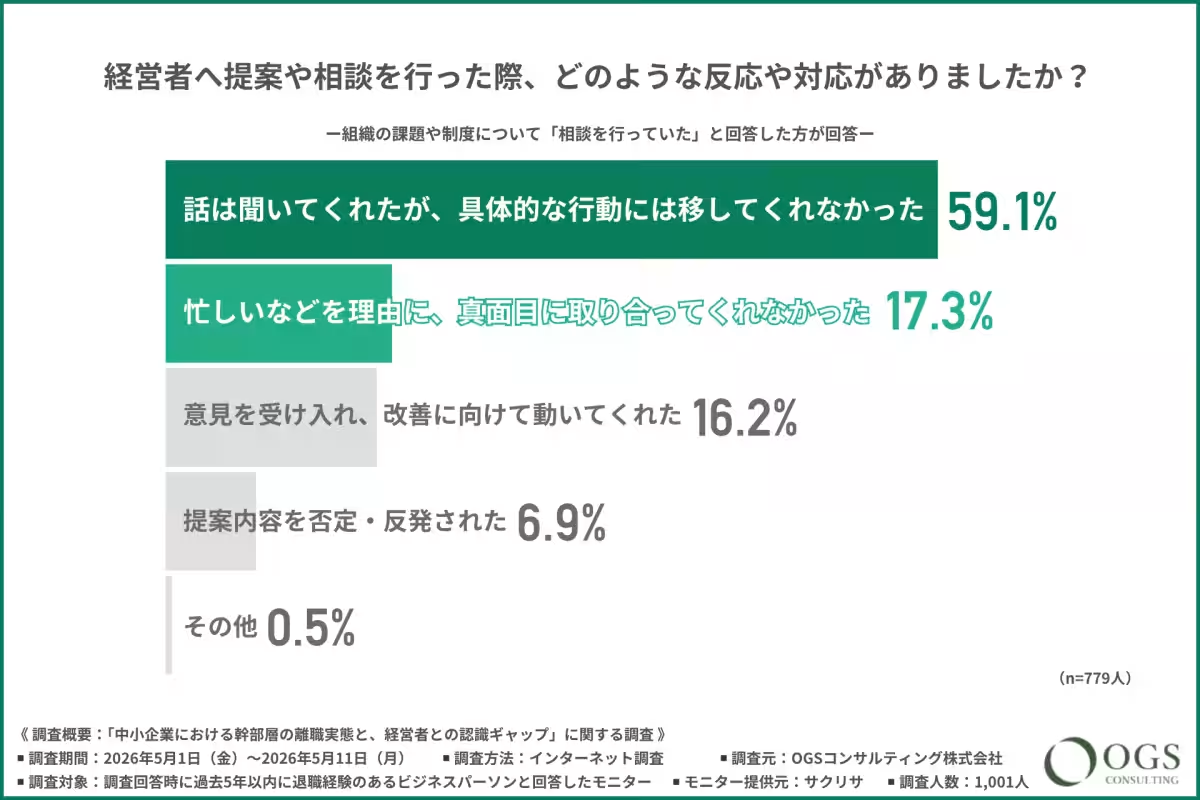
Executives expressed significant disappointment towards management's failure to act on their suggestions, with 59.1% stating that while their opinions were heard, they did not lead to actionable changes. This lack of responsiveness not only dampened morale but also led to a belief that management was unwilling to acknowledge the company's shortcomings, causing feelings of hopelessness among the executives.
The pervasive culture of discouraging dissenting opinions and the risk of increased workloads played critical roles in suppressing these voice processes, limiting opportunities for meaningful feedback and improvement.
Conclusion: A Call to Action for Executives
The findings of this research signal a pressing need for business leaders to foster a culture where feedback is not only welcomed but acted upon. By addressing the concerns raised by their key personnel and ensuring a more transparent dialog of engagement, small business owners can mitigate the risk of losing their most valuable assets—executives willing to champion the company’s growth. Effective and responsive leadership could very well be the differentiator that retains fluent talent amidst a competitive business climate. It’s imperative that management listens and provides genuine responses to the issues raised by their teams.
The full details of the survey can be accessed via OGS Consulting’s white paper, revealing further insights that highlight the challenges and solutions within small businesses regarding personnel retention.

Topics General Business)
【About Using Articles】
You can freely use the title and article content by linking to the page where the article is posted.
※ Images cannot be used.
【About Links】
Links are free to use.