



Understanding the Boundaries of Discomfort in Online Advertising: Key Insights from Recent Survey
Understanding the Boundaries of Discomfort in Online Advertising: Key Insights from Recent Survey
In today's digital age, we encounter a staggering amount of advertising daily, especially with the rise of smartphones and advanced digital technologies. However, as the volume of ads increases, many consumers are becoming increasingly frustrated with ads that seem irrelevant or appear too frequently. A recent survey conducted by Ato Inc., targeting individuals aged 20 to 60, delves into the impressions of ads and behavioral changes in response to them.
Survey Overview
Ato Inc., led by CEO Yohei Nasuda and headquartered in Chiyoda, Tokyo, executed a survey from March 30 to March 31, 2026, in collaboration with PRIZMA. With a sample size of 1,019 respondents, this survey aims to address impressions of ads and how they influence consumer behavior. All data from the survey is available for download, providing insights into what constitutes advertising discomfort.
The Threshold of Discomfort in Advertising
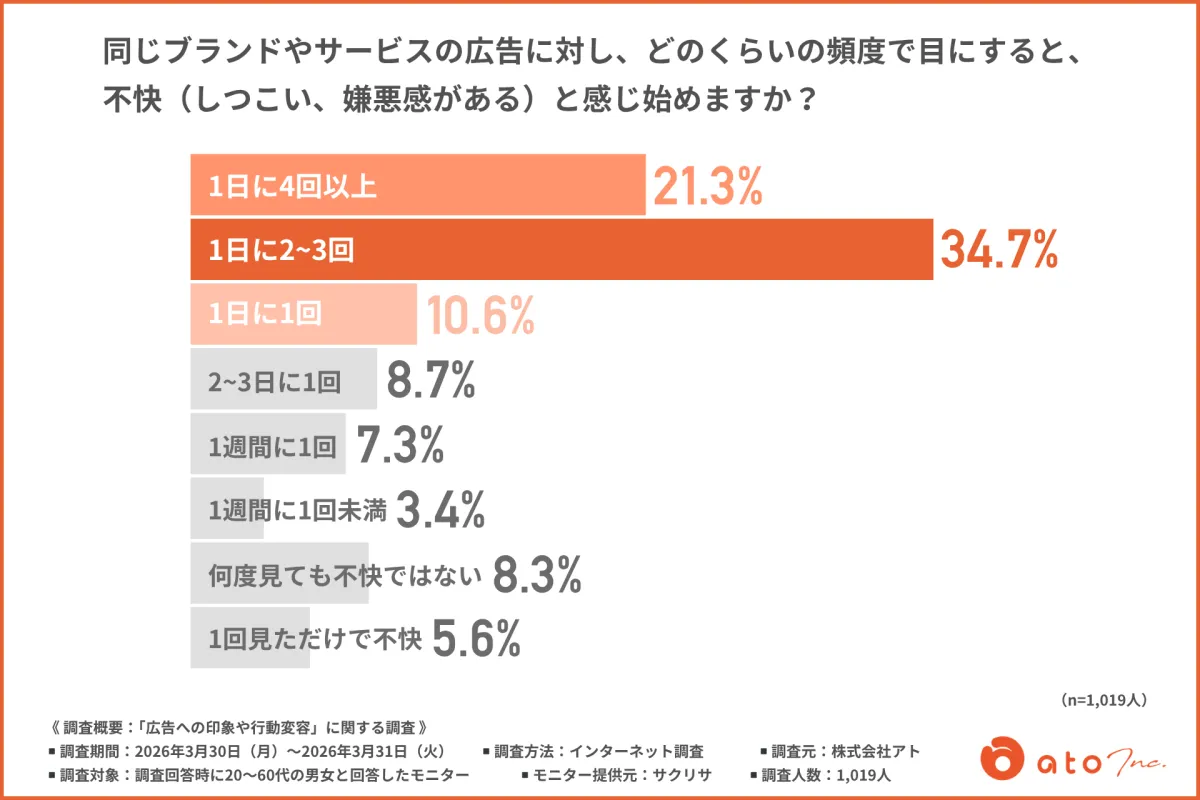
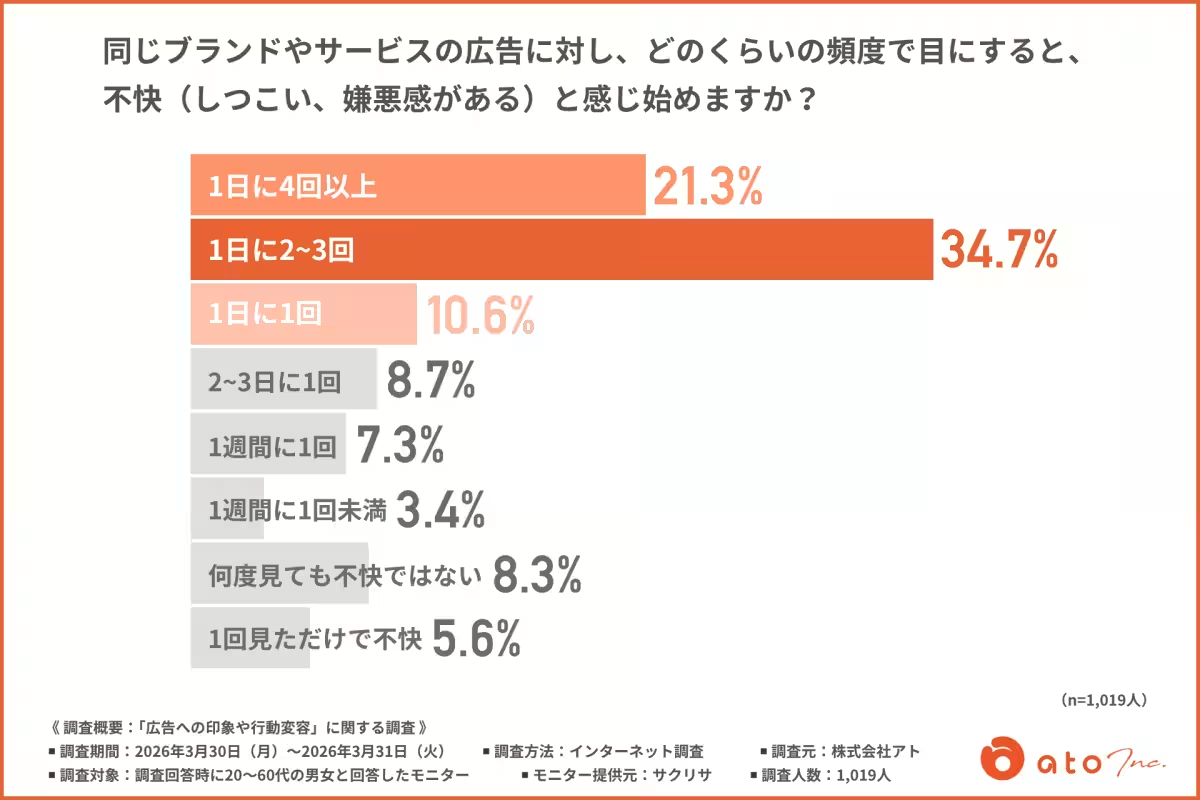
A crucial question arises: how frequently must a consumer encounter the same ad before feeling discomfort? The survey reveals that the majority of respondents (34.7%) start to feel uncomfortable after seeing the same ad two to three times a day, while 21.3% reported discomfort after four or more instances. When combined, over half the respondents experience discomfort after seeing multiple ads within a day. Notably, the survey also highlights that nearly 70% of people begin feeling annoyed even if they see an ad just once a day.
Media Types and Advertising Discomfort
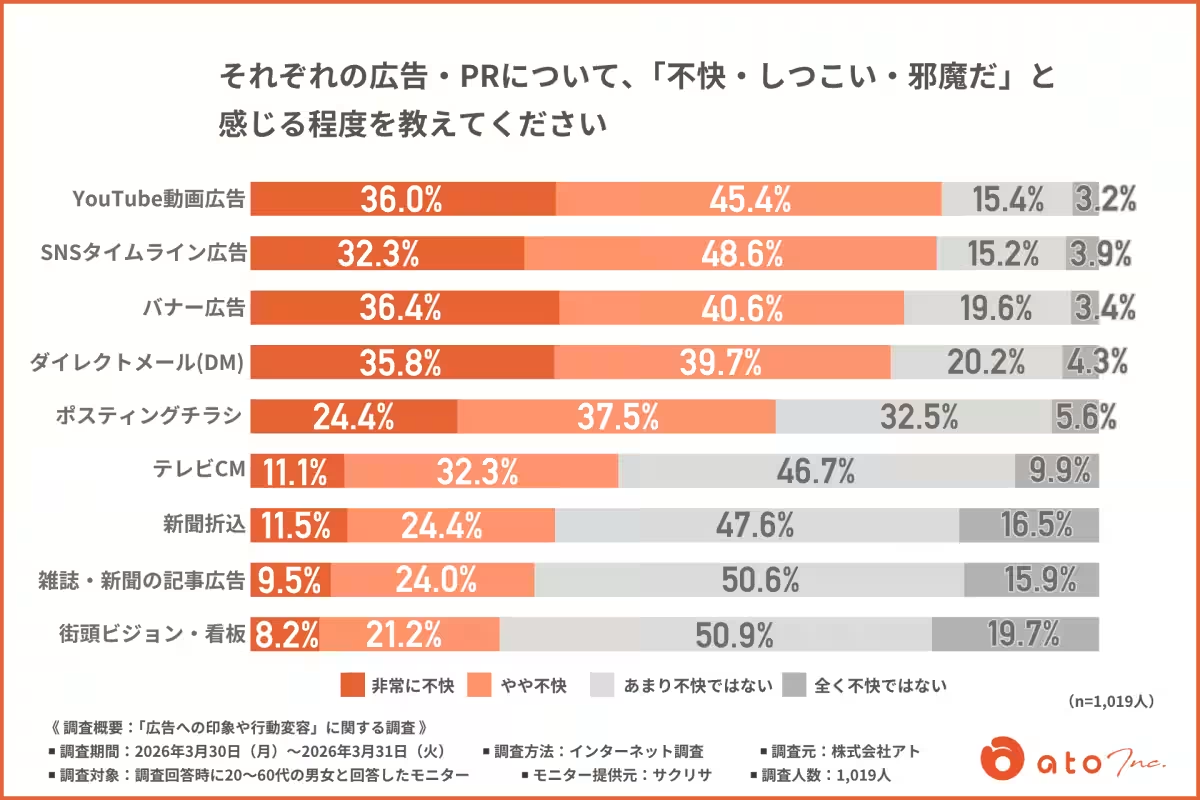
Which types of media lead to heightened feelings of discomfort? When asked about various advertising formats, a striking 80% of respondents classified digital ads, such as banner ads or YouTube ads, as “very unpleasant” or “somewhat unpleasant.” While some offline advertising methods like direct mail resulted in discomfort for certain individuals, mediums such as street billboards or newspaper ads elicited far less negativity. The intrusive nature of digital advertising seems to provoke more substantial negative feelings due to its tendency to interrupt users' viewing experiences.
Stress Factors in Online Advertising
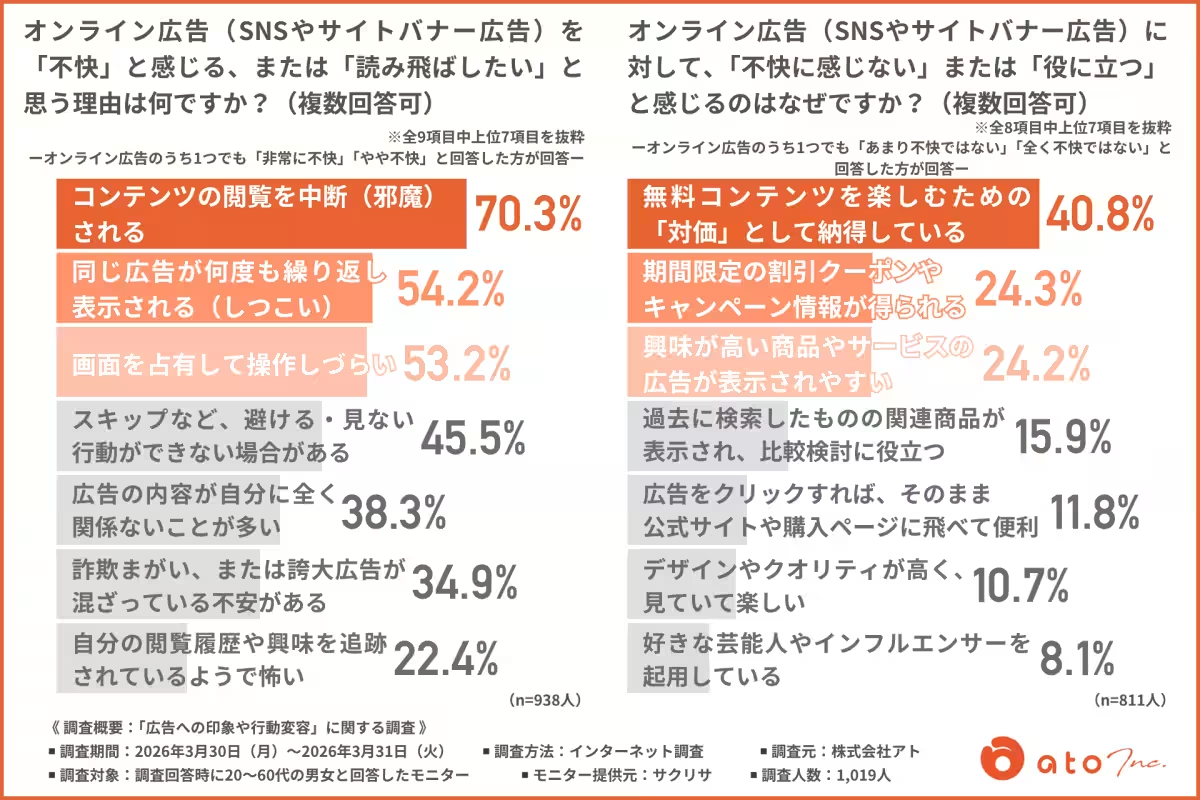
Digging deeper into the elements of online advertising, respondents identified primary factors contributing to their discomfort. The leading reason (70.3%) was the interruption of content viewing, followed by repetitive displays of the same ad (54.2%), and ads that took up too much screen space, making interaction cumbersome (53.2%). This suggests that users often feel disrupted by one-sided, intrusive marketing efforts that neglect their viewing pace and preferences.
Positive Aspects of Online Advertising
Interestingly, not all respondents find online ads bothersome. Among those who reported ads to be “not very unpleasant” or “not unpleasant at all,” 40.8% believe they are a necessary trade-off for enjoying free content. Others find value in receiving limited-time discounts or promotions (24.3%) and interest-based advertisements (24.2%). This indicates that relevant and beneficial advertisements can foster a more positive reception among consumers.
Offline Advertising Discomfort
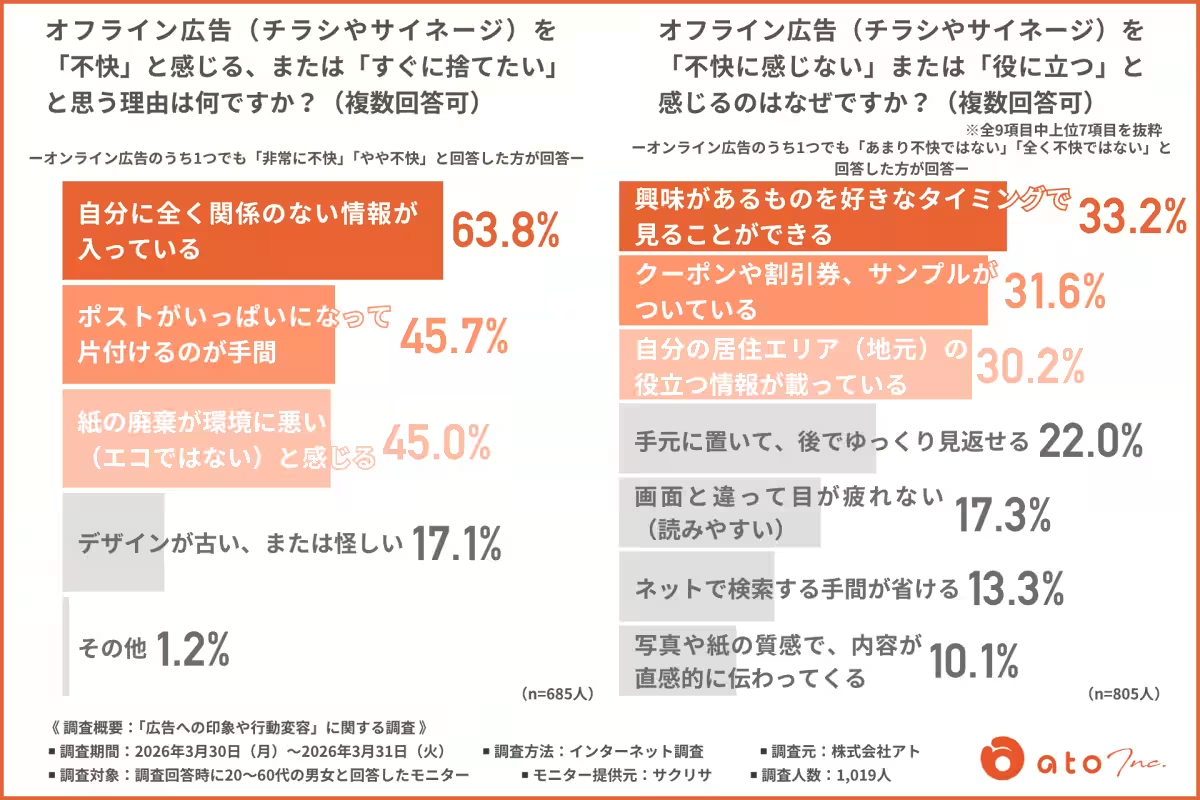
Turning to offline advertising, the survey asked those who found traditional ads unpleasant about their reasons. A significant 63.8% noted the presence of irrelevant information as the main issue, alongside frustrations regarding cluttered mailboxes (45.7%) and environmental concerns over paper waste (45.0%).
Conversely, those who perceive offline advertising favorably often cite the ability to review materials at their own pace (33.2%), the inclusion of coupons or samples (31.6%), and local information that adds value (30.2%) to their lives.
Memory Retention in Advertising
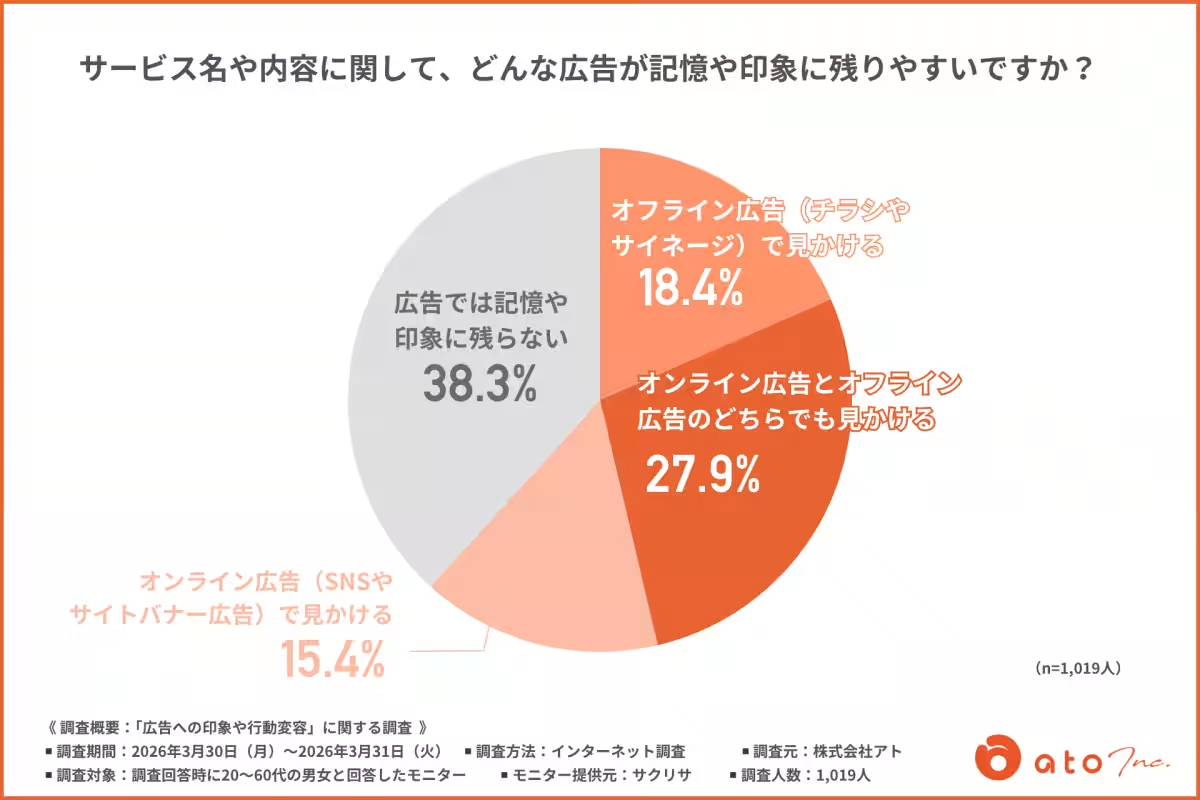
The survey also highlighted key insights into what makes advertisements memorable. Participants reported that they were more likely to remember ads seen in both online and offline formats (27.9%) compared to those seen in just one medium. This highlights the importance of utilizing a multi-channel marketing approach to enhance retention.
Behavioral Responses to Advertising
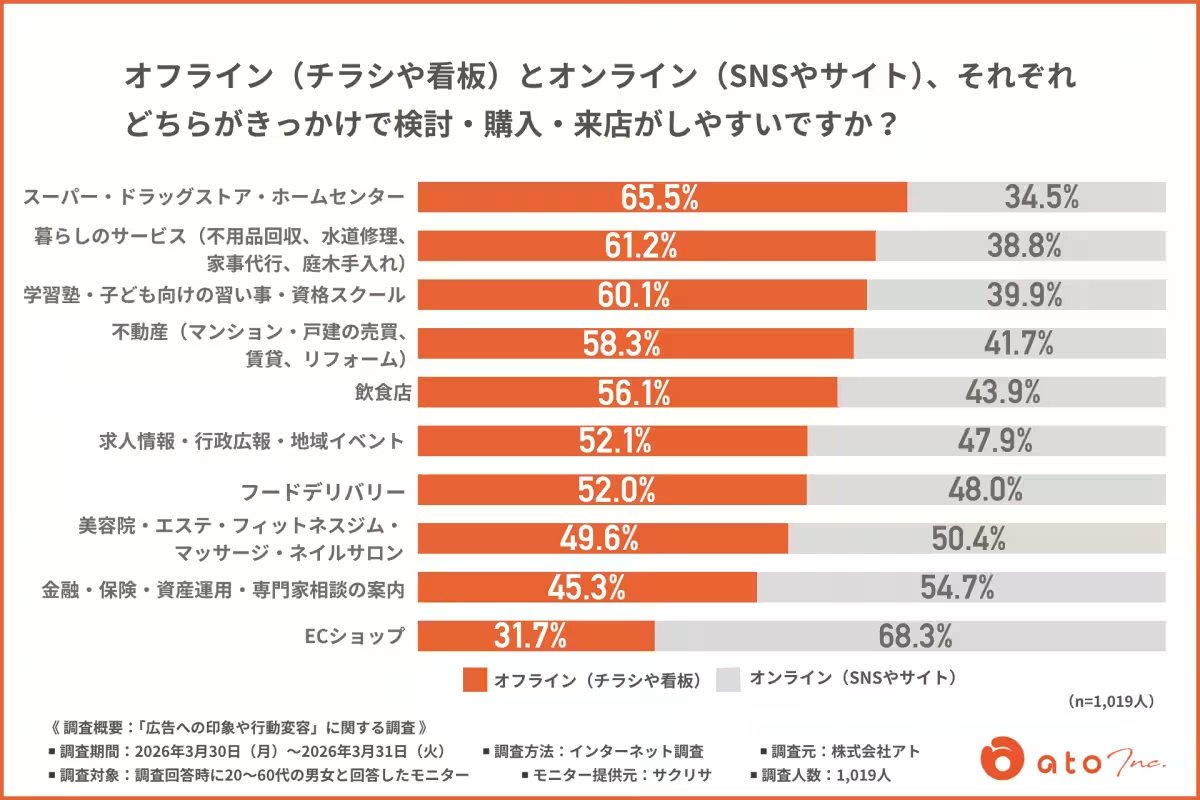
When exploring how different media influence purchasing decisions, the survey revealed that for local services, over 60% of respondents find offline ads to be more effective. This stark contrast appeared in sectors like eCommerce, where online ads played a more significant role in influencing consumer actions.
Conclusion: Rethinking Advertising Strategies
The Ato Inc. survey sheds light on the perceptions of consumers towards various advertising modalities, emphasizing the need for nuanced strategies. While digital ads often evoke discomfort due to their intrusive nature, offline ads carry advantages when users can engage with them at their convenience. By balancing online and offline marketing elements, businesses can develop more effective advertising strategies that respect consumer preferences and mitigate distress.
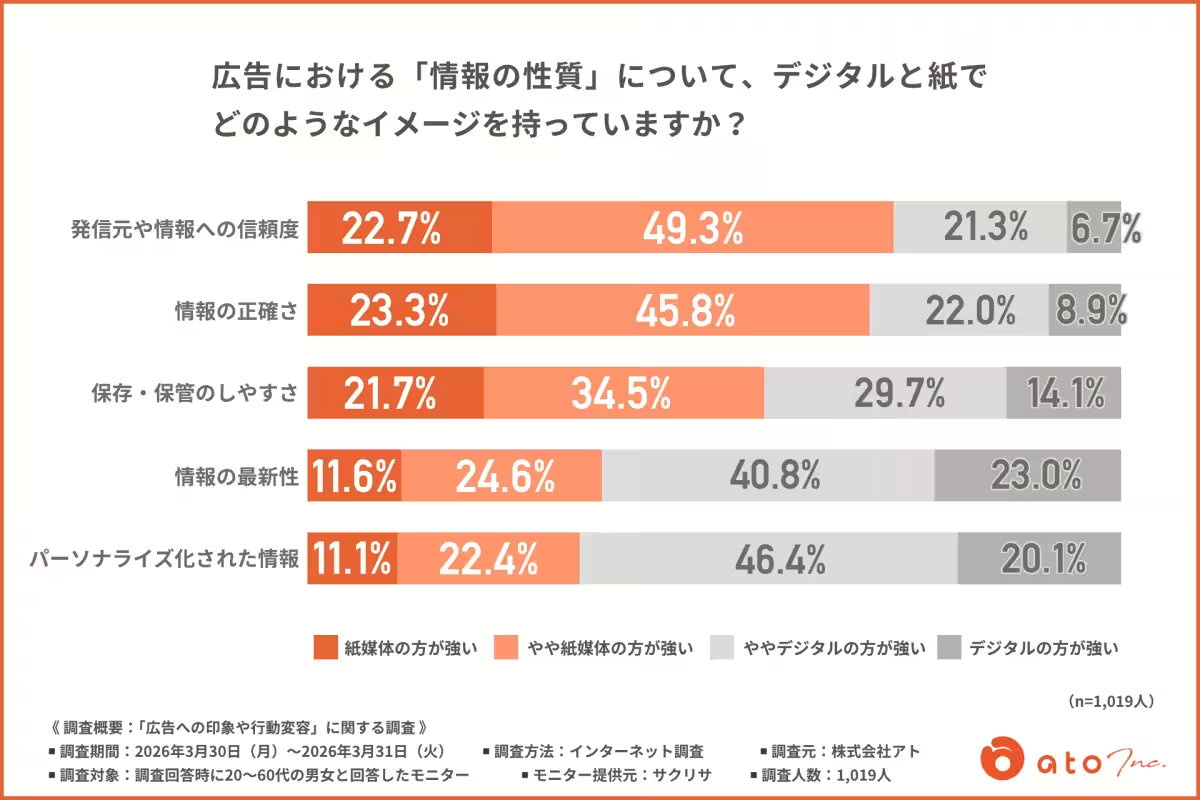
Furthermore, companies should recognize the distinct qualities of each advertising medium, leveraging digital marketing for immediacy and local promotions for tangible, trusted information. As Ato Inc. continues to innovate with its direct mail solutions, businesses must also adapt to fit the evolving landscape of consumer engagement and advertising effectiveness.

Topics Consumer Products & Retail)






【About Using Articles】
You can freely use the title and article content by linking to the page where the article is posted.
※ Images cannot be used.
【About Links】
Links are free to use.