



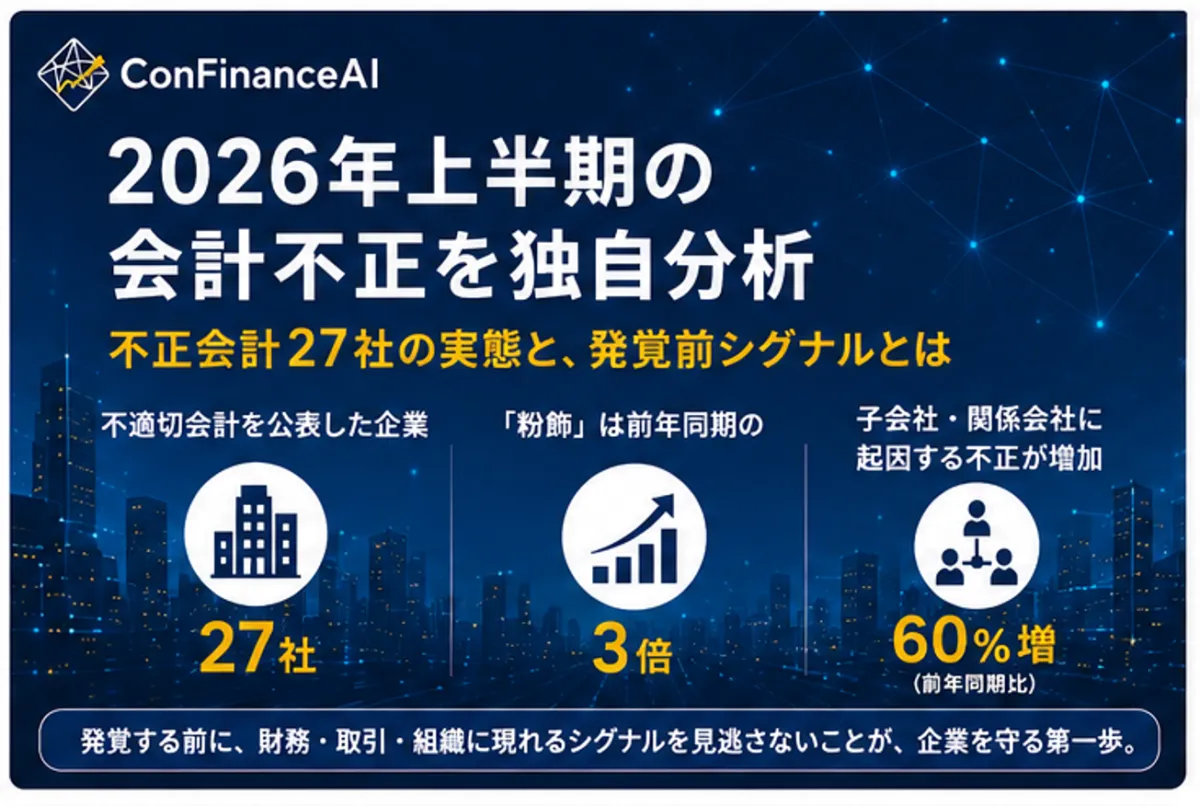
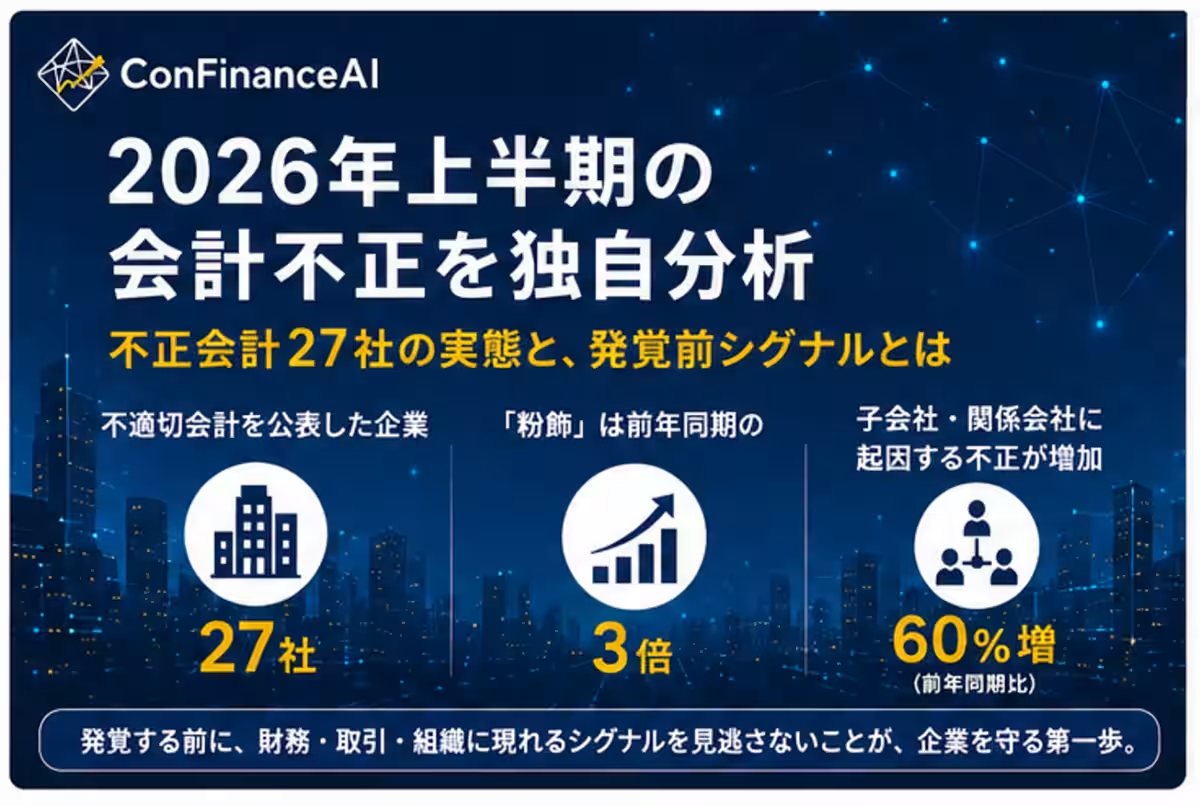
Analysis of Accounting Irregularities Disclosed by 27 Companies in Japan's First Half of 2026
Analyzing Accounting Irregularities in Listed Companies: A Study by ConFinanceAI
In a revealing report, ConFinanceAI has conducted an analysis of the accounting irregularities disclosed by publicly listed companies in Japan during the first half of 2026. This analysis sheds light on the changing landscape of financial accountability and the emergence of alarming trends in corporate governance.
Findings from ConFinanceAI's Analysis
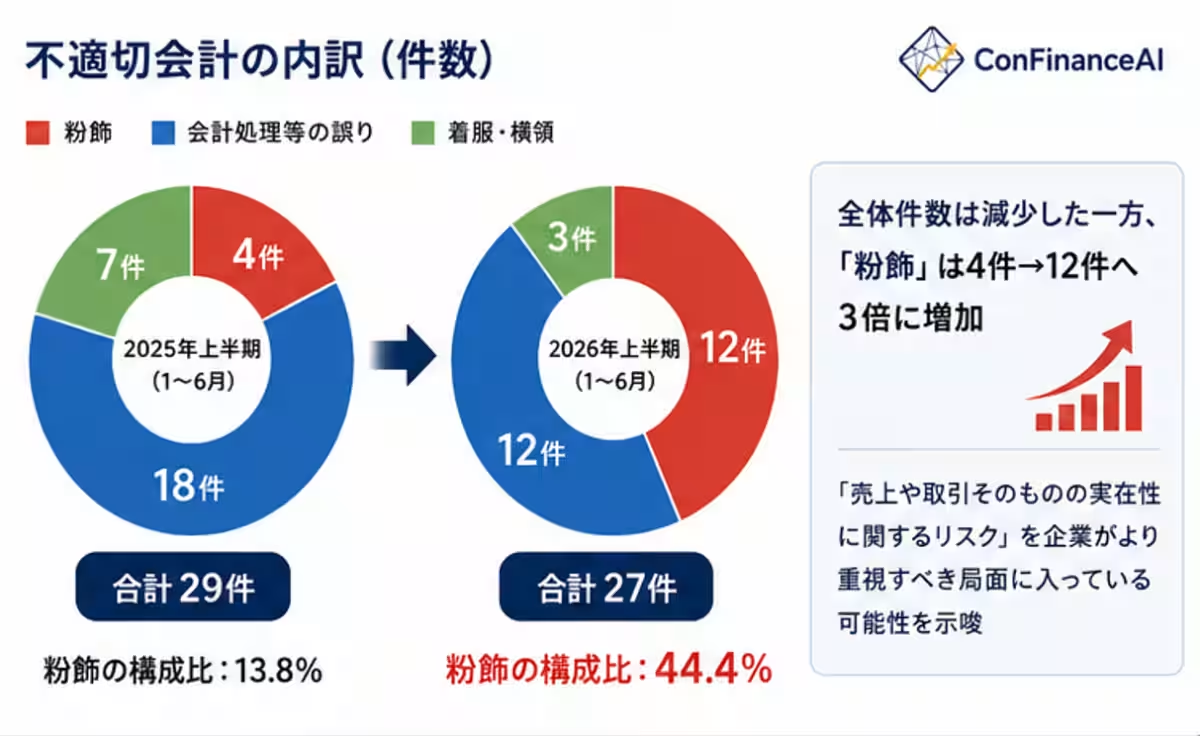
According to research from Tokyo Shoko Research, the number of companies reporting accounting discrepancies has decreased from 29 to 27 compared to the same period last year. However, there has been a significant surge in cases of financial fraud, suggesting a shift in the nature of accounting irregularities. Specifically, the proportion of fraudulent practices jumped to 44.4% from 13.8% in the previous year, indicating that companies are now facing heightened risks regarding the legitimacy of their revenue and transactions.
1. A Shift Toward Fraudulent Practices
Of the 27 instances of inappropriate accounting recorded in the first half of 2026, there were 12 cases of financial fraud, 12 related to errors in accounting processes, and 3 involving embezzlement. Notably, the dramatic rise in fraudulent activities raised concerns among stakeholders, suggesting that firms must re-evaluate their internal controls and risk assessment measures.
The emergence of greater scrutiny following scandals involving companies such as Ortz and Nidec in 2025 has resulted in auditors being more cautious, leading to the increased uncovering of fraudulent practices in recent disclosures.
2. The Oversight of Subsidiaries
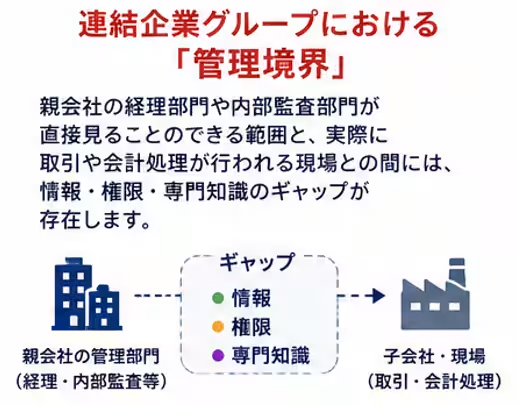
The study highlighted that issues related to subsidiaries or associates accounted for 29.6% of the irregularities identified. This revelation points to a growing risk where management lacks adequate visibility into the workings and financial reporting of subsidiary companies. The analysis emphasized the need for parent companies to bridge the gap in information and authority when it comes to overseeing their subsidiaries.
The special investigation reports of KDDI have also indicated business concentration on specific individuals within subsidiaries, insufficient risk assessments for new projects, and inadequate management monitoring as critical points for improving oversight.
3. The Alarming Trends in the Information and Communication Industry
In sector-specific analysis, both the manufacturing and information & communication industries reported seven cases each. However, the deterioration in the information sector was particularly stark, where 85.7% of cases were classified as financial fraud. This sector's reliance on intricate digital transactions makes it difficult to verify the actual value behind reported sales, necessitating a thorough examination of the structure of transactions alongside traditional financial metrics.
4. Warning Signs of Fraud
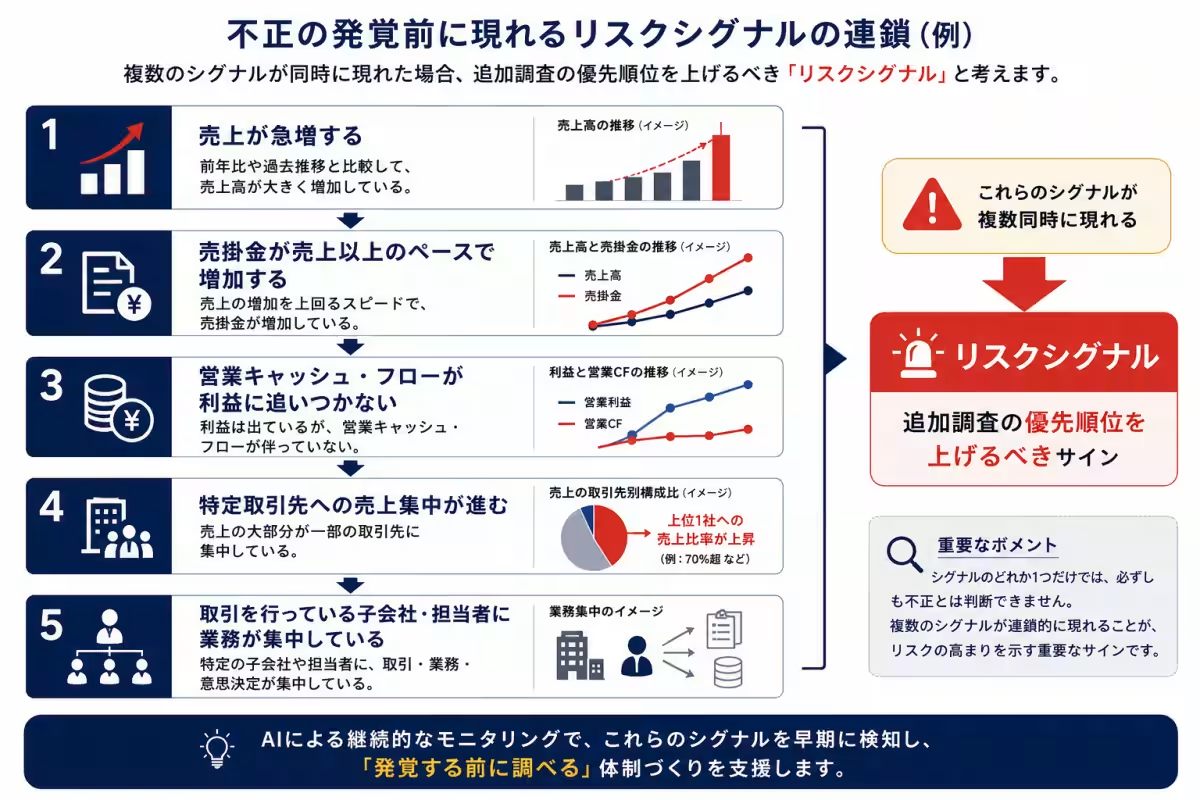
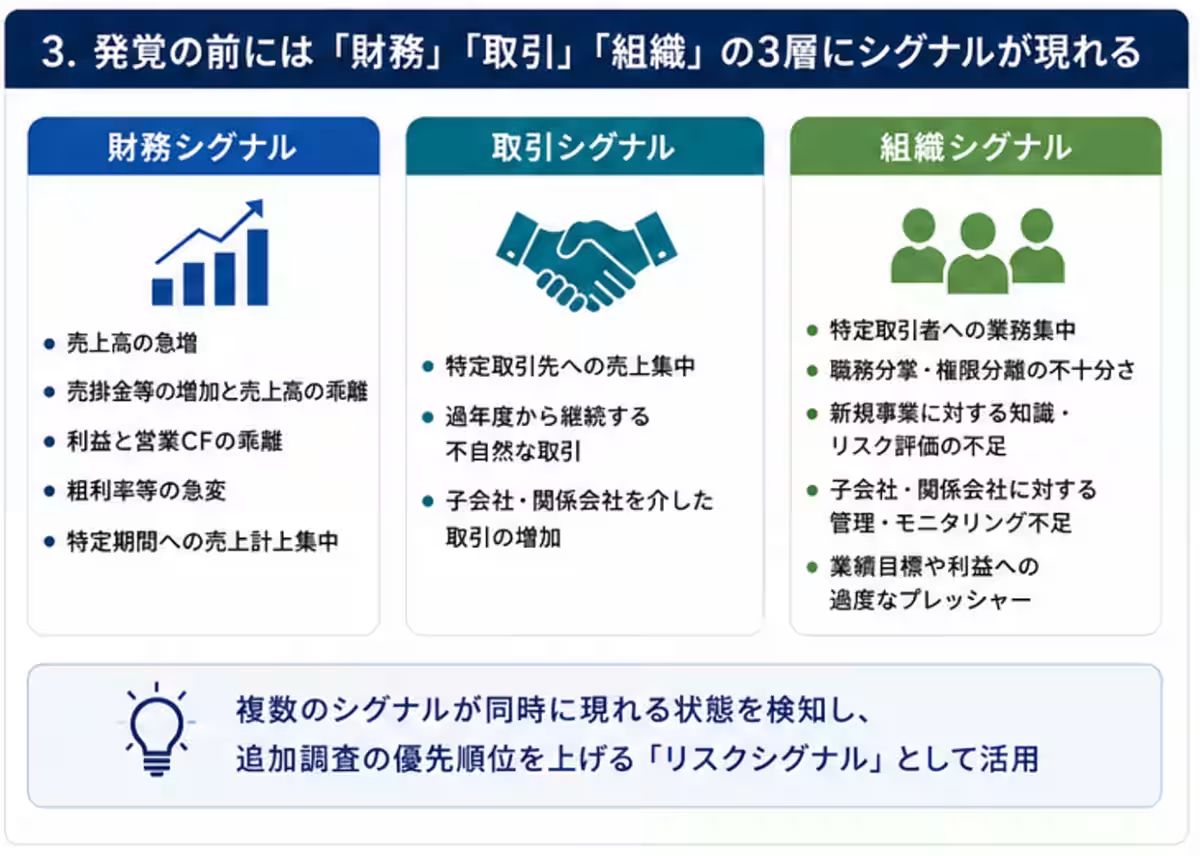
ConFinanceAI identified several warning signals that may forecast fraudulent activities. These include significant increases in sales figures, disparities between accounts receivable and actual sales, and unusual pressure on specific employees or departments to meet financial targets. The interplay of multiple signals could indicate deeper systemic issues within a company.
5. Accumulation of Abnormalities Before Fraudulent Outputs
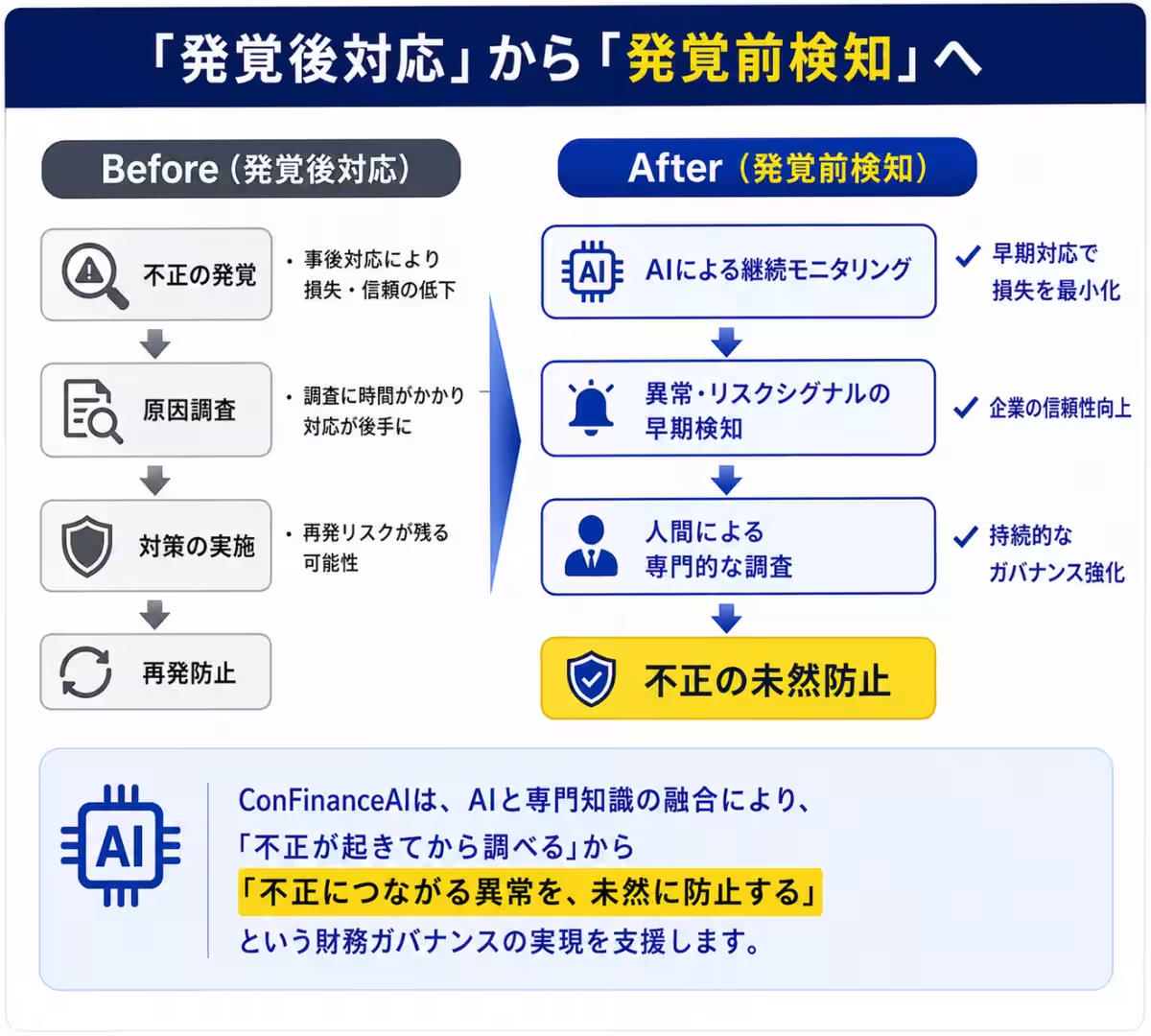
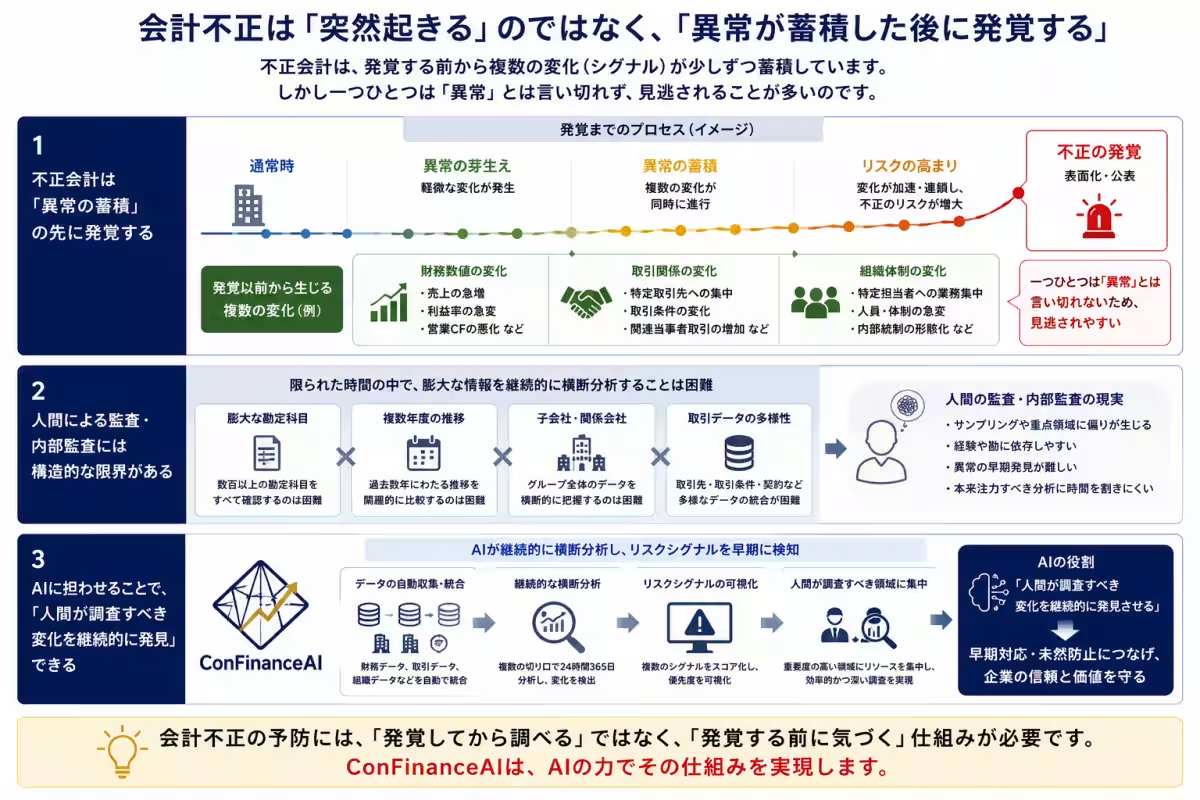
The conclusion drawn from this analysis highlights that accounting fraud does not arise suddenly; instead, it gradually manifests through a series of abnormal changes in financial data, transaction histories, and organizational structures. Failing to recognize these signs could lead to insufficient preventative measures, emphasizing the necessity for companies to adopt continuous monitoring systems powered by AI to detect anomalies before they surface as fraud.
The Role of FraudLens by ConFinanceAI
To address this growing concern, ConFinanceAI has introduced FraudLens, a service that utilizes AI and data analytics to monitor corporate financial data continuously. The goal is to detect signs of potential fraud proactively. This approach epitomizes a shift from reactive measures to preventative protocols in corporate governance practices.
Conclusion
The heightened rates of financial fraud alongside the decreasing overall numbers of accounting irregularities present a paradox that requires immediate attention from corporate management worldwide. In 2026, more than ever, the focus must pivot from merely reacting to accounting malpractices to establishing robust systems that can catch discrepancies early on. Such measures are not only essential for maintaining credibility and trust but also for ensuring sustainable business practices in an increasingly complex and scrutinized market environment.
For more information about ConFinanceAI and the services offered, visit their official website at ConFinanceAI.
Topics Business Technology)

【About Using Articles】
You can freely use the title and article content by linking to the page where the article is posted.
※ Images cannot be used.
【About Links】
Links are free to use.