



Dress Code Unveils GA Force Series to Streamline Inventory Management for Businesses
Dress Code Inc. Launches GA Force Series
Dress Code Inc., based in Chuo-ku, Tokyo, has introduced a new addition to its GA Force series: 'Equipment', aimed at significantly enhancing the management of inventory and consumables in businesses. This innovative product follows the release of 'Places', the first in the GA Force series. The launch targets common issues faced by organizations, such as misplaced items, return oversights, and inventory discrepancies, which traditional Excel and spreadsheet management systems struggle to resolve. The new solution aims to drastically reduce the burden on administrative departments while improving asset utilization and management accuracy.
Challenges in Inventory Management
Despite advancements in technology, many companies continue to rely on fragmented and person-dependent inventory management practices. This often leads to various operational challenges:
- - Ambiguity in Item Location and Usage: Misrecorded temporary loans and inter-department transfers can frequently result in lost or unaccounted items.
- - Discrepancies Between Records and Actual Stock: Situations where inventory records exist but the actual items are missing due to neglect in returning or disposing of items.
- - Complex Procurement and Stock Management: Inability to monitor accurate stock levels can lead to procurement delays and unnecessary costs from overstocking.
- - Lack of Lifecycle Management: Inadequate tracking of purchase dates, warranty periods, and useful life can introduce risks associated with disposal decisions and lease return deadlines.
Adequately managing inventory without overwhelming staff remains a significant challenge, often resulting in lost items and surplus inventory. To address these challenges and facilitate streamlined management, Dress Code has developed the 'Equipment' product.
Overview of Equipment
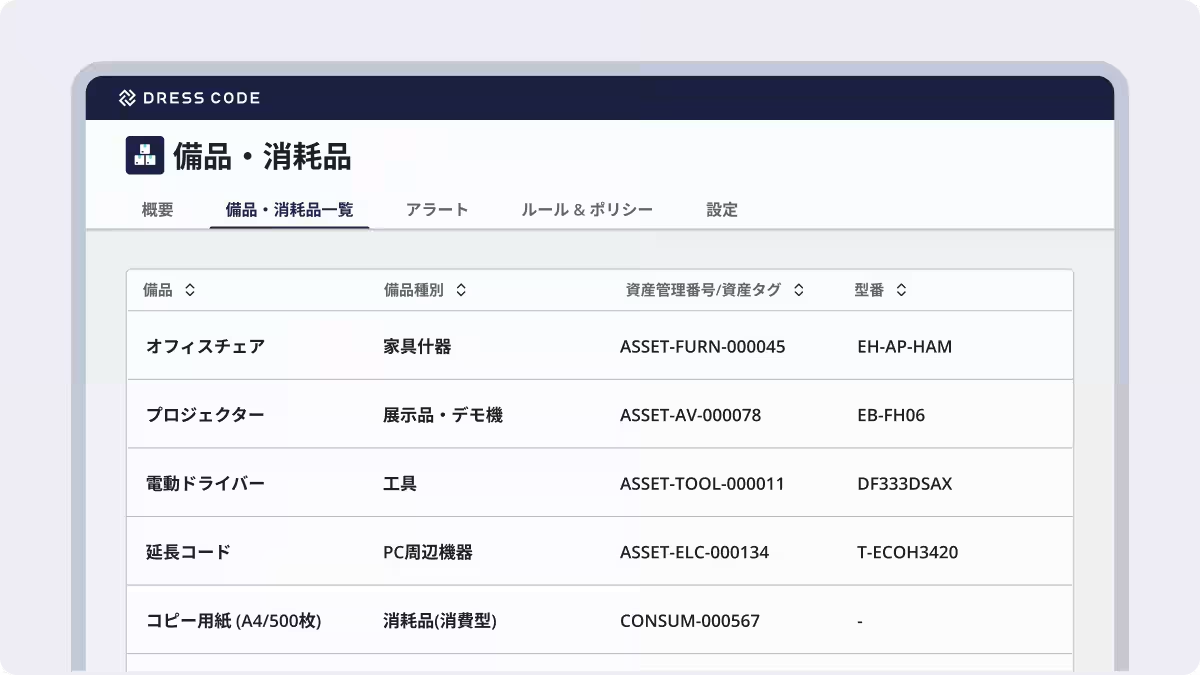
'Equipment' is designed for centralized management of an organization’s diverse assets. This product offers capabilities to efficiently manage everything from furniture and tools to research equipment and office supplies. It includes comprehensive management features, encompassing essential items such as manufacturer, model number, production date, purchase price, warranty information, alongside lifecycle details like failure, repair, and disposal history. By standardizing asset management, organizations can maximize asset utilization while simultaneously reducing costs.
Key Features
- - Centralized Ledger Management: All assets, including furniture and research instruments, are managed in one comprehensive ledger. This enables users to check location, quantity, and usage status at a glance, effectively minimizing the risk of lost or mismanaged items.
- - Custom Item Master Functionality: Companies can freely add items to their inventory, customizing entries based on their unique assets such as furniture, tools, and research equipment. This functionality accommodates specialized management needs that standard ledgers may not support.
- - Lifecycle Management: The product tracks every phase of an item’s lifecycle from purchase to disposal, allowing organizations to visualize repair histories and warranty timelines. This proactive management helps prevent compliance risks associated with expired warranties or delayed disposal decisions.
- - Status Management: Utilization status for each asset—like loans, returns, and installation locations—are meticulously tracked. Immediate awareness of assets that are out on loan or under-utilized improves efficiency in inventory audits and redistribution, which ultimately helps mitigate unnecessary procurement costs.
Future enhancements will include QR code integration for inventory management and tracking features, along with workflow automation for loan applications and damage reports. These developments will further streamline administrative activities and enhance asset efficiency.
About Dress Code
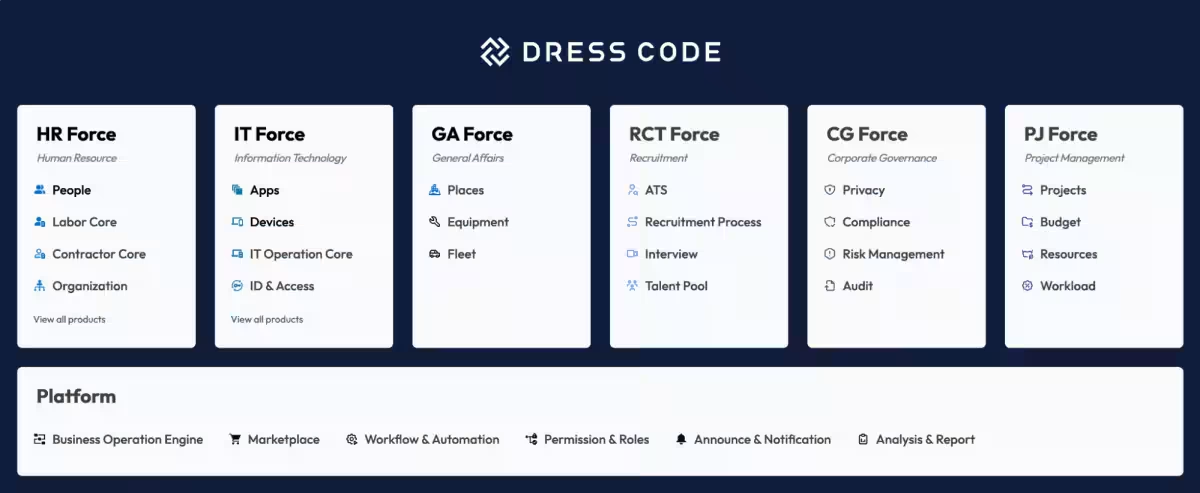
The Dress Code platform aims to alleviate structural friction in workforce management by integrating HR, information systems, and administrative processes into a cohesive solution. Traditional systems, often siloed by department, foster inefficiencies and redundant tasks. Dress Code’s approach focuses on the elimination of these frictions to ensure a more integrated and sustainable optimization of operations. With a product mix that combines SaaS with marketplace functionalities, Dress Code addresses issues within corporate operations that conventional single-feature SaaS cannot solve. Presently, the company operates three series—HR Force, IT Force, and GA Force—planning an expansion to cover additional sectors in the near future. With a presence in territories like Japan, Indonesia, Thailand, and Vietnam, Dress Code is committed to enhancing its offerings and providing intrinsic value to its clientele both locally and internationally.
About Dress Code Inc.
- - Company Name: Dress Code Inc.
- - CEO: Yuuki Ejiri
- - Headquarters: Ginza PREX East 8F, 2-1-4 Tsukiji, Chuo-ku, Tokyo, Japan
- - Founded: September 2, 2024
- - Business Activities: Design, development, and sales of the 'DRESS CODE' platform.
- - Capital: 1,139,089,000 JPY (including capital reserve)
- - Website: Dress Code
For further inquiries:
- - Press Contact: [email protected]
- - Inquiries for Product Use and Business Cooperation: [email protected]
- - Recruitment Inquiries: [email protected]
Topics Business Technology)
【About Using Articles】
You can freely use the title and article content by linking to the page where the article is posted.
※ Images cannot be used.
【About Links】
Links are free to use.