



Exploring the Integration of AI in Intellectual Property: A Global Perspective
The Current State and Potential of AI in Intellectual Property
A newly released report by RWS Group in Japan sheds light on the integration of artificial intelligence (AI) in the field of intellectual property (IP). Conducted among 312 IP professionals from patent offices and companies across 33 countries, this survey reveals critical insights into the industry's perception and implementation of AI technologies.
The report, titled "Reasons to Consider AI's Advancements in Intellectual Property Now," aims to deepen the understanding of Japanese readers by providing a comprehensive translation from its original English version.
Key Findings from the Survey
According to the findings, 80% of IP professionals are currently facing pressure to enhance revenue and reduce costs. However, the number of companies actively embracing AI technology remains limited. The survey highlights significant barriers to implementation, primarily revolving around concerns about accuracy and security.
Concerns About AI Implementation
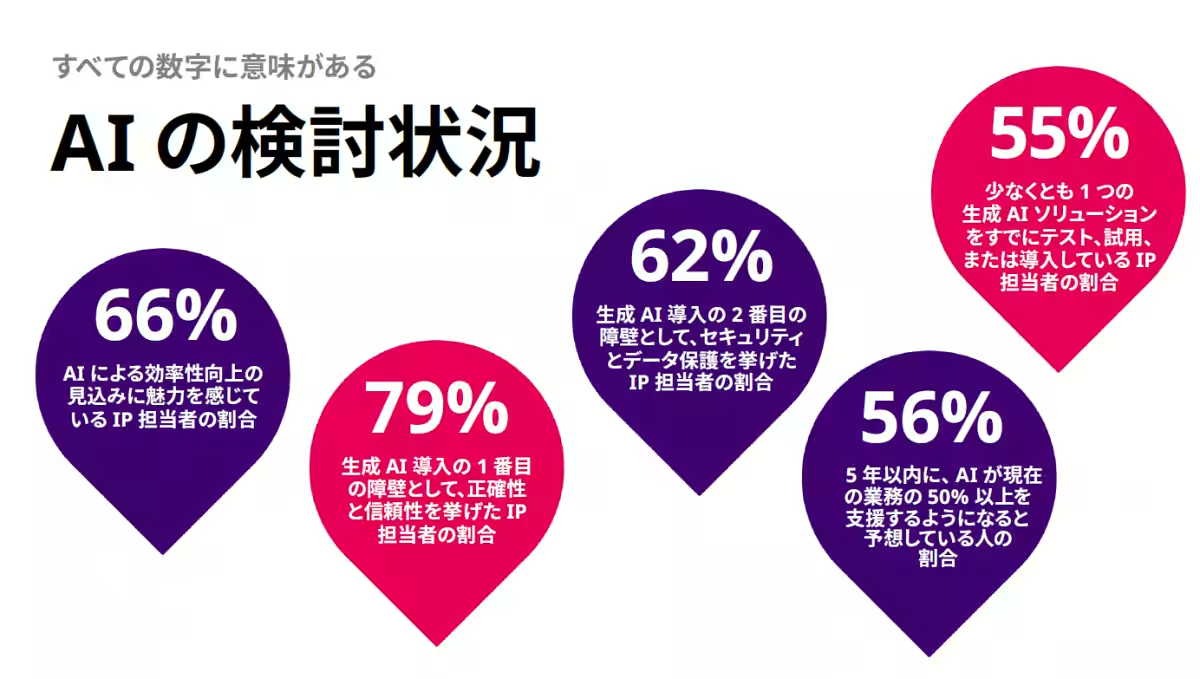
The top concern regarding AI adoption is its "accuracy and reliability," cited by 79% of respondents. Close behind, 62% expressed worries about "security and data protection." These issues significantly contribute to the reluctance seen across the sector towards integrating AI solutions.
Potential Benefits of AI
RWS advocates that AI is not designed to replace human expertise; rather, it should be viewed as a means to enhance operational efficiency and value creation by combining machine capabilities with human knowledge. While only around 34% of IP professionals are currently utilizing AI, several tangible applications were reported:
- - Patent translations
- - Preparation of application documents
- - Optimization of patent databases
- - Patent and trademark investigations
- - Analytical tasks
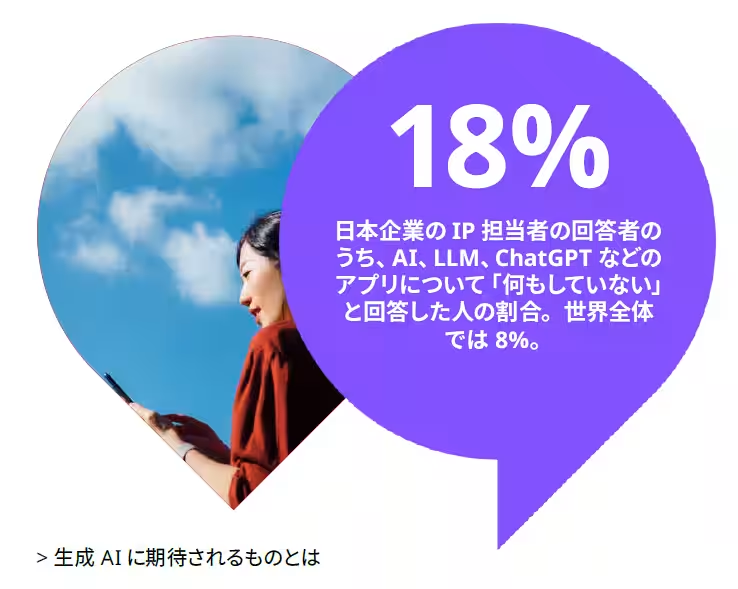
Conversely, about 8% of global respondents indicated a lack of interest in AI, with this figure rising to 18% among Japanese respondents, reflecting a notable discrepancy in the industry's engagement with these technologies.
Expected Outcomes of AI Adoption
Expected benefits from AI integration include:
- - Increased operational efficiency
- - Enhanced automation
- - Improved productivity
These advantages could provide significant solutions to challenges facing IP departments.
Future Perspectives
As AI technology continues to develop, the landscape of IP operations is poised for dramatic transformations. RWS believes that the IP sector must accurately understand and strategically leverage AI's potential to generate greater value.
Accessing the Report
The detailed findings from the report can be accessed by downloading it from the dedicated site: Download the Report.
If you're interested in RWS's services or have inquiries regarding intellectual property support, feel free to reach out for more information.
About RWS Group
RWS Group, headquartered in the UK, operates as the Japanese subsidiary of RWS Holdings plc. Since its establishment in 1998, it has provided comprehensive solutions for global enterprises, offering support across all facets of intellectual property, such as patent applications, translations, investigations, and management. In recent years, RWS has also focused on AI technologies. The company strives to remain a relatable partner for clients in Japan while leveraging the strengths of global enterprises.
RWS Holdings plc stands as a leading provider of technology-driven translation, content management, and intellectual property services. The firm helps clients connect with people worldwide and deliver innovative ideas by protecting and realizing their innovations. RWS's mission is to bridge language, content, and market entry challenges through global intelligence.
Company Information
- - Company Name: RWS Group, Inc.
- - CEO: Marie Hara
- - Location: Kanda Misakicho 3-1-16, Chiyoda, Tokyo
- - Website: www.rws.com/jp
- - Business Focus: Providing solutions related to intellectual property

Topics Business Technology)
【About Using Articles】
You can freely use the title and article content by linking to the page where the article is posted.
※ Images cannot be used.
【About Links】
Links are free to use.