



Mental Health Challenges Among Teachers: Insights from Recent Survey
Understanding Mental Health Challenges Among Teachers
A recent survey conducted by Rodina, a company based in Hiroshima that specializes in supporting health recovery and workplace reintegration, has unveiled significant insights into the mental health of educators in Japan. With 100 teachers participating in this nationwide study, the data sheds light on the working conditions, perceived challenges, and overall mental health of teachers.
Key Findings from the Survey
The survey, conducted from March 7 to March 12, 2025, revealed various insights:
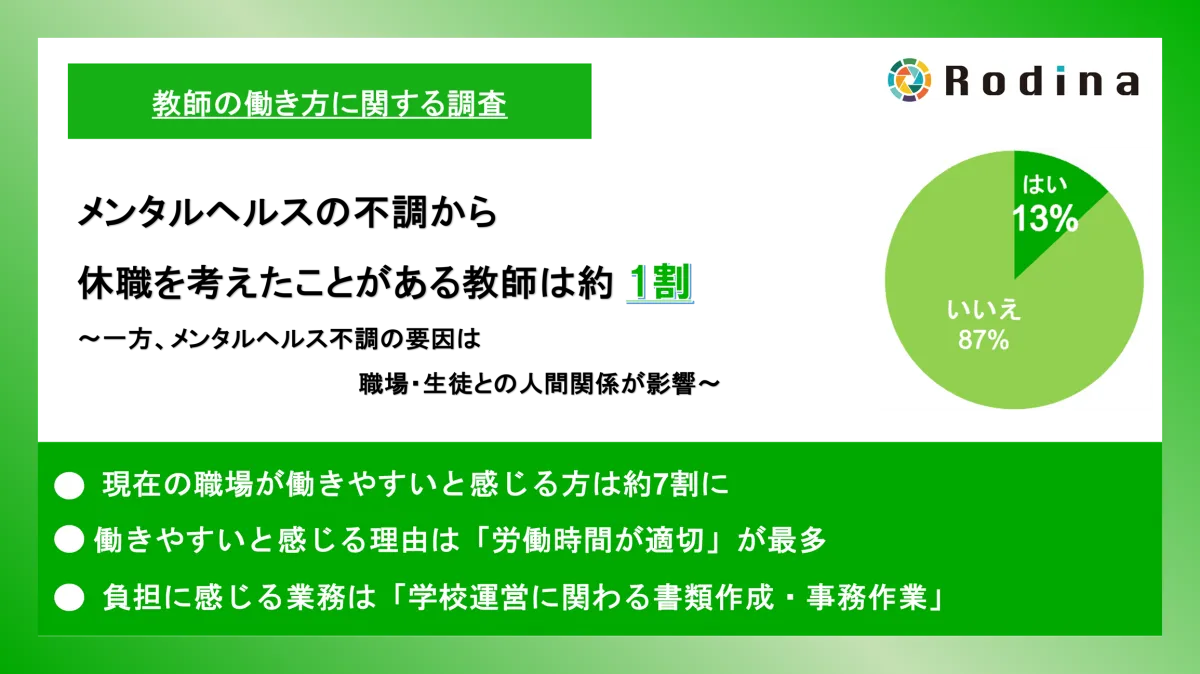
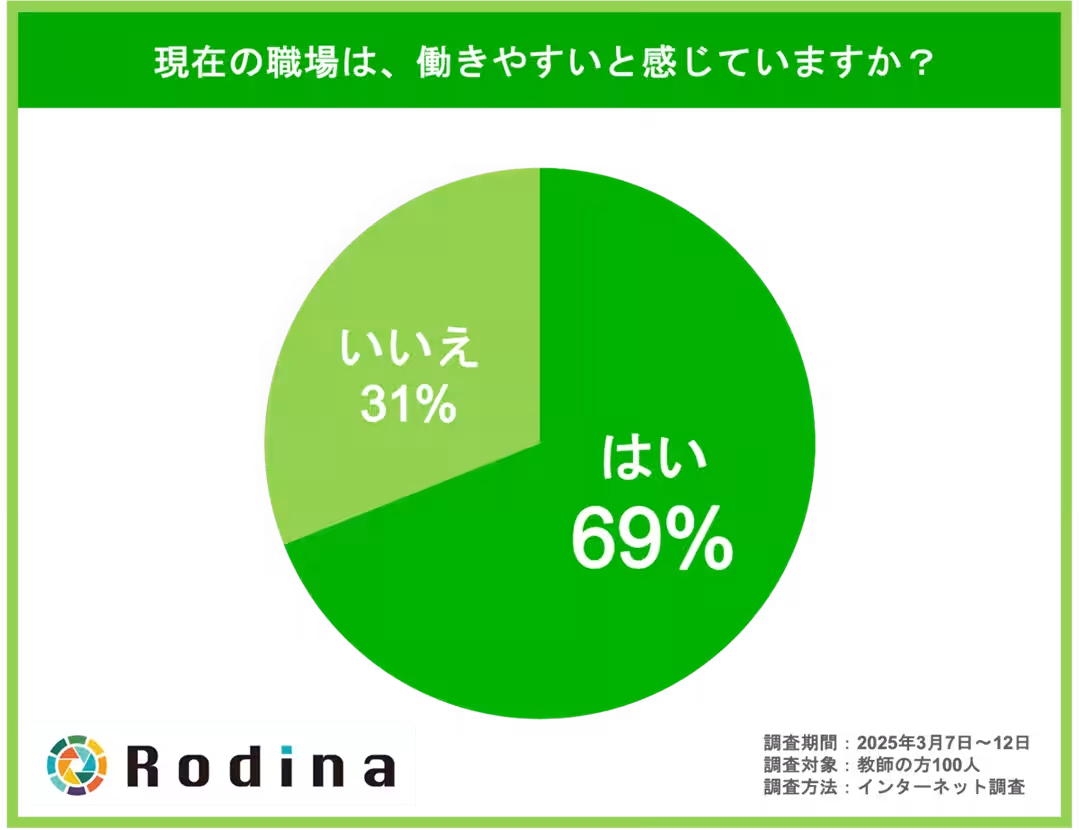
- - Approximately 69% of teachers feel that their current workplace is supportive.
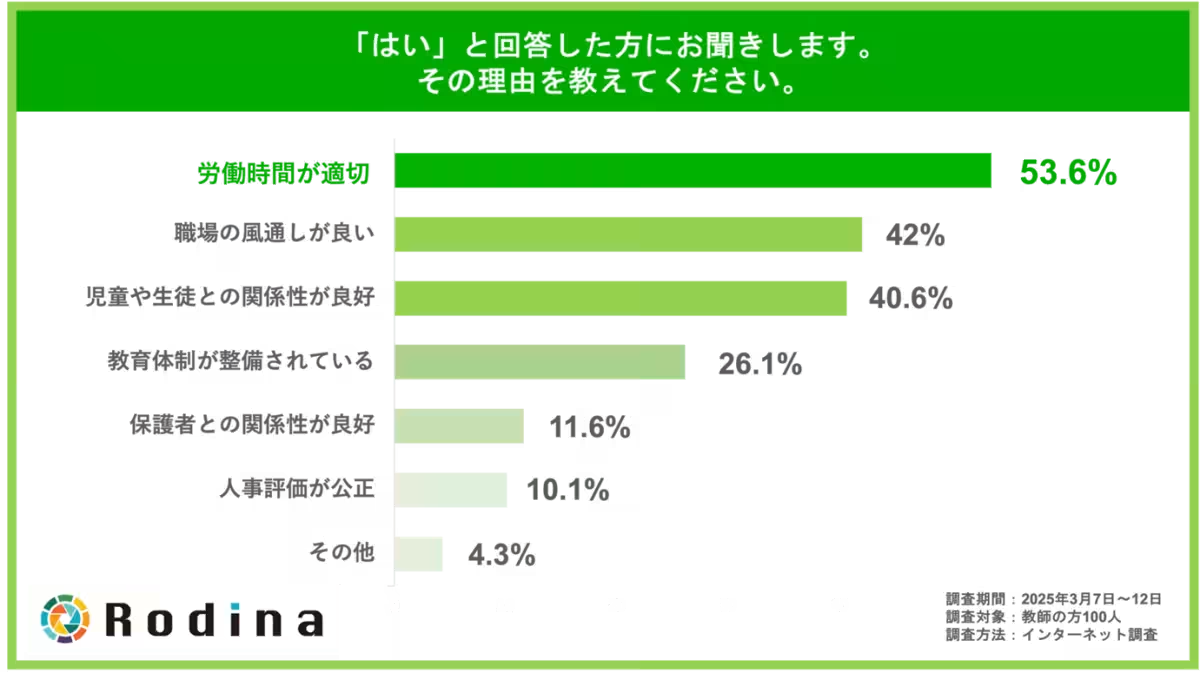
- - A considerable 53.6% of these respondents attribute this positive feeling to appropriate working hours.
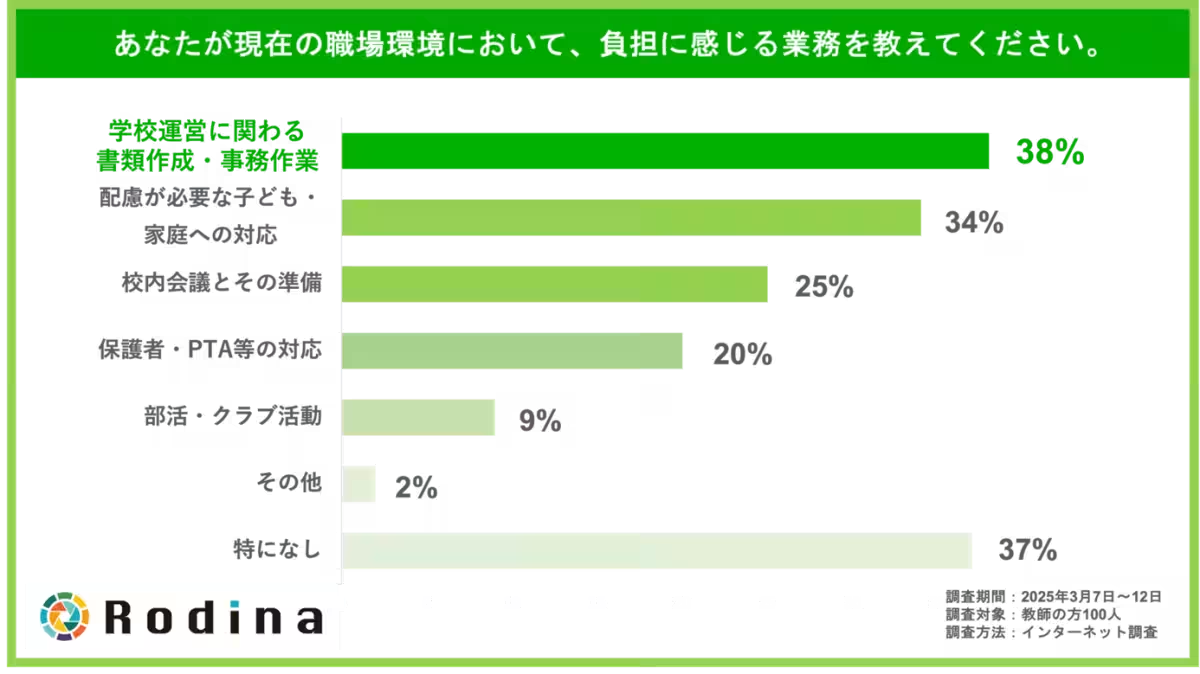
- - Conversely, 38% of teachers indicated that tasks related to administrative paperwork and school operations are perceived as burdensome.
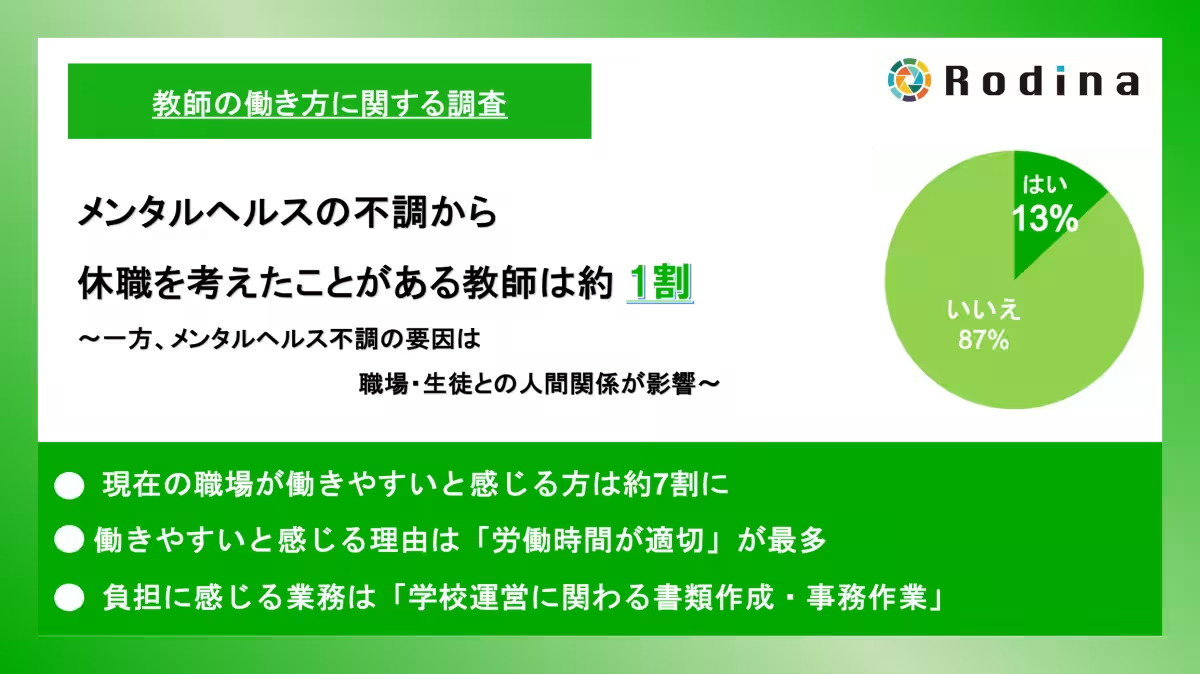
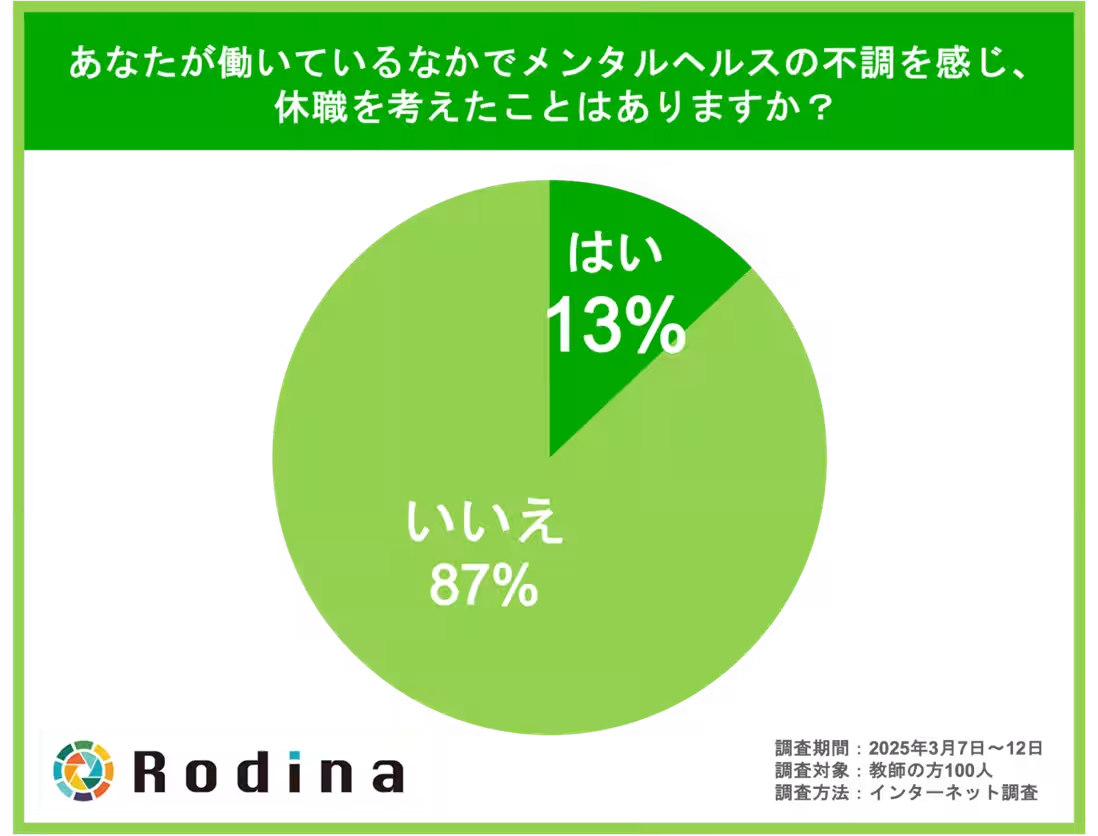
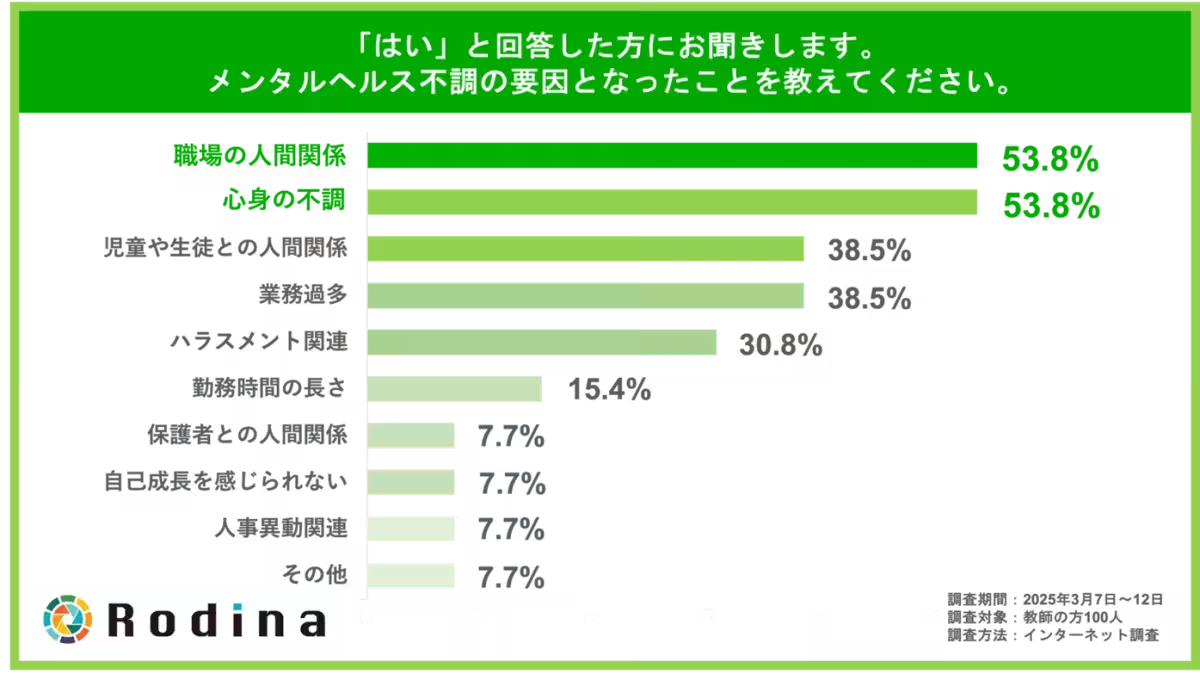
- - Notably, around 13% of teachers have considered taking leave due to mental health issues, influenced largely by workplace relationships and interactions with students.
These findings suggest that the teaching profession is impacted by both satisfaction and mental health challenges, highlighting a pressing need for structural improvements in work environments.
Factors Contributing to Teacher Well-being
When asked why they perceive their workplace positively, the majority (53.6%) cited manageable working hours as a significant factor. Following this, responses included a supportive atmosphere (42%) and good relationships with students (40.6%). Such factors are crucial as the education system continues to adapt to evolving challenges.
However, the report indicates a growing concern regarding the administrative responsibilities overshadowing teaching duties. Around 38% of respondents expressed that paperwork and administrative tasks significantly contribute to their stress levels, thereby compromising the time and energy available for instructional planning and student interaction.
This situation becomes more alarming when we consider the mental health aspect. Among respondents who have contemplated a leave of absence for mental health reasons, many indicated that their struggles stem from workplace relationships (53.8%) and mental exhaustion (53.8%). The pressures of managing not only the curriculum but also interpersonal dynamics can lead to dissatisfaction and burnout.
Addressing the Mental Health Concerns
Despite a considerable number of teachers feeling satisfied with their workplace, the underlying issues surrounding mental health should not be overlooked. Teachers face unique challenges, and the dual role of educator and administrator can create a landscape of stress and fatigue. Ongoing dialogue and reform are essential to enhance teacher welfare and ensure a supportive environment to foster both personal and professional growth.
In light of these findings, Rodina emphasizes the importance of acknowledging and addressing mental health issues within teaching staff. The necessity for a workplace that is not only supportive but also conducive to mental well-being is paramount in creating effective educational environments.
Conclusion
The current findings highlight a paradox in the teaching profession: while many teachers report satisfaction with their working conditions, significant mental health challenges persist. A clear link between perceived workload, workplace relationships, and mental health indicates that reforms are essential. Moving forward, it is crucial for educational institutions and policymakers to focus on improving working conditions, minimizing administrative burdens, and fostering an open and supportive workplace culture. By promoting mental health awareness and providing adequate support, we can ensure that teachers remain not just effective educators but also mentally healthy individuals.
Rodina is committed to creating a society where mental health support and recovery programs are recognized and accessible to all, particularly in educational settings. With future initiatives and a commitment to workplace well-being, we aim to empower teachers to thrive both in their personal and professional lives.
*Author: Yoshihiro Maeda, Psychiatrist, Director of


Topics Health)
【About Using Articles】
You can freely use the title and article content by linking to the page where the article is posted.
※ Images cannot be used.
【About Links】
Links are free to use.