



Addressing Capital Leakage: Innovative Guidelines for Local Tax Management
Addressing Capital Leakage: Innovative Guidelines for Local Tax Management
In recent developments, the Global Investment Corporation has published guidelines for local governments in Japan aimed at curbing capital leakage associated with specific revenue sources like accommodation taxes. This initiative is designed to maximize the economic repercussions within the region by ensuring that funds collected through taxes are reinvested locally instead of flowing to external firms.
The Challenge of Structural Leakage
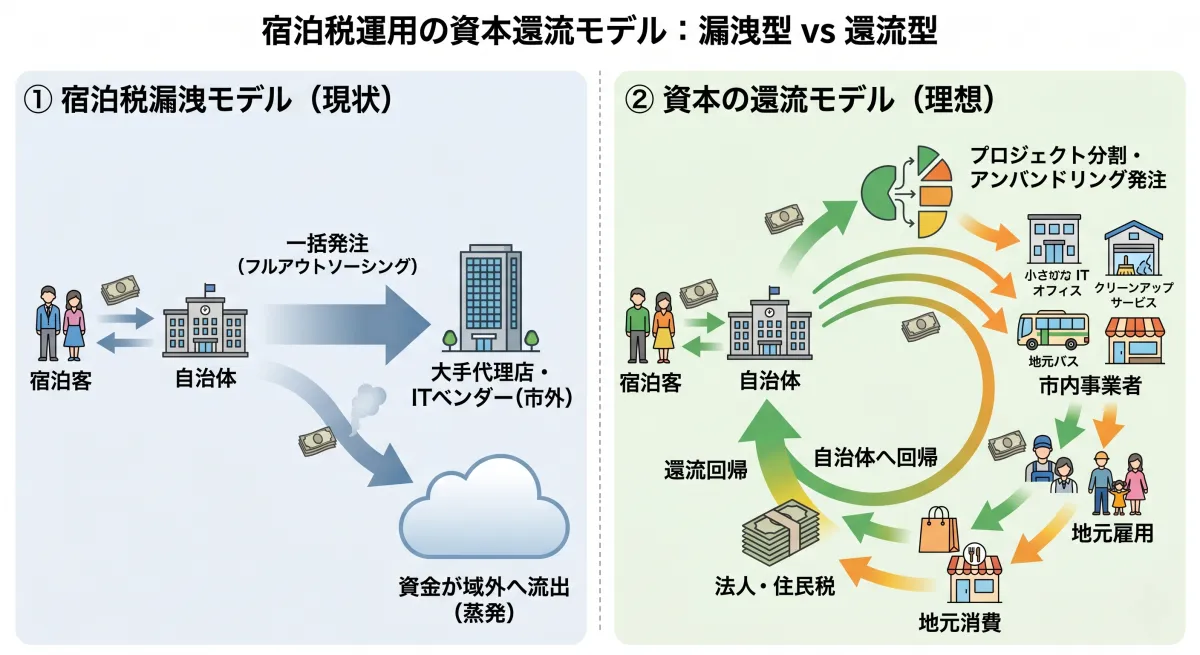
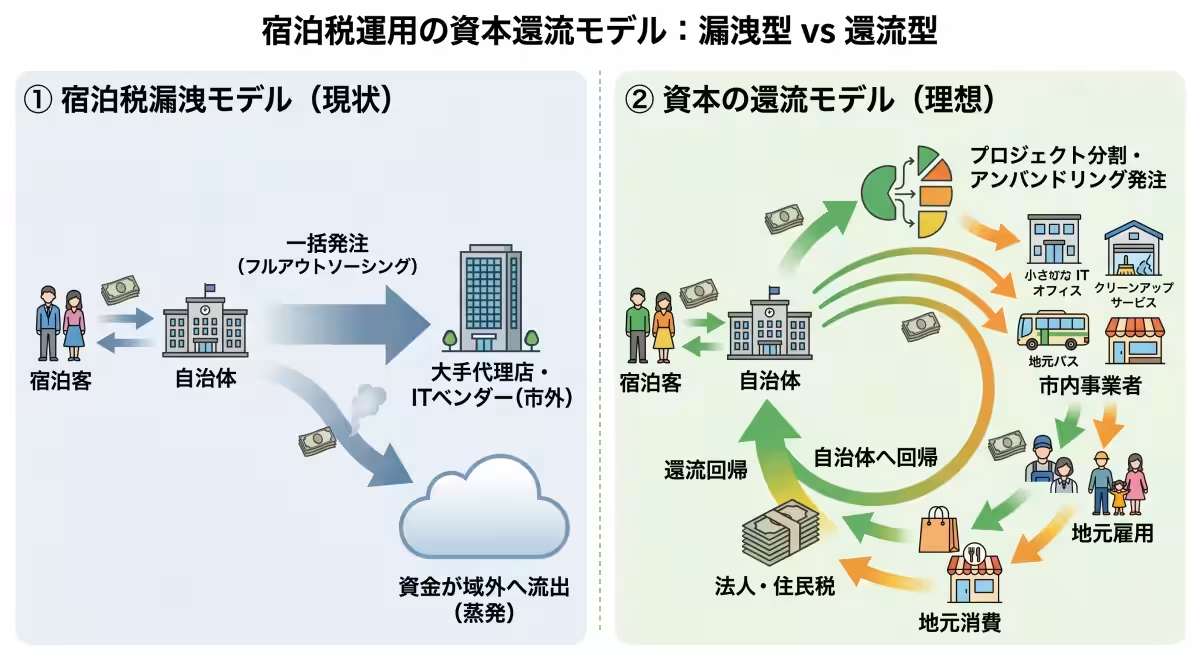
The introduction of accommodation tax has surfaced a pressing issue: the potential for structured economic leakage. The funds collected are often redirected toward large out-of-region businesses, which means local enterprises miss out on significant economic reinvestment. Analysis from the Corporation suggests that if municipalities continue using the current all-inclusive outsourcing model, nearly 40% of the budgeted public funds could end up outside the local economy, contradicting the principle of achieving maximum outcomes with minimum expenses as stipulated by local government laws.
Overcoming the Dilemma of Specifications
Many municipalities fall into the trap of blindly following previous practices by outsourcing large contracts to major vendors. This approach stifles the involvement of local businesses and could lead to higher future costs due to dependence on specific companies. The new guidelines aim to structure a robust logic around 'unbundling' procurement processes, allowing municipalities to operate more autonomously and engage local firms directly.
The Unbundling Model for Capital Reinvestment
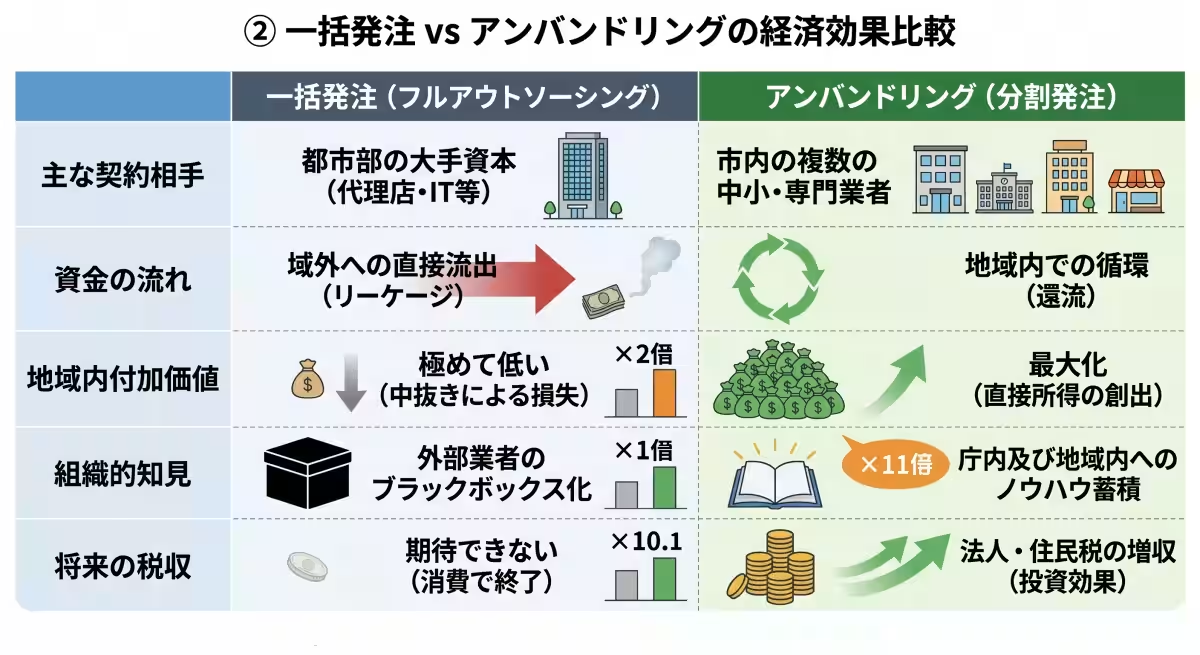
The risk of structural loss to regional economies is exacerbated by the prevalent preference for full outsourcing. Various municipalities routinely allocate significant budgets for outsourcing market research and execution to large consulting firms or agencies. This practice frequently results in a majority of the collected funds being siphoned off as management fees or secondary contracting costs, which severely limits awarding contracts to local businesses.
The new directive emphasizes the importance of directing funds back into the local economy. For example, by implementing an unbundled approach to accommodation taxes, municipalities anticipate an increase in reinvested economic benefits from around 1.2 billion yen to approximately 3.8 billion yen, showcasing a staggering improvement of 316% in local impact.
Advocating Neutral Specification Design
The guidelines underscore the necessity of creating specifications that don't favor particular contractors. They provide a logical framework for ensuring compliance with relevant contract laws while also incorporating criteria aimed at promoting local economic reinvestment. This aim seeks to resolve practical challenges faced by department heads, balancing the need for fairness with contributions to the local community.
Practical Support Scheme for Administrative Decision Making
The Global Investment Corporation not only proposes theoretical frameworks but also facilitates practical support to expedite the internal administrative drafting processes. Some of these include:
- - Assessing local reinvestment rates using input-output tables and quantitatively estimating economic impacts.
- - Developing legal arguments to ensure the legitimacy of contracts in preparation for audits.
- - Drafting specifications based on a model that eliminates barriers for local businesses, promoting a circular economic approach.
In summary, as municipalities prepare for upcoming tax implementations in 2026 — a pivotal year for local tax legislation — it is crucial that they adopt these new guidelines to ensure funds directly benefit their communities. The evolving landscape necessitates effective measures to avoid the pitfalls of past procurement strategies and to ensure that local economies thrive through successfully managed tax revenues. By embracing these best practices, local governments can foster sustainable economic growth and community wellbeing.

Topics General Business)
【About Using Articles】
You can freely use the title and article content by linking to the page where the article is posted.
※ Images cannot be used.
【About Links】
Links are free to use.