



Okoyama University Hosts Practical Workshop for Young Staff on National Policies
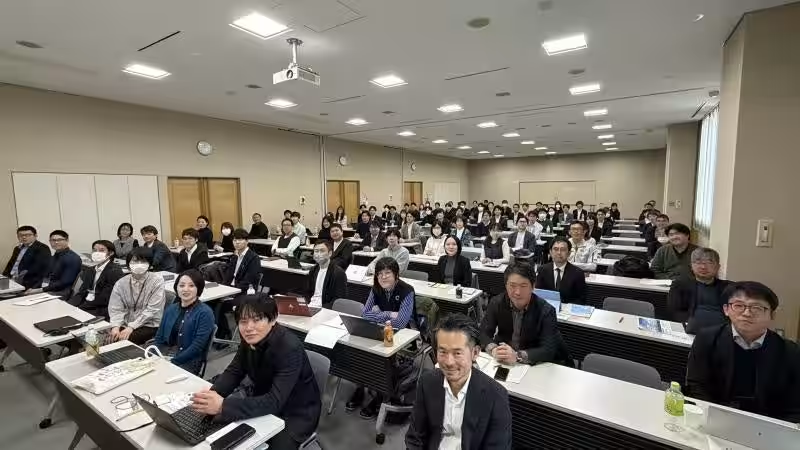
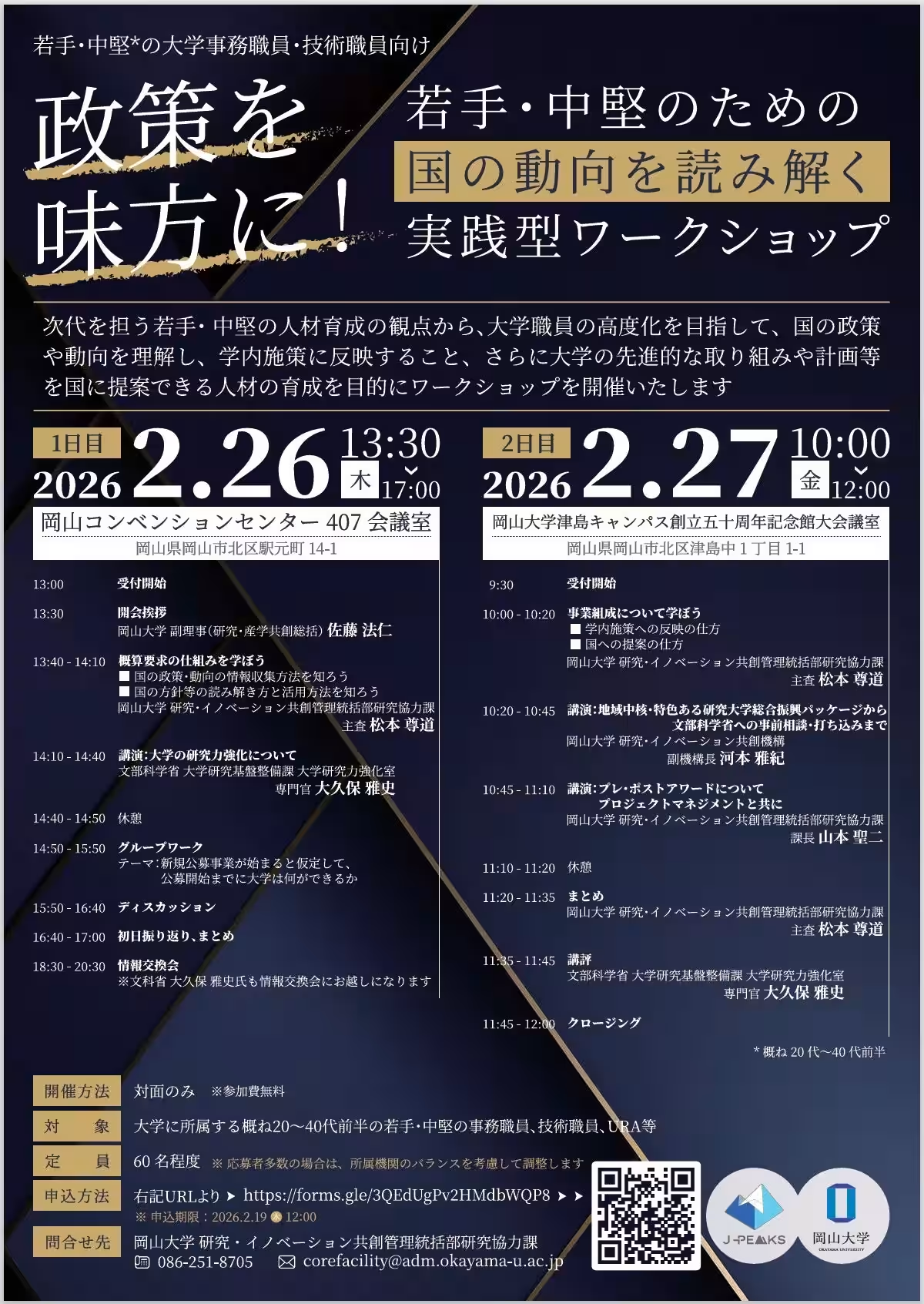
Okoyama University, located in Okayama City, held a significant workshop on February 26-27, 2026, titled 'Understanding National Trends: A Practical Workshop for Young and Mid-career University Staff.' This event was attended by over 80 participants from 32 national, public, and private universities, making it an impactful opportunity for knowledge exchange across institutions.
The primary goal of the workshop was to enhance the skills of university staff, focusing on understanding national policies and effectively incorporating them into university operations. The organizers aimed to nurture professionals who can not only understand but also propose forward-thinking initiatives aligned with national trends.
On the first day, the workshop commenced at the Okayama Convention Center with an opening address delivered by key university officials, including Vice President Sato Norihito, who oversees research and industry-academic collaboration. Following this, short presentations provided participants insights into the budget formation process and the mechanism of national requests.
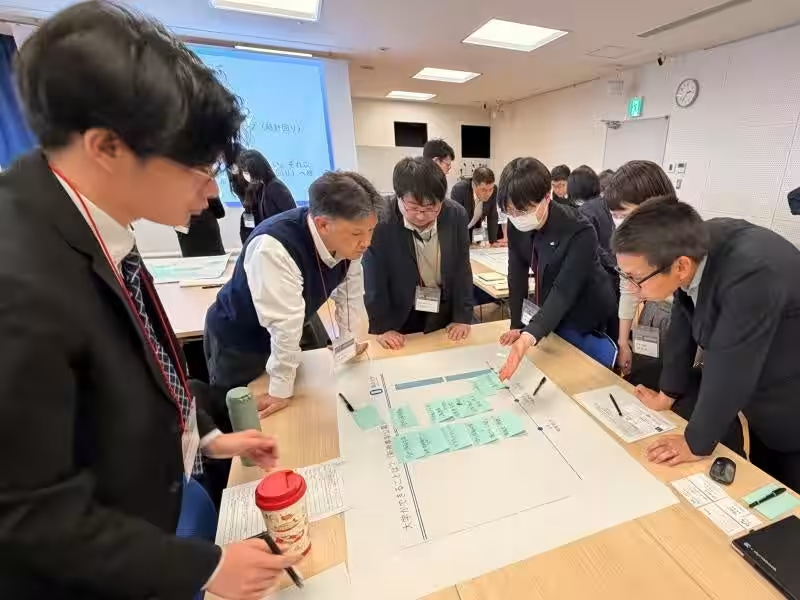
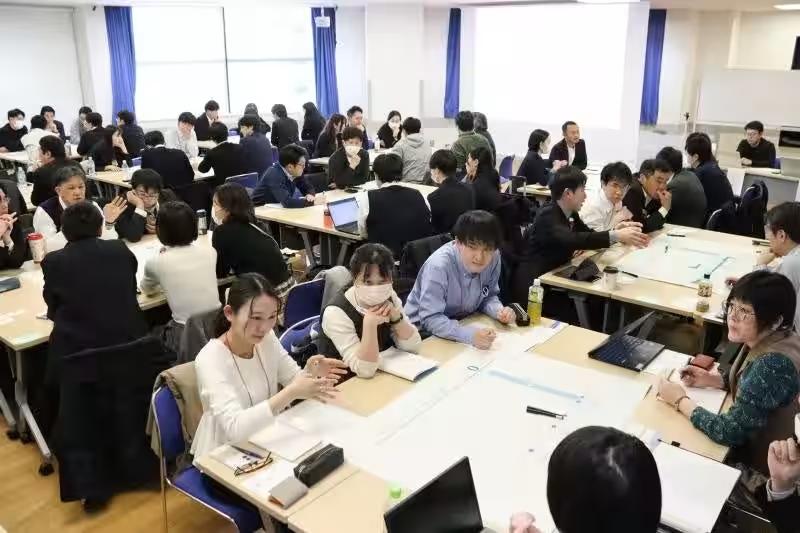
Participants were then divided into small groups for discussions centered around hypothetical challenges related to the Ministry of Education, Culture, Sports, Science and Technology’s budget requests. This hands-on approach offered a rare chance for university staff to engage in dialogues about strategies and preparations before public funding opportunities arise, which is usually not a common discussion point.
Matsumoto Takamichi, a senior officer at the university, delivered a session on how to gather information about national policies, emphasizing the importance of a robust approach to resource collection that enables constructs to view trends from multiple perspectives. This session illuminated the diverse resources available for understanding policy implications, thus promoting a more comprehensive view of national agendas.
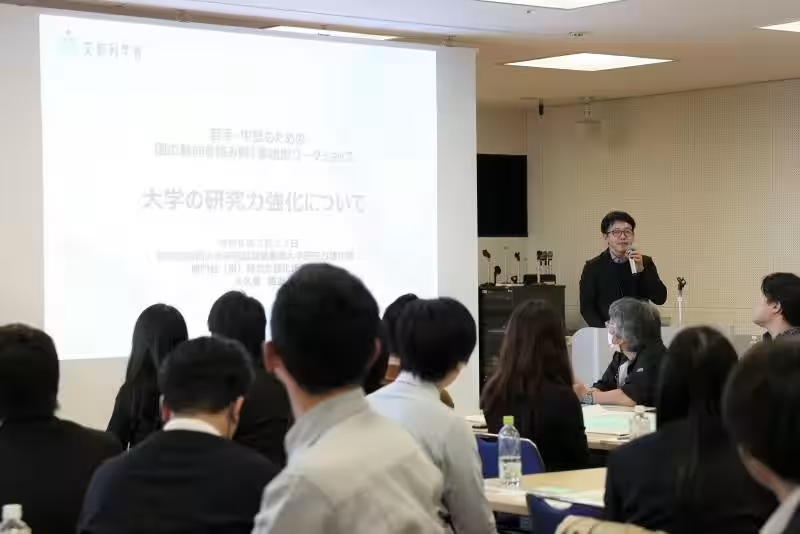
In addition, a lecture led by Okubo Masashi from the Ministry discussed the current state and strategies for enhancing university research capacities. He highlighted the essential role of collaboration between administrative staff and students in fostering regional innovation.
The second day shifted to the Tsushima Campus's 50th Anniversary Memorial Hall, where focus was placed on deciphering national documents. Participants learned specific strategies for interpreting budget requests and supplementary budget materials, exemplifying how to analyze and plan potential projects at their respective universities effectively.
The engaging presentations on project formation included insights from key university representatives, showcasing actual case studies of university-led projects aimed at regional development. This reinforced the notion of shifting away from a 'faculty-centric' university management model towards a more inclusive framework involving administrative and technical staff in leadership roles.
Feedback from attendees reflected a profound appreciation for the collaborative spirit fostered during the workshop. Many recognized the pivotal transition from competitivestances to a shared vision of mutual contribution among universities for the advancement of national interests. The welcoming environment encouraged participants to articulate their concerns and challenges, fostering discussions that would otherwise remain unspoken.
The workshop also served as a learning platform for enhancing awareness of national trends and equipping participants with the necessary skills for project initiation and management. It demonstrated the university's commitment to elevating its administrative staff into knowledge workers capable of generating innovation through their understanding of both policy and practice.
In conclusion, Okoyama University is advocating for a collective and innovative approach toward university governance, empowering all staff members to engage meaningfully with national policies and to contribute towards the university’s goals of being a leading research institution. The workshop reflects ongoing efforts to create a supportive ecosystem where young and mid-career staff can thrive and directly influence educational quality and research strengths by translating their learning into actionable initiatives. As Okoyama University continues to reshape its institutional structure to support staff development, it remains dedicated to fostering regional and national academic excellence.
This workshop stands as a part of multiple initiatives aimed at preparing university staff for the evolving landscape of higher education governance and management, ultimately positioning Okayama University as a hub of innovation and collaboration in the academic sector.
The primary goal of the workshop was to enhance the skills of university staff, focusing on understanding national policies and effectively incorporating them into university operations. The organizers aimed to nurture professionals who can not only understand but also propose forward-thinking initiatives aligned with national trends.
On the first day, the workshop commenced at the Okayama Convention Center with an opening address delivered by key university officials, including Vice President Sato Norihito, who oversees research and industry-academic collaboration. Following this, short presentations provided participants insights into the budget formation process and the mechanism of national requests.
Participants were then divided into small groups for discussions centered around hypothetical challenges related to the Ministry of Education, Culture, Sports, Science and Technology’s budget requests. This hands-on approach offered a rare chance for university staff to engage in dialogues about strategies and preparations before public funding opportunities arise, which is usually not a common discussion point.
Matsumoto Takamichi, a senior officer at the university, delivered a session on how to gather information about national policies, emphasizing the importance of a robust approach to resource collection that enables constructs to view trends from multiple perspectives. This session illuminated the diverse resources available for understanding policy implications, thus promoting a more comprehensive view of national agendas.
In addition, a lecture led by Okubo Masashi from the Ministry discussed the current state and strategies for enhancing university research capacities. He highlighted the essential role of collaboration between administrative staff and students in fostering regional innovation.
The second day shifted to the Tsushima Campus's 50th Anniversary Memorial Hall, where focus was placed on deciphering national documents. Participants learned specific strategies for interpreting budget requests and supplementary budget materials, exemplifying how to analyze and plan potential projects at their respective universities effectively.
The engaging presentations on project formation included insights from key university representatives, showcasing actual case studies of university-led projects aimed at regional development. This reinforced the notion of shifting away from a 'faculty-centric' university management model towards a more inclusive framework involving administrative and technical staff in leadership roles.
Feedback from attendees reflected a profound appreciation for the collaborative spirit fostered during the workshop. Many recognized the pivotal transition from competitivestances to a shared vision of mutual contribution among universities for the advancement of national interests. The welcoming environment encouraged participants to articulate their concerns and challenges, fostering discussions that would otherwise remain unspoken.
The workshop also served as a learning platform for enhancing awareness of national trends and equipping participants with the necessary skills for project initiation and management. It demonstrated the university's commitment to elevating its administrative staff into knowledge workers capable of generating innovation through their understanding of both policy and practice.
In conclusion, Okoyama University is advocating for a collective and innovative approach toward university governance, empowering all staff members to engage meaningfully with national policies and to contribute towards the university’s goals of being a leading research institution. The workshop reflects ongoing efforts to create a supportive ecosystem where young and mid-career staff can thrive and directly influence educational quality and research strengths by translating their learning into actionable initiatives. As Okoyama University continues to reshape its institutional structure to support staff development, it remains dedicated to fostering regional and national academic excellence.
This workshop stands as a part of multiple initiatives aimed at preparing university staff for the evolving landscape of higher education governance and management, ultimately positioning Okayama University as a hub of innovation and collaboration in the academic sector.
Topics Other)
【About Using Articles】
You can freely use the title and article content by linking to the page where the article is posted.
※ Images cannot be used.
【About Links】
Links are free to use.