



Meiji Introduces Advanced Oral Maps® Technology for Texture Evaluation
Meiji's Cutting-Edge Oral Maps® Technology
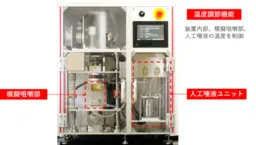
In a significant advancement for food texture evaluation, Meiji Co., Ltd. has announced the introduction of the latest model of its chewing process simulator, Oral Maps® (オーラルマップス®). This innovative device will be installed at the Meiji Application Center (APC) by October 2025. The APC serves as a hub for B2B product development, offering recipe and menu suggestions that integrate advanced texture evaluation methods, aimed at addressing customer challenges and exploring new market opportunities.
Purpose of Implementation
For years, Meiji has employed Oral Maps® for research on chewing processes and food textures. The new model will allow for the quantification of texture across various food categories, transforming previously subjective qualities like 'melt-in-your-mouth' and 'smoothness' into objective numerical values. The aim is to elevate customer service by providing quick and precise solutions tailored to each client’s needs, thereby enhancing product evaluations and menu suggestions.
Fundamental Functions of Oral Maps®
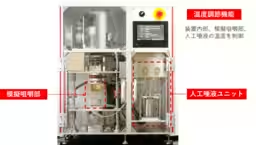
The Oral Maps® system controls key factors that alter food texture in the mouth, including: 1) compression by teeth and tongue, 2) body temperature, and 3) saliva. This simulator accurately analyzes the transition of food from the moment it enters the mouth until it is swallowed, allowing for in-depth evaluation of various foods such as dairy products (like cheese and whipped cream), candies (chocolates and gummies), and even meat products and ready-to-eat meals.
Features of the Latest Model
The new device introduced at APC boasts an enhanced sensitivity of force sensors, doubled compared to existing systems, making it especially effective for measuring soft foods like whipped cream. Additionally, updates to the data analysis software have expedited the measurement and analysis processes, ensuring high-accuracy evaluations that are faster and responsive to client requirements.
About the Meiji Application Center (APC)
Founded to expand B2B operations, the Meiji Application Center serves clients in sectors such as confectionery, bakery, and food processing. The APC not only provides recipe and menu development support but also offers market and evaluation data to its customers. Since opening in 2022, inquiries have increased by approximately 50%, underscoring the growing demand for its specialized services.
Recent Research Outcomes with Oral Maps®
Between August 27-29, 2025, at the 72nd Annual Meeting of the Japanese Society of Food Science and Technology, Meiji presented groundbreaking research involving Oral Maps®. This study focused on developing an evaluation method for the “melt-in-your-mouth” quality of whipped cream.
Methodology
- - The research targeted whipped cream, known for its melt characteristics. Three different levels of whipped cream firmness were assessed through sensory evaluation to score their 'meltiness'.
- - Samples of the same whipped cream were measured using Oral Maps® under controlled conditions: 100N of compressive force, a salivary flow rate of 2 mL/min, and a simulated temperature of 33.5 ± 0.5°C.
- - Recognizing that 'melt-in-your-mouth' describes the softening changes of food, five specific indicators related to firmness changes during the simulated chewing process were calculated.
- - Correlations between sensory evaluation results and the indicators obtained from Oral Maps® measurements were analyzed.
Results
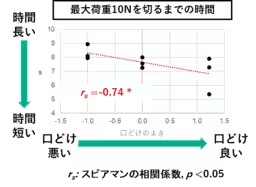
Significant correlations were found between the sensory evaluation and two indicators derived from Oral Maps®—the time until the maximum load dropped below 10N and the time until it fell below 20N. Among these, the indicator showing the time until reaching below 10N exhibited the highest correlation.
Discussion
The research utilizing Oral Maps® effectively identified indicators closely correlated with the perceived 'melt-in-your-mouth' quality of whipped cream. This indicates a potential for predicting the cream's melt characteristics based on the measurements obtained, emphasizing that the assessment of cream's melt quality hinges on how quickly it reaches a certain softness during consumption.
In conclusion, Meiji’s implementation of the advanced Oral Maps® will not only refine texture evaluations but also enhance customer interactions and product development strategies, forging a path toward innovation in the food industry.
Topics Consumer Products & Retail)



【About Using Articles】
You can freely use the title and article content by linking to the page where the article is posted.
※ Images cannot be used.
【About Links】
Links are free to use.