




The True Value of English Proficiency in Global Business and Your Career Advancement
Understanding the True Value of English Proficiency in Global Business
In today’s increasingly globalized world, many Japanese professionals find themselves facing a puzzling contradiction: despite dedicating several years to studying English and achieving high scores on tests such as TOEIC, their career advancement often stalls. It’s a widespread concern, with many wondering why their hard work isn’t yielding expected results in international business environments.
Recent research conducted by Alpros, a company based in Tokyo, sheds light on this issue. The study, which examined the relationship between English proficiency and career outcomes among professionals working in foreign and overseas divisions, highlights a striking reality: mere fluency in English is simply not enough when it comes to making significant impacts in a global business setting.
The Importance of “Output” in English Proficiency
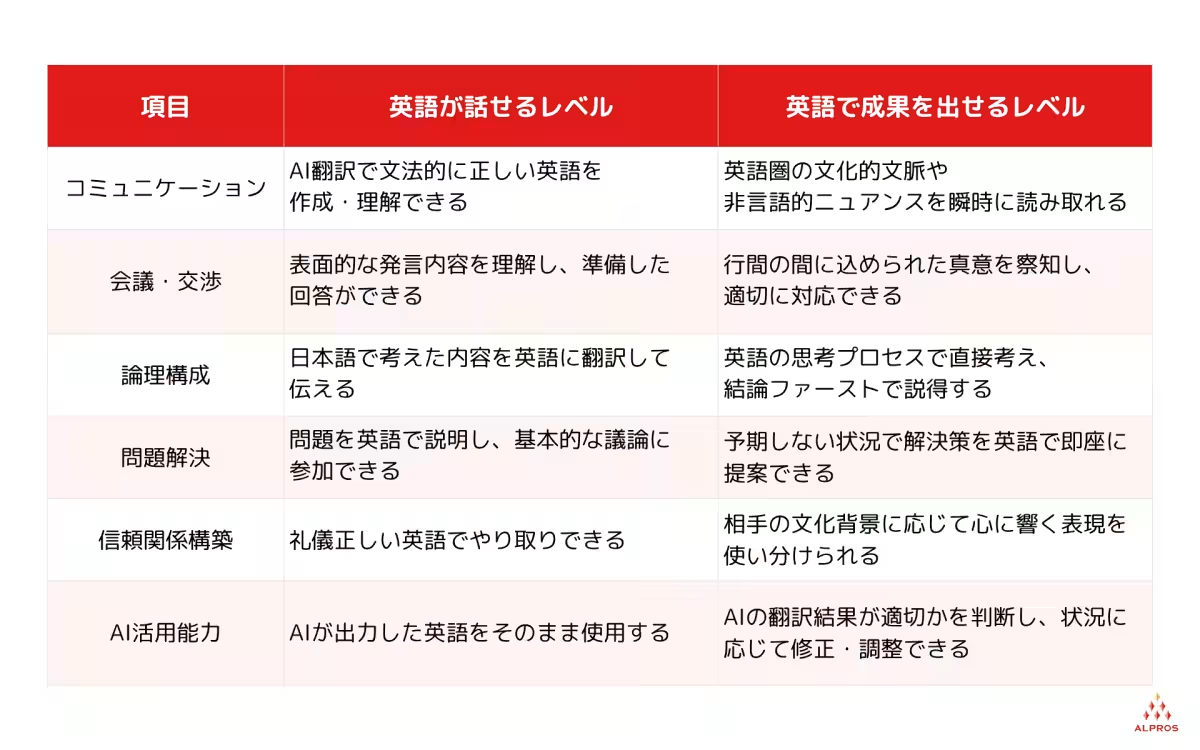
A common misconception that prevails among many Japanese business persons is equating fluency in English—measured by tests like TOEIC—to the ability to generate tangible results in business. High scores might suggest a command of the language, but they do not correlate with skills necessary for negotiating deals, building trust within teams, or leading international projects.
The Reality of the Global Workplace
In environments dominated by native English speakers, such as firms in the United States, the UK, and Australia, professionals are expected to not only communicate effectively but to influence conversations toward measurable outcomes. Alpros' research revealed numerous accounts of individuals who, despite performing well in English tests, struggled with practical applications of their language skills.
- - Some reported engaging in important negotiations without successfully securing orders due to ineffective communication.
- - Others found themselves unable to foster meaningful relationships with international colleagues, as they could participate in discussions but fell short of effectively guiding agreements.
From Language to Results: Bridging the Gap
The gap between simply speaking English and utilizing it for impactful business outcomes is substantial. Effective communication in commerce requires more than grammatical precision; it necessitates an understanding of cultural nuances and the ability to interpret subtleties in conversation. A key observation lies in the fact that many Japanese people possess the ability to read and write basic English, but struggle to utilize their skills dynamically during critical negotiations or spontaneous discussions.
For instance, during contract negotiations or M&A discussions, merely articulating agreements in English is insufficient. Professionals must adeptly read between the lines and respond to implicit cues, which calls for a nuanced grasp of English that extends well beyond theoretical knowledge.
Learning the Right Skills: Avoiding Common Pitfalls
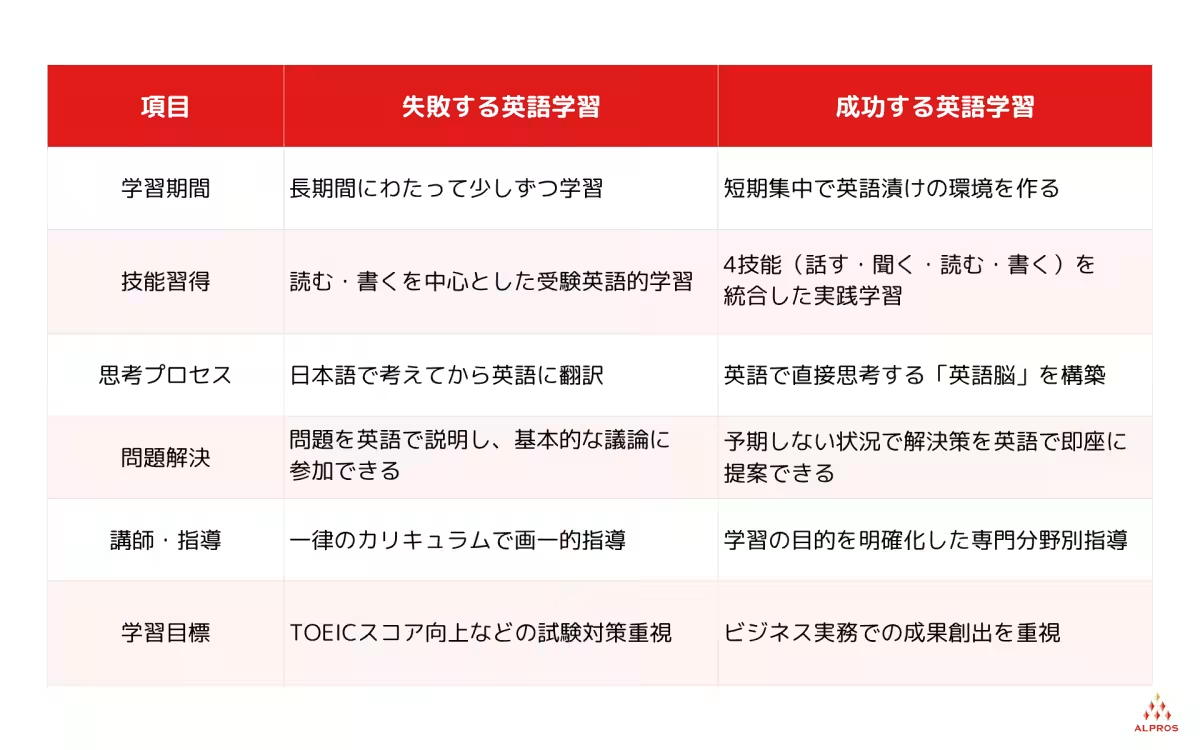
Despite years of rigorous English education, many find themselves unprepared for real-world applications. Traditional learning methods often emphasize grammar and test preparations, neglecting the importance of immersive practice that prompts real conversation and negotiation. Consequently, business professionals frequently feel lost when attempting to engage meaningfully in discussions.
The Key Features of Successful English Learning for Career Advancement
To truly benefit from English in a business context, professionals must adopt effective methods that involve:
1. Short-term Intensive Learning: Prolonged weekly study sessions often lead to forgetfulness. Instead, consistent and focused short-term courses can drive greater engagement.
2. Integrated Skills Training: Instead of isolating reading, writing, speaking, and listening, combining these elements can foster comprehensive skills that align with real-world applications.
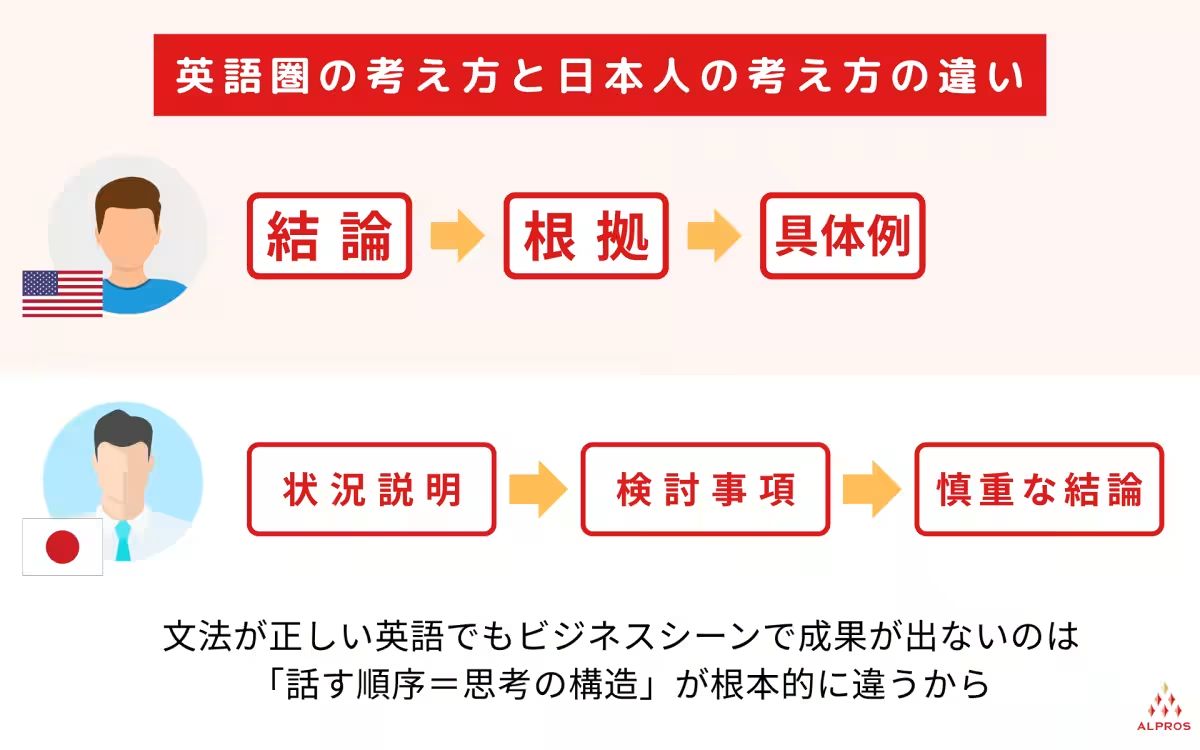
3. Adopting English Thinking Processes: Embracing a logical structure aligned with English-speaking cultures is essential. While Japanese thinking values detailed context, global business necessitates direct and concise communication, particularly that stresses outcome-oriented dialogue.
Towards Proficiency That Delivers Results
In conclusion, achieving true proficiency in English means transforming abstract language learning into practical business acumen. It involves honing skills that empower individuals to make impactful contributions internationally. With the emergence of AI translation tools, anyone can articulate grammatically correct English; however, the necessity for authentic communication that drives business results remains paramount. For those seeking to cultivate this capability, Alpros offers intensive programs aimed at fostering an environment akin to those found in English-speaking countries, effectively readying you for the global business landscape.
Explore your potential with the intensive programs offered by Alpros, and start enhancing your English for actual business success today!
For further information, please visit Alpros.

Topics Business Technology)
【About Using Articles】
You can freely use the title and article content by linking to the page where the article is posted.
※ Images cannot be used.
【About Links】
Links are free to use.