




Insights into Micro-Mobility Sharing Services in Urban Areas: A Joint Study
Understanding Micro-Mobility in Urban Settings
Introduction
In recent years, micro-mobility solutions like electric scooters and e-bikes have gained tremendous popularity as alternative transportation modes within urban areas. However, a comprehensive understanding of how these services are utilized and their role in urban and transportation policy has been lacking. To bridge this knowledge gap, Pacific Consultants Co., Ltd. and Luup, Inc. conducted a joint survey to assess the usage and societal impacts of micro-mobility sharing services.
Background of the Study
The need for this research arises from the rapid growth of micro-mobility services, which has transformed how commuting and transport are approached in major cities. The study aims to analyze the utilization patterns of the “LUUP” service, focusing on its effectiveness as a transportation option and its contributions to solving urban mobility challenges.
Key Findings
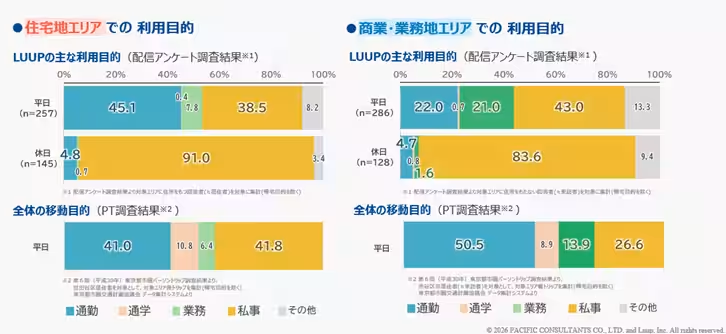
The findings reveal that the LUUP service is primarily used for short-distance trips, indicating its role as a convenient option for quick travels. In residential areas, approximately 40% of users employ LUUP for commuting to work or school. In commercial zones, its applications span various activities, including work-related travel, shopping, dining, and leisure pursuits. This highlights LUUP's significant role as an essential means of transport in people's daily lives.
Moreover, about 20% of the trips facilitate movement between locations where public transportation is inconvenient. This underscores LUUP’s function in complementing areas that lack adequate public transit options, fulfilling a crucial transportation need.
Reasons for Choosing LUUP
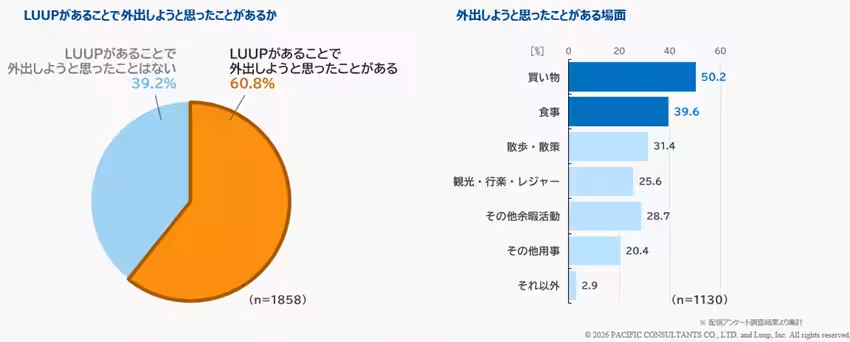
A striking finding of the survey is the flexible nature of the service that appeals to users. Half of the respondents cited the freedom to manage their time as a significant reason for opting for LUUP. Approximately 60% mentioned that LUUP availability has encouraged them to go out, while about 40% stated that proximity to a LUUP port influenced their destination choices. This suggests that the presence of LUUP ports could enhance local activity and increase foot traffic to establishments nearby.
Comparative Analysis of Usage Trends
The analysis also compared usage patterns in residential and commercial districts. In residential zones (like the areas between Shimokitazawa Station, Sangenjaya Station, and Gakugei Daigaku Station), commuting remains the primary purpose of using LUUP. In contrast, in commercial districts (like around Ebisu Station), the spectrum of usage is more varied, with residents taking advantage of LUUP for leisure, dining, and business meetings.
Future Outlook
The implications of this study suggest that micro-mobility sharing services like LUUP serve as highly flexible transportation solutions that can be easily integrated into daily life, irrespective of time and location. As the sharing economy continues to expand, the proliferation of micro-mobility services is anticipated.
However, urban areas face various transportation challenges that necessitate tailored solutions. The insights gathered from this research can significantly inform urban planning initiatives aimed at reducing over-reliance on cars, ultimately facilitating a more accessible and sustainable mobility environment.
Conclusion
The collaborative study by Pacific Consultants and Luup sheds light on the transformative role of micro-mobility in shaping modern urban transport infrastructures. As cities evolve to accommodate diverse transportation modes, understanding usage patterns and impacts will be essential for fostering sustainable urban development that serves everyone equitably. The community can benefit from these findings as local governments and stakeholders strive to create inclusive, efficient, and environmentally friendly transit systems.
Collaborative Research Report
For a detailed analysis of the survey, please refer to the report linked in the original document.
About Luup
Luup is committed to creating


Topics Other)
【About Using Articles】
You can freely use the title and article content by linking to the page where the article is posted.
※ Images cannot be used.
【About Links】
Links are free to use.