




Bizgem Releases Profit Dashboard Feature for Retail Success Monitoring
Introduction
In today's competitive retail environment, businesses are continuously seeking ways to optimize their operations and understand their profit contributions on a granular level. Bizgem, a Tokyo-based company, has introduced an innovative feature in its Store Record SaaS platform that allows retail businesses to monitor their marginal profits by product efficiently.
New Feature: Marginal Profit Dashboard
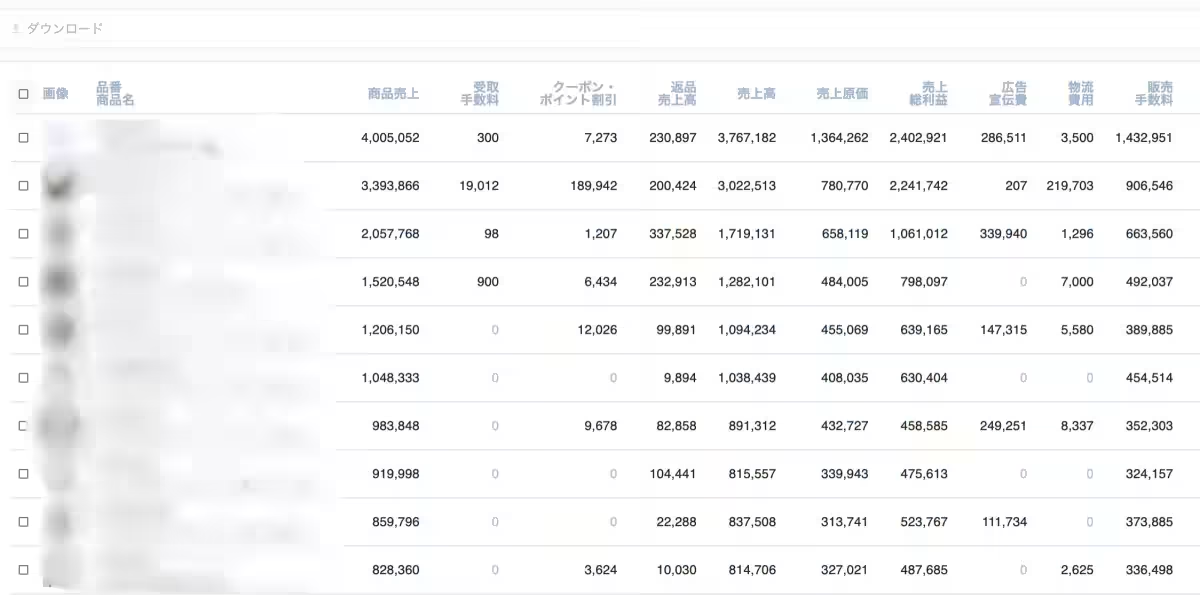
With the recently launched dashboard, users can now visualize not just their total revenue, but also identify which specific products are driving profitability. This feature encapsulates the company's mission: "To provide quality management solutions for all retail businesses.”
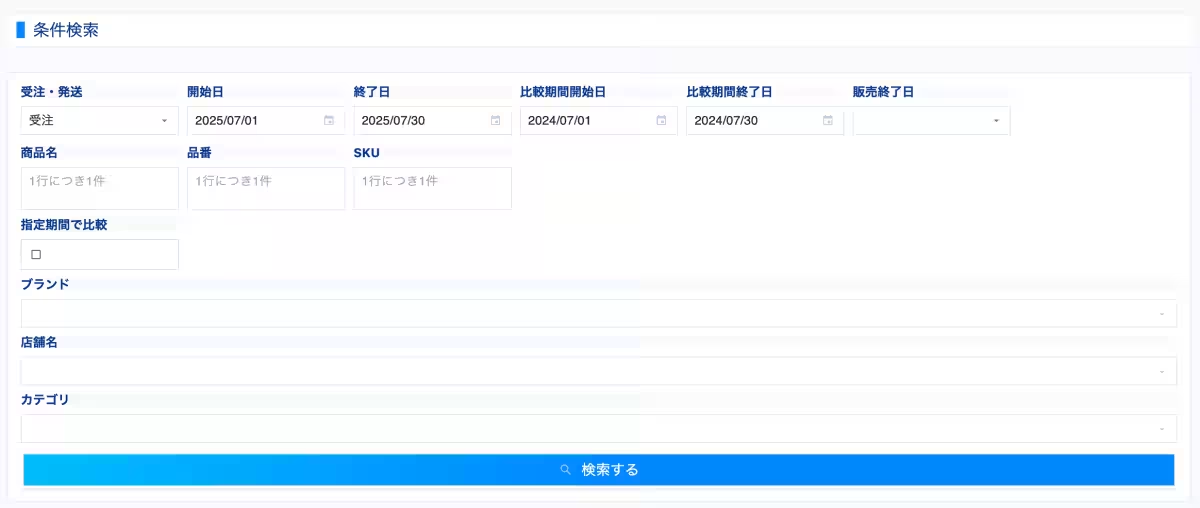
Retailers can filter data based on various parameters, including period specifications, brands, and sales channels, making it easier for team members to conduct detailed analyses relevant to their duties. Moreover, the capability to download data as a CSV file means that users can seamlessly integrate Store Record data into Excel or other spreadsheet applications, allowing for customized management metrics to be built on top of the existing framework.
Importance of Marginal Profit Management
The significance of understanding marginal profits cannot be understated—especially in e-commerce, where variable costs often make up a considerable portion of overall expenses. Relying solely on sales or unit numbers for product evaluation may obscure crucial insights into actual profitability. By visualizing marginal profit (revenue minus variable costs, including product costs and sales commissions), businesses can effectively:
- - Identify key profit-generating products.
- - Determine which products require advertising investment.
- - Make informed decisions about discontinuing non-profitable items or adjusting their pricing strategies.
Overcoming Traditional Challenges
In the past, many businesses have faced significant obstacles in analyzing marginal profits. Common issues included:
- - Fragmented sales data across multiple systems, leading to prolonged consolidation processes.
- - Difficulties in allocating advertising costs per product, hampering precise profit analysis.
- - A substantial operational load related to data collection and processing, often resulting in unsustainable practices.
- - Excel-based management becoming overly reliant on specific individuals, detracting from timely decision-making in management.
Streamlined Profit Management with Store Record
The new marginal profit management feature aims to resolve these challenges by automating the integration and calculation of several key data points, making profit analysis both straightforward and efficient. It automatically pulls:
- - Sales data from various channels, including Shopify, Rakuten, and Amazon.
- - Individual product costs based on figures stored within the Store Record system.
- - Sales commission rates from platforms such as Rakuten and Yahoo, pre-set for calculation.
- - Logistics costs and advertising expenses, with certain platforms allowing for direct integrations.
Additionally, Store Record accommodates other external advertising costs through CSV uploads or form entries, aligning flexibly with user operations. This shift in focus from a revenue-centric approach to a profit-oriented mindset enables companies to make more informed decisions related to purchasing, sales strategies, and promotional activities.
The Future of Bizgem
Bizgem is committed to continuing the development of tools that visualize, analyze, and facilitate decision-making around critical business metrics. By persistently innovating to meet the needs of retail companies, Bizgem aims to elevate their operational efficiency and strategic decision-making capabilities.
Company Overview
Company Name: Bizgem Inc.
Founded: December 2022
CEO: Kota Higuchi
Location: 2-3-11 Korakuen, Bunkyo-ku, Tokyo 112-0004, Japan
Contact: [email protected]
Website: https://service.storerecord.jp
About the CEO
Kota Higuchi graduated from Keio University and initially joined Itochu Corporation in 2008. In 2011, he co-founded Unistyle Inc. and served as COO until its shares were sold in 2016. Afterward, he held executive positions in various companies until establishing Bizgem, where he currently serves as CEO.

Topics Business Technology)
【About Using Articles】
You can freely use the title and article content by linking to the page where the article is posted.
※ Images cannot be used.
【About Links】
Links are free to use.