




The Success of Crowd Unit: Over 500 Case Studies Showcasing HR Solutions for Companies
The Success of Crowd Unit: Over 500 Case Studies Showcasing HR Solutions for Companies
Introduction
In a remarkable achievement, Aidma Holdings has reported that their HR support platform, Crowd Unit, has now surpassed 500 case studies showcasing its successful implementation in various companies. This platform assists businesses in addressing key management challenges, including sales support and leveraging remote workers effectively.
Overview of Case Studies
Aidma Holdings, based in Shinagawa, Tokyo, has conducted interviews with companies to ascertain how they adopted the Crowd Unit platform. Each case study explores the journey leading up to the adoption of services, specific use cases, and changes in organizational structure post-implementation. Notably, a significant portion of the participating companies are small and medium-sized enterprises spanning various industries, from manufacturing to IT and services.
According to reports, a growing number of companies face escalating challenges linked to labor shortages, with data indicating that as of April 2026, over 50% of firms felt a shortage of full-time employees. The rising incidence of insolvencies due to labor shortages, reaching an alarming 441 cases in fiscal 2025, underscores the urgent need for innovative solutions in labor management.
Navigating Labor Shortages
Japan's labor market currently showcases a paradox; while businesses are striving for adaptable employment avenues, there exists a pool of capable candidates wishing for working conditions beyond traditional full-time setups. Aidma Holdings stands in this gap, striving to alleviate labor shortages while promoting different work styles. The systematic integration of remote workers into businesses has emerged as a crucial strategy in this effort.
Three Key Changes Derived from 500 Cases
Through the analysis of 500 company case studies, three notable trends have emerged concerning the utilization of remote workers within small and medium-sized enterprises:
1. Expansion of Role Assignments: Initially, companies relied on remote workers primarily for auxiliary tasks. However, many have expanded these roles to encompass core business operations.
2. Geographic Recruitment Freedom: Companies are finding that their talent search is not bound by geographical constraints, which encourages a broader recruitment horizon.
3. Strategic Restructuring: Instead of viewing remote work as an alternative to full-time hiring, businesses are beginning to see it as an integral part of their organizational design.
Case Study 1: Highzai Manufacturing Co.
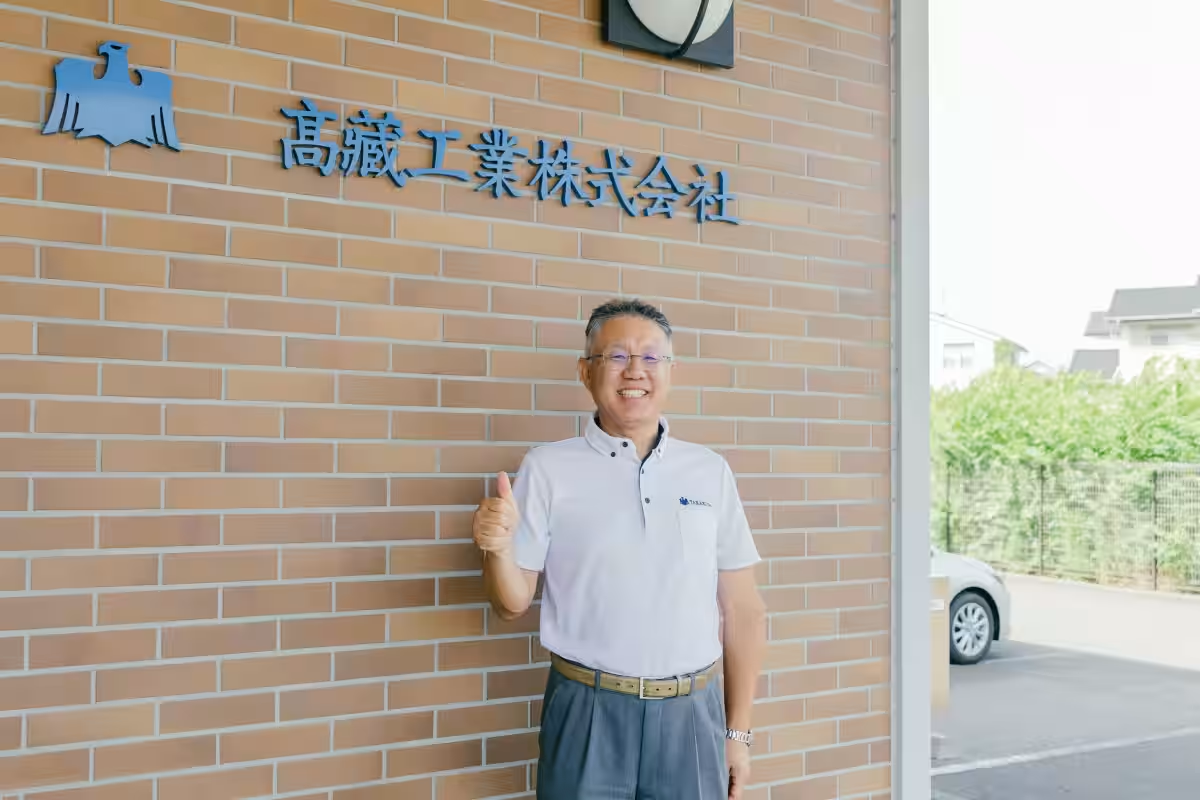
One compelling example is Highzai Manufacturing, a grinding and polishing stone manufacturer founded in 1939. Facing the challenge of establishing overseas sales channels without incurring heavy costs for hiring multilingual specialists, they leveraged Aidma's support to create a remote team.
By posting on the dedicated remote work platform, Mama Works, they received over ten applications from candidates residing not just in urban areas but also in rural regions and even overseas. Ultimately, Highzai contracted a trilingual remote worker from Spain, who managed initial contact, telephone outreach, and on-site interpretation during meetings.
As a result, Highzai has successfully engaged in export transactions with 18 countries, expanding their operational reach significantly. They continue to involve remote workers in marketing efforts, showcasing the versatility of this work model.
Case Study 2: APOMA Corp.
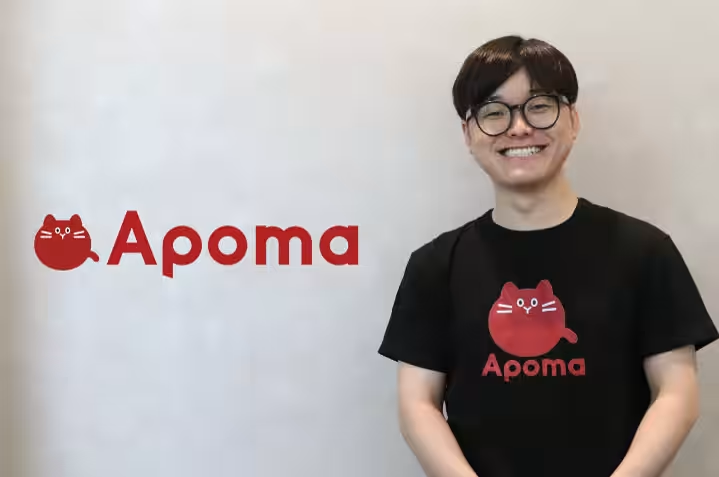
Another notable case is APOMA Corporation, a business matching platform provider that opted for a structure where core roles are retained for full-time employees while outsourcing specialized functions to highly skilled external personnel. The approach allowed them to expand without the need for increased staffing burdens.
With approximately 350 applicants responding to their recruitment through Mama Works, they have established a formidable remote workforce of about 18 individuals handling sales and customer success, effectively managing a sizable volume of job matchings.
This structure has shown substantial success, evidenced by a rapid growth in membership from 200 to 700 companies within three months, aided by Aidma's media exposure and sales platform support.
Conclusion: Addressing Labor Shortages and Workforce Diversity
For companies struggling with remote work implementations, a key missing element has been the strategic design of roles and responsibilities. Factors like task segmentation, delegation, oversight of workflow, and performance tracking will play critical roles in making the transition smoother for companies.
Aidma Holdings offers comprehensive support, ranging from job listing on Mama Works to the systematic organization of tasks, hiring, initial setup, and operational sustainability criteria. This accumulated wisdom from over 500 cases reveals a high level of replicability across sectors and sizes, advocating for the viability of remote work solutions.
Going forward, Aidma Holdings aims to create environments encouraging remote workers to tackle more complex tasks. Their commitment to exploring new work domains, including those within digital and AI-enhanced fields, will further bridge gaps between workforce demand and skilled availability. The initiative looks to pioneer what can be termed the new era of talent utilization in Japan, tackling labor shortages while also providing opportunities for eager individuals seeking work flexibility.

Topics Business Technology)
【About Using Articles】
You can freely use the title and article content by linking to the page where the article is posted.
※ Images cannot be used.
【About Links】
Links are free to use.