


Okayama University Unveils Novel Iron Exporter in Rice Plant for Enhanced Environmental Resilience
Discovery of Novel Iron Exporter in Rice
On November 12, 2025, researchers from Okayama University published a groundbreaking discovery in the esteemed journal Nature Communications. They unveiled a new protein, known as Iron Efflux Transporter 1 (IET1), which plays a crucial role in exporting divalent iron ions from rice cells into the surrounding environment. This discovery promises to enhance our understanding of iron distribution in plants and contribute to sustainable agricultural practices.
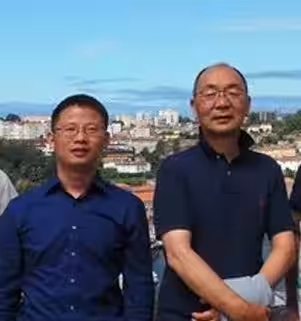
The research group, led by Professor Jian Feng Ma and Professor Takaaki Miyaji, collaborated with researchers from the Nanjing Institute of Soil Science at the Chinese Academy of Sciences. This international collaboration highlights the importance of cross-border scientific partnerships in addressing global agricultural challenges.
The Role of Iron in Plants
Iron is an essential micronutrient for both plants and animals, playing a vital role in numerous biological processes. However, iron availability fluctuates in soil due to environmental conditions, such as pH levels and redox state. This variability poses a significant challenge for plants, which have developed various mechanisms to acquire and regulate iron efficiently.
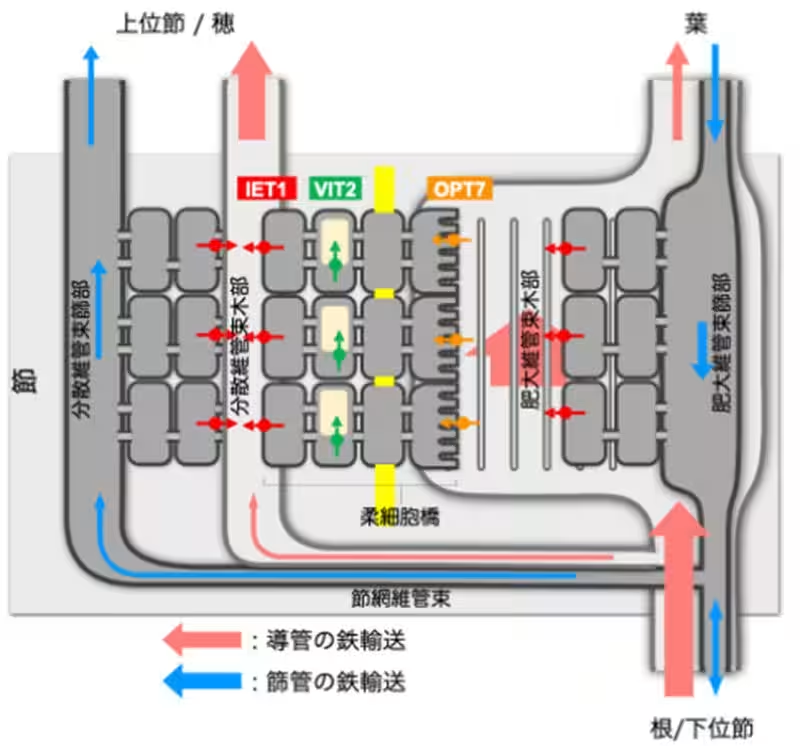
IET1 emerges as a key player in this complex system. It is predominantly expressed in the cells surrounding vascular bundles in rice nodes, facilitating the reloading of transported iron into conduits, essential for distributing iron to newly developing leaves and spikes. This novel mechanism fosters a better balance of iron within the plant, crucial for its growth and adaptation to changing environments.
Implications for Sustainable Agriculture
This research could have significant implications for enhancing the environmental resilience of crops. By improving the mechanisms through which rice (and potentially other crops) distribute iron, we may help these plants adapt better to climate change and soil variability.
Professor Ma remarked on the collaborative nature of the research: "The project's inception dates back to when Dr. Jing Che was part of our stress group at the IPSR. Even after Dr. Che moved to the Nanjing Institute, we persevered with our studies on this unprecedented transporter for over five years."
The findings underscore the importance of continuous research and collaboration in agriculture, particularly in regions where soil quality and climate conditions pose significant challenges for food production.
Research Backing and Publication
This project received substantial funding from the Japan Society for the Promotion of Science (JSPS), underscoring the vital role of government support in advancing scientific research. The original research paper titled, A node-localized efflux transporter for loading iron to developing tissues in rice, is available online and provides detailed insights into the methodologies and results of the study.
Looking to the Future
The discovery of IET1 opens new avenues for research into enhancing crop resilience and sustainability. As scientists continue to investigate the mechanisms of nutrient transport in plants, we can expect further innovations aimed at ensuring food security in a rapidly changing environment.
References
For more updates on this research and similar developments, stay tuned to agricultural news sources and academic journals. Research like this paves the way for future breakthroughs that could revolutionize farming practices and promote global food security.

Topics Consumer Products & Retail)

【About Using Articles】
You can freely use the title and article content by linking to the page where the article is posted.
※ Images cannot be used.
【About Links】
Links are free to use.