



The Future of Remote Work in 2025: Investigating Companies' Expansion or Contraction Strategies
The Future of Remote Work in 2025: Investigating Companies' Expansion or Contraction Strategies
In recent years, the landscape of remote work has undergone a significant transformation. As many companies initially adopted remote work in response to the COVID-19 pandemic, the current inclination is towards a reduction in its implementation rate. A recent survey conducted by SMB Corporation, based in Aichi Prefecture, Japan, sheds light on business leaders’ perspectives on managing remote employees' work progress. This article delves into the key findings and implications of this survey.
Survey Overview
From May 8 to May 9, 2025, SMB Corporation sought insights from a diverse range of business executives and managers who employ remote workers. With 1,004 participants, the survey aimed to understand how well these leaders perceive their ability to track the productivity of their remote employees.
The Diverse Landscape of Remote Work Implementation
According to the survey results, businesses exhibit varied attitudes towards remote work based on their size. While most companies have reverted to a hybrid working model, which combines both in-office and remote work, the approaches are not uniform across the board:
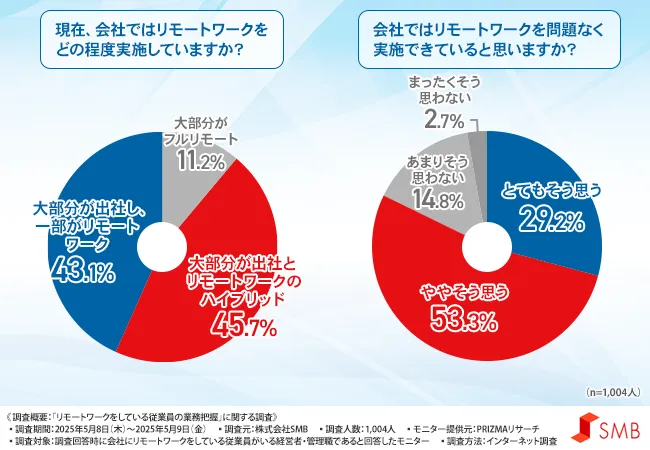
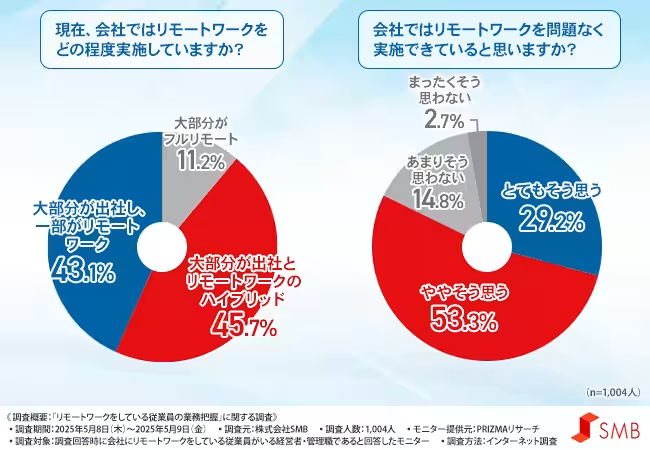
- - Full Remote: 11.2%
- - Hybrid: 45.7%
- - Mostly in-office, some remote: 43.1%
These results reflect a trend towards flexibility in the workplace, with hybrid models becoming the norm. Approximately 80% of participants indicated that they believe their companies are successfully implementing remote work, with 29.2% claiming they are “very confident” and 53.3% saying they “somewhat agree.” However, nearly 20% expressed concerns about achieving complete satisfaction in this model, prompting further investigation into the challenges they face.
Positive Feedback on Remote Work Implementation
Those who believe their companies are successfully managing remote work cited several reasons:
- - Consistent Performance: Remote work has not negatively affected productivity (ages 40s, Tokyo, large corporation).
- - Thorough Management: A robust management system is in place (ages 40s, Tokyo, small business).
- - Effective IT Tools: Companies have access to comprehensive tools that facilitate remote work performance (ages 50s, male, small business).
- - Increased Efficiency: Teams are operating efficiently and sales are growing (ages 60s, Osaka, small business).
Conversely, those who felt less convinced about effective remote work addressed issues like:
- - Visibility Challenges: Difficulty in tracking employee performance (ages 30s, Fukuoka, small business).
- - Inadequate Communication: In-person employees are burdened with more unrecognized tasks (ages 60s, Tokyo, small business).
- - Communication Difficulties: Complications in maintaining team communication (ages 50s, Fukuoka, large corporation).
- - Employee Development: Challenges in nurturing new talent (ages 60s, Tokyo, small business).
Shifting Perspectives on Future Remote Work Policies
When asked about their future strategies regarding remote work, responses varied by company size:
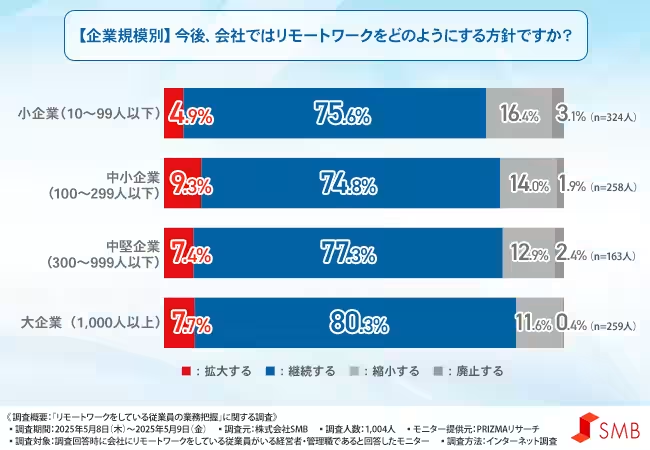
- - Small Businesses (10-99 employees): 4.9% expand, 75.6% continue, 16.4% contract, 3.1% eliminate.
- - Medium Enterprises (100-299 employees): 9.3% expand, 74.8% continue, 14.0% contract, 1.9% eliminate.
- - Large Firms (1,000+ employees): 7.7% expand, 80.3% continue, 11.6% contract, 0.4% eliminate.
Across all sizes, “continuation” emerged as the dominant strategy, indicating that companies intend to maintain their existing remote work frameworks. Interestingly, “expansion” was most frequently endorsed by medium-sized enterprises, highlighting their eagerness to enhance remote work systems.
Benefits Realized from Remote Work
Participants noted several advantages experienced post-adoption of remote work, which varied according to company size:
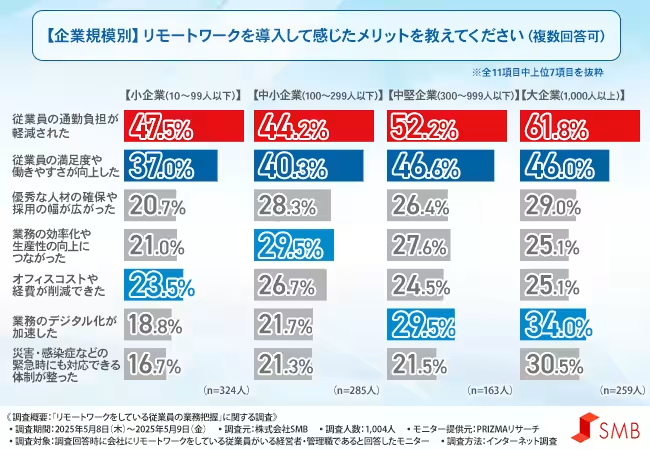
- - Decreased Commute Burden: 61.8% of large companies cited significant reductions in commuting challenges.
- - Improved Employee Satisfaction: Many noted improvements in work-life balance, particularly in larger firms, where 46.0% acknowledged better employee satisfaction levels.
- - Cost Reductions: Many also reported reductions in office-related costs.
These findings underscore a growing acknowledgment of the significant impact of remote work on overall employee well-being and productivity, transcending mere efficiency metrics.
Challenges in the Remote Work Environment
However, along with these benefits come noticeable drawbacks:
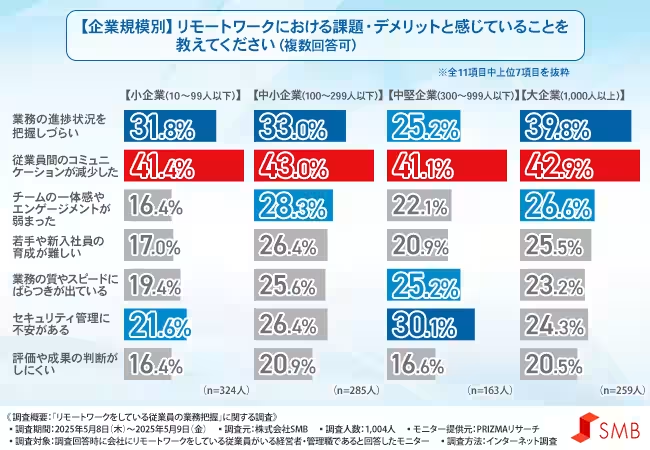
- - Reduced Employee Communication: Identified by 41.4% of small businesses as a major challenge.
- - Difficulty in Monitoring Progress: A common concern reported across all business sizes, particularly in larger organizations where tracking numerous projects can become complex.
- - Security Management Concerns: Particularly significant for mid-sized companies, reflecting the gaps in systems and infrastructures during growth.
Utilizing Tools for Better Progress Tracking
The research revealed that communication tools like Slack and Microsoft Teams dominate remote work interactions, with 45.1% using chat for status updates. However, many executives also continue to rely on individual meetings and emails, signaling a blend of digital and traditional management practices.
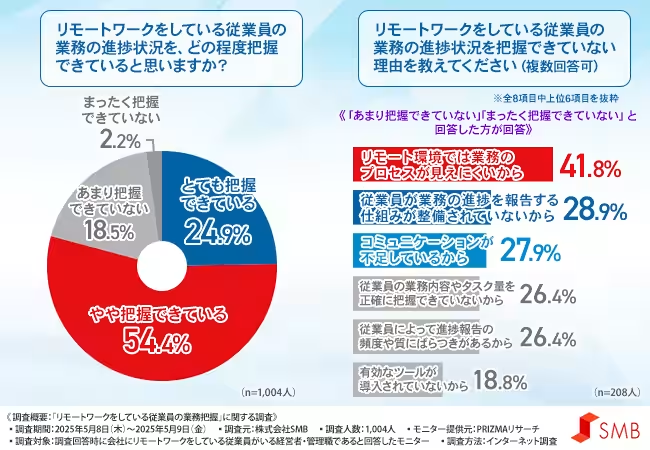
When asked how well they believe they understand their employees' work status, about 80% of leaders felt they had a grasp, although only about 24.9% were “very confident” in this understanding.
The Need for Better Visibility Tools
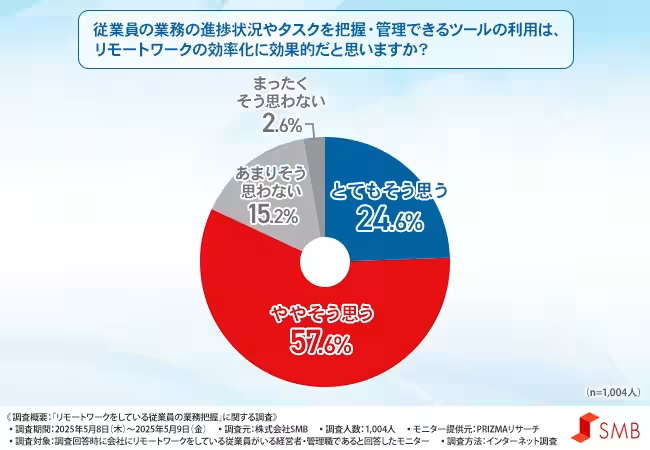
Approximately 80% of executives also expressed optimism about utilizing tools to better track and manage employee progress, indicating a significant opportunity for tools like BizLib to bridge existing gaps in remote work management and visibility.
Conclusion
While a large majority of companies report no issues with remote work implementation, concerns over visibility and communication remain significant barriers. As organizations continue to navigate this remote landscape, the deployment of effective management tools will be crucial to overcoming these challenges. Digital solutions that enhance visibility, streamline communication, and support remote operational structures are likely to play a pivotal role in the future of work. BizLib is positioned to provide the necessary support to companies looking to optimize their remote work strategies.
About BizLib
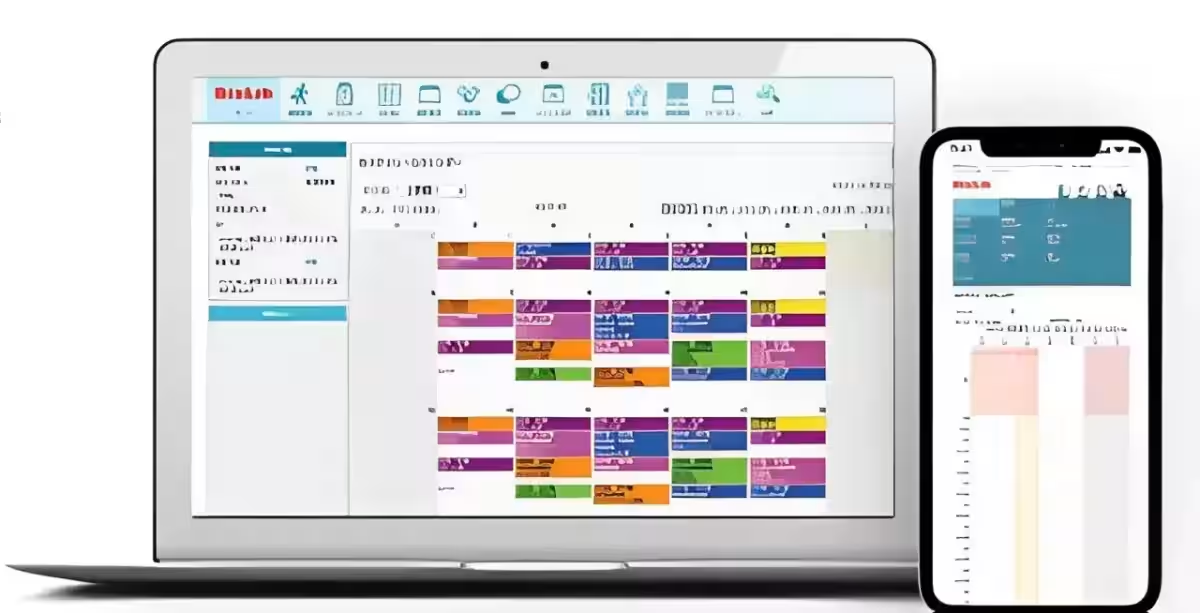
BizLib is a business management system operated by SMB Corporation, designed to support companies in managing critical elements such as people, information, and time for sustainable growth. More details can be found at BizLib.

Topics Business Technology)
【About Using Articles】
You can freely use the title and article content by linking to the page where the article is posted.
※ Images cannot be used.
【About Links】
Links are free to use.