



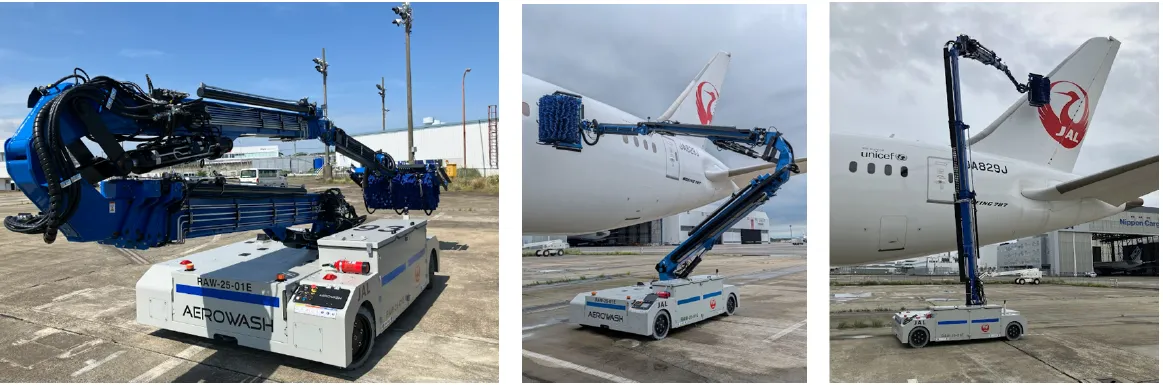
Japan's First Automated Aircraft Cleaning Robot Set for Narita Airport in 2026
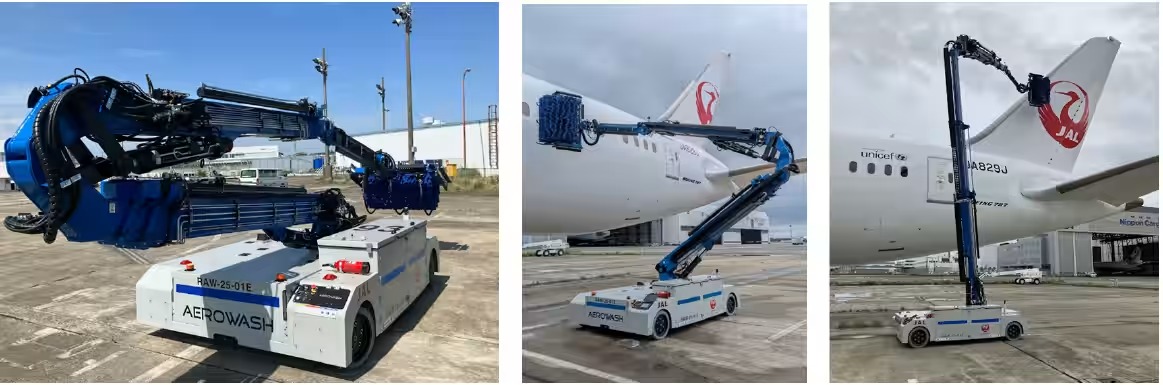
Japan Airlines Group (JAL) has announced a groundbreaking advance in its airport digital transformation efforts by introducing the first remotely operated aircraft cleaning robot in the country, developed by Aerowash AB from Sweden. This innovative robot, known as the AW3, is equipped with advanced programming control features and is set to begin full operations at Narita Airport by the end of 2026, following necessary training for the operational staff.
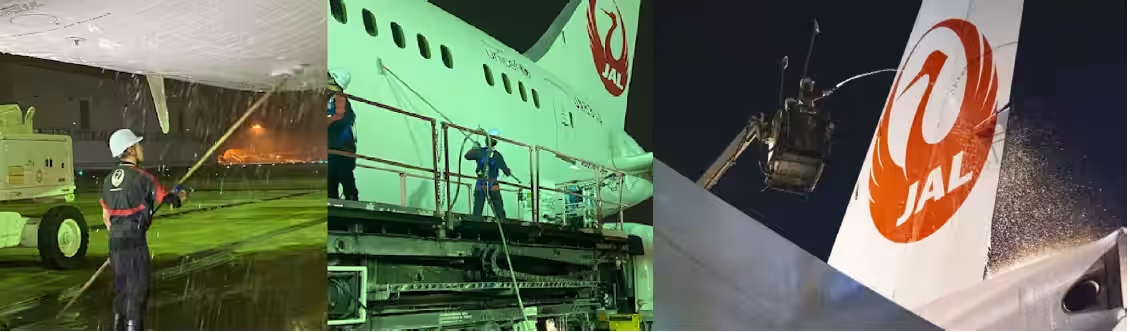
Aircraft maintenance is crucial not just for performance but also for the visual appeal of the aircraft. Until now, these cleaning operations were primarily conducted at night by specialized staff using long-handled mops and specific cleaning agents, which can be labor-intensive and burdensome. JAL previously attempted to improve efficiency with a wired remote-controlled cleaning system about 30 years ago. However, due to technological limitations, that initiative did not continue.
With the new remote-controlled aircraft cleaning robot, JAL is making a significant comeback, leveraging modern control technologies to create an advanced collaborative work assistant that aims to significantly reduce the workload of cleaning staff.
1. Japan's First: Equipped with advanced program control and sophisticated collaboration features, the robot is designed to make cleaning processes more efficient.
- Automated Approach to Cleaning Areas: By programming the specific cleaning areas, such as the wings and tail, the robot's manipulator can autonomously approach these designated surfaces.
- Human-Machine Collaboration Design: During the final phase of the cleaning process, operators can perform precise adjustments, integrating human skill with machine assistance for improved safety and productivity.
- High Maneuverability with All-Directional Movement: The robot is designed to operate flexibly around the aircraft, thanks to its four-wheel steering feature that facilitates all-directional movement.
2. Promoting Work Style Reform through Workplace DX:
- Reduction in Labor Hours: According to the manufacturer’s catalog, introducing this robot could reduce labor hours for cleaning tasks done at night by up to 40% per aircraft, allowing for more efficient operations while improving staff productivity.
- Enhancing Work Environment and Safety: By alleviating physical strain from substantial cleaning tasks and minimizing exposure risk to harmful chemical agents, the robot enhances the safety and health management of cleaning personnel.
3. Contribution to Sustainability and Environmental Responsibility:
- Water Conservation: This innovative robot can cut water use by up to 50% per aircraft, promoting more sustainable cleaning practices.
- Contributing to CO2 Reduction: With rechargeable battery power, the robot aims to reduce carbon emissions at cleaning sites, thereby lowering the environmental impact of aircraft maintenance operations.
JAL is planning to use this robot at Narita Airport initially and is considering further implementations at other domestic airports. This initiative signifies a commitment not only to improve the labor environment for cleaning tasks but also to enhance the quality of aircraft maintenance. Japan Airlines is dedicated to leveraging cutting-edge technology to elevate the safety, quality, and productivity of ground handling operations while fostering an inclusive work environment that prioritizes employee well-being and sustainable operations.
By prioritizing advancements in technology and corporate responsibility, JAL aims to create a future-focused workplace and align its operations with an environmentally conscious framework, reinforcing its leadership in the airline industry.
Background and Purpose of Introduction
Aircraft maintenance is crucial not just for performance but also for the visual appeal of the aircraft. Until now, these cleaning operations were primarily conducted at night by specialized staff using long-handled mops and specific cleaning agents, which can be labor-intensive and burdensome. JAL previously attempted to improve efficiency with a wired remote-controlled cleaning system about 30 years ago. However, due to technological limitations, that initiative did not continue.
With the new remote-controlled aircraft cleaning robot, JAL is making a significant comeback, leveraging modern control technologies to create an advanced collaborative work assistant that aims to significantly reduce the workload of cleaning staff.
Key Features and Advancements of the Remote-Controlled Aircraft Cleaning Robot
1. Japan's First: Equipped with advanced program control and sophisticated collaboration features, the robot is designed to make cleaning processes more efficient.
- Automated Approach to Cleaning Areas: By programming the specific cleaning areas, such as the wings and tail, the robot's manipulator can autonomously approach these designated surfaces.
- Human-Machine Collaboration Design: During the final phase of the cleaning process, operators can perform precise adjustments, integrating human skill with machine assistance for improved safety and productivity.
- High Maneuverability with All-Directional Movement: The robot is designed to operate flexibly around the aircraft, thanks to its four-wheel steering feature that facilitates all-directional movement.
2. Promoting Work Style Reform through Workplace DX:
- Reduction in Labor Hours: According to the manufacturer’s catalog, introducing this robot could reduce labor hours for cleaning tasks done at night by up to 40% per aircraft, allowing for more efficient operations while improving staff productivity.
- Enhancing Work Environment and Safety: By alleviating physical strain from substantial cleaning tasks and minimizing exposure risk to harmful chemical agents, the robot enhances the safety and health management of cleaning personnel.
3. Contribution to Sustainability and Environmental Responsibility:
- Water Conservation: This innovative robot can cut water use by up to 50% per aircraft, promoting more sustainable cleaning practices.
- Contributing to CO2 Reduction: With rechargeable battery power, the robot aims to reduce carbon emissions at cleaning sites, thereby lowering the environmental impact of aircraft maintenance operations.
Future Prospects
JAL is planning to use this robot at Narita Airport initially and is considering further implementations at other domestic airports. This initiative signifies a commitment not only to improve the labor environment for cleaning tasks but also to enhance the quality of aircraft maintenance. Japan Airlines is dedicated to leveraging cutting-edge technology to elevate the safety, quality, and productivity of ground handling operations while fostering an inclusive work environment that prioritizes employee well-being and sustainable operations.
By prioritizing advancements in technology and corporate responsibility, JAL aims to create a future-focused workplace and align its operations with an environmentally conscious framework, reinforcing its leadership in the airline industry.
Topics Consumer Products & Retail)
【About Using Articles】
You can freely use the title and article content by linking to the page where the article is posted.
※ Images cannot be used.
【About Links】
Links are free to use.