



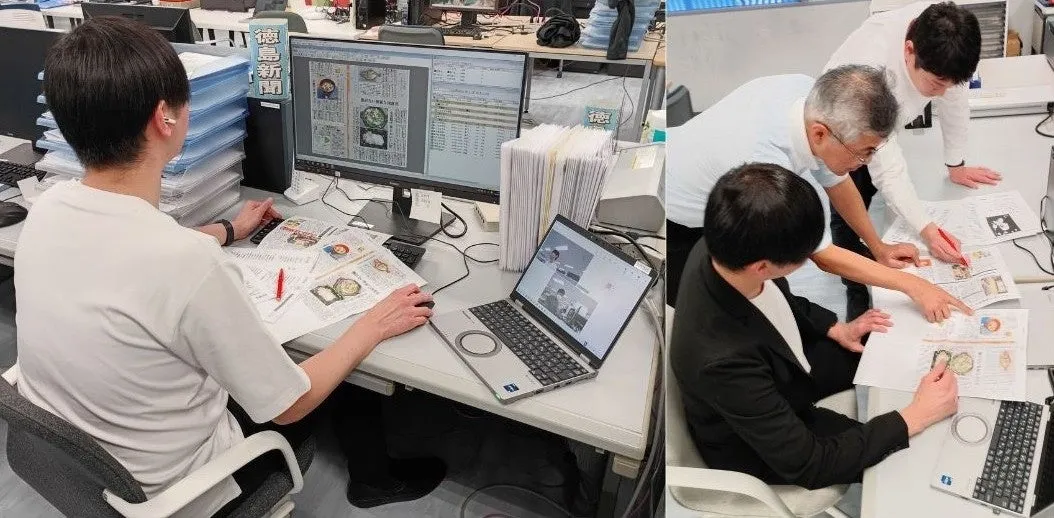
TONICHI Media Gate Launches Remote News Production for Tokushima Newspaper During Winter Olympics
Remote News Production at TONICHI Media Gate
In a groundbreaking initiative, TONICHI Media Gate has launched a remote production service for the Tokushima Newspaper's economic sections during the Winter Olympics. This innovative approach marks the first time in the industry that remote support will be provided for news sections, highlighting a significant shift in how journalists and editors may interact with their work.
Located in Koto Ward, Tokyo, TONICHI Printing Co., Ltd. is led by President Mitsuaki Nishikawa. The company has a robust track record as a core entity within the Mainichi Shimbun Group, involved in the production of various print media, including evening editions, specialized newspapers, civic publications, and university reports. The new service aims to strengthen the connection between regional newspapers and modern technological advancements.
The remote production will specifically cover the economic sections of the Tokushima Newspaper, running from February 9 to February 20, coinciding with the Winter Olympic events. This initiative aims to showcase the capability of TONICHI’s service not only to enhance the efficiency of production but also to ensure high-quality output. During the process, TONICHI's editors will actively engage with the submitted articles, crafting headlines, refining content, and arranging the layout in real-time.
The Process of Remote Production
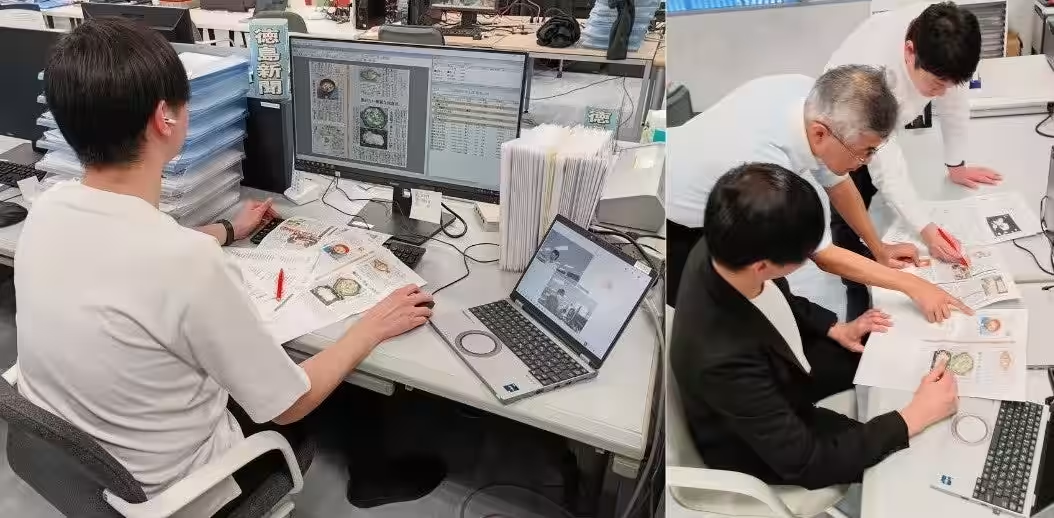
To produce the pages remotely, the design and layout environment is accessed through a cloud-based newspaper sharing system utilized by member companies of Kyodo News. This innovative workflow allows for seamless collaboration between editors at TONICHI and the Tokushima Newspaper's team, ensuring that editorial quality is maintained. Each page of news produced will undergo meticulous quality checks by the responsible director, ensuring that the final product meets the high standards expected by readers.
This initiative is part of the broader TONICHI Media Gate project, which is dedicated to pioneering new frontiers for media's future. The project aims to open doors to innovative practices in newspaper production, ultimately contributing to the preservation of newspaper culture in Japan. By combining traditional values with modern technology, TONICHI seeks to support local newspapers and further engage with the community.
Going beyond the Winter Olympics coverage, TONICHI has articulated its commitment to supporting the production of regional and prefectural newspapers. As the media landscape continues to evolve, TONICHI's efforts underscore the importance of adaptive strategies in maintaining journalistic integrity and continuing the tradition of local reporting.
Conclusion
The launch of remote production for the Tokushima Newspaper represents a significant step forward for the industry. With a focus on collaboration and innovation, TONICHI aims to reinforce the role of local papers in preserving the integrity of news reporting while adapting to the challenges posed by the rapidly changing media environment. As they move forward, the company looks to expand its support for various media outlets, fostering a rich newspaper culture for future generations.
Topics Entertainment & Media)
【About Using Articles】
You can freely use the title and article content by linking to the page where the article is posted.
※ Images cannot be used.
【About Links】
Links are free to use.