



Insights from IT Engineers on Withdrawal During the Hiring Process
Exploring Withdrawal Trends Among IT Engineers
Overview
In a recent survey conducted by Kikkake Creation, which involved 221 IT engineers who withdrew from hiring processes after the second interview, startling insights emerged regarding their reasons for withdrawal and communication practices with potential employers. This report sheds light on the gap between the reasons candidates provide for withdrawing from the selection process and their true sentiments.
Key Findings
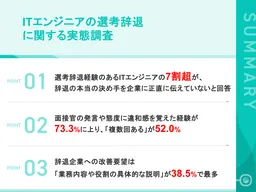
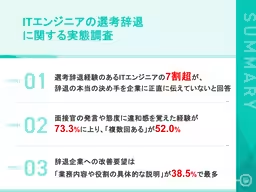
The survey results indicate that roughly 71.2% of IT engineers did not communicate their genuine reasons for withdrawing to the organizations involved. Furthermore, an impressive 73.3% of respondents reported experiencing discomfort with the statements or attitudes exhibited by interviewers throughout the process. This disconnect raises essential questions regarding the hiring practices adopted by companies and their effectiveness in genuinely understanding candidate concerns.
Reasons for Withdrawal
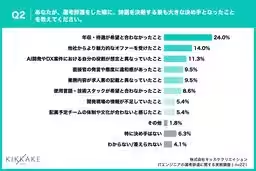
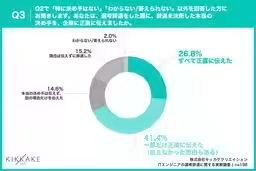
The most significant motive for withdrawal noted by respondents was dissatisfaction with salary or benefits, accounting for 24.0% of the responses. Following closely at 14.0% was receiving a more enticing offer from another company. Despite these clear motivations, only 26.8% stated they communicated all their true reasons for withdrawal, and an alarming 15.2% didn’t share any rationale at all when they decided to withdraw.
Why Engineers Withhold True Reasons
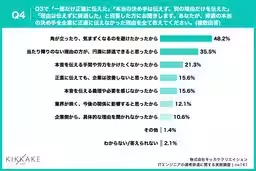
The primary reason for not being forthright about their withdrawal was a desire to avoid awkwardness or conflict, selected by 48.2% of respondents. Other responses highlighted a preference for conveying neutral reasons that might facilitate a smoother withdrawal process, accounting for 35.5% of the answers. Such tendencies suggest a cultural issue where IT engineers may feel the need to filter their true feelings to maintain amicable relationships.
Interview Discomfort
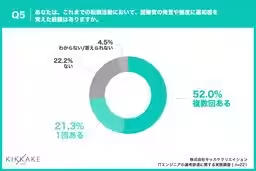
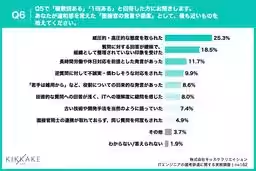
When probing into the discomfort experienced with interviewers, over half of the participants (52.0%) acknowledged having faced this scenario numerous times. The most common discomfort stemmed from perceiving interviewers to be overly intimidating or high-handed, affecting not only their comfort level but also their perception of the company's culture. Additional factors such as vague responses about the company structure added to the unease.
Demand for Improvement
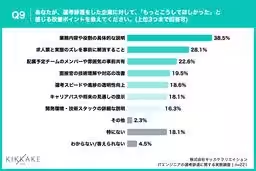
Respondents offered valuable feedback on what changes they would like to see from companies. Notably, 38.5% requested clearer explanations of job roles and responsibilities, while 28.1% emphasized the necessity for better alignment between job listings and actual job conditions. Improving these facets could significantly enhance candidate experience throughout the hiring process.
Conclusion
This survey reveals a complex interplay between the withdrawal decisions of IT engineers and their communication with potential employers. The tendency of candidates to keep their true motivations for withdrawing silent hints at larger systemic issues within recruitment processes. Companies must foster open communication channels to better align their practices with the expectations and experiences of job seekers. By embracing constructive feedback and making tangible improvements, businesses can potentially mitigate candidate withdrawals and build an environment that supports transparency and trust.


Topics Business Technology)

【About Using Articles】
You can freely use the title and article content by linking to the page where the article is posted.
※ Images cannot be used.
【About Links】
Links are free to use.