



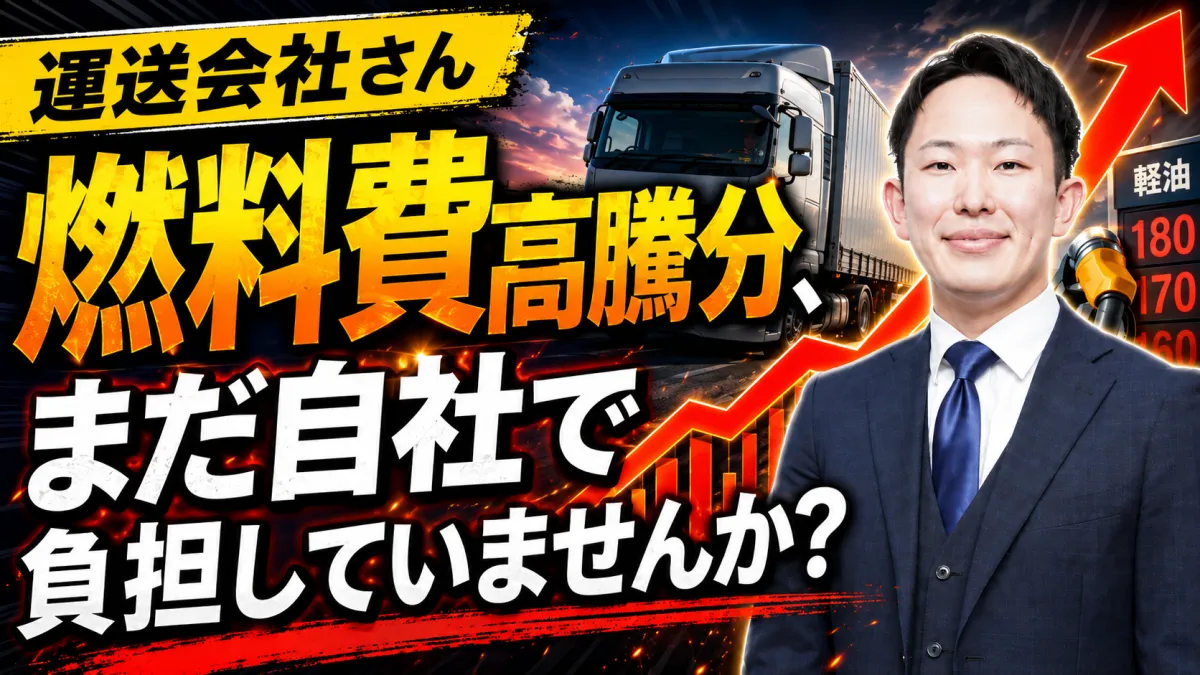
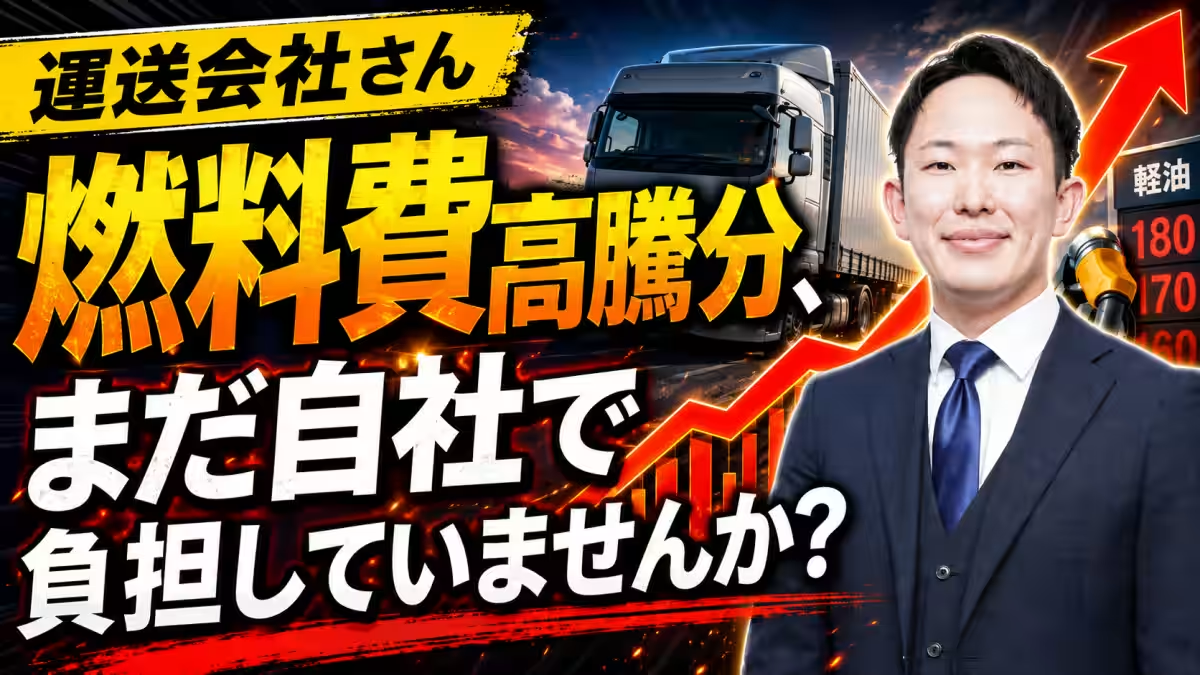
Understanding Fuel Surcharge Implementation for Logistics Executives: A Video Guide
Navigating Fuel Price Surge: Essential Insights for Logistics Leaders
Amidst the volatile fluctuations in diesel prices due to escalating Middle Eastern tensions, logistics executives face significant challenges. The situation has compelled many transport companies to shift from in-tank self-supply to external fueling stations, leading to an alarming increase of about 20 yen per liter. Given that fuel costs are closely tied to company profitability, controlling these expenses becomes impossible due to external factors such as international relations and currency exchange rates.
In response to these challenges, Funai Research's Supply Chain Consulting division has launched an insightful video titled "The Definitive Guide to Fuel Surcharges: Effective Strategies for Rate Negotiations and Administrative Load Reduction." Targeted at top management within transportation and logistics firms, the video aims to unpack the complexities surrounding fuel surcharges and provide actionable solutions for maintaining stable operations.
Key Highlights of the Video
The video transcends basic explanations by delving into pragmatic solutions to the common 'real-world problems' faced during negotiations with clients. Here are some crucial aspects covered:
1. Distinguishing Between Freight Rate Increases and Fuel Surcharges
One critical takeaway from the video is understanding the essential difference between increasing basic freight rates and implementing fuel surcharges. Regular expenses, such as labor and vehicle costs that consistently rise, should be negotiated within the freight rate. In contrast, fluctuations in fuel costs, which can be unpredictable, warrant a separate surcharge through a distinct contractual agreement. This knowledge effectively mitigates the risk of being pressured to reduce freight rates when fuel prices drop.
2. Establishing Trustworthy Reference Points
The video also provides a framework for creating 'official standard values' based on guidelines from the Ministry of Land, Infrastructure, Transport, and Tourism and the Japan Trucking Association. By using a base value of 120 yen, negotiation grounds are fortified with credible metrics that both transport companies and clients can rely upon.
3. Streamlining Administrative Processes
To alleviate the burdensome administrative workload associated with price adjustment, the video outlines a unique 'freight-rate-linked' calculation method. This innovative approach negates the need to match every trip's mileage and fuel receipts individually. Instead, by leveraging the industry’s average cost rate of 14.9%, transport firms can efficiently apply fluctuations in fuel prices to adjust freight rates, thus significantly reducing management costs for both companies and clients alike.
Accessing the Video
To view the complete video detailing these strategies and more, visit this link.
About Funai Research SC
Founded on May 10, 2000, Funai Research Supply Chain Consulting has its headquarters in Chuo-ku, Tokyo, and operates a significant branch in Osaka. With a capital of 980 million yen, the company, led by President Naoyuki Hashimoto, specializes in providing expert consulting services tailored to the logistics and transportation sector, aimed at fostering sustainable growth in times of fluctuating fuel costs.
- - Contact Information:
Osaka Headquarters: 21st and 22nd Floors, Innogate Osaka, 3-2-123 Umeda, Kita-ku, Osaka, 530-0001, Japan
Telephone: 03-4223-3163
Email: [email protected]
Website: sc.funaisoken.co.jp
Topics Business Technology)

【About Using Articles】
You can freely use the title and article content by linking to the page where the article is posted.
※ Images cannot be used.
【About Links】
Links are free to use.