



J.D. Power Reveals 2025 Corporate E-Commerce Customer Satisfaction Rankings
Overview of J.D. Power's 2025 Customer Satisfaction Survey
J.D. Power Japan, a leader in customer satisfaction research and consulting based in Minato-ku, Tokyo, has recently unveiled the results of its 2025 Corporate E-Commerce Customer Satisfaction Survey. This annual study assesses various business types, categorizing them into three distinct sectors: Office, Manufacturing/Field, and Medical/Care.
Survey Methodology
Conducted annually, the survey targets corporate users who utilize e-commerce services for their organizations. This marks the 13th year of the investigation, which began dividing satisfaction metrics based on business types in 2024. The evaluation scores are based on user satisfaction in several dimensions including support service, delivery, pricing, and product availability.
Satisfaction Scores
The overall satisfaction scores were as follows:
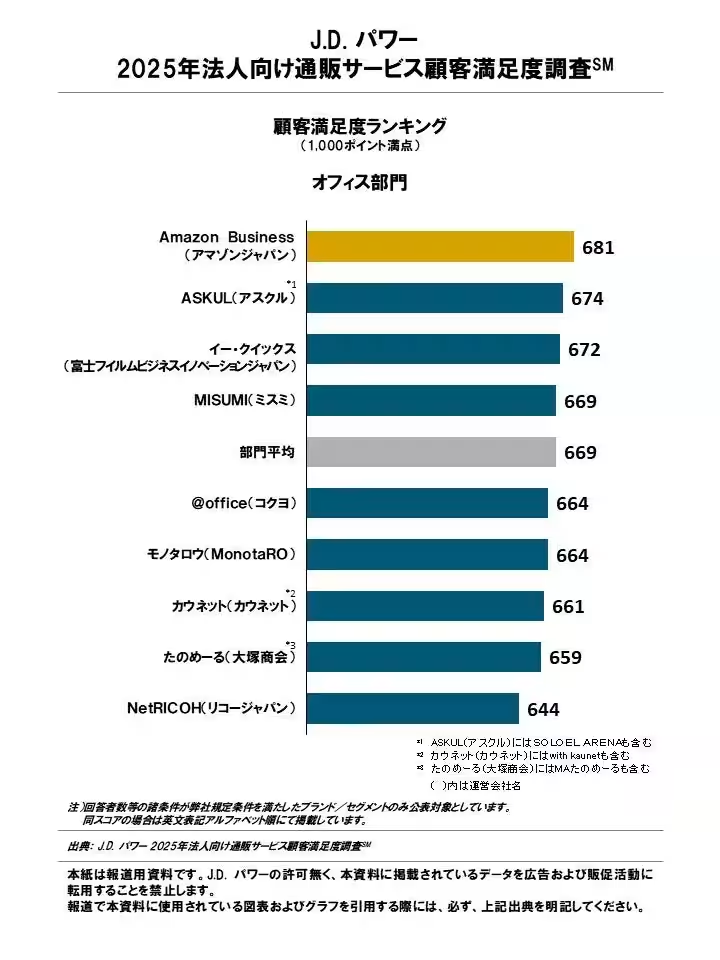
- - Office Sector: 669 points
- - Medical/Care Sector: 658 points
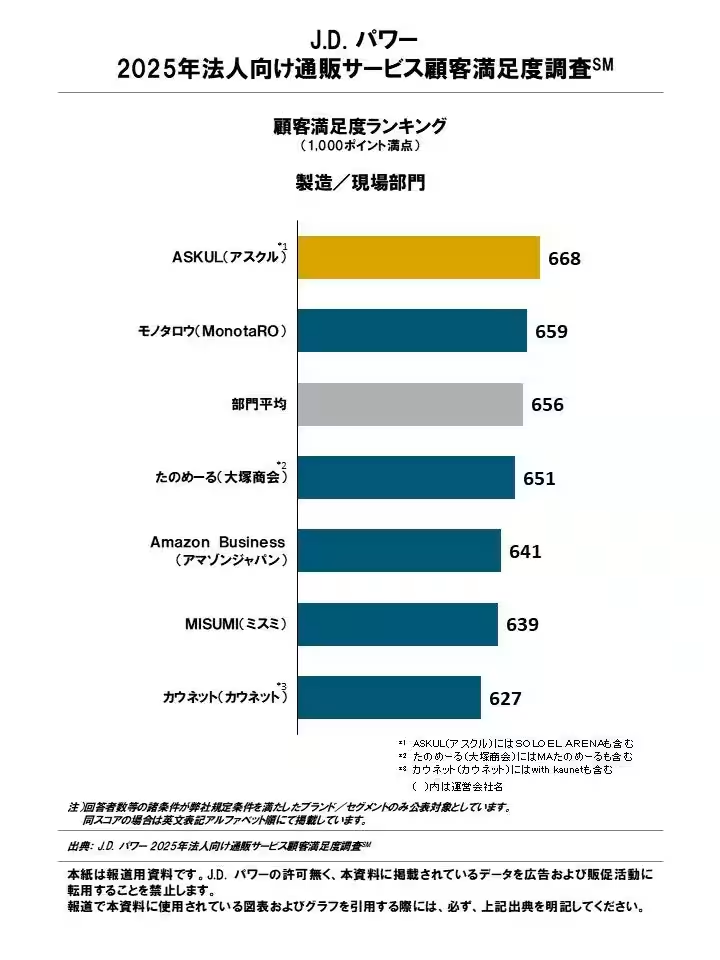
- - Manufacturing/Field Sector: 656 points
Top Performers
In the Office sector, Amazon Business emerged as the frontrunner with an impressive score of 681 points, excelling in categories such as website/catalog usability and product offerings. ASKUL claimed second place with 674 points, followed closely by e-Quicks at 672 points.
For the Manufacturing/Field sector, ASKUL topped the chart with 668 points, outperforming competitors in delivery and pricing aspects. Monotaro followed in second with 659 points.
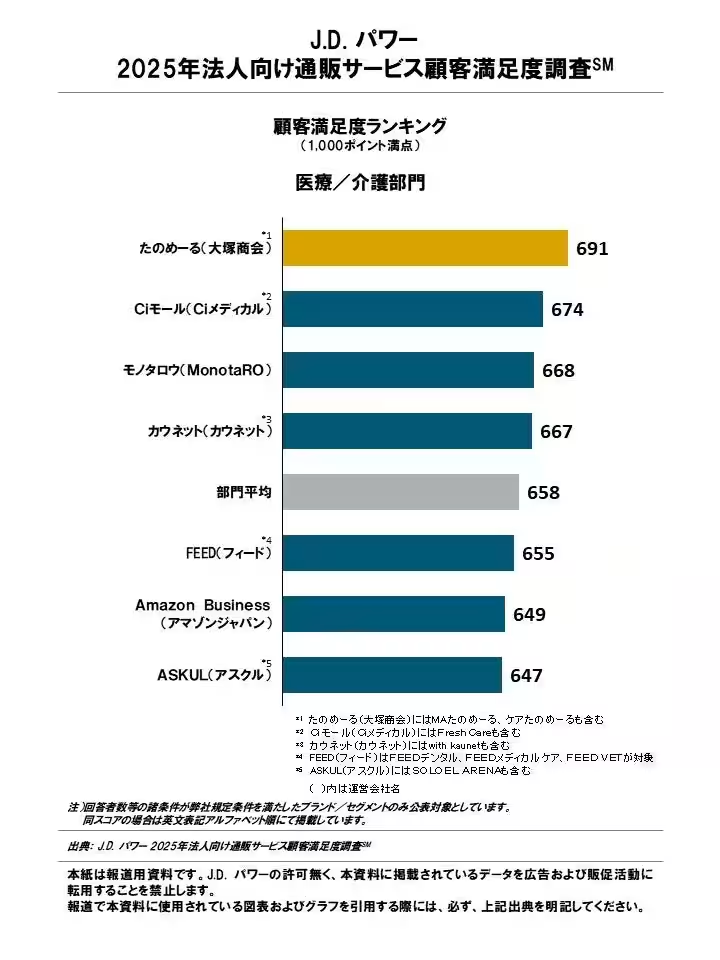
In the Medical/Care sector, Tanomail secured the leading position with a notable 691 points, while Ci Mall and Monotaro garnered scores of 674 points and 668 points, respectively.
Focus on Sustainability and SDGs
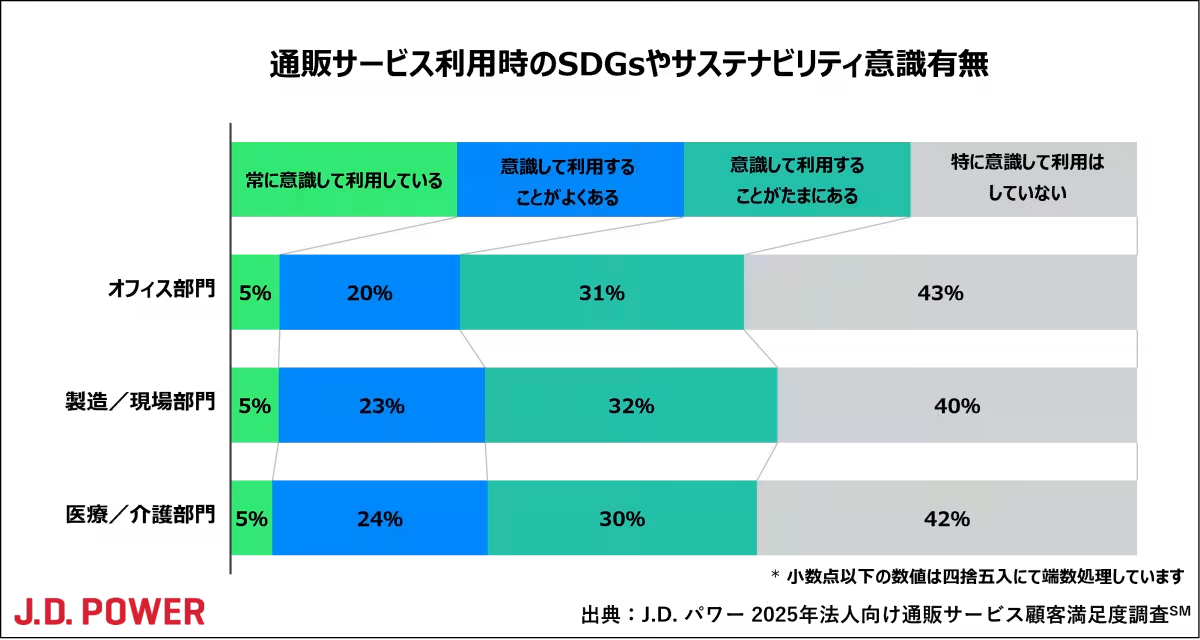
A significant finding from this year's survey was the increasing awareness of sustainability among corporate purchasers. More than half of the respondents noted that they consciously integrate sustainability practices into their purchasing decisions. Specifically, 56% from the Office sector, 60% from Manufacturing/Field, and 59% from Medical/Care reported being mindful of sustainability and SDGs (Sustainable Development Goals) when making purchases.
Interest in Recycling Initiatives
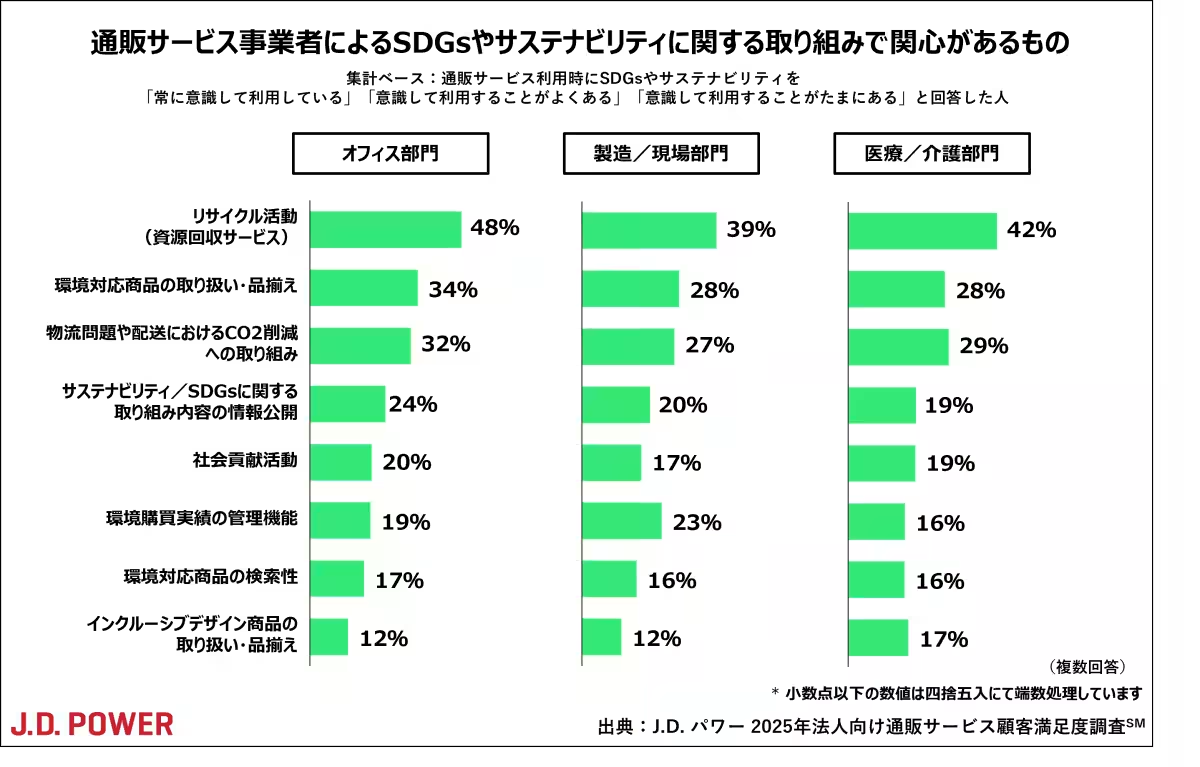
When asked about sustainability initiatives that organizations are keen on, recycling activities emerged as the top priority across all sectors, with respondents expressing high interest in environmentally friendly logistics and product offerings. Manufacturing and Medical sectors showed particular engagement with sustainable purchasing processes and inclusive product designs.
Conclusions and Future Directions
The findings indicate that while many corporate users are moving towards environmentally responsible purchasing, notable portions still lack awareness or concern for sustainability. Especially among larger organizations, the emphasis on environmental considerations is more pronounced, suggesting a trend toward increased awareness and adoption of SDGs.
These results underscore the importance for companies to tailor their services and information to meet the diverse needs and awareness levels of their clients. Continued innovation in logistics and customer service will likely be essential for maintaining competitiveness in the evolving corporate e-commerce landscape.
Final Thoughts
J.D. Power's insights shed light on the leading companies in customer satisfaction, establishing benchmarks that can drive entire sectors toward improved service and sustainable practices. By aligning corporate purchasing behavior with sustainability goals, companies can foster both growth and corporate responsibility in the marketplace.



Topics Consumer Products & Retail)
【About Using Articles】
You can freely use the title and article content by linking to the page where the article is posted.
※ Images cannot be used.
【About Links】
Links are free to use.