



Exploring AI Integration in Manufacturing: Results from a Recent Survey
Exploring AI Integration in Manufacturing: Results from a Recent Survey
In a rapidly evolving technological landscape, the integration of artificial intelligence (AI) within various industries is becoming increasingly significant. The manufacturing sector, long reliant on human experience and intuition, is now experiencing a shift towards more data-driven approaches. Recently, CADDi, a startup based in Tokyo, Japan, conducted a detailed survey focusing on AI usage among 300 employees in the manufacturing industry to uncover how different types of AI are transforming operational practices. This article focuses on the findings of their investigation into the deployment of both specialized and general-purpose AI in manufacturing.
The Survey's Background
CADDi aims to revolutionize the manufacturing sector by leveraging AI and data as fundamental assets to drive innovation. The survey compared user experiences between specialized AI tools, designed to tackle specific manufacturing challenges, and general-purpose AI systems like ChatGPT and Gemini. As the manufacturing industry grapples with the complexities of operational efficiency, the survey sought to determine how these tools impact various facets of the trade, especially concerning efficiency and expertise.
Key Findings
1. AI's Role in Decision-Making
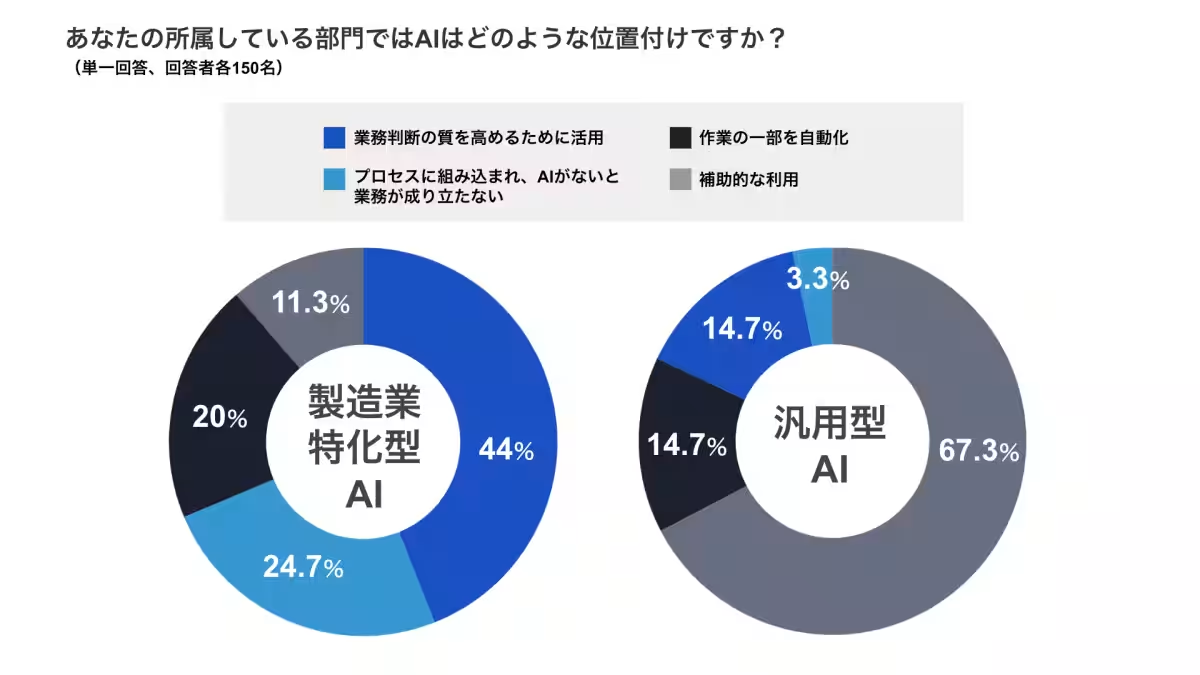
Among the specialized AI users, 44% stated that their AI tools significantly enhance the quality of operational judgments, while 24.7% claimed such AI was essential for their day-to-day functions. In contrast, general-purpose AI users primarily employed these tools for supplementary tasks; a whopping 67.3% reported using AI in a supportive role.
2. Task Estimations
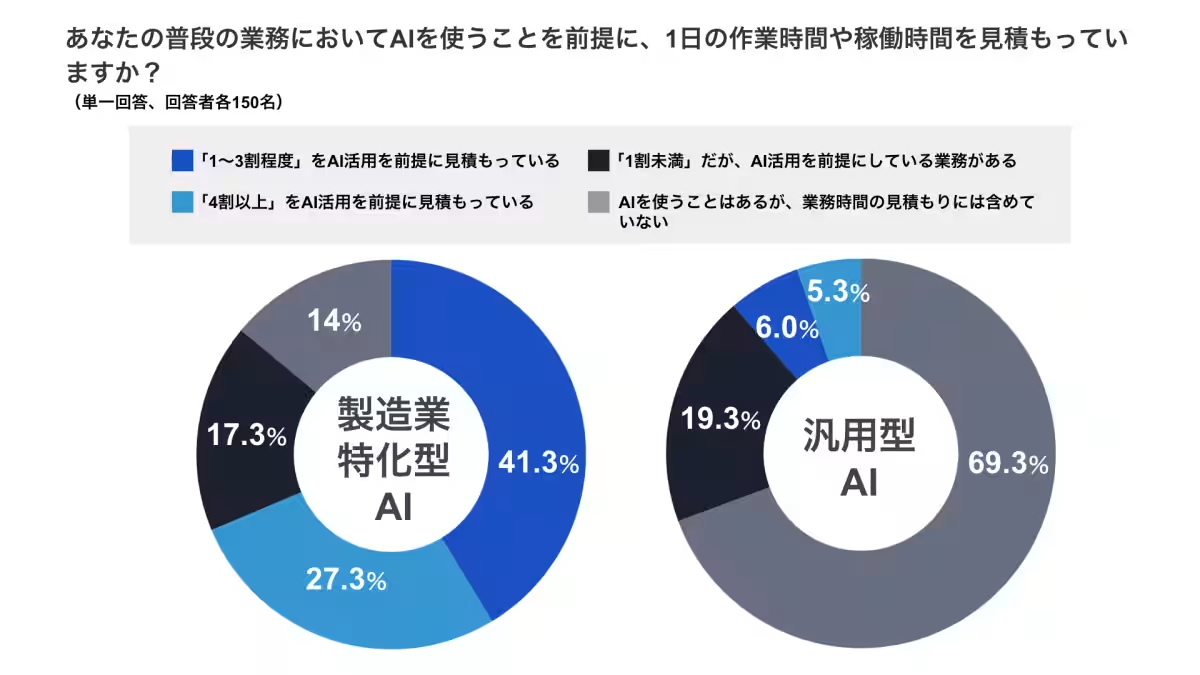
When estimating time spent on operations, over 80% of specialized AI users calculated their work hours based on expected AI contributions. Conversely, almost 70% of general-purpose AI users did not include AI in their time estimations, signaling a stark difference in how integral AI is to day-to-day operations in specialized settings.
3. Effectiveness in Unique Manufacturing Tasks
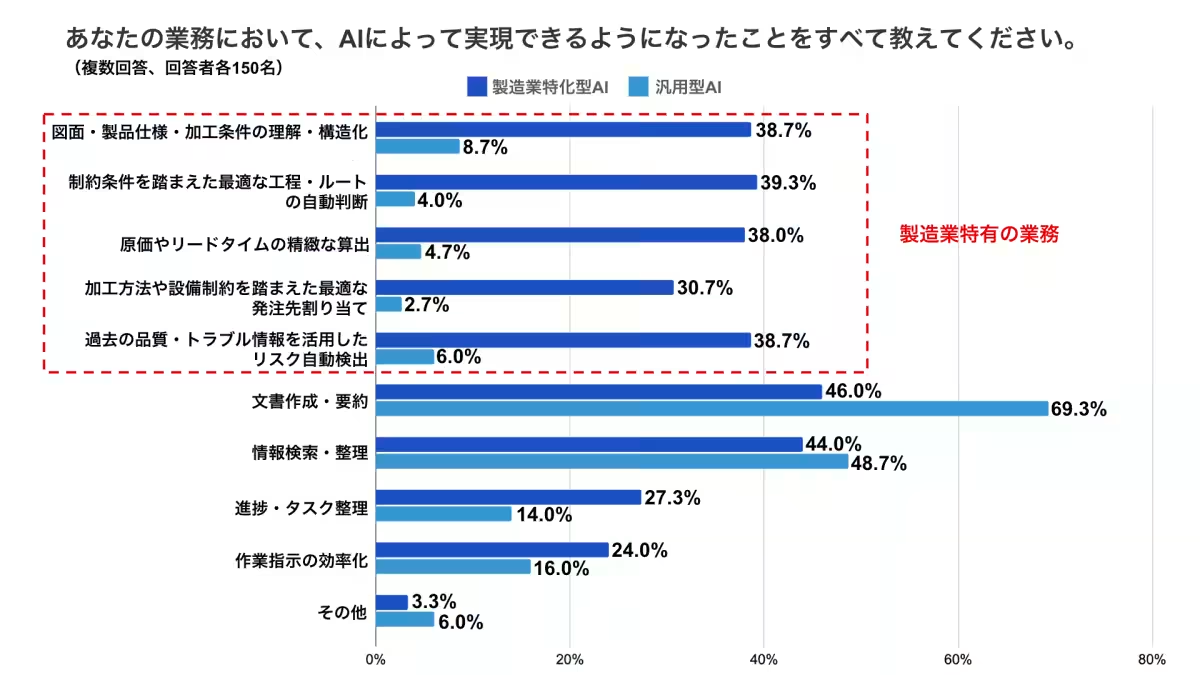
The survey also revealed that nearly 40% of specialized AI users recognized tangible benefits in critical manufacturing tasks like blueprint interpretation and process optimization. In comparison, less than 10% of general-purpose AI users felt their tasks improved significantly.
4. Addressing Long-standing Challenges
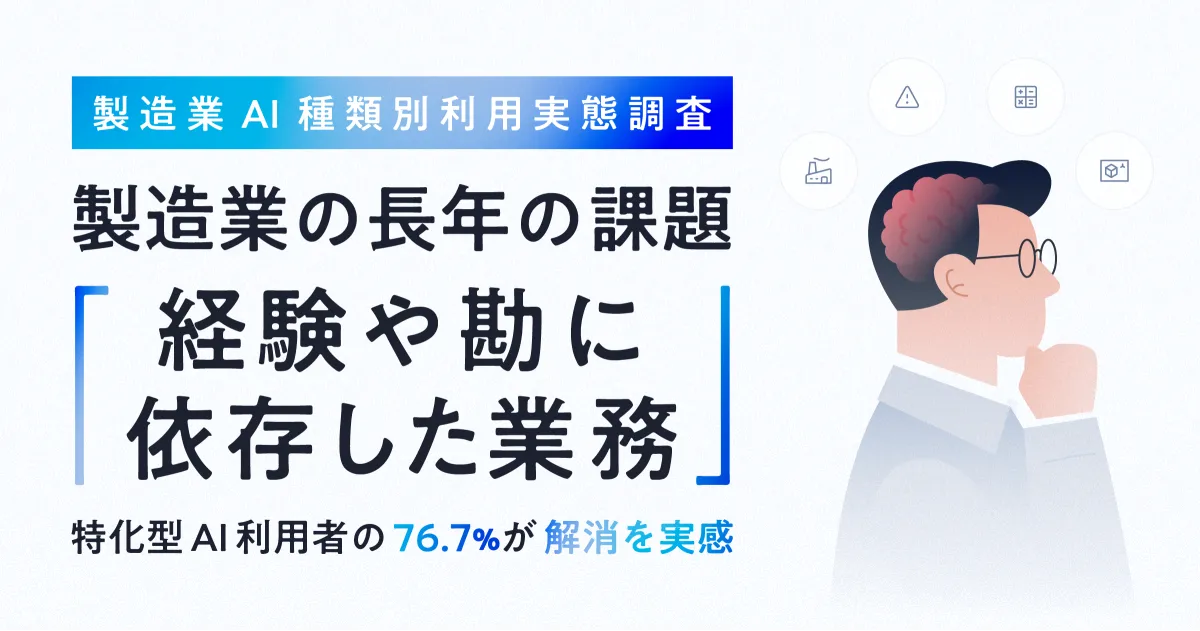
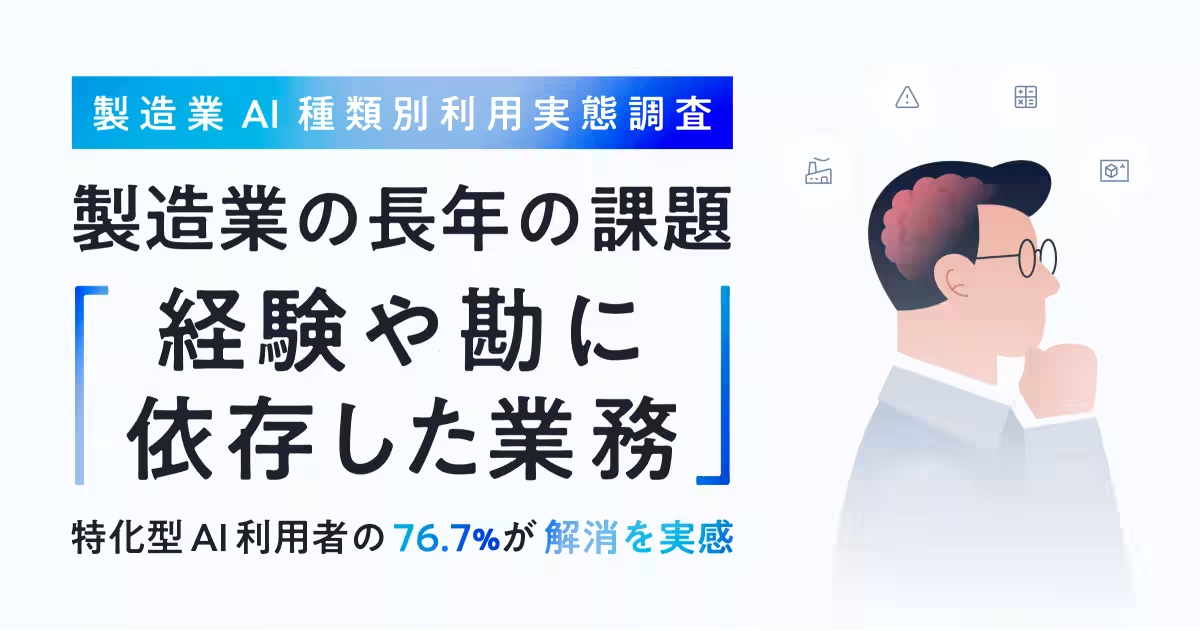
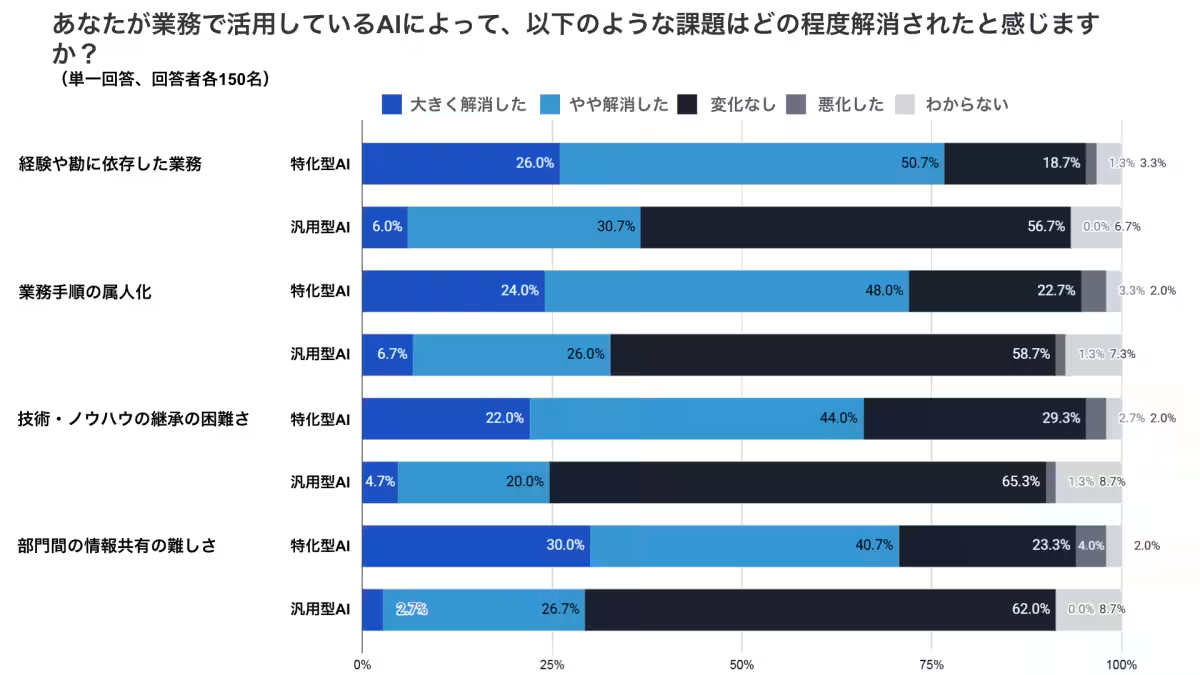
Another noteworthy aspect was the role of specialized AI in addressing long-standing issues in manufacturing, such as over-dependence on personal experience. An impressive 76.7% of specialized AI users acknowledged a substantial reduction in such reliance due to their AI systems. This finding highlights how specialized AI can mitigate the inherent challenges associated with knowledge transfer and individual expertise in manufacturing environments.
5. Expectations for Future AI
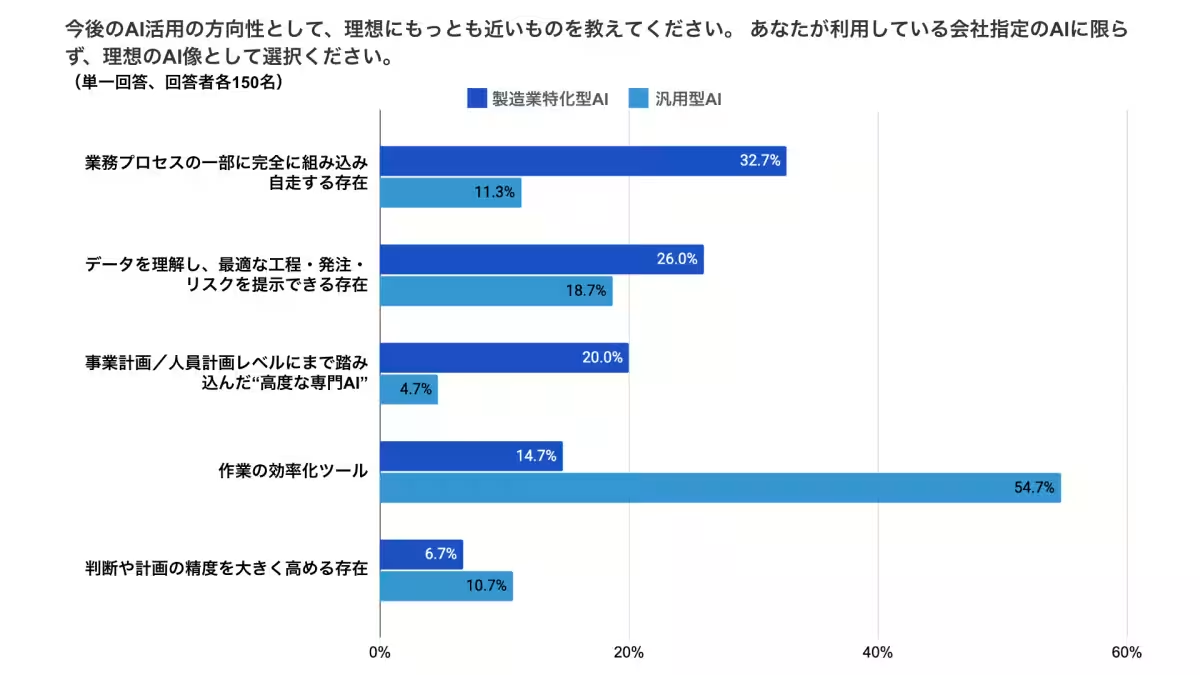
Looking forward, specialized AI users envision their tools as fully integrated parts of their operational processes, whereas users of generalized systems see AI primarily as efficiency-enhancing instruments. This difference in expectation signifies a clear distinction in how specialized AI can redefine roles within the industry.
6. Expertise Enhancement in Specialized AI Users
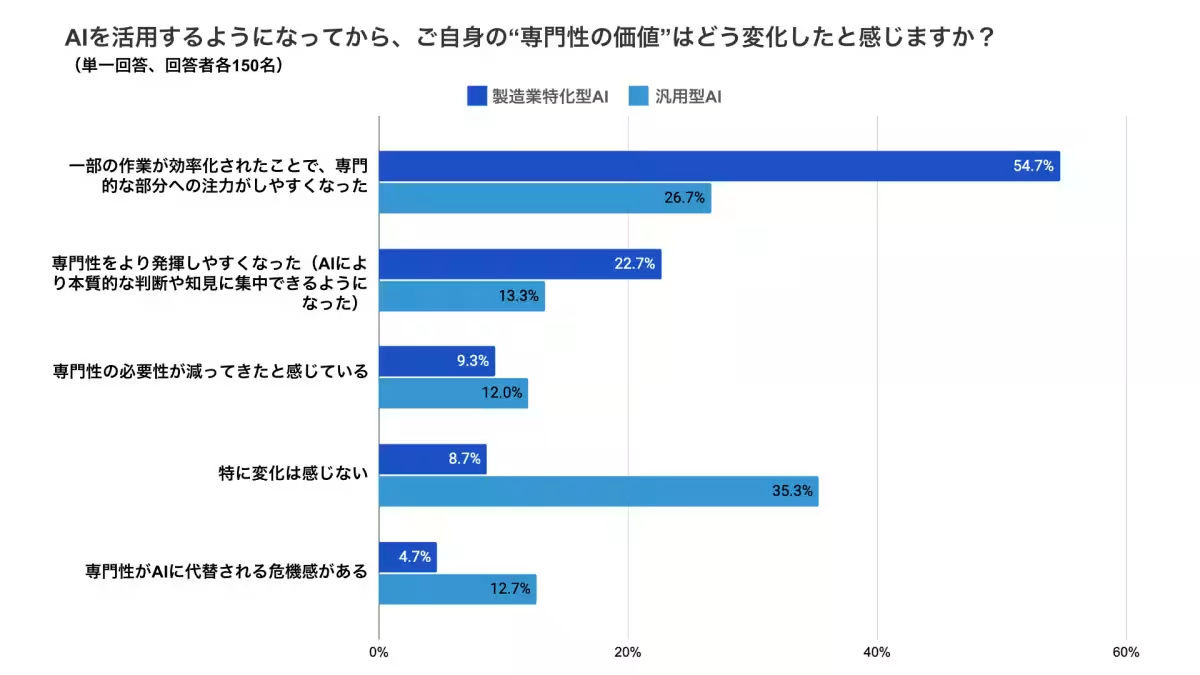
The stats show that almost 80% of specialized AI users felt they could focus more on their actual fields of expertise as a result of AI implementation. Contrarily, the majority of general-purpose AI users felt limited changes in their output, reflecting a crucial area for growth within this user group.
Conclusion
The findings from CADDi's survey reveal a significant shift in how AI tools are being utilized within the manufacturing sector. With specialized AI clearly outperforming its general-purpose counterparts in depth of application and effectiveness, the report illustrates the pivot from a landscape defined by intuitive decision-making to one defined by AI-driven insights. This transition is not only improving operational efficiencies but also helping restore human specialized knowledge that has been overshadowed by reliance on individual experience. The promise of specialized AI rests in its potential to empower employees, enabling them to contribute their expertise more effectively and transforming valuable insights into organizational assets.
As the manufacturing industry progresses, adopting specialized AI could be the key to unlocking a new era of efficiency and innovation, fundamentally altering how we perceive available knowledge and skill within this critical sector. With CADDi leading the charge, the global manufacturing landscape is poised for transformative change, leveraging data as a primary resource for innovation and growth.

Topics Consumer Technology)
【About Using Articles】
You can freely use the title and article content by linking to the page where the article is posted.
※ Images cannot be used.
【About Links】
Links are free to use.