




Farm Mind's Sustainable Strawberry Farming Delivers First Harvest Amidst Challenges
Sustainable Strawberry Farming in Japan
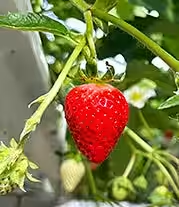
Amidst a backdrop of climate challenges and food security concerns, Farm Mind, a comprehensive distribution company based in Tokyo, has made a significant stride in sustainable agriculture. Its group company, Farm Mura Strawberry Farm, located in Ibaraki Prefecture, celebrated its inaugural strawberry harvest in April 2025. The farm, which utilizes smart agricultural technologies, aims to counteract the adverse effects of unprecedented heat during the year, producing approximately 160 tons of high-quality strawberries. This marks a pivotal first step in the endeavor to bring vibrant colors to Japanese tables, especially during the high-demand festive seasons like Christmas and New Year.
Variety of Strawberries Innovatively Cultivated
The initial harvest features three varieties of strawberries, including two main products:
1. Ichimitsu
- Varieties:
- Royal Queen: This premium variety is known for its rich sweetness and deep red color, making it a popular choice for gifts.
- Mikuno Ka: A new variety that is aromatic with minimal acidity, highlighting its sweetness. This variety has also been recognized at the Japan Food Selection Grand Prix.
2. Ichinoka
- Variety:
- Kaorino: Known for its strong sweetness and mild acidity, this variety boasts a firm texture and superior aroma.
Addressing Social Challenges in Agriculture
Japan's agriculture faces multifaceted challenges, including a declining food self-sufficiency rate, a shortage of successors, and climate change effects. In response, Farm Mura Strawberry Farm has taken significant steps toward establishing sustainable agriculture through several initiatives:
1. Smart Facilities for Enhanced Efficiency
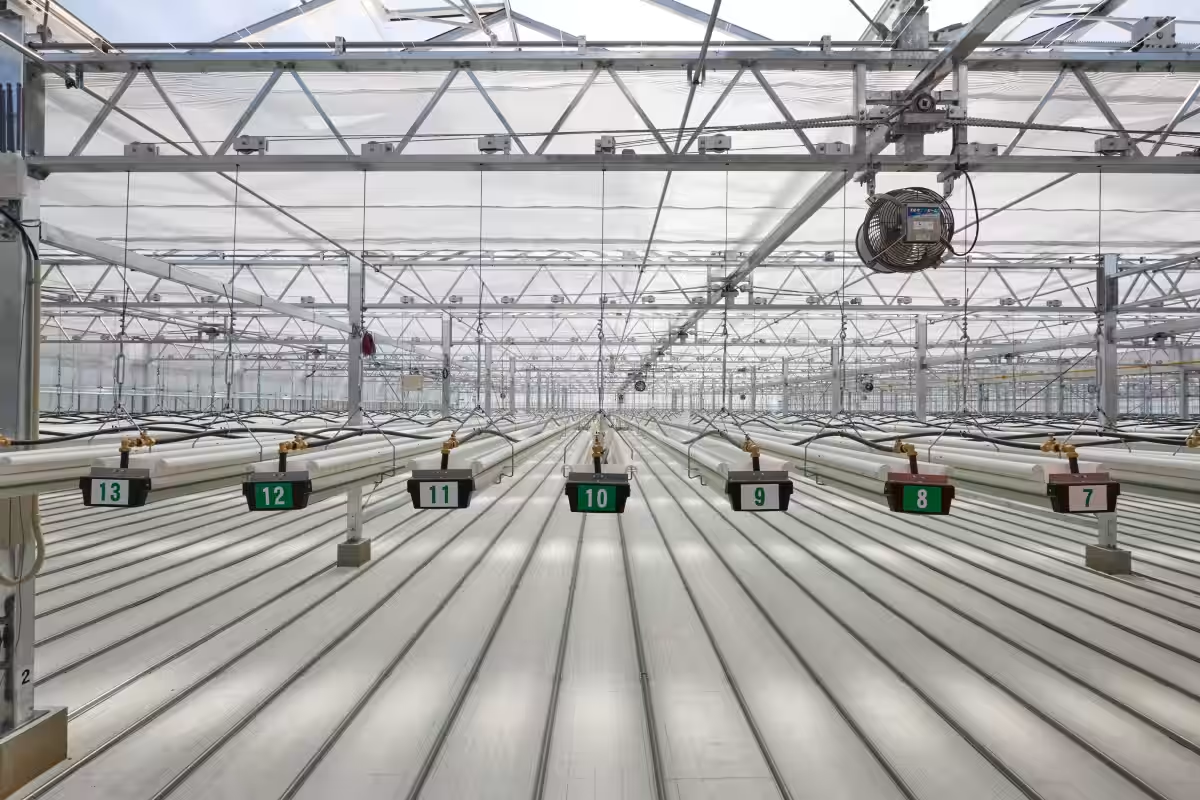
The farm employs a lifting bench system that maximizes space usage, effectively doubling the planting capacity. The height-adjustable benches reduce the physical strain on workers, making strawberry cultivation more efficient. Remote management through cloud systems facilitates temperature control and improves overall harvest stability and quality.
2. Eco-Friendly Energy Solutions
Utilizing solar thermal panels, the farm creates hot water that powers a localized heating method, heating plants only at the base during nighttime, which conserves energy compared to traditional heating methods. Automatic irrigation based on cumulative sunlight and the recycling of nutrient solutions further enhance resource efficiency and diminish environmental impact.
3. Cold Chain Network
The integration of a robust cold chain network enables immediate precooling of harvested strawberries. Using refrigerated trucks, produce is swiftly transported to distribution centers, maintaining freshness throughout storage and sorting processes, effectively reducing food waste.
4. Young and Dynamic Workforce
With the average age of agricultural workers in Japan at 69.2 years, Farm Mura Strawberry Farm adopts a youthful workforce, averaging 28.2 years old. By harnessing smart agricultural techniques, the farm transitions to data-driven management, developing agriculture into a future-oriented profession.
Producer Insights
Koji Kawashima, the CEO of Farm Mura Strawberry Farm, expressed his sentiments regarding this year's challenges: "This summer was particularly tough due to record heat. We faced difficulties in seedling care and cultivated management amidst changing conditions. By making use of data for irrigation and temperature control, we managed to navigate through. I am thrilled to finally deliver strawberries to our consumers."
About Farm Mura Strawberry Farm
- - Company Name: Farm Mura Strawberry Farm
- - CEO: Koji Kawashima
- - Location: 1 Kanda Izumi-cho, Chiyoda-ku, Tokyo
- - Established: August 4, 2020
- - Business Activities: Production and sale of domestic fruits and management of agricultural land.




Topics Consumer Products & Retail)
【About Using Articles】
You can freely use the title and article content by linking to the page where the article is posted.
※ Images cannot be used.
【About Links】
Links are free to use.