



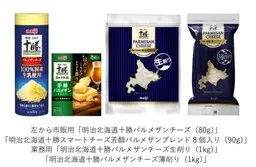
Innovative Parmesan Cheese Production Using Tokachi Lactic Acid Bacteria Wins Invention Award
Innovative Parmesan Cheese Production
An exciting development in the cheese industry has emerged from Japan, where Meiji Co. has successfully invented a method for producing Parmesan cheese using lactic acid bacteria derived from Tokachi raw milk. This innovation, recognized with an Invention Award at the 2023 National Invention Awards, highlights the potential of local ingredients to enhance global cheese culture.
The Award-Winning Invention
The award-winning method employs a specific strain of lactic acid bacteria, Lactobacillus fermentum OLL203697, which allows for the production of richly flavored cheese in a significantly shorter aging period. Typically, long-aged cheeses like Parmesan require over two years of maturation to develop their robust flavors. However, this new technique enables cheese makers to achieve similar results in just about six months, creating a product that is aromatic and flavorful, reminiscent of traditional long-aged cheese.
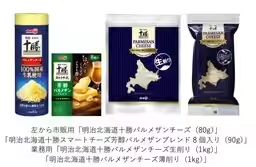
This innovative approach not only augments the culinary landscape of cheese but also enhances the value of Tokachi-produced cheese, contributing to local economic development. The method is implemented in products like Meiji Hokkaido Tokachi Parmesan Cheese, which has been diversifying the cheese culture in Japan for nearly a decade.
About the Innovation
The essence of this invention lies in its ability to harness the potential of lactic acid bacteria sourced from Tokachi raw milk. By utilizing strain OLL203697, robust flavors and a fruity aroma have been successfully incorporated into cheeses aged for less than a year. This advancement in cheese production presents a significant shift, demonstrating the diverse applications of lactic acid bacteria in creating gourmet products in shorter aging timeframes.
Engineers Behind the Innovation
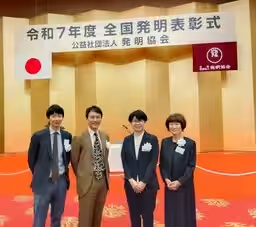
The award was presented to several key figures at Meiji Co., including:
- - Kenichi Shironoshita, Cheese Division Head
- - Hanae Dotabashi, Microbial Resource Unit Leader
- - Satoshi Komori, Innovation Project Manager
- - Mizue Saito, Analytical Chemistry Research Leader
These individuals played pivotal roles in exploring and refining the use of the unique lactic acid bacteria, leading to this highly impactful invention.
How It Works
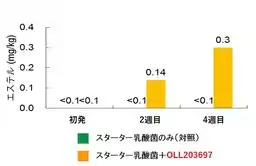
The traditional method of cheese production often results in limited diversity regarding flavor profiles due to the typical strains of lactic acid bacteria employed. In contrast, Meiji's process strategically introduced OLL203697 alongside standard starter bacteria. This unique combination enables the enhanced production of a component known as pine-like ester, which contributes to the cheese's fruity, aromatic qualities. The result is a vibrant cheese that both novice and experienced cheese lovers can cherish.
The Importance of National Invention Awards
The National Invention Awards, which began in Japan in 1919, honor inventions that significantly advance science and technology. The awards serve to acknowledge those who contribute to industry development through innovative achievements. They aim to promote technical progress and recognize outstanding inventors.
In conclusion, the Tokachi Lactic Acid Bacteria method for producing Parmesan cheese epitomizes a remarkable development in food technology. Winning the Invention Award not only celebrates the ingenuity behind this process but also underscores the growing relevance of local resources in the culinary world. As this method gains recognition, it may open doors for further innovation in cheese production, promising an exciting future for cheese enthusiasts everywhere.
Topics Consumer Products & Retail)
【About Using Articles】
You can freely use the title and article content by linking to the page where the article is posted.
※ Images cannot be used.
【About Links】
Links are free to use.