



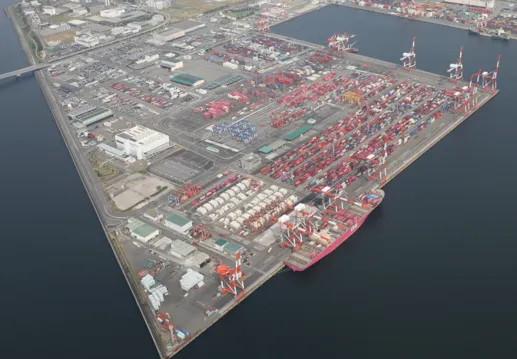
Expansion of KICT: The Largest Container Terminal in Japan Completed at Kobe Port
The Completion of KICT’s Expansion: A Significant Step for Kobe Port
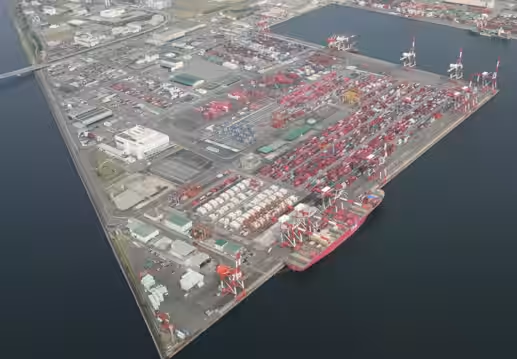
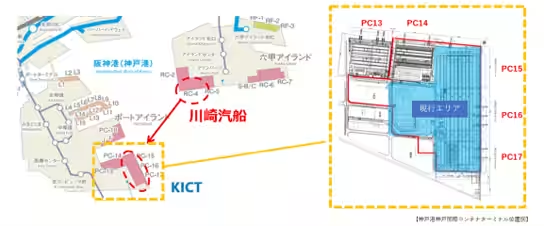
In a notable development for Japan's logistics landscape, Mitsui O.S.K. Lines, led by President Jotaro Tamura and headquartered in Tokyo, has successfully finalised a leasing agreement with Hanshin International Port Corporation, headed by President Takafumi Kido, for the newly expanded section of the Kobe Port Container Terminal, known as KICT. This expansion has transformed KICT from a three-berth to a four-berth system, solidifying its status as the largest terminal for foreign trade containers in the country, now expected to manage around 40% of Kobe Port’s external trade containers.
Enhancements to KICT
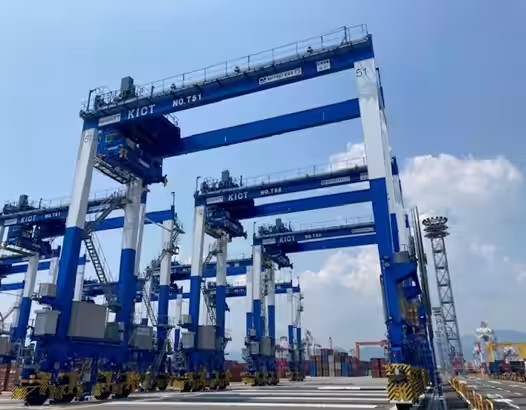
The enhancements at KICT include an increase in the total length of the quay from 1,050 meters to 1,750 meters. This extension allows for greater flexibility in vessel docking schedules and improved transshipment connectivity to other routes. The introduction of twelve new Remote-Controlled Transfer Cranes (RTG) is also a highlight of this expansion, driving forward the digital transformation (DX) initiatives at the terminal.
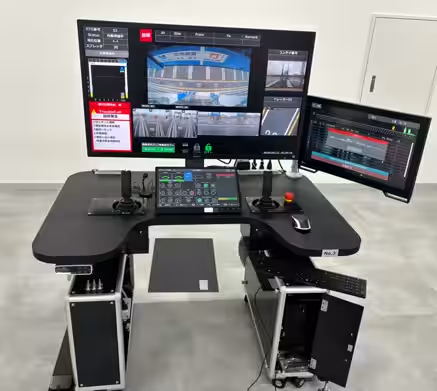
Traditionally, crane operators worked directly on freight handling equipment. However, with the new RTGs, operations can now be controlled remotely from a facility within the terminal. This significant shift not only improves working conditions, making them less susceptible to weather and temperature variations but also enhances productivity and safety by reducing physical strain on operators.
Adoption of Advanced Technologies
Since the end of March this year, the terminal has also adopted a new port information system called CONPAS (Container Fast Pass). This state-of-the-art system enables real-time sharing of information concerning container movements among port stakeholders, addressing the pressing issue of long wait times for trucks at gate entries, which has been a significant challenge for domestic logistics. By leveraging the latest in digital technology, KICT aims to improve the efficiency of container logistics operations and enhance overall productivity.
Additionally, KICT is actively engaging in sustainability efforts by installing solar panels on container gates and logistics facility rooftops to mitigate greenhouse gas emissions from operations.
The Future of Container Logistics
The expansion of KICT symbolizes a critical advancement in Japan's container logistics capabilities. By modernizing the terminal with cutting-edge technology and sustainable practices, it is poised to set a benchmark for operational excellence in the region. As the demand for international trade continues to grow, KICT’s advancements will play a crucial role in supporting Japan's economy and improving the logistics infrastructure.
In conclusion, the successful completion of the KICT expansion not only enhances the operational capacity of Kobe Port but also pioneers a new standard in the logistics industry, focusing on efficiency, safety, and sustainability. This strategic move by Mitsui O.S.K. Lines and partners reaffirms their commitment to advancing how container logistics are managed in Japan and beyond.
Conclusion
KICT’s expansion is a milestone that will undoubtedly shape the future of container logistics in Japan. With increased capacity and enhanced technology, KICT is set to become a pivotal player in the global logistics arena, representing a noteworthy evolution in Japan's transport and trade capabilities.
Topics Consumer Products & Retail)

【About Using Articles】
You can freely use the title and article content by linking to the page where the article is posted.
※ Images cannot be used.
【About Links】
Links are free to use.