



The Shift Toward Office Work: Insights from the 2026 Employment Survey
In recent years, the way we work has undergone a seismic shift, especially influenced by the COVID-19 pandemic. As organizations adapt to a post-pandemic world, a recent survey conducted by Job Soken has shed light on the evolving landscape of office work in 2026. This survey, executed by Persol Career, involved 327 working individuals, offering a glimpse into their attitudes towards returning to the office, the frequency of commuting, and the overall necessity of being present in a workplace.
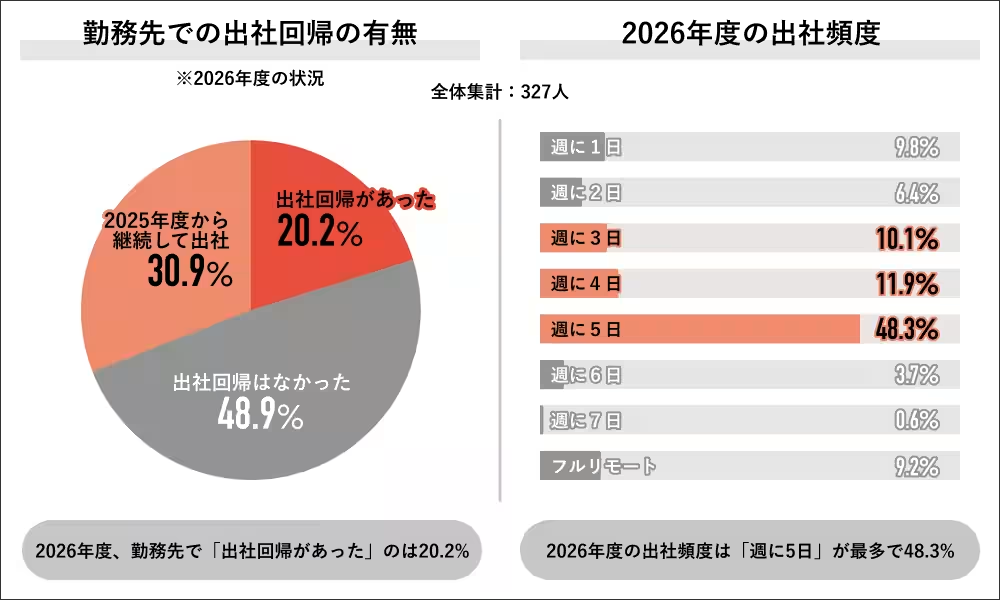
As of April 2026, many companies are re-evaluating their work policies, marking a notable transition back to in-person work. Results from the Job Soken survey indicate that a significant portion of respondents—about 20.2%—reported a shift back to office attendance, while 30.9% indicated that they have continuously been working on-site since 2025. The most common frequency for these workers is five days a week, reported by 48.3% of the respondents, followed by four days a week (11.9%) and three days a week (10.1%).
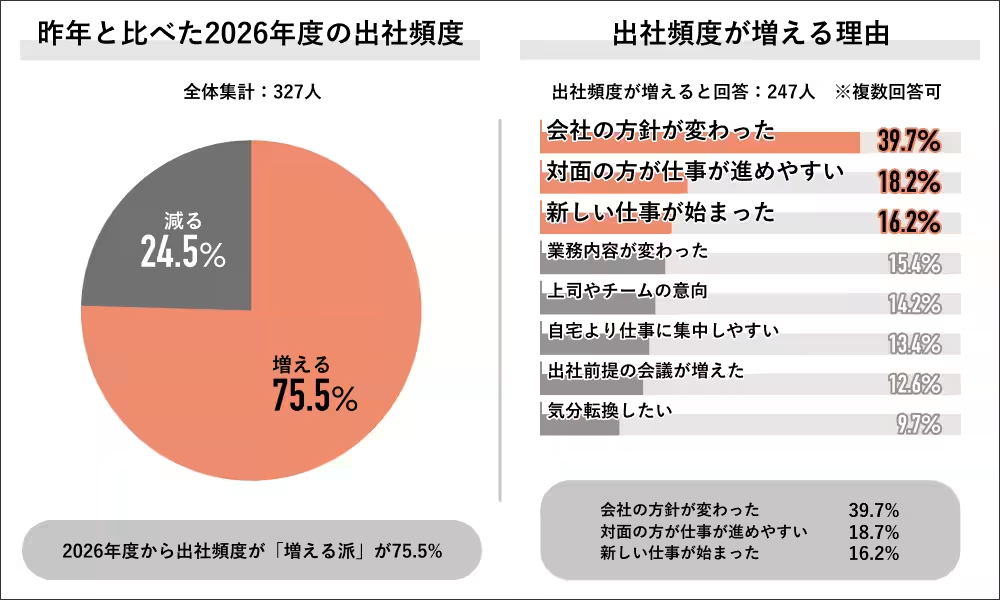
This shift underscores a growing trend where 75.5% of participants indicated that their office attendance is expected to increase in 2026. The primary reason cited by 39.7% of respondents was a change in company policies, indicating a top-down impetus for returning to the office. This insight prompts questions about the balance between personal preferences for remote work and the institutional push for in-person engagement.
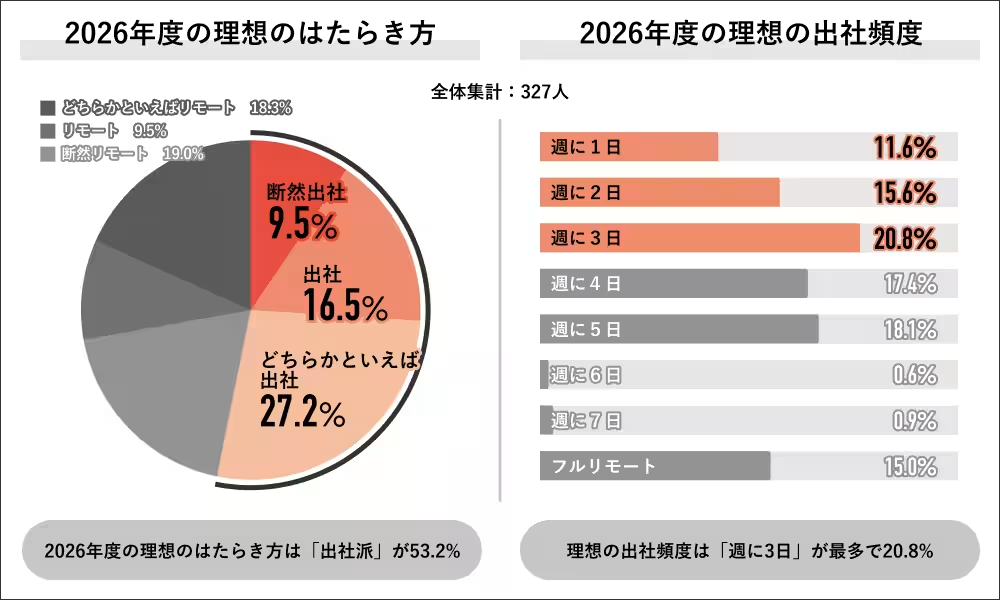
When asked about their ideal work arrangements, a clear majority (53.2%) of respondents leaned towards being office-oriented, describing their preferences as follows: firmly in favor of office work (9.5%), generally supportive of office work (16.5%), and leaning towards office work (27.2%). The preferred frequency for office attendance skewed towards three days a week (20.8%), reflecting a desire for a hybrid model rather than a full return to traditional five-day work weeks.
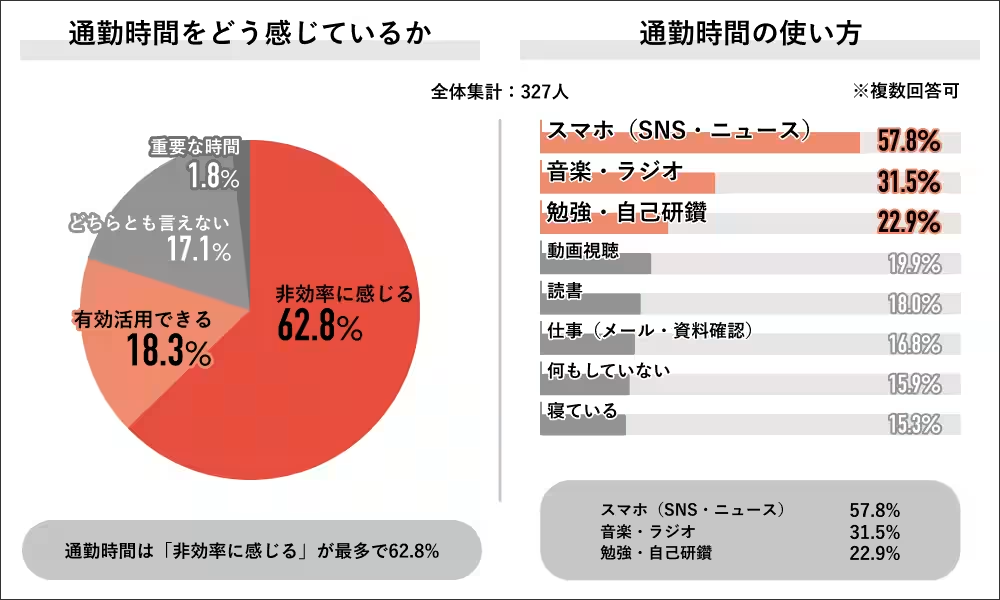
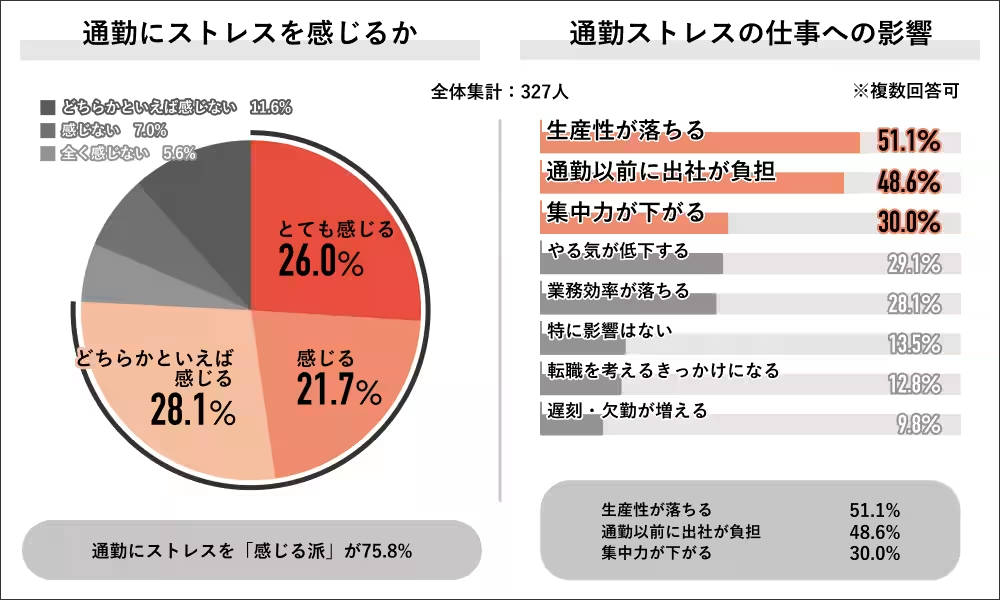
Contrary to the push for increased office work hours, 62.8% of respondents expressed that they feel their commuting time is inefficient. This sentiment is compounded by the stress and fatigue commuting brings, which 75.8% of participants reported experiencing, directly correlating with diminished productivity. Busy professionals frequently resort to utilizing their commuting time for tasks like scrolling through social media or catching up on news, as indicated by the 57.8% who reported these habits.
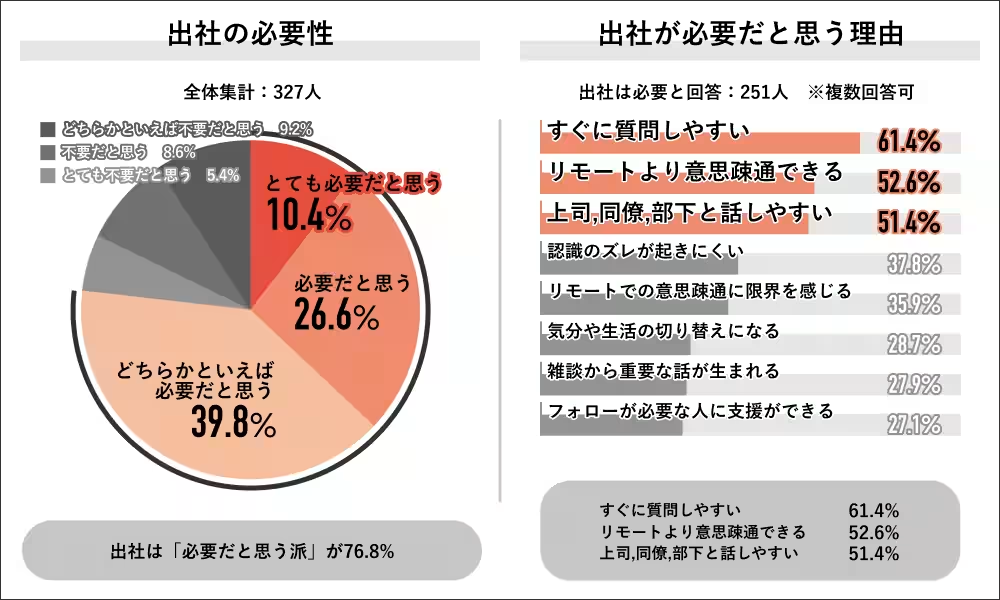
Despite the apparent challenges of commuting and the shifting workplace dynamics, a substantial 76.8% of respondents believe that being physically present in the office is necessary. The immediate accessibility for inquiries and the ease of communication were highlighted as primary benefits of working on-site. The findings underscore the enduring value of face-to-face interaction within professional settings, especially in fostering teamwork and collaboration.
While there is a recognition of the necessity of office work, many comments from respondents reveal a desire for flexibility. Numerous individuals noted the need to balance in-office attendance with remote working options to mitigate the stressors associated with commuting.
The Job Soken survey illustrates a dual reality: while there is a strong push for returning to the office, the associated challenges, particularly concerning commuting, reveal a gap in the ideal versus actual working conditions. As professionals grapple with a desire for flexibility alongside the organizational demands for in-person attendance, it will be crucial for companies to create supportive frameworks that acknowledge these needs.
This study demonstrates not just a return to pre-pandemic norms, but an evolution in the work culture, where both employers and employees must navigate the complexities of this transition. The findings illuminate the changing dynamics of work, highlighting the inherent tension between institutional mandates and individual preferences as we move into 2026 and beyond. Job Soken remains committed to exploring these themes further, seeking to reshape the narrative around work and productivity for a brighter future.

Current Trends in Office Re-entry
As of April 2026, many companies are re-evaluating their work policies, marking a notable transition back to in-person work. Results from the Job Soken survey indicate that a significant portion of respondents—about 20.2%—reported a shift back to office attendance, while 30.9% indicated that they have continuously been working on-site since 2025. The most common frequency for these workers is five days a week, reported by 48.3% of the respondents, followed by four days a week (11.9%) and three days a week (10.1%).
This shift underscores a growing trend where 75.5% of participants indicated that their office attendance is expected to increase in 2026. The primary reason cited by 39.7% of respondents was a change in company policies, indicating a top-down impetus for returning to the office. This insight prompts questions about the balance between personal preferences for remote work and the institutional push for in-person engagement.
Ideal Working Conditions in 2026
When asked about their ideal work arrangements, a clear majority (53.2%) of respondents leaned towards being office-oriented, describing their preferences as follows: firmly in favor of office work (9.5%), generally supportive of office work (16.5%), and leaning towards office work (27.2%). The preferred frequency for office attendance skewed towards three days a week (20.8%), reflecting a desire for a hybrid model rather than a full return to traditional five-day work weeks.
Commuting Insights
Contrary to the push for increased office work hours, 62.8% of respondents expressed that they feel their commuting time is inefficient. This sentiment is compounded by the stress and fatigue commuting brings, which 75.8% of participants reported experiencing, directly correlating with diminished productivity. Busy professionals frequently resort to utilizing their commuting time for tasks like scrolling through social media or catching up on news, as indicated by the 57.8% who reported these habits.
The Necessity of Office Attendance
Despite the apparent challenges of commuting and the shifting workplace dynamics, a substantial 76.8% of respondents believe that being physically present in the office is necessary. The immediate accessibility for inquiries and the ease of communication were highlighted as primary benefits of working on-site. The findings underscore the enduring value of face-to-face interaction within professional settings, especially in fostering teamwork and collaboration.
While there is a recognition of the necessity of office work, many comments from respondents reveal a desire for flexibility. Numerous individuals noted the need to balance in-office attendance with remote working options to mitigate the stressors associated with commuting.
Conclusion
The Job Soken survey illustrates a dual reality: while there is a strong push for returning to the office, the associated challenges, particularly concerning commuting, reveal a gap in the ideal versus actual working conditions. As professionals grapple with a desire for flexibility alongside the organizational demands for in-person attendance, it will be crucial for companies to create supportive frameworks that acknowledge these needs.
This study demonstrates not just a return to pre-pandemic norms, but an evolution in the work culture, where both employers and employees must navigate the complexities of this transition. The findings illuminate the changing dynamics of work, highlighting the inherent tension between institutional mandates and individual preferences as we move into 2026 and beyond. Job Soken remains committed to exploring these themes further, seeking to reshape the narrative around work and productivity for a brighter future.
Topics General Business)



【About Using Articles】
You can freely use the title and article content by linking to the page where the article is posted.
※ Images cannot be used.
【About Links】
Links are free to use.