



Exploring the Future Urban Landscape: Post Growth City Lab's Insights
Exploring the Future Urban Landscape: Insights from Post Growth City Lab
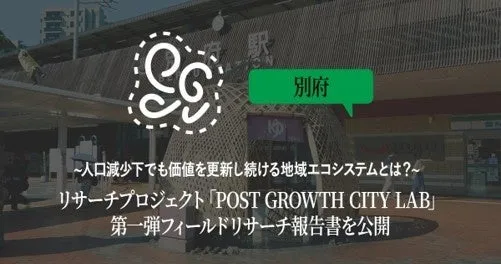
The Post Growth City Lab (PGCL), a groundbreaking joint research initiative, has recently unveiled its first field research report focusing on Beppu, a city in Oita Prefecture, Japan. This initiative, co-led by Nitsui Kowa Real Estate and Zebras and Company, aims to explore and redefine the concept of sustainable urban and regional development in the context of declining populations. The report, titled "First Field Research Report - Beppu Area," analyzed data collected from a research expedition held in October 2025 and shed light on valuable insights into innovative urban ecosystems.
Key Findings of the Beppu Research
The recent report has meticulously gathered and analyzed the dynamics of Beppu's urban structure by focusing on its unique resource: hot springs. The city has transformed this singular asset into a multi-layered industry, showcasing how sectors such as tourism, healthcare, welfare, arts, and international education can interconnect and thrive.
Three Structural Principles (Key Learnings)
The report identifies three essential structural principles that contribute to Beppu's value creation ecosystem even in the face of population decline:
1. Updating Regional Resources and Industries: Beppu has diversified its economy by evolving its hot spring industry into dual pillars of tourism and healthcare/welfare. This evolution is further enriched by innovative community-driven tourism models and partnerships with research institutions. The focus is on how interactions, creative collaborations, and the re-translation of cultural and natural resources can foster continuous updates rather than merely replicating past successes.
2. Designing Chains of Challenges that Support Value Updates: The city exemplifies a vibrant platform in which entrepreneurial efforts, such as those led by local visionaries like Koichiro Tsuruta and Haruko Anba, have perpetuated a culture of ongoing challenges and innovations across generations. The report emphasizes the need for a structure that isolates these successes as communal assets rather than individual milestones, embedding them into the urban fabric.
3. Creating Opportunities for Participation in Sustainable Urban Development: Beppu is home to significant social initiatives, including Taiyo no Ie, which promotes job opportunities for people with disabilities, and the Ritsumeikan Asia Pacific University, which is a hub for international students. These initiatives not only embrace diversity but also transform community members into active contributors, showcasing the importance of cultivating environments where various talents and roles are sustained.
The convergence of these three principles illustrates how Beppu, despite the challenges posed by urban shrinkage, continues to renew its urban value proposition continually.
Future Directions for the Project
Looking ahead, the PGCL team plans to extend its research efforts beyond Beppu, with upcoming field studies scheduled for Kumamoto City. This second phase aims to gather insights on urban dynamics that were not sufficiently explored in Beppu. This includes examining urban relationships with defined block, hub, and small-scale centers, alongside how top-down industrial structures influence urban formation.
By implementing a comprehensive research approach, the PGCL aims to identify concrete investment opportunities in real estate and business development that can be applied across various cities and regions.
Collaborators Behind PGCL
PGCL collaborates with several organizations, including NEWLOCAL and Re-Public, bringing together diverse expertise in urban development, research innovation, and community engagement. The consortium is dedicated to redesigning urban landscapes in response to contemporary challenges like population decline and climate change.
Conclusion
As cities grapple with the implications of declining populations and shifting economic paradigms, initiatives like the Post Growth City Lab serve as beacons of innovation and resilience. By learning from Beppu’s distinctive models, PGCL seeks to pave the way for sustainable urban futures that not only address present challenges but also cultivate robust ecosystems capable of thriving in the years to come.
For further reading, access the full report here.

Topics General Business)
【About Using Articles】
You can freely use the title and article content by linking to the page where the article is posted.
※ Images cannot be used.
【About Links】
Links are free to use.