



Impact of Oral Hygiene on Glucose Management in Type 2 Diabetes
Study Explores Oral Care and Blood Glucose in Diabetes
A newly published study in the journal 'Diabetes Spectrum' by Sunstar Group, alongside the Nanshoji Internal Medicine Clinic and the Southern Diabetes Clinical Research Center, reveals significant findings regarding oral hygiene practices and blood sugar stability among adults with type 2 diabetes. This research underscores the crucial interplay between dental care and diabetes management.
Background of the Study
Diabetes and periodontal diseases are closely linked, with prior research showing that treating gum disease can lower HbA1c levels, a key marker for blood sugar control. However, the relationship between daily oral care habits and overall blood sugar management had not been thoroughly investigated. With the advent of Continuous Glucose Monitoring (CGM) technology, a more detailed understanding of daily blood sugar fluctuations can be obtained, offering insights into how oral hygiene might influence diabetes outcomes.
The study involved 104 participants with type 2 diabetes, each of whom had at least 15 natural teeth. Over a period of 14 days, CGM devices were utilized alongside blood tests and surveys about oral hygiene practices, aiming to explore the connections between these factors and clinical indices such as Time in Range (TIR) and Glycemic Management Indicator (GMI).
Key Findings
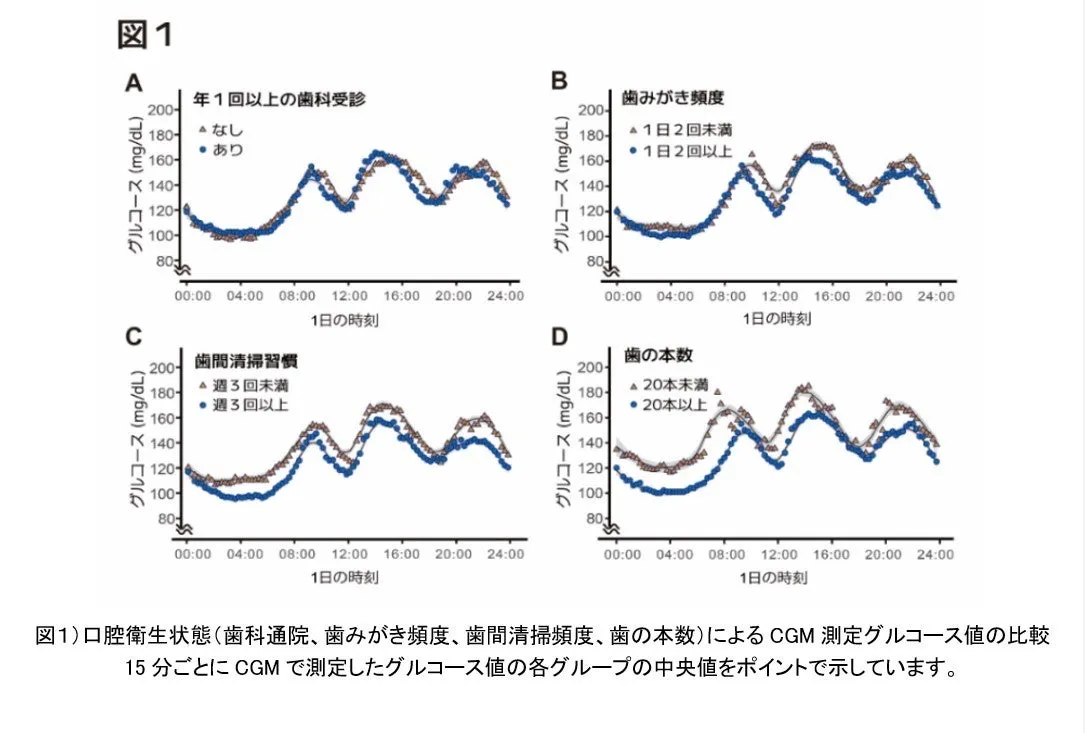
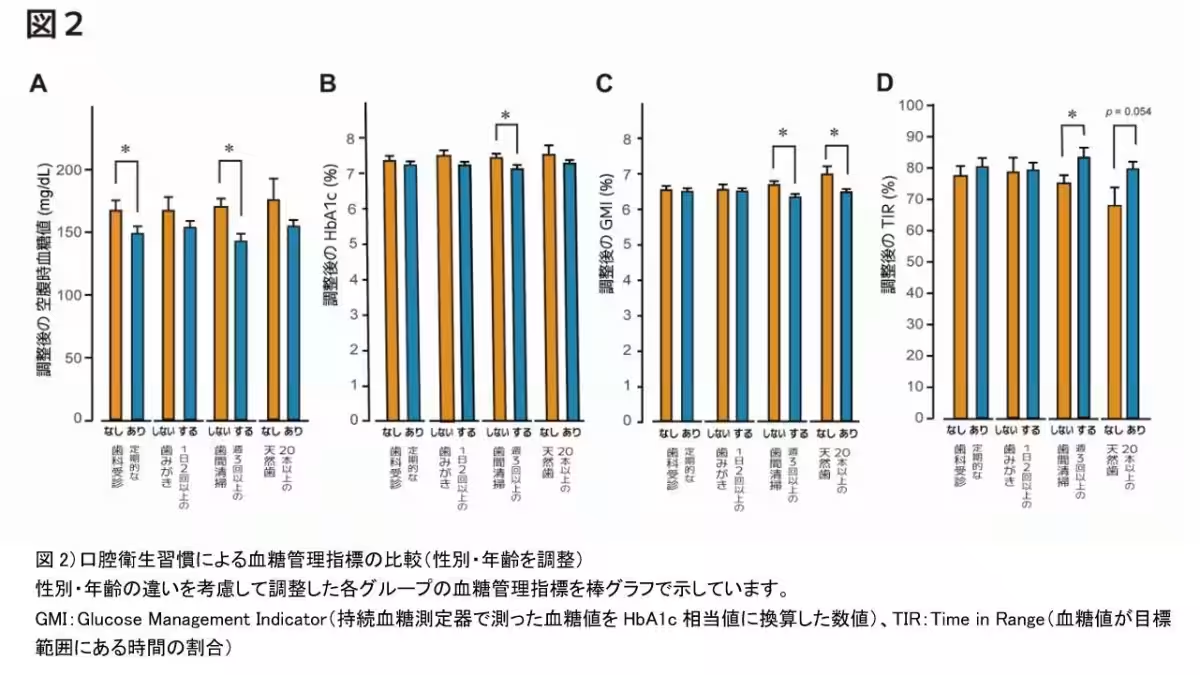
The findings indicate that participants who engaged in interdental cleaning at least three times a week exhibited lower blood sugar levels and spent more time within the target range throughout the day. Notably, those with 20 or more teeth also displayed lower GMI values. This correlation was statistically significant even after adjusting for variables such as age and gender.
1. Oral Hygiene and Metabolic Indicators
The study highlighted the oral care habits of participants: 61.2% regularly visited a dentist, 78.4% brushed twice a day, and 70.6% engaged in interdental cleaning at least once weekly. Higher frequencies in these practices correlated with improved metabolic outcomes, including lower HbA1c and fasting blood glucose levels.
2. Correlation Between Dental Practices and Blood Sugar Control
Participants practicing interdental cleaning more than three times a week had statistically significant lowerHbA1c and fasting glucose levels. Additionally, higher TIR values and lower GMI scores were observed in these individuals compared to those with less frequent cleaning habits.
3. Inflammatory Insights
The study's detailed analysis suggests that the benefits of regular oral hygiene may extend beyond direct metabolic effects to include reduced systemic inflammation. As indicators of inflammation were controlled for in participants, the positive relationships between oral care practices and blood glucose levels remained significant.
Future Implications
While the study's cross-sectional design limits causal interpretations, these results advocate for the inclusion of oral care in diabetes management strategies. Upcoming revisions to healthcare guidelines in Japan propose to integrate dental care recommendations into diabetes management criteria. This integration supports the notion that comprehensive care—-linking medical and dental practices—can enhance the quality of life for diabetes patients.
Conclusion
This research sheds light on the importance of daily oral hygiene habits, emphasizing their potential role in diabetes management. It also highlights the broader implications for healthcare systems to foster collaboration between medical and dental professionals. By promoting oral health as part of comprehensive diabetes care, the aim is to improve overall health outcomes for individuals living with type 2 diabetes.
Study Reference
Title: Oral hygiene practices and glucose profiles assessed through continuous glucose monitoring in adults with type 2 diabetes.
Authors: Kayo Harada, Yasutaka Maeda, Dan Sekiguchi, Atsushi Ishikado, Mayu Hayashi Suzuki, Ayumi Tamura, Masae Minami.
Published In: Diabetes Spectrum
DOI: https://doi.org/10.2337/ds25-0015
About the Institutions Involved
Nanshoji Internal Medicine Clinic: Located in Fukuoka City, this clinic specializes in diabetes management, advocating for patient comfort and sustainable treatment.
Southern Diabetes Clinical Research Center: This research entity aims to utilize real-world data to innovate diabetes treatment methods tailored for individual patients.
Sunstar Group: A global entity providing oral care products and services, focusing on enhancing overall health through oral hygiene.
In a world where each individual strives for a long and healthy life, maintaining oral health emerges as a cornerstone of overall well-being.


Topics Health)
【About Using Articles】
You can freely use the title and article content by linking to the page where the article is posted.
※ Images cannot be used.
【About Links】
Links are free to use.